Acreage and Stand Numbers to Ask About
It's a common fear when you're planning a hard-earned Kansas deer hunt: you've committed your time and money, and now you're wondering if the hunting experience will be diminished by too many hunters or worn-out spots. This guide will help you understand the critical questions to ask your potential outfitter regarding their hunting acreage and stand management, so you can make an informed decision and set clear expectations for your trip.
Why the Outfitter's Acreage Matters More Than You Think
When you're talking to a Kansas outfitter, the total acreage they have access to isn't just a number; it's a window into the potential quality and feel of your hunting experience. A good outfitter doesn't just lease land; they manage a resource, and the size and distribution of that resource are paramount. Without enough ground, even the best habitat can quickly become overpressured.
The "Feel" of a Low-Pressure Hunt
Imagine slipping into a treestand before dawn, the air crisp and quiet, knowing that you're likely the only hunter within a significant radius. That feeling of solitude, of truly being out in wild Kansas, is priceless. It's often directly tied to the amount of ground an outfitter controls per hunter. When acreage is generous, deer patterns are less disturbed, and natural movement is more likely. You're not just hunting deer; you're immersing yourself in the landscape, a far cry from a "put-and-take" experience. It’s about feeling like you’re truly engaged in Public Land Deer Hunting in Kansas but with the added benefits of private land management.
If an outfitter has, say, a thousand acres but books ten hunters at a time for week-long stints, that's 100 acres per hunter. That might sound decent, but if that land is all in one block, and everyone is hunting the prime spots, those deer are going to feel the heat fast. Conversely, an outfitter with 5,000 acres, booking only five hunters, provides 1,000 acres per hunter, allowing for vast stretches of undisturbed bedding cover and travel corridors. This space allows deer to act like deer, following their natural instincts rather than constantly reacting to human intrusion.
Managing Hunting Pressure Across Properties
Even with ample acreage, it's how that land is managed that truly counts. A top-notch outfitter will understand how to rotate hunters through different parcels, giving areas a break. This isn't just about spreading hunters out; it's about minimizing the consistent human presence in a specific drainage or timber block, allowing deer to settle back into their routines. Think of it like farming: you wouldn't plant the same crop in the same field year after year without rotating to replenish the soil. Similarly, an outfitter needs to "rest" certain hunting areas to maintain their productivity.
They might have multiple, non-contiguous properties scattered across a unit, offering diverse hunting scenarios and escape routes for game. This provides flexibility, especially when weather patterns shift or pressure increases on adjacent properties. For example, if one lease is getting hammered by neighbors, a savvy outfitter can shift hunters to a more secluded parcel. When discussing options, you might find valuable insights on platforms like BookYourHunt, where outfitters often detail their operations and land holdings, giving you a preliminary sense of their scale and approach to managing pressure.
Diverse Habitat, Diverse Opportunities
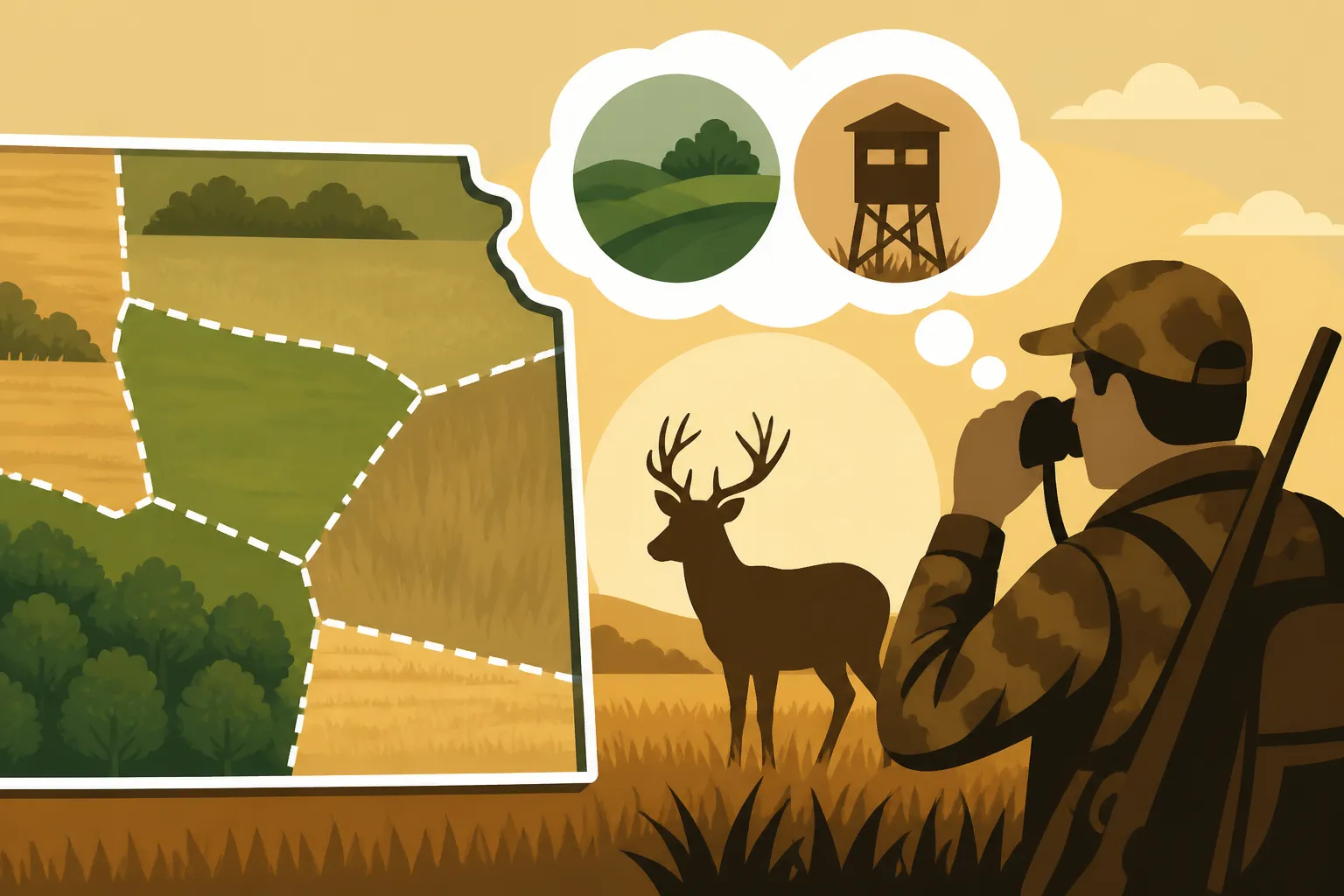
Kansas is incredibly diverse, from the rich river bottom timbers of the east to the rolling farmlands and CRP fields of central Kansas, and the wide-open plains of the west. A larger acreage base often translates to access to a wider variety of habitats. This isn't just about aesthetics; it's about adaptability. Having access to timbered creeks, standing corn, milo stubble, CRP fields, and plum thickets means an outfitter can adapt to changing weather, crop rotations, and deer behavior throughout the season. Hunting Terrain Funnels in Flat Country become even more effective when an outfitter has multiple examples across varied landscapes.
Consider a late-season hunt: if all the outfitter's ground is in cut cornfields, and a massive snowstorm hits, your options might be limited. But if they also have standing beans or overlooked timber patches that offer critical browse, your chances improve dramatically. More acreage often means more options, which translates directly to a higher probability of success and a more dynamic hunting experience for you.
Understanding Stand Numbers and Their Impact on Your Hunt
Beyond the total acres, the number and strategic placement of stands are critical. It’s not just about having a stand for every hunter; it's about having enough quality, fresh stand locations to provide consistent opportunities across varied conditions.
Hunter Density and Stand Freshness
Let's be realistic: every time a human steps foot into a hunting area, scent is left, and deer are potentially alerted. A high number of stands allows an outfitter to rotate hunters, ensuring that no single stand location is over-pressured. If an outfitter has only one or two stands per hunter, and those stands are hunted day after day, deer will quickly pattern the pressure and avoid the area. This is especially true for mature bucks who are notoriously wary.
Think about it: would you rather hunt a stand that was last hunted yesterday, or one that hasn't seen a hunter in a week? The latter is almost always preferred. An outfitter who can tell you they have three or four times as many stands as hunters in camp shows a commitment to stand freshness. This means they can respond to shifting winds, changing food sources, or unexpected pressure from neighboring properties without burning out their best spots. This commitment is crucial, especially during the peak of the rut when bucks are moving.
Strategic Stand Setups for Every Condition
Kansas weather can be notoriously unpredictable, swinging from warm and sunny to cold and windy in a matter of hours. A large inventory of stands, positioned for various wind directions, access routes, and deer travel patterns, is a sign of a well-prepared outfitter. It means they're not just throwing up a few stands; they've thought through the intricacies of deer movement on their specific properties. Best Stand Locations in Flat Farm Country will often differ based on the wind, the time of year, and the specific crop rotation in play.
Imagine arriving in camp and the wind is blowing from the south for three days straight. If an outfitter only has north-wind stands, you're out of luck. But if they have stands set up for every conceivable wind direction, overlooking different food sources, bedding areas, and travel corridors, your guide has real options. This foresight ensures that no matter what Mother Nature throws your way, you'll have a viable, scent-controlled option to hunt. This adaptability is crucial for a successful hunting trip, especially when dealing with the fickle nature of deer movement.
Varieties of Stand Types for Comfort and Effectiveness
Not all stands are created equal, and a good outfitter will offer a variety. This might include enclosed box blinds for cold weather or hunters with mobility issues, traditional hang-on treestands for stealth, or ladder stands for ease of access. Each type serves a different purpose and offers distinct advantages. The availability of diverse stand types demonstrates an outfitter's dedication to hunter comfort and effective hunting strategies.
For example, during a brutally cold December firearm season, an enclosed blind can be a game-changer for staying warm and alert. For an early-season bowhunt, a well-brushed hang-on stand high in a cottonwood might be ideal for stealth and a clear shot. Discussing the types of stands available can give you a better idea of what to expect in terms of comfort and hunting style. Some outfitters might even allow you to bring and set up your own mobile setup, like a saddle, if that's your preferred method, but you need to ask about Portable Stand Rules on Kansas Public Land or private land.
How Outfitter Management Influences Both Acreage and Stands
The best land and the most stands are only as good as the management behind them. A responsible Kansas outfitter isn't just a landlord; they're a wildlife manager, constantly evaluating, improving, and strategically allocating their resources. This ongoing effort directly impacts both the quality of their acreage and the effectiveness of their stand setups.
Stand Rotation and "Resting" Hunting Areas
Effective stand rotation is probably one of the most underappreciated aspects of a successful outfitter operation. It's not enough to simply have many stands; they need to be hunted intelligently. A great outfitter will have a detailed plan for which stands are hunted when, and for how long, to minimize pressure. This might involve resting a group of stands for several days or even a week after a single hunt, allowing deer to move back in confidently.
This goes hand-in-hand with scouting efforts. Deer patterns change throughout the season due to food availability, breeding activity, and hunting pressure. A dynamic outfitter will be continually scouting, identifying fresh sign, and adjusting stand assignments accordingly. They understand that a stand that was hot last week might be barren this week, and they have alternatives ready. This level of attentiveness is what separates a truly dedicated operation from one that simply puts hunters in the same spots repeatedly.
Habitat Improvement and Food Plots
An outfitter who invests in their land goes beyond simply leasing; they're actively enhancing the resource. This can include planting food plots to attract and hold deer, hinge-cutting timber to create bedding cover, or managing native grasses. These efforts not only improve the overall deer herd health but also create more consistent hunting opportunities. When you're asking about acreage, inquire about their habitat management practices.
For instance, an outfitter might strategically plant late-season food plots like winter wheat or brassicas that become irresistible once the row crops are harvested. This concentrates deer and provides reliable hunting locations during colder months. These managed food sources are often positioned to be hunted effectively with specific wind directions, adding another layer of thought to their stand placement strategy. This type of proactive management indicates a long-term commitment to providing quality hunts.
Hunter Allocation and Group Size
Ultimately, the best acreage and stands can be ruined by overbooking. An outfitter's policy on hunter density and group size is a direct reflection of their commitment to a quality experience. They should be able to clearly articulate how many hunters are in camp at any given time, and what their ratio of hunters to acres is. This ensures that you're not competing for prime spots with too many other hunters.
Some outfitters specialize in small, intimate groups, offering a more personalized experience. Others might run larger camps but have vast amounts of land and well-defined hunting zones to spread hunters out. There’s no single right answer, but transparency is key. You want to avoid the scenario where you're seeing other hunters walking in or out of stands near your location. A solid outfitter manages their bookings to prevent overcrowding and maintain a low-pressure environment. Reading Kansas Outfitter Success Rates can sometimes give you a clue here, but direct questions are better.
Key Questions to Ask About the Outfitter's Acreage
When you're trying to nail down the specifics of an outfitter's hunting ground, don't be afraid to ask direct, pointed questions. This isn't being pushy; it's due diligence for a significant investment. You're looking for transparency and detail, not vague assurances.
Total Leased or Owned Acres
Start with the basics. Ask, "How many total acres do you lease or own for hunting, specifically for deer?" Be specific about the species. Sometimes an outfitter will lump all their land together, including turkey or upland bird ground, which isn't relevant to your deer hunt. A good answer will provide a clear figure and perhaps a breakdown by unit or property type. This foundational number will inform many of your follow-up questions.
Also, inquire about the nature of the land: is it contiguous, or are there multiple separate parcels? While a single, large block is great, several strategically located smaller blocks can be just as effective if managed correctly. Understand that this number isn't just for you; it's for all hunters using that outfitter. So if they say they have 2,000 acres, follow up by asking how many hunters they take concurrently. This ratio is far more telling than the raw acreage alone.
Hunter Capacity and Rotation Strategy
This is where the rubber meets the road. Ask, "How many deer hunters do you typically have in camp at one time, and how do you rotate hunters through your properties?" This question gets to the heart of hunting pressure. An ideal scenario would be a low hunter-to-acre ratio and a clear strategy for resting hunting areas. The outfitter should be able to explain how they minimize pressure on specific spots.
They might describe a system where certain farms are only hunted for a few days before being rested, or how different groups of hunters are assigned to entirely separate parcels. If they can’t articulate a clear rotation strategy, or if the hunter numbers seem high relative to the acreage, it’s a potential red flag. You're looking for an outfitter who prioritizes a quality, low-pressure experience over maximizing bookings.
Adjacent Land and Potential Pressure
While an outfitter controls their own leased ground, external factors can still impact your hunt. Ask, "What kind of hunting pressure exists on properties adjacent to your leases?" This might seem like an odd question, but a seasoned outfitter will know their neighborhood well. They should be able to tell you if they're bordered by heavy public land pressure, a notoriously aggressive neighboring outfitter, or quiet private landowners.
This information is crucial because deer, especially mature bucks, react strongly to external pressure. A buck might spend his days on a well-managed lease but move off to a thick, unpressured timber block on adjacent private land if he feels too much heat. Knowing the surrounding environment helps you understand the full picture of the hunting conditions you'll face. It's similar to the considerations for Hunting Pressure Patterns on Kansas Public Land, but on private ground.
Key Questions to Ask About Stand Placement and Management
Just having stands isn't enough; they need to be strategically placed, well-maintained, and managed to stay productive. These questions will help you gauge the thoughtfulness and effort an outfitter puts into their setups.
Total Number and Types of Stands
First, get a solid number: "How many established deer stands do you have across all your properties?" Then, delve into the variety: "What types of stands do you primarily use – ladder stands, hang-ons, ground blinds, enclosed blinds?" A high number of stands generally indicates more flexibility for the guide and fresher hunting spots for you. The types of stands offered also speak to their understanding of hunter needs and diverse hunting scenarios.
Don't forget to ask about the condition of the stands. Are they regularly inspected for safety? Are they comfortable for long sits? A good outfitter maintains their equipment, replacing worn straps or faulty ladders to ensure both safety and a good hunting experience. This detail might seem small, but it shows a commitment to the overall quality of the hunt.
Stand Rotation and Frequency of Use
This is perhaps the most critical question regarding stands: "How often are your stands typically hunted, and what is your rotation strategy for them?" You're looking for an answer that indicates stands are rested for multiple days between hunts. If an outfitter tells you a stand might be hunted every other day, that's already pushing the limit for wary Kansas whitetails.
A great response would involve a system where stands are hunted only once every few days or even once a week, depending on the pressure and time of season. They might have a specific set of "A" stands for prime conditions and "B" stands for backup or alternative winds. The goal is to keep the deer from associating specific locations with human presence. This is particularly important for mature bucks, who are incredibly adept at identifying patterns of intrusion.
Scouting and Stand Adjustment Philosophy
Ask, "How do you scout and decide where to place new stands or adjust existing ones throughout the season?" This question uncovers an outfitter's proactive approach to deer movement. Are they constantly in the field, monitoring trail cameras, and looking for fresh sign? Or do they rely on historical data and rarely make changes? A dynamic outfitter will be actively scouting, even during the season.
They might describe how they use client feedback, trail camera intel, and in-person scouting to adapt. For instance, if a new food source emerges or a bedding area shifts due to logging or a new crop rotation, a responsive outfitter will adjust stand locations to capitalize on these changes. This demonstrates a commitment to providing the best possible opportunities, rather than just relying on fixed setups. Platforms like GoHunt often highlight outfitters who employ advanced scouting techniques and utilize technology to track deer movement.
Making Sense of the Information for Your Hunt
After you've gathered all this information from potential Kansas outfitters, it's time to put it all together. This is where your personal preferences, budget, and hunting style will help you filter through the options.
Comparing Outfitter Offerings
Once you have the details on acreage, hunter density, and stand management from several outfitters, create a simple comparison. It might look something like this:
| Outfitter Name | Total Hunting Acres | Hunters in Camp (Max) | Acres/Hunter (Approx.) | Number of Stands | Stand Rotation Policy |
|---|---|---|---|---|---|
| "Prairie Ghost" | 3,500 | 4 | 875 | 40 | Stands rested 3-5 days |
| "River Bottom" | 1,200 | 6 | 200 | 20 | Stands rested 1-2 days |
| "Crop Country" | 6,000 (multiple) | 8 | 750 | 65 | Stands rotated by property, 4-7 days |
This table immediately shows you a clearer picture of what you're getting in terms of potential pressure and opportunity. Remember, a higher acres/hunter ratio and a longer stand rest period generally point to a less pressured and potentially higher-quality hunt. Don't be afraid to cross-reference this with other key aspects like What a Kansas Outfitter Provides or the overall vibe of their camp.
Consider what matters most to you. Are you willing to pay more for more space and less pressure? Or are you okay with a slightly higher density if the habitat is prime? Your personal comfort level with hunting pressure is a major factor in how you'll enjoy your trip.
Recognizing Red Flags and Seeking Clarification
Sometimes, the answers you get will raise more questions than they resolve. Be wary of vague responses or an unwillingness to provide specific numbers. If an outfitter can't tell you how many acres they control or how they manage stand rotation, it could indicate a lack of organization or a reluctance to be transparent. These are potential red flags.
Another warning sign is an outfitter who promises guaranteed success or boasts unrealistic trophy sizes. While Kansas definitely produces big deer, hunting is hunting, and guarantees don't exist. Focus on their operational transparency and management strategies instead of flashy claims. If something feels off, trust your gut and don't hesitate to seek clarification or look elsewhere. Asking for references from past clients, as covered in Getting References From Past Clients, can also help clarify any lingering doubts.
Trusting Your Gut and Making the Right Choice
Ultimately, booking an outfitted hunt is a big decision, often involving considerable time and financial commitment. Beyond the numbers and logistics, trust your gut feeling about the outfitter and their team. Did they answer your questions patiently and thoroughly? Did they seem genuinely passionate about deer hunting and dedicated to providing a quality experience? Choosing a Kansas Deer Outfitter involves a blend of analytical research and personal connection.
The best outfitters are not just selling a hunt; they're sharing their passion and expertise. If you feel confident in their answers, their management philosophy, and their commitment to a fair chase experience, then you're likely on the right track. After all, a successful hunt isn't just about punching a tag; it's about the entire experience, the memories made, and the knowledge that you made a well-informed choice. Getting your Kansas Deer Permits and the Nonresident Draw is just the first step; choosing your outfitter is the next big one.
Disclaimer
This article is for general informational purposes only and does not constitute professional advice. Laws, prices and regulations vary by location and change over time. Consult a qualified professional for guidance on your specific situation.