Elk City Wildlife Area Access
One of the biggest frustrations for any hunter, especially those new to a specific public land, is figuring out how to actually get on the ground and what to expect once you're there. Elk City Wildlife Area, like many diverse Kansas public lands, presents unique opportunities and challenges. This guide will walk you through the specifics of accessing and successfully hunting this fantastic area, helping you unlock its potential.
The Lay of the Land: What to Expect at Elk City Wildlife Area
Elk City Wildlife Area (WMA) is a gem in southeast Kansas, offering a fantastic mix of habitat that supports a wide array of game species. It's not just a big block of timber or an open prairie; it’s a dynamic landscape that demands a thoughtful approach. Understanding its core features and the general rules governing it is your first step to a successful hunt.
Geographical Features and Habitat Diversity
When you look at a map of Elk City Wildlife Area, whether it's a paper copy or using a digital tool like onX Hunt, you'll immediately notice the dominating feature: Elk City Reservoir. This large body of water influences everything around it, from the weather patterns to the vegetation types and, of course, the game animals. The WMA itself sprawls out from the reservoir, encompassing thousands of acres of timber, dense brush, open fields, and creek bottoms. You'll find mature hardwood forests, especially along the creek drains and the Verdigris River arm, providing excellent cover and mast crops for deer and turkeys.
Beyond the mature timber, there are areas of dense plum thickets, cedars, and younger successional growth that create ideal bedding and escape cover. These thickets can be a nightmare to navigate but are often where you'll find pressured animals holding tight. Interspersed with these wooded and brushy areas are open fields, some managed for wildlife food plots, others agricultural fields leased out to farmers, and some simply native grasslands. This mosaic of habitat is what makes Elk City so productive, as it provides everything a variety of game needs: food, water, and cover. It's a place where you can be Scouting Kansas River Bottoms and Creek Draws one day and Hunting Terrain Funnels in Flat Country the next, sometimes even within the same section.
The terrain itself isn't what you'd call mountainous, but it's far from flat. You'll encounter rolling hills, steep creek banks, and plenty of ditches and draws. These subtle elevation changes and natural pinch points are critical to understand, as they often dictate how game animals travel. Knowing how to read these features, even on seemingly flat ground, is essential. The reservoir itself, with its many coves and fingers, also creates unique access opportunities and challenges, particularly for waterfowl hunters or those looking to slip into remote timber blocks.
Prime Game Species and Hunting Opportunities
Elk City Wildlife Area is renowned for its diverse hunting opportunities, making it a popular destination for many Kansas hunters. Whitetail deer are undoubtedly the main attraction for many, and the area's rich habitat provides them with excellent nutrition and cover, allowing them to grow to impressive sizes. You'll find deer utilizing the dense timber for bedding, the open fields for feeding, and the creek bottoms for travel corridors. During the rut, the activity can be intense, and understanding Kansas Whitetail Hunting Tactics Through the Rut is key.
Wild turkeys are another significant draw, with good populations scattered throughout the timbered portions of the WMA. Spring turkey season sees many hunters venturing into the hardwoods, trying to call in an elusive gobbler. Both Rio Grande and Eastern wild turkeys, or hybrids thereof, can be found here, often roosting in the tall trees along the waterways. Small game hunting, including squirrels and rabbits, is also popular, offering a more relaxed experience in the many timber blocks and brushy areas.
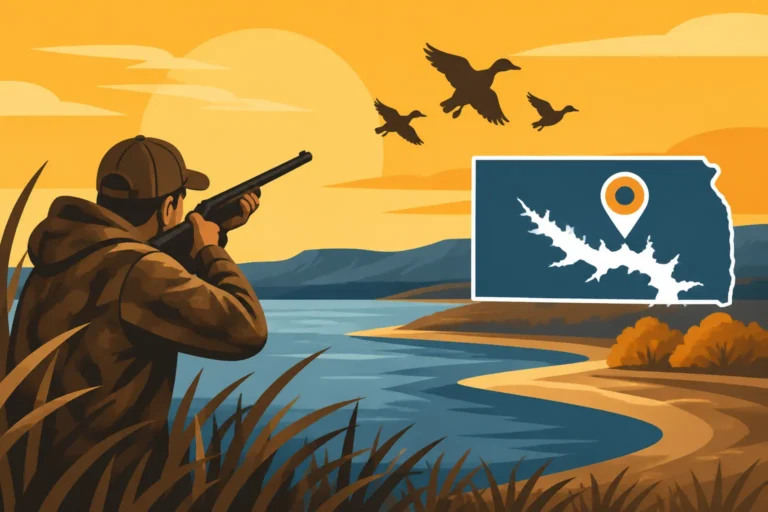
For those interested in wingshooting, Elk City also provides opportunities. Upland birds like quail and pheasant might be found in the managed grassland and brushy field edges, though populations can fluctuate. Upland Bird Hunting Kansas Grass and Milo Edges can be a great way to explore different parts of the WMA. And, of course, with the large reservoir, waterfowl hunting can be productive, particularly during migration. Ducks and geese will utilize the main lake, as well as the numerous coves and the riverine portions of the WMA, offering chances for those willing to brave the elements.
| Game Species | Primary Habitat within Elk City WMA | Typical Season Type | Best Times to Hunt |
|---|---|---|---|
| Whitetail Deer | Hardwood timber, creek bottoms, crop edges | Archery, Muzzleloader, Firearm | October, November, December |
| Wild Turkey | Mature timber, roosting along waterways | Spring, Fall | April, May, October |
| Squirrel | Mature oak/hickory forests | Fall, Winter | September – January |
| Rabbit | Brushy edges, thickets, younger growth | Fall, Winter | September – March |
| Waterfowl | Reservoir, coves, river sections, wetlands | Fall, Winter | October – January |
| Bobwhite Quail | Grasslands, plum thickets, field edges | Fall, Winter | November – January |
Understanding General KDWP Regulations for Wildlife Areas
Hunting public land like Elk City Wildlife Area means adhering to Kansas Department of Wildlife and Parks (KDWP) regulations, which can sometimes feel like navigating a maze. While general statewide hunting laws apply, specific rules often exist for state wildlife areas. It's crucial to consult the most current KDWP hunting regulations summary before you head out, as these can change annually. Typically, rules cover aspects like legal hunting hours, hunter orange requirements during specific seasons, and restrictions on certain equipment or methods.
For state wildlife areas, you often find additional rules pertaining to vehicle access, camping, and the placement of stands or blinds. For example, some areas might restrict vehicle use to designated roads and parking areas only, meaning you'll be doing a lot of walking or using a deer cart once you leave the pavement. Camping might be allowed only in specific designated campgrounds, or it might be prohibited entirely within the WMA boundaries. Always check these details before planning an overnight stay or bringing your camper.
Another common regulation involves tree stands and ground blinds. On many public lands, screw-in steps or permanent stands are prohibited to prevent damage to trees and to ensure equal access for all hunters. Portable stands that must be removed daily or within a short period after the hunt are usually the norm. Pay close attention to rules regarding Portable Stand Rules on Kansas Public Land or Overnight Stand Storage on Public Ground. Respecting these regulations is not just about avoiding a ticket; it's about preserving the resource for everyone and being a responsible hunter. Remember, public land hunting is a privilege, and adhering to the rules ensures we all continue to have these valuable opportunities.
Gaining Entry: Navigating Access Points and Terrain
Getting to your desired hunting spot at Elk City Wildlife Area isn't always as simple as pulling off a main road. The WMA is vast and varied, meaning access can range from easy roadside parking to requiring a boat to reach more remote sections. Understanding these nuances is crucial for planning your hunt and maximizing your time afield.
Identifying Primary Road Access and Parking Solutions
Elk City WMA is generally well-served by a network of public roads, both paved and gravel, that provide numerous entry points around the reservoir and its associated lands. Many of these roads have designated parking areas, often marked with KDWP signs, which are your safest and most legal bet for leaving your vehicle. These parking lots are usually strategically placed near good access points to larger blocks of timber or field edges. When you’re using a mapping application like onX Hunt, these access points and parking areas are often clearly marked, along with the WMA boundaries. This visual information is incredibly helpful for pre-hunt planning, allowing you to identify potential entry points and scout them from home.
However, you'll also find numerous less-formal pull-offs along gravel roads that border the WMA. While tempting, always exercise caution and ensure you are not blocking gates, driveways, or private property access. It's also vital to confirm you are truly on public land before venturing off the road. One of the most common mistakes hunters make is unknowingly trespassing because they didn't properly identify the boundary. A GPS unit with a reliable mapping app, like onX Hunt, is invaluable for this, as it overlays property lines directly onto the satellite imagery, helping you navigate with confidence. Don't be afraid to park a little further away and walk in if it means avoiding a potential conflict or legal issue. Remember, Access Routes That Do Not Bump Deer are often those that require a bit more legwork and a bit less driving right up to the spot.
Once you leave your vehicle, expect to walk. Elk City is not a place where you'll drive right to your stand, generally speaking. The best hunting spots are often a good hike in, away from road noise and easily accessible areas. Be prepared for varied walking conditions: mowed trails (if available), tall grass, uneven timbered ground, and potentially muddy creek bottoms, especially after rain. Having a good backpack, reliable boots, and a plan for carrying out any game you harvest is paramount. Consider bringing a game cart if you plan to hunt deep within the WMA, as dragging a deer out of a thick river bottom alone can be a monumental task.
Utilizing Water Access for Deeper Penetration
The Elk City Reservoir itself, along with the Verdigris River and numerous large creeks that feed into it, offers fantastic water-based access to parts of the wildlife area that are difficult or impossible to reach by foot or vehicle. This is particularly appealing for waterfowl hunters, who can launch boats directly onto the lake or into the river arms to set up spreads in secluded coves or flooded timber. Waterfowl Hunting Kansas Reservoirs and Playas can be a productive venture here, especially when the migration is on.
But water access isn't just for duck and goose hunters. For deer and turkey hunters, a small boat, canoe, or kayak can be a game-changer. Imagine being able to paddle across a section of the reservoir or up a quiet creek arm, slipping into a remote timber block that sees very little foot traffic. This strategy can put you into areas where mature animals feel safer and are less pressured. Always adhere to boating safety regulations, including wearing life jackets and having proper lighting if operating in low light conditions. The reservoir can get choppy on windy days, so choose your days and craft wisely.
When considering water access, scouting is still crucial. Even if you're accessing by water, you need to know where the public land boundaries lie and what the terrain looks like once you land. Using your mapping app to identify public shorelines and understand the topography is vital. Finding those hidden River Oxbows and Deer Movement or remote Creek Crossings Worth Hanging a Stand On becomes much easier when you can approach them from the water, bypassing typical hunter entry points. This method often allows for quieter, more stealthy access, giving you an edge over other hunters who stick to roads and trails.
Tackling the Challenging Landscape of Elk City
Elk City Wildlife Area, while beautiful, is not without its physical challenges. The landscape can be quite demanding, and being prepared for it will significantly improve your comfort and success. One of the primary obstacles is the dense cover. You'll encounter areas of thick brush, tall grass, and tangles of briars that can be slow-going and noisy to move through. This cover is fantastic for holding deer and turkeys, but it demands patience and robust clothing. Wear durable pants and long-sleeved shirts to protect against thorns and ticks, especially during Tick and Chigger Season in September.
Navigating the numerous creek crossings and drainage ditches can also be tricky. After heavy rains, these can become swollen and muddy, potentially blocking your path or forcing long detours. Always assess the safety of a crossing; swift water, even shallow, can be dangerous. Good waterproof boots are a non-negotiable for hunting Elk City, especially if you plan on exploring any of the low-lying areas or creek bottoms. It's also worth thinking about how you would Getting a Deer Out of a River Bottom Alone if you connect with one in a tough-to-reach spot.
Elevation changes, while not extreme, are present. You'll find yourself climbing and descending modest hills and navigating steep banks. These undulations create important thermal currents and funnels for deer movement, so understanding Wind and Thermals on a River Bank is critical for stand placement. Moreover, the varying terrain means your physical conditioning will be tested. Long walks through uneven, brushy ground are common, so ensure you're physically ready for the demands of a day in the field. Carrying enough water, snacks, and a small first-aid kit is always a good idea, as you might find yourself a fair distance from your vehicle or other people.
Strategic Hunting: Making the Most of Your Time at Elk City
Hunting Elk City Wildlife Area, like any public land, benefits immensely from a well-thought-out strategy. It’s not just about showing up; it’s about understanding the animals, the landscape, and the pressure that other hunters might exert. A strategic approach will greatly increase your odds of success.
E-Scouting and On-the-Ground Reconnaissance for Success
Before you ever set foot in Elk City WMA, a significant part of your scouting can (and should) be done from home using digital tools. E-scouting, as it's often called, allows you to pour over satellite imagery and topographic maps to identify potential hotspots. Tools like onX Hunt are invaluable here. You can pinpoint likely bedding areas in dense cedar thickets or thick timber, mark historical travel corridors along creek bottoms, and identify potential food sources in agricultural fields or mast-producing hardwood stands. Look for Cedar Thickets as Bedding Cover or River Oxbows and Deer Movement patterns that suggest consistent use.
Once you have a few promising spots identified on your map, the next step is on-the-ground reconnaissance. This involves physically walking the areas you've marked, preferably well before hunting season, to confirm your e-scouting observations. Look for fresh deer sign like rubs, scrapes, tracks, and droppings. Identify pinch points, funnels, and natural barriers that might concentrate deer movement. This is also your chance to confirm access routes, find suitable tree stand locations, and assess the cover. Even during hunting season, a quick mid-day walk, being careful not to bump deer out of their beds, can reveal new information about current patterns.
When you're doing your scouting, pay attention to subtle details. Which way are the prevailing winds? Where does the sun rise and set in relation to your chosen stand locations? Are there obvious signs of other hunter activity? The more you observe and integrate into your hunting plan, the better your chances. This blend of virtual and physical scouting will give you a comprehensive understanding of your chosen area within Elk City, preparing you for effective Hunting Kansas Walk-In Land Without Burning It Out.
Dealing with Pressure: Finding Your Secluded Spot
Public land, by its very nature, means you're sharing the resource with other hunters. Elk City Wildlife Area, being a popular destination, can experience significant hunting pressure, especially during peak seasons like the firearm rut or opening weekends. This pressure can alter deer behavior, pushing animals into thicker cover or making them primarily nocturnal. Your strategy needs to account for this. Don't be surprised to encounter other vehicles in parking areas or even see other hunters afield.
One of the most effective ways to mitigate hunting pressure is to go where others won't. This often means walking further, penetrating deeper into the WMA than the average hunter is willing to go. Look for areas that are difficult to access, perhaps requiring a hike over a challenging ridge, through a dense swamp, or by utilizing water access as previously discussed. These hard-to-reach pockets often hold less pressured animals. Using a mapping application like onX Hunt to identify areas with minimal road or trail access can be a great starting point for finding these "honey holes." Some hunters also use tools like GoHunt to gather general intelligence on hunting pressure patterns across broader regions, which can inform their choices even on a local WMA.
Consider hunting during weekdays instead of weekends, or during less popular times of day. Mid-day hunts, while often overlooked, can be surprisingly productive, especially if deer are being bumped by morning hunters. Adjusting your tactics, such as still-hunting slowly through thick cover rather than sitting in a stand over an open field, can also pay dividends. Understanding Hunting Pressure Patterns on Kansas Public Land is an ongoing process, but by putting in the extra effort and thinking outside the box, you can still find quality hunting experiences at Elk City.
Essential Gear and Pre-Hunt Preparations
Success at Elk City Wildlife Area often boils down to preparation and having the right gear. Given the diverse terrain and variable weather conditions, being well-equipped is non-negotiable. Start with your footwear: quality, waterproof, comfortable hiking boots are essential. You'll be doing a lot of walking through potentially wet, muddy, or uneven terrain. Pair them with moisture-wicking socks to prevent blisters.
Layered clothing is another key component. Kansas weather can change rapidly, from crisp mornings to warm afternoons, especially during early archery season or the swing months. Having layers allows you to adapt to temperature fluctuations and manage your core body temperature effectively. Don't forget durable outerwear that can withstand briars and thorns, especially if you plan on still-hunting or tracking through thickets. A good quality hunting backpack is crucial for carrying your essentials: water, snacks, first-aid kit, game processing tools, and your preferred navigation device.
For navigation, a reliable GPS unit or a smartphone with a robust mapping app like onX Hunt is indispensable. It will help you stay oriented, mark key locations, and, most importantly, confirm public land boundaries. Don't rely solely on your phone; a portable power bank is a smart addition, or even a traditional compass and paper map as a backup. Finally, make sure all your hunting equipment is in top working order. Your bow or rifle should be sighted in, and your broadheads or bullets chosen. If you're a bowhunter, practicing Shot Placement on a Whitetail at Twenty Yards from various angles will boost your confidence. A well-prepared hunter is a more confident and effective hunter, regardless of the challenges Elk City throws their way.
Permits, Licenses, and Area-Specific Rules
Navigating the legal requirements for hunting any public land in Kansas can feel overwhelming, but it's an absolutely critical step. Knowing which permits and licenses you need, and understanding any rules unique to Elk City Wildlife Area, will ensure your hunt is not only successful but also legal.
Essential Kansas Hunting Licenses and Permits
Before you even think about setting foot on Elk City Wildlife Area with a weapon, you must possess the appropriate Kansas hunting licenses and permits. At a minimum, every hunter in Kansas needs a valid hunting license. The type of license (resident or nonresident, adult or youth) will depend on your personal circumstances. These are typically purchased annually and are a baseline requirement for almost all hunting activities in the state. You can usually purchase these online through the KDWP website or at authorized vendors.
Beyond the general hunting license, you'll need specific permits or tags for the species you intend to hunt. For whitetail deer, this means a deer permit, which often specifies the deer unit, weapon choice (archery, muzzleloader, or firearm), and sometimes even the sex of the animal (antlered or antlerless). Nonresident deer permits are typically allocated through a draw system, so understanding Kansas Deer Permits and the Nonresident Draw is vital if you're coming from out of state. For turkeys, you'll need a spring turkey permit for the spring season, and these might also be unit-specific or have certain restrictions. Kansas Spring Turkey Permits and Units details this.
For upland birds or waterfowl, in addition to your general hunting license, you might also need a Kansas Harvest Information Program (HIP) stamp and a Kansas State Waterfowl Stamp, depending on what you're targeting. Federal duck stamps are also required for waterfowl hunting nationwide. While the costs of these permits can add up, remember they are essential contributions to wildlife conservation and management, directly benefiting the habitats and populations at places like Elk City Wildlife Area. Always carry your physical licenses and permits, or their digital equivalents if allowed, while hunting to avoid any issues with game wardens.
Special Rules and Considerations for Elk City WMA
While statewide regulations form the foundation, specific state wildlife areas often have additional rules tailored to their unique management goals and characteristics. It is imperative to check the most current Elk City Wildlife Area-specific regulations, typically found in the KDWP Hunting and Trapping Regulations Summary or on the KDWP website's individual WMA pages. These rules can change from year to year, so don't rely on last season's knowledge.
Common special regulations you might encounter at Elk City or similar WMAs include limitations on vehicle access. Often, motorized vehicles are restricted to designated parking areas and established roads only. Off-road vehicle use, including ATVs or UTVs, might be strictly prohibited in sensitive areas, or allowed only for game retrieval on specific trails. Pay attention to signage. Similarly, rules regarding the placement and removal of tree stands or ground blinds are often more stringent on public land to ensure fairness and prevent habitat damage. Some areas may require stands to be removed daily, while others allow them to remain for a specified period, but always with clear identification of the owner. You need to know if Are Screw-In Steps Legal in Kansas? on this particular WMA.
Other considerations might include baiting prohibitions, restrictions on target practice, or specific rules for dog training. Waterfowl hunters might find restrictions on blind construction or specific zones designated as refuges where hunting is not allowed. Camping rules are also important; some WMAs have designated primitive camping sites, while others forbid overnight stays outside of developed campgrounds. Always respect closed areas, clearly marked boundaries, and private property that borders the WMA. Being a responsible and informed hunter not only keeps you legal but also contributes to a positive public image for all hunters, ensuring the continued availability of these precious public hunting grounds.
Disclaimer
This article is for general informational purposes only and does not constitute professional advice. Laws, prices and regulations vary by location and change over time. Consult a qualified professional for guidance on your specific situation.