Which Kansas Counties Have iWIHA
Navigating the ever-changing landscape of public hunting opportunities in Kansas can feel like trying to hit a moving target, especially when it comes to the highly sought-after iWIHA tracts. Many hunters express frustration at the uncertainty, wondering where these unique, capacity-controlled areas are actually located and if their favorite counties even participate. This guide is designed to cut through that confusion, helping you understand which Kansas counties tend to feature iWIHA, how to find these prime spots, and what to expect when you hunt them.
Understanding the Innovation of iWIHA
For years, Kansas hunters have relied on the Walk-In Hunting Access (WIHA) program, a groundbreaking initiative that opens up private land to public hunting. But as hunter numbers grew and certain popular tracts saw immense pressure, the Kansas Department of Wildlife and Parks (KDWP) introduced an evolution: iWIHA. This isn't just another flavor of WIHA; it's a completely different approach designed to manage hunter density and provide a more equitable experience. Many hunters, especially those traveling from out of state, find themselves scratching their heads, wondering how this new system works and, critically, where it exists.
The Evolution of Walk-In Hunting Access
The original WIHA program was a game-changer for public land access in Kansas. Landowners enrolled their private ground, often agricultural fields or timber blocks, and hunters could walk in with a printed atlas or a digital map and hunt during designated seasons. It opened up literally hundreds of thousands of acres that would otherwise be inaccessible. This freedom was a blessing, but also presented challenges. Some tracts, especially those easily accessible or known for good hunting, could become quickly saturated with hunters, leading to overcrowding and a less-than-ideal experience for everyone involved. This led to a need for a more dynamic system.
iWIHA Versus Traditional WIHA: Key Differences
The core difference between traditional WIHA and iWIHA lies in hunter management. With traditional WIHA, it's a "first-come, first-served" free-for-all; if you find an open tract, you can hunt it. With iWIHA, which stands for "interactive Walk-In Hunting Access," hunters must check in and out digitally through the KDWP system, and each tract has a specific, limited hunter capacity. Once that capacity is reached, no more hunters can check in until someone checks out. This system aims to spread out hunter pressure and maintain a quality experience. You can't just show up and hunt; you need to secure your spot. This check-in process is a critical layer that impacts not just how you hunt, but where iWIHA is most effectively implemented. Kansas iWIHA Check-In Rules are a must-read for anyone considering these areas.
| Feature | Traditional WIHA (Regular Walk-In) | iWIHA (Interactive Walk-In) |
|---|---|---|
| Access Method | "First-come, first-served" via maps/atlas | Digital check-in/check-out required (online/app) |
| Hunter Capacity | Unlimited (can lead to overcrowding) | Limited, specific capacity per tract |
| Real-time Info | Static map information, no live updates on hunter numbers | Real-time display of tract availability and current hunters |
| Purpose | Maximize access to private land | Manage hunter density, improve hunter experience |
| Pressure Control | None | Direct control through capacity limits |
| Finding Tracts | Reading the Kansas WIHA Atlas, online hunting atlas | KDWP Go Outdoors Kansas portal/app, digital mapping apps |
How Kansas Counties Qualify for iWIHA
It's not arbitrary which counties get iWIHA. The KDWP carefully considers several factors when deciding where to implement this system. It's a logistical puzzle, balancing landowner participation, habitat quality, potential for high hunter pressure, and the practicalities of managing an interactive system across diverse landscapes. Understanding these criteria helps shed light on why some counties are iWIHA heavy, while others stick to traditional WIHA or have very little public access at all.
Criteria for iWIHA Enrollment
When the KDWP looks to enroll private land into the iWIHA program, they're not just looking for any open field. Key criteria often include:
- High Hunter Demand: Tracts that historically experience heavy use or are located in areas with a significant number of hunters are prime candidates. The interactive system helps mitigate overcrowding in these popular spots.
- Quality Habitat: Land with diverse habitat that supports various game species (deer, turkey, pheasants, quail) makes it more attractive for KDWP to invest in iWIHA management. These areas offer a better quality hunt, justifying the capacity limits.
- Landowner Willingness: This is fundamental for any WIHA program. Landowners must be willing to participate and allow access. With iWIHA, there's an added layer of understanding the digital check-in system, though the KDWP handles the technical side.
- Geographic Distribution: KDWP tries to distribute iWIHA opportunities across the state where feasible, but some regions naturally lend themselves to it more than others due to land use patterns and population centers.
- Management Goals: The state has specific wildlife management goals, and placing iWIHA in certain areas can help achieve these, such as managing antlerless deer harvest in particular units or distributing bird hunters.
KDWP's Allocation Strategy
The KDWP doesn't just randomly assign iWIHA tracts. Their strategy often targets specific areas. For instance, counties with a high proportion of prime deer habitat but limited existing public land might see iWIHA introduced to open up new opportunities. Similarly, counties known for exceptional upland bird hunting, where hunter numbers can explode during opening weekend, are excellent candidates for capacity control. The goal is to provide controlled access, which often means focusing on locations that would otherwise be overwhelmed. This proactive approach helps the KDWP manage both the wildlife resource and the hunter experience. Why Kansas Limits iWIHA Hunter Numbers delves deeper into the reasoning behind these decisions.
Key Kansas Counties for iWIHA
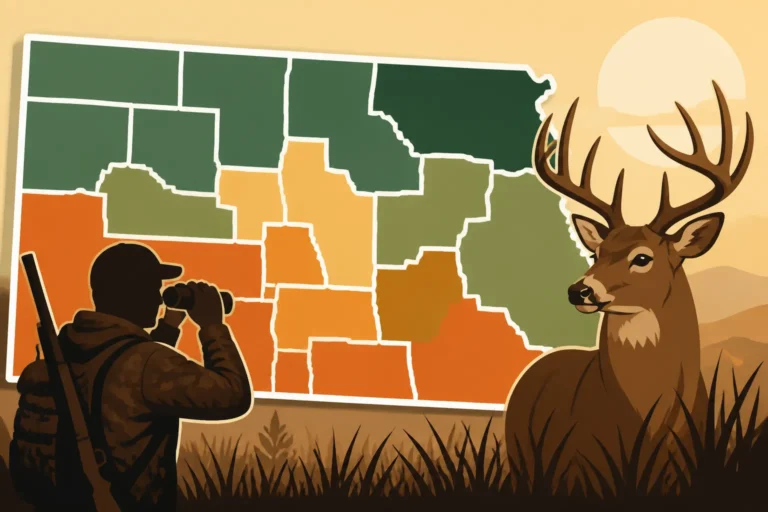
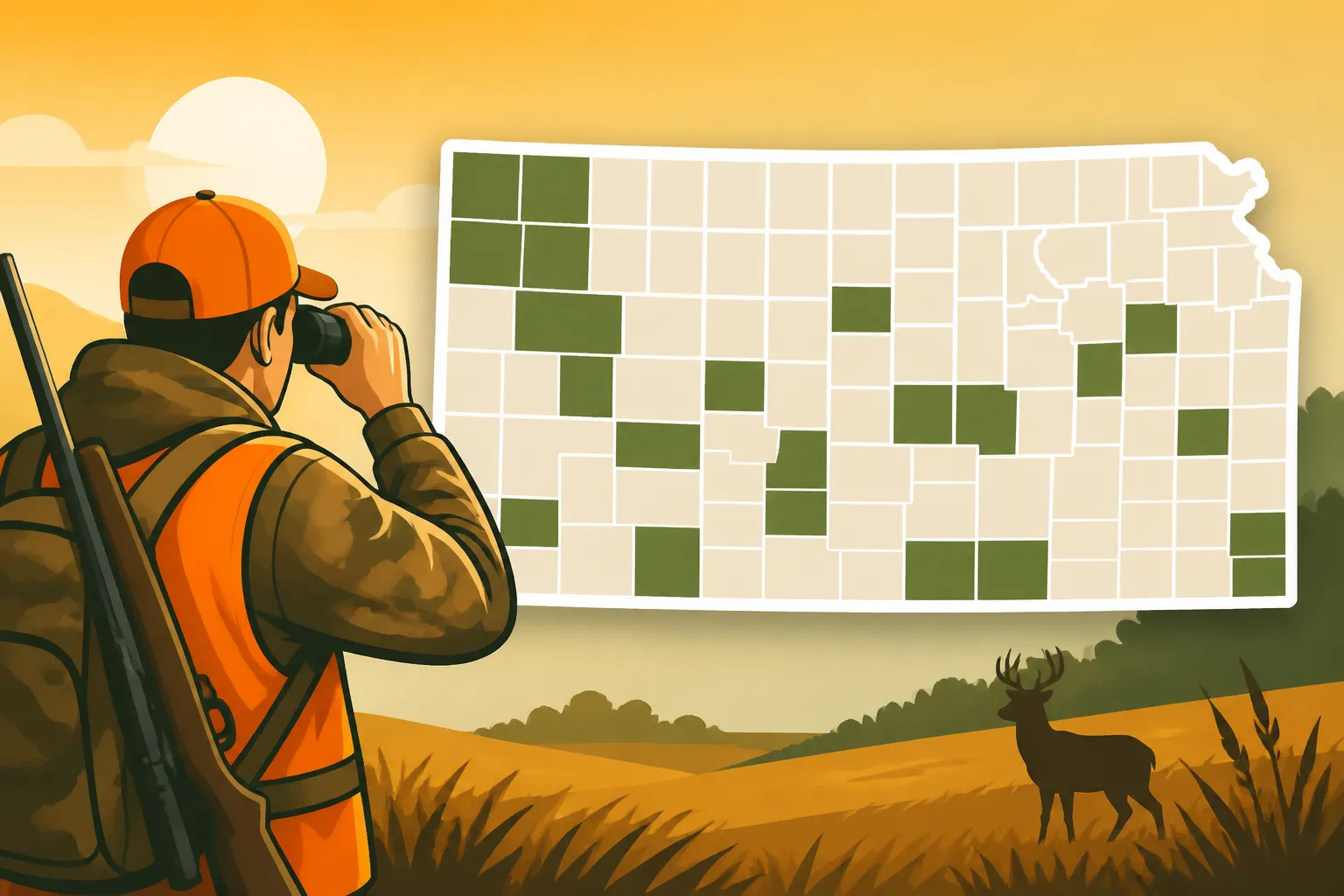
So, which counties should you be looking at? While the exact tracts change yearly as landowner contracts expire and new ones begin, certain regions and counties consistently offer more iWIHA opportunities than others. This isn't just about raw acreage but also about the types of hunting experiences available within those capacities. Understanding these general patterns can help you narrow down your search and focus your e-scouting efforts. For detailed, up-to-the-minute information, you'll always need to consult the KDWP's official resources or a reliable mapping application.
Western Kansas iWIHA Hotspots
Western Kansas, known for its vast agricultural landscapes and rolling prairie, is often a prime region for iWIHA, particularly for upland birds and mule deer. Counties in the southwest and northwest parts of the state frequently participate. Think about counties like those in the High Plains, where large tracts of wheat stubble, milo, and CRP grass dominate the landscape. These areas are magnets for pheasants and quail, and without iWIHA, they could easily be overrun. The capacity limits help ensure that hunters have a reasonable chance at finding unpressured birds or an undisturbed mule deer buck. While mule deer are fewer in number compared to whitetails, Mule Deer in Western Kansas are a highly prized trophy, and iWIHA can provide regulated access to their habitat.
Example Counties (general tendency, not exhaustive):
- Southwest Kansas: Kearny, Finney, Gray, Haskell, Grant, Stevens, Morton, Stanton, Hamilton counties often have significant iWIHA acreage, particularly for birds and some whitetail/mule deer.
- Northwest Kansas: Thomas, Rawlins, Cheyenne, Sherman, Wallace, Greeley, Logan, Wichita counties can also be strong contenders, offering similar opportunities.
These counties typically feature a mix of CRP, wheat, corn, and milo fields, interspersed with smaller timber belts along drainages, providing diverse habitat for multiple species.
Central Kansas Opportunities
Central Kansas offers a blend of agricultural land and more significant river drainages, and thus, iWIHA here can cater to a wider variety of game. This region often provides excellent whitetail deer hunting alongside strong upland bird prospects. Counties with a good mix of timber, CRP, and crop fields, especially those near larger reservoirs or major river systems, tend to have iWIHA. The KDWP uses iWIHA in these areas to manage pressure on both deer and bird populations. Hunters looking for a balanced approach, with a chance at either, will often find iWIHA opportunities in this central band of the state.
Example Counties (general tendency, not exhaustive):
- North Central: Graham, Rooks, Osborne, Ellis, Russell, Ellsworth, Lincoln, Ottawa counties, particularly areas with river breaks and large agricultural sections.
- South Central: Barton, Stafford, Reno, Kingman, Pratt, Barber counties, known for their strong pheasant and quail populations, and good deer habitat along creek bottoms.
These central counties can offer some fantastic hunting, but their accessibility also means that iWIHA is crucial for keeping hunter numbers manageable, especially during peak seasons like the firearms deer season or the opening weekends for pheasants.
Eastern Kansas Limited iWIHA
Eastern Kansas, with its denser timber, more private land, and closer proximity to larger population centers, generally sees less iWIHA acreage compared to the central and western parts of the state. This isn't to say it's nonexistent, but the nature of the landownership and habitat often lends itself more to traditional WIHA or private lease arrangements. When iWIHA is present in Eastern Kansas, it's often on smaller, more isolated tracts, perhaps for a specific purpose like antlerless deer harvest or a smaller block of timber that holds turkeys. Hunters looking for iWIHA here might need to search more diligently and recognize that available spots may be fewer and fill up quickly. However, these limited tracts can offer a unique experience in areas where public access is otherwise scarce. Public Land Deer Hunting in Kansas discusses other strategies for eastern Kansas.
Example Counties (general tendency, not exhaustive):
- Eastern Fringe: Counties like Linn, Miami, Franklin, Anderson, Woodson, Allen, Neosho, Labette, Cherokee might occasionally feature iWIHA, but it's typically less widespread than further west. These often focus on timbered areas for deer and turkey.
The pattern you'll generally observe is that the further east you go in Kansas, the smaller and more sporadic iWIHA tracts become, due to the different land use, more fragmented habitat, and often higher population density.
Finding Current iWIHA Tracts
Knowing which counties might have iWIHA is one thing, but actually finding the currently available tracts and understanding their real-time status is another. This requires utilizing specific tools and understanding how to interpret the information they provide. Gone are the days of just driving around looking for signs; with iWIHA, digital resources are your absolute best friend.
Utilizing the Official iWIHA System
The primary and most accurate source for finding iWIHA tracts is the KDWP's official "Go Outdoors Kansas" platform. This is where you'll find the interactive map, check-in/check-out system, and real-time capacity information. Before you even leave your driveway, you should be checking this system. It will show you available tracts, indicate how many hunters are currently checked in, and tell you if a tract is at its full capacity. This system is crucial because it ensures you're playing by the rules and not wasting a trip to a full tract. You can access it via their website or a dedicated mobile application, which is invaluable when you're in the field and need to check in or out on the fly. Don't forget, Checking In and Out on iWIHA Ground is a non-negotiable step.
Leveraging Digital Mapping Tools
Beyond the KDWP's direct portal, powerful digital mapping applications have become indispensable for hunters navigating iWIHA and other public lands. Tools like onX Hunt and GoHunt integrate KDWP data, often making it easier to visualize property lines, locate access points, and see the surrounding habitat. While these apps can show you the location of WIHA and iWIHA tracts, remember that for iWIHA, you'll still need to use the official KDWP platform to actually check in and verify real-time capacity.
- onX Hunt: Many hunters swear by onX Hunt for its detailed satellite imagery, private and public land boundaries, and landowner information. You can overlay KDWP's WIHA/iWIHA layers directly onto the map, giving you a clear picture of available ground. It's fantastic for identifying access roads, timber pockets, and terrain features that might concentrate game. Using onX Layers for Kansas Land Status helps clarify ownership and access.
- GoHunt: Similarly, GoHunt provides robust mapping features and often incorporates public land data. While its primary focus might lean towards western big game, its mapping capabilities are highly useful for Kansas hunters looking at iWIHA, especially for scouting potential entry and exit routes or identifying bedding areas.
These mapping tools excel at helping you scout effectively from home E-Scouting Kansas Farm Country From Home, understand the surrounding landscape, and plan your hunt before you arrive. Just remember, for the live status of iWIHA, the KDWP Go Outdoors Kansas system is paramount.
Interpreting Real-Time Capacity
The real-time capacity displayed on the iWIHA system is dynamic. A tract might be open one minute and full the next. This means flexibility is key. If your primary iWIHA spot is full, you need a backup plan. Having a list of several potential tracts in the area, and knowing how to quickly check their status, will save you a lot of frustration. Sometimes, waiting a short while for someone to check out can open up a spot. Other times, it means driving to your next option. This real-time information is both a blessing and a curse: it ensures a less crowded hunt, but it also demands constant vigilance and adaptability from the hunter.
Benefits and Challenges of iWIHA Hunting
The iWIHA system, while designed to improve the hunting experience, comes with its own set of advantages and hurdles. Hunters who understand and adapt to these unique characteristics are the ones who will find the most success and enjoyment on these valuable tracts. It's a different way of thinking about public land access, and it requires a different kind of preparation.
Advantages for Public Land Hunters
The most significant benefit of iWIHA is the controlled hunter density. No one likes showing up to a prime hunting spot only to find three other trucks already parked, or worse, other hunters already walking in from different directions. The capacity limits on iWIHA tracts help mitigate this, creating a more peaceful and potentially more productive hunt.
- Reduced Pressure: Fewer hunters on a given tract means less disturbance for wildlife and a more natural hunting environment. This can be especially critical during the peak of the rut for deer or during the early morning hours for turkeys. Hunting Pressure Patterns on Kansas Public Land are notoriously high on unmanaged areas.
- Higher Quality Experience: With fewer people, you have more room to maneuver, more opportunity to set up unhurried, and a greater sense of solitude. This can make the entire hunting experience more enjoyable, whether you fill your tag or not.
- Managed Harvest: By controlling hunter numbers, KDWP can better manage the harvest on specific tracts, helping to sustain healthy game populations over the long term. This benefits everyone.
- Fairer Access: While it requires planning, the check-in system can prevent the same few individuals from monopolizing a prime spot, spreading opportunities more broadly among hunters.
Navigating the Unique Challenges
Despite its benefits, iWIHA presents some distinct challenges that hunters need to be aware of and prepared for.
- Planning and Flexibility: The biggest hurdle is the need for proactive planning and extreme flexibility. You can't just wake up and go. You need to check the system, have backup locations, and be prepared to audible if your chosen tract is full. This can be frustrating, especially for those traveling a long distance.
- Competition for Spots: While overall density is lower, popular iWIHA tracts can still fill up very quickly, especially on weekends or during prime seasons. This means waking up early to check in or being ready to travel to less popular options.
- Connectivity Issues: Since the system is digital, you need reliable cell service to check in and out. In some remote parts of Kansas, this can be an issue. Always have a plan for what you'll do if you lose service (e.g., check in before you leave service, know a spot with signal).
- "Digital Fences": While traditional WIHA might have a physical sign, iWIHA is managed through a digital fence. It relies on hunters understanding and respecting the online check-in/check-out protocol. Failure to do so impacts others.
Ultimately, iWIHA is a tool, and like any tool, it's most effective when used correctly and with a full understanding of its nuances.
Strategizing Your Hunt in iWIHA Counties
Successfully hunting iWIHA tracts means more than just knowing where they are. It requires a thoughtful strategy that accounts for the dynamic nature of these areas, from scouting to adapting your approach based on real-time information. You'll need to blend traditional hunting wisdom with modern digital savvy.
Scouting Smart in iWIHA Areas
Scouting is always crucial, but for iWIHA, it needs to be extra smart. Since you might not be able to physically scout every potential tract, especially if you're an out-of-state hunter, e-scouting becomes paramount. Use onX Hunt, GoHunt, and the KDWP's online hunting atlas to identify promising habitat, travel corridors, and potential bedding areas. Look for features like Terrain Funnels That Work Without Hills, Creek Crossings Worth Hanging a Stand On, or Shelterbelt Ends and Buck Travel.
- Identify Multiple Options: Never rely on just one iWIHA tract. Have a "top three" or "top five" in mind for any given hunting day, all within a reasonable driving distance.
- Consider Diverse Habitat: Look for tracts that offer varied habitat types – a mix of timber, thickets, and crop fields – as these tend to hold a wider variety of game and provide more options if one area isn't producing.
- Look at Access Points: Pay close attention to how hunters might access the area. Can you find an entry point that allows you to sneak in undetected, or approach from a direction that avoids blowing out bedding areas? Access Routes That Do Not Bump Deer are vital.
- Pre-Season Check-Ins: Even if you can't physically scout, use the KDWP system during the pre-season (if available) to see which tracts are enrolled and get a feel for their general layout and size.
Adapting to Dynamic Hunter Pressure
The beauty and challenge of iWIHA is its dynamic nature. You'll need to be adaptable and make decisions on the fly.
- Early Bird Gets the Worm: For popular tracts, checking in right at legal hunting hours is often your best bet to secure a spot, especially on weekends.
- Mid-Day Opportunities: Don't discount mid-day. Sometimes hunters check out after the morning sit, opening up spots for an afternoon hunt. Keeping an eye on the system while you're taking a break can pay off.
- Weekday Advantage: If your schedule allows, hunting iWIHA during weekdays will almost always offer less competition than weekends.
- Have a Plan B (and C): If your primary tract is full, have your alternative options mapped out and ready to go. Know the driving time between them.
- Respect the System: Always check in and out promptly. Not only is it the law, but it's also common courtesy to your fellow hunters, ensuring accurate capacity numbers.
Hunting iWIHA tracts is a modern hunting challenge that rewards preparation, digital proficiency, and a flexible mindset. By understanding which counties typically feature these tracts and how to use the available tools, you'll be well on your way to a successful Kansas hunting adventure.
Disclaimer
This article is for general informational purposes only and does not constitute professional advice. Laws, prices and regulations vary by location and change over time. Consult a qualified professional for guidance on your specific situation.