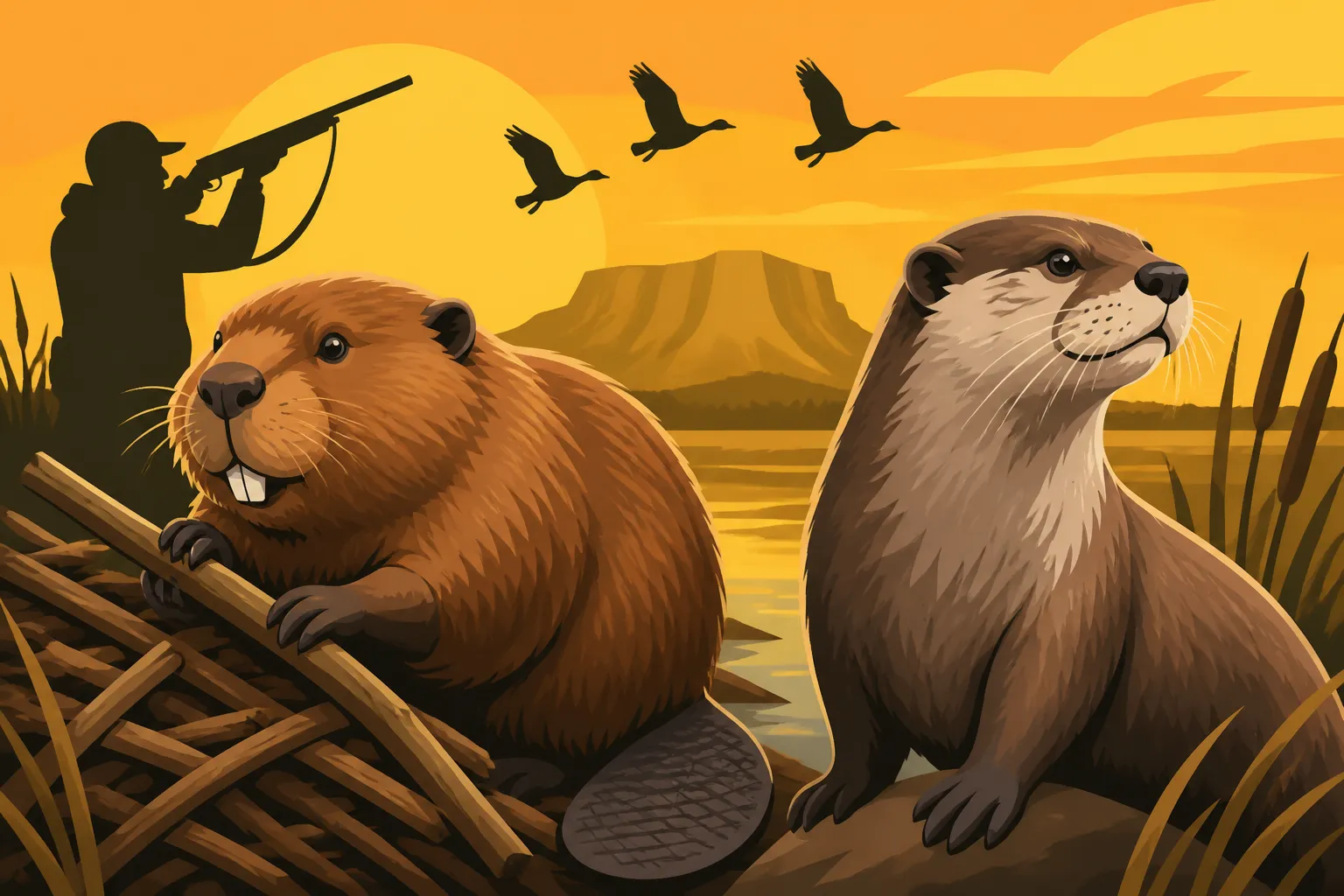
Beaver and Otter in Kansas
Many folks in Kansas might not realize just how much wildlife thrives beneath the surface of our rivers and streams, or along their muddy banks. While deer and pheasants often steal the spotlight, there are two fascinating aquatic mammals that play significant roles in our state's ecosystems: the beaver and the river otter. Often unseen, these creatures shape waterways and contribute to the rich biodiversity of the Sunflower State, and understanding them is key for anyone who spends time near Kansas water.
Beavers: Kansas's Natural Engineers
Beavers are arguably the most impactful mammals on any given Kansas waterway, second only to humans. They’re true landscape architects, constantly reshaping their environment with their impressive dam-building and tree-felling abilities. If you've spent any time along a creek or river in Kansas, you've undoubtedly seen their work, even if you haven't seen the animal itself.
Understanding Beaver Ecology and Habitat
Beavers are semi-aquatic rodents, well-adapted to life in and around water. They thrive in slow-moving streams, rivers, ponds, and even drainage ditches throughout much of Kansas. Their diet consists primarily of tree bark, cambium (the soft layer under the bark), leaves, and aquatic vegetation. Cottonwoods, willows, and elms are particular favorites, and you'll often see distinct conical stumps near their territories where they’ve been at work.
The dams they build are engineering marvels, constructed from sticks, mud, rocks, and whatever else they can get their paws on. These dams create deeper, more stable pools of water, which are essential for their survival. These deeper pools provide protection from predators, allow them to safely access food sources even in winter, and create the perfect environment for their lodges. A beaver lodge is a sturdy, dome-shaped structure, often built in the middle of their created pond, with an underwater entrance for security. If they can't build a dam, they'll often burrow into riverbanks, creating bank dens that serve the same purpose as a lodge.
Beavers can be found across the entire state of Kansas, from the timbered river bottoms in the east to the more arid western regions where smaller creeks and irrigation ditches offer suitable habitat. Their presence is usually signaled by freshly gnawed trees, mudslides on banks where they enter and exit the water, and, of course, their signature dams.
The Impact of Beavers on Kansas Waterways
The engineering work of beavers has both positive and negative consequences, depending on your perspective. On the positive side, beaver dams create wetlands and slow down water flow. This can lead to increased water retention, which is incredibly valuable in a state prone to drought. These newly formed wetlands provide crucial habitat for a huge variety of other species, including ducks, geese, fish, amphibians, and countless invertebrates. The standing water can also filter pollutants and recharge groundwater.
However, beavers can also pose challenges. Their dam-building activities can flood agricultural fields, block culverts, and cause significant damage to valuable timber stands. Farmers and landowners frequently grapple with beaver issues, trying to mitigate their impact without harming the animals. It's a constant balance between recognizing their ecological benefits and managing the practical problems they create.
For hunters, understanding beaver activity can be a huge asset. Beaver ponds and sloughs can be hotspots for waterfowl, providing excellent Waterfowl Hunting Kansas Reservoirs and Playas opportunities. Deer will often use the edges of beaver-created wetlands as travel corridors or for bedding, attracted by the diverse vegetation that often grows in these areas. When Scouting Kansas River Bottoms and Creek Draws, fresh beaver sign can tell you a lot about the health of the ecosystem and where other game might be concentrated.
River Otters: A Kansas Conservation Success Story
Unlike the sometimes-problematic beaver, the river otter is almost universally celebrated in Kansas. Once virtually extirpated from the state due to habitat loss and unregulated trapping, these playful, charismatic creatures have made a remarkable comeback, largely thanks to reintroduction efforts and improved habitat management.
Otter Recovery and Current Range
River otters are sleek, agile members of the weasel family, perfectly adapted for an aquatic lifestyle. They were once common throughout Kansas, but by the mid-20th century, their numbers had dwindled to critical levels. Recognizing this loss, the Kansas Department of Wildlife, Parks and Tourism (KDWP) began reintroduction programs in the late 1980s, primarily releasing otters into major river systems in eastern Kansas.
The reintroductions were a resounding success. River otters are intelligent, adaptable animals, and they quickly established breeding populations. Today, they can be found in nearly every major river basin in the eastern two-thirds of the state, and their populations continue to expand westward as suitable habitat allows. Seeing an otter sliding down a muddy bank or frolicking in a creek is a special treat, a tangible sign of healthy waterways.
Otters prefer clean, unpolluted water with plenty of fish, crayfish, and frogs to eat. They also need dense vegetation along the banks for cover and denning sites, which are often abandoned beaver lodges or muskrat burrows. They are incredibly playful animals, often seen sliding, wrestling, and swimming in groups. Their presence is a strong indicator of a healthy aquatic ecosystem.
Distinguishing Beavers and Otters in the Field
While both are aquatic mammals, beavers and otters are quite different in appearance and behavior. Knowing these differences is important, especially for those involved in Kansas Trapping Season Dates or simply observing wildlife.
Here's a quick comparison:
| Feature | Beaver | River Otter |
|---|---|---|
| Size | Large (up to 60 lbs), stocky, rounded body | Medium (10-30 lbs), long, slender, muscular |
| Tail | Flat, broad, paddle-like, scaly | Long, tapered, muscular, furry |
| Head | Large, rounded, prominent front teeth | Small, flattened, pointed snout |
| Fur Color | Dark brown to reddish-brown | Dark brown dorsally, lighter belly |
| Movement | Slow and deliberate, waddles on land | Agile, fluid, graceful in water, bounds on land |
| Diet | Herbivorous (bark, cambium, plants) | Carnivorous (fish, crayfish, amphibians) |
| Habitat Impact | Builds dams, fells trees, creates ponds | Uses existing habitat, creates slides |
| Activity | Nocturnal or crepuscular | Mostly nocturnal/crepuscular, can be diurnal |
| Vocalization | Hisses, growls, slaps tail loudly | Chirps, whistles, growls |
When you're out in the field, look for their distinctive tracks. Beavers leave large, webbed hindfoot prints and drag their heavy tail, while otters leave smaller, five-toed tracks with claw marks and often slide marks where they've slid down banks. GoHunt maps can be incredibly useful here, allowing you to mark areas where you've seen sign or actual animals, helping you build a comprehensive picture of wildlife activity in your chosen area.
Trapping and Management of Beavers and Otters in Kansas
Both beavers and otters are classified as furbearers in Kansas, meaning they can be legally harvested during specific seasons by licensed individuals. Management strategies for these species aim to balance population health, ecological benefits, and potential conflicts with human interests.
Regulations and Licensing for Furbearers
To trap beavers or otters in Kansas, you must possess a valid Kansas Furharvester Licence. These licenses are required for anyone, resident or nonresident, who intends to trap or hunt furbearing animals. It’s absolutely critical to understand that regulations can and do change, so always check the most current Kansas Hunting and Trapping Regulations Summary from the KDWP before heading into the field. This summary will outline season dates, bag limits, legal trapping methods, and specific rules that apply to each species.
For otters, in particular, the management strategy is more conservative due to their history of extirpation and successful reintroduction. Otter harvest is often restricted to specific units or may have lower bag limits compared to beavers, reflecting their protected status and ongoing conservation efforts. You’ll find details about this in the annual regulations.
Ignoring these rules can lead to serious consequences. Kansas Wildlife Violation Penalties can be steep, including fines, loss of hunting and trapping privileges, and even jail time for severe offenses. Responsible and ethical trapping means knowing and following all regulations to the letter.
Ethical Trapping Methods and Best Practices
Trapping these aquatic furbearers involves specialized equipment and techniques. Beavers, due to their size and strength, are typically targeted with larger body-gripping traps (Conibears), snares, or footholds placed in water sets. Otter trapping often uses similar methods, though trap size might be adjusted.
Ethical trapping practices emphasize humane dispatch and minimizing non-target catches. Trappers often use "drowning sets" for both species, which involves placing traps in a way that quickly submerges the animal, leading to a swift and humane end. Checking traps frequently is another critical ethical consideration to ensure any caught animal is dispatched promptly.
When trapping near private property or in areas with high public use, it's also important to consider trap placement carefully to avoid accidentally catching pets or other non-target animals. Clear communication with landowners is vital if you're trapping on private ground. Understanding Portable Stand Rules on Kansas Public Land or other public access guidelines can also inform safe and respectful trap placement, even though it's not directly related to trapping. It's all about being a considerate user of the landscape.
Coexisting with Beavers and Otters
Whether you're a landowner, a hunter, or simply a nature enthusiast, coexisting with beavers and otters in Kansas often requires a thoughtful approach. Their presence is a testament to the health of our waterways, but sometimes their activities necessitate intervention.
Managing Beaver Conflicts
For landowners facing flooded fields, blocked culverts, or damaged trees due to beaver activity, there are several management options. Lethal removal through trapping is one common method, particularly when damage is severe and immediate action is needed. However, non-lethal deterrents are also available.
One popular method is the use of "beaver deceivers" or flow devices. These are specially designed pipes or fences that can be installed through a beaver dam or culvert to control water levels without requiring the dam's removal. By preventing the water from reaching a certain level, the beavers are less motivated to continually repair the dam in that spot, allowing water to flow while still providing some of the wetland benefits. Wrapping valuable trees with wire mesh can protect them from gnawing.
Consulting with KDWP or a professional wildlife control operator can provide tailored advice for specific situations. They can offer insights into the most effective and legal ways to mitigate beaver damage while respecting the species.
Observing Otters and Their Role in the Ecosystem
For river otters, the focus is almost entirely on appreciation and conservation. Since their reintroduction, they've become a valued part of Kansas's natural heritage. Their playful antics and sleek movements are a joy to behold for anyone lucky enough to catch a glimpse.
If you're interested in spotting otters, look for them during dawn and dusk along rivers, large creeks, and even larger ponds. Their preferred habitats often include areas with dense bank vegetation, logs, and rocky outcrops where they can den and find cover. Observing them responsibly means maintaining a respectful distance, avoiding disturbance, and simply enjoying their presence.
The continued health of otter populations in Kansas depends on maintaining clean waterways and ample habitat. Efforts to reduce pollution, protect riparian zones, and manage fish populations all contribute to a robust environment for these captivating furbearers. Tools like GoHunt can help you identify public land areas with good water sources and riparian habitat where otters are more likely to be found, enhancing your chances of a sighting. It's a true privilege to have these vibrant animals back in our Kansas landscape.
Disclaimer
This article is for general informational purposes only and does not constitute professional advice. Laws, prices and regulations vary by location and change over time. Consult a qualified professional for guidance on your specific situation.