Prairie Chicken Range Loss
It’s a tough pill to swallow for many of us who remember stories from our grandfathers, or even just a couple of decades ago, when prairie chickens seemed to dance across much more of the Kansas landscape. The truth is, these iconic grassland birds, with their incredible booming calls and elaborate courtship rituals, are facing significant challenges, most notably the continuous shrinking of their crucial habitat. This guide will delve into the complex factors contributing to prairie chicken range loss, what it means for their future and for Kansas hunters, and what efforts are being made to reverse this troubling trend.
The Disappearing Landscape: What's Driving Prairie Chicken Range Loss?
The decline of prairie chicken populations across Kansas isn't due to a single culprit, but rather a perfect storm of environmental shifts and human land use decisions that have slowly but surely chipped away at their essential habitat. These birds are inextricably linked to expansive, undisturbed grasslands, and unfortunately, those are becoming increasingly rare.
Agricultural Expansion and Intensification
For generations, agriculture has been the backbone of Kansas, and rightly so. But the push for ever-increasing yields has led to the conversion of native prairie into row crops at an alarming rate. Imagine a vast ocean of tallgrass prairie, humming with life, suddenly broken up by endless fields of corn, soybeans, or wheat. This isn't just a loss of habitat; it's habitat fragmentation. Prairie chickens, particularly the Greater Prairie Chickens found in Kansas, need large, contiguous blocks of grassland for all aspects of their life cycle: nesting, brood-rearing, and winter cover. When these blocks are broken into smaller, isolated parcels by crops, it forces birds into less-than-ideal situations. Nests become more vulnerable to predators that thrive on field edges, and chicks struggle to find the diverse insect life and cover they need. The shift from diverse mixed-grass and tallgrass prairie to monoculture crops simply doesn't support the intricate needs of these birds, leading to a direct reduction in available living space. Flint Hills Burning and Prairie Chickens touches on one aspect of grassland management, but the complete conversion is a far more severe threat.
Energy Development and Infrastructure
Kansas is also a state rich in natural resources, and the development of energy infrastructure, both traditional and renewable, adds another layer of pressure. Wind farms, while beneficial for clean energy, require large tracts of land and a dense network of access roads and power lines. These structures can disrupt prairie chicken leks—the traditional booming grounds where males gather to perform their mating dances—and create visual or auditory disturbances that deter birds from nesting or foraging in the vicinity. Similarly, the expansion of oil and gas operations, though perhaps less visually prominent than wind turbines, also introduces roads, pipelines, and well pads that fragment habitat and increase human activity in formerly secluded areas. Even something as common as new highways or utility easements, built to support growing communities, can carve through valuable habitat, further isolating populations and making it harder for birds to move safely between critical areas.
Urban Sprawl and Rural Development
While Kansas might evoke images of endless plains, our towns and cities are growing, and with that growth comes urban sprawl. As communities expand, they consume surrounding undeveloped land, often prime prairie habitat. This isn't just about houses and businesses; it includes the associated infrastructure like new roads, schools, and recreational areas. Even small-scale rural development, such as new farmsteads, outbuildings, or rural subdivisions, contributes to habitat loss and fragmentation. Each new fence line, residential area, or manicured lawn replaces what was once native grassland, pushing prairie chicken populations further into ever-smaller pockets of remaining wild country. This gradual encroachment creates a constant attrition of suitable living space, making it harder for these birds to maintain viable populations, especially in areas outside of the most protected strongholds.
A Shrinking Map: Historical vs. Current Prairie Chicken Strongholds
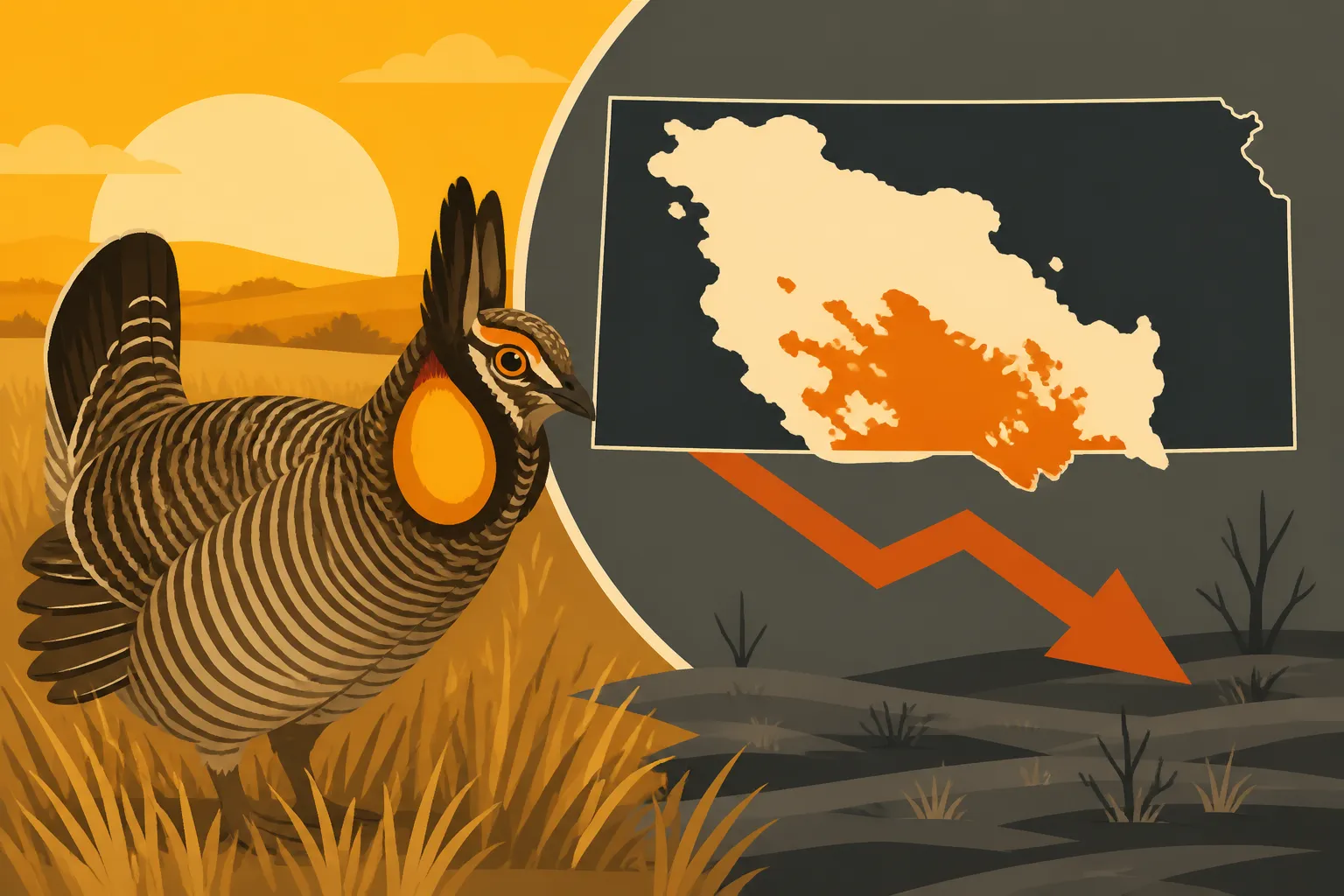
Understanding prairie chicken range loss means looking back at where they once thrived compared to where they cling on today. The difference is stark and tells a powerful story of habitat transformation.
The Original Range: A Sea of Grass
Historically, the Greater Prairie Chicken was widespread across much of central and eastern Kansas, a true embodiment of the vast North American tallgrass prairie ecosystem. Imagine driving through nearly any county east of perhaps Hays, and chances are you would have heard the distinct booming call of a prairie chicken in the spring. Their range stretched from the Missouri border well into the central and even some western parts of the state, covering millions of acres of unbroken grassland. This immense habitat provided everything they needed: dense nesting cover, diverse forbs and insects for broods, and winter protection. Prairie Chicken Range and Leks would have been common features throughout this sprawling territory, indicative of robust and healthy populations that moved freely across the landscape. The sheer scale of the historical range speaks volumes about how integrated these birds once were into the Kansas environment.
The Modern Strongholds: Islands in the Agricultural Sea
Today, the situation is dramatically different. While prairie chickens still exist in Kansas, their distribution is far more concentrated, primarily confined to the relatively unplowed expanses of the Flint Hills. This unique geographical region, unsuitable for widespread row cropping due to its rocky soils, has become the last major bastion for the Greater Prairie Chicken in the state. Outside of the Flint Hills, you might find fragmented, smaller populations in scattered pockets of suitable habitat, but these are often isolated and vulnerable. The vast majority of the state that once echoed with their booming calls is now silent. This concentration in the Flint Hills highlights the critical importance of this specific region for the species' survival, making it a focal point for conservation efforts. Prairie Chicken Hunting in the Flint Hills remains viable specifically because of these remaining strongholds.
Let's put this into perspective with a simplified comparison:
| Feature | Historical Prairie Chicken Range (Pre-1900s) | Current Prairie Chicken Strongholds (Modern Day) |
|---|---|---|
| Geographic Extent | Much of Central and Eastern Kansas | Primarily Flint Hills, scattered isolated pockets |
| Habitat Type Dominance | Vast, contiguous Tallgrass Prairie | Fragmented grasslands, mostly in the Flint Hills |
| Population Density | Widespread and robust | Concentrated, often precarious in fringe areas |
| Primary Threats | Limited (historical hunting pressure) | Habitat loss, fragmentation, degradation |
| Hunting Opportunities | Widespread, common | Limited, primarily in specific units, permit required |
This table vividly illustrates the significant contraction of their range. Kansas Prairie Chicken Permit Requirement and Kansas Greater Prairie Chicken Only Rule now exist because of these reduced populations, necessary steps to manage a delicate resource.
Ripple Effects: Impact on Kansas Hunting and Ecosystem Health
The shrinking range of the prairie chicken isn't just a sad statistic for birdwatchers; it has tangible, far-reaching consequences for Kansas hunting heritage, the state's economy, and the overall health of our grassland ecosystems. As hunters, we feel this loss acutely.
Reduced Hunting Opportunities
For many years, hunting prairie chickens was a cherished tradition for a dedicated few, offering a unique challenge and a deep connection to the prairie. With the dramatic decline in their populations and the contraction of their range, hunting opportunities have become much more restricted. Seasons are often shorter, bag limits are conservative, and access to huntable ground, especially on public land, can be limited. Hunters might find themselves traveling greater distances to find suitable areas, often competing with more hunters in those remaining strongholds. This means fewer people get to experience the thrill of a prairie chicken flush or the unique hunt that these birds provide. It's a noticeable shift, and it impacts the very culture of upland bird hunting in Kansas. Before heading out, tools like GoHunt can be useful for checking up-to-date regulations and identifying potential public access points that might hold birds.
Ecological Consequences
Prairie chickens are considered an "umbrella species" for grassland health. This means that if their populations are healthy and their habitat is intact, it's a good indicator that many other grassland species are also thriving. Conversely, when prairie chickens decline, it's a red flag for the entire ecosystem. The same habitat loss and fragmentation that hurts prairie chickens also negatively impacts other native grassland birds like Grasshopper Sparrows, Eastern Meadowlarks, and even Bobwhite Quail Across Kansas. These birds rely on similar habitat features for survival, and their populations often track with the health of the prairie chicken. Furthermore, the loss of diverse native grasslands can lead to soil degradation, reduced water retention, and a decrease in biodiversity, impacting everything from pollinator populations to the overall resilience of the land to drought and other environmental stressors. It's a stark reminder that the health of one species is often intrinsically linked to the health of an entire habitat.
Economic Impact on Rural Communities
Hunting, including upland bird hunting, brings significant economic benefits to rural Kansas communities. Hunters purchase licenses, buy gas, stay in motels, eat at local diners, and frequent sporting goods stores. When hunting opportunities for a species like the prairie chicken diminish, so too does this economic activity. Guide services and outfitters that once catered to prairie chicken hunters might see a decline in business, and small-town economies that rely on seasonal influxes of hunters feel the pinch. While prairie chicken hunting might not be as widespread as Kansas Ring-Necked Pheasants or deer hunting, every niche contributes to the broader economic fabric of our rural areas. The loss of a hunting tradition, even for a smaller contingent of hunters, represents a measurable economic ripple effect felt across the state.
Hope on the Horizon: Conservation Efforts and How Hunters Can Help
While the picture of prairie chicken range loss can seem bleak, there are dedicated individuals and organizations working tirelessly to protect and restore these magnificent birds and their habitats. Hunters, with their deep connection to the land and a vested interest in healthy wildlife populations, have a crucial role to play in these efforts.
Landowner Incentive Programs and Habitat Restoration
Much of the remaining viable prairie chicken habitat in Kansas is on private land. Recognizing this, various state and federal programs offer incentives to landowners to manage their property in ways that benefit grassland wildlife. Programs like the Conservation Reserve Program (CRP) pay landowners to convert marginal cropland back into native grasses, providing vital nesting and brood-rearing cover. Other initiatives focus on prescribed burning programs, which mimic natural fire cycles and are essential for maintaining healthy, vigorous tallgrass prairie, preventing the encroachment of woody vegetation, and promoting new growth for insects. CRP Grass and Where Bucks Bed also benefits deer, showcasing how these programs have wider positive impacts. These programs are critical for creating and maintaining the large blocks of contiguous grassland that prairie chickens need. Hunters can support these efforts by advocating for robust funding for such programs and by seeking out opportunities to partner with landowners who are committed to conservation.
Advocacy, Education, and Responsible Hunting Practices
Hunters are often the most passionate advocates for wildlife and wild places. We need to use our voices to support conservation initiatives, speak up against habitat destruction, and educate others about the importance of prairie ecosystems. Joining organizations like Pheasants Forever or Quail Forever, which have specific grassland habitat initiatives, is an excellent way to get involved. These groups often work directly on the ground, creating habitat and engaging local communities. For hunters participating in Prairie Chicken Tactics in Flint Hills Grass, practicing responsible hunting is also paramount. This includes respecting regulations, scouting carefully to avoid disturbing leks, and ensuring ethical shot placement. Before heading out, checking resources like GoHunt for updated information on local conditions or private land initiatives can be a smart move, and it's always good to be informed about where conservation efforts are specifically focused.
The Role of Technology and Citizen Science
Modern technology offers new avenues for conservation and understanding. Geographic Information Systems (GIS) and satellite imagery allow conservationists to map prairie chicken range and habitat changes with incredible precision, guiding restoration efforts to the most impactful areas. Citizen science programs, where volunteers collect data, can also contribute valuable information on population trends and habitat use. Hunters, who spend countless hours in the field, are uniquely positioned to contribute to these efforts by reporting sightings, participating in surveys, or even using apps to document habitat conditions. Many dedicated conservationists utilize platforms like GoHunt to stay informed about policy changes or to locate areas where conservation efforts are concentrated, which is just one example of how technology can help. Supporting scientific research into prairie chicken ecology is also vital for developing effective long-term conservation strategies. The more we understand, the better equipped we are to protect these incredible birds for future generations of Kansas hunters and outdoor enthusiasts.
Disclaimer
This article is for general informational purposes only and does not constitute professional advice. Laws, prices and regulations vary by location and change over time. Consult a qualified professional for guidance on your specific situation.