Why Kansas Bucks Reach Maturity
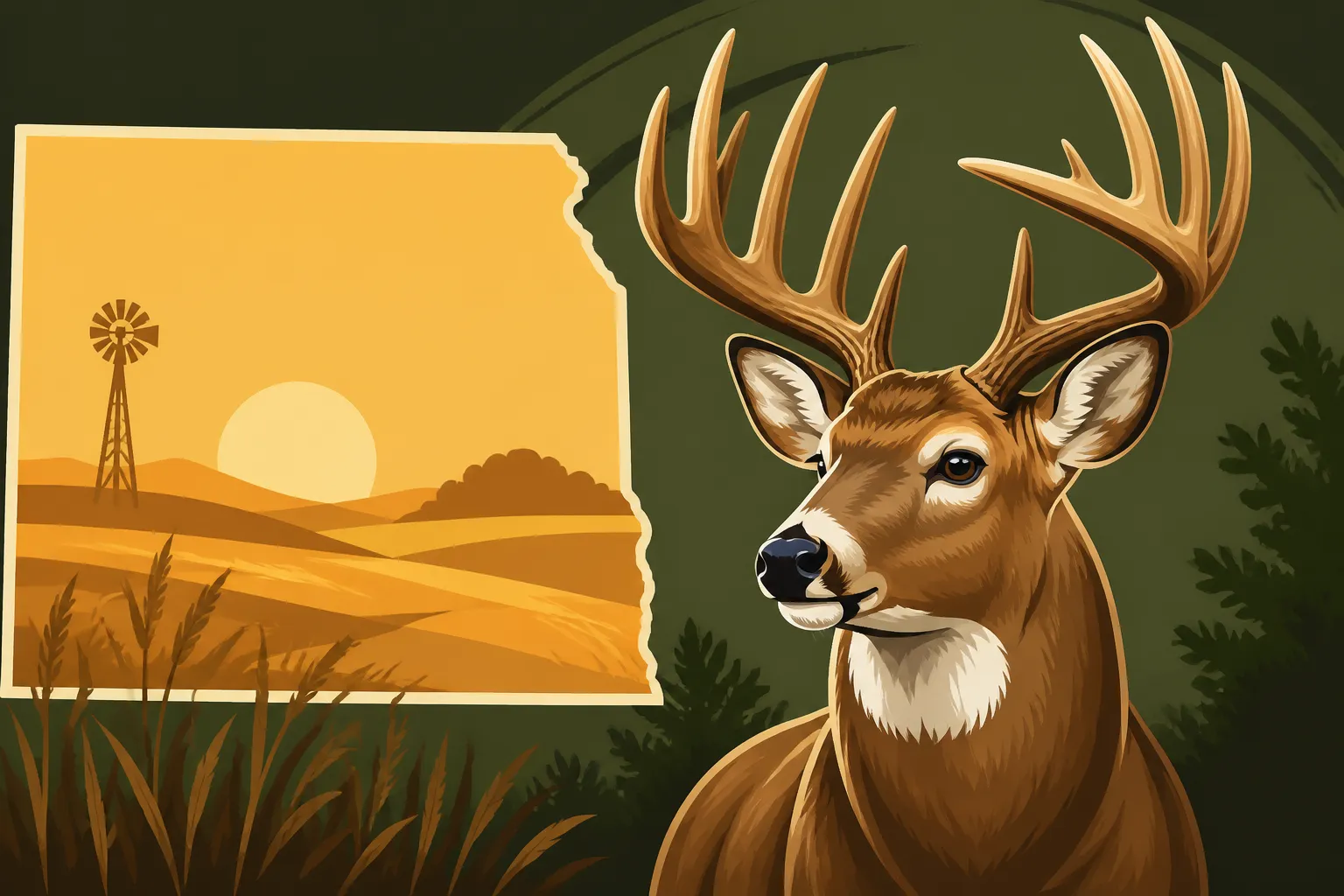
It's no secret that Kansas has a reputation for producing some truly exceptional whitetail bucks. Many hunters, especially those from out of state, look to the Sunflower State with a mix of awe and aspiration, wondering what secret sauce Kansas possesses that allows its deer to grow so big and, crucially, to reach an age where those impressive antlers can truly develop. This guide will peel back the layers to explore the key factors that contribute to Kansas bucks reaching maturity, a phenomenon that makes this state a deer hunting mecca for many.
The Foundation of Growth: Rich Habitat and Abundant Nutrition
One of the most significant, yet often overlooked, reasons Kansas bucks mature is simply the incredible environment they call home. It's a land of plenty, and that translates directly into robust deer. The state's unique blend of agricultural land, native grasslands, and riparian timber creates a mosaic of habitat that provides everything a whitetail needs to not just survive, but truly thrive.
Soil Fertility and Antler Growth
You might think soil fertility sounds like a farming topic, not a hunting one, but it’s absolutely critical for growing big deer. Kansas boasts some of the richest topsoil in the nation, particularly in its agricultural regions. This rich soil is packed with essential minerals and nutrients. When crops like corn, soybeans, and alfalfa grow in this fertile ground, they absorb these nutrients. Then, when deer consume these plants, those vital minerals, like calcium and phosphorus, are directly transferred to their bodies.
It's a simple, yet profound, chain reaction. Bucks need a consistent intake of high-quality minerals to support rapid body growth and, of course, impressive antler development. Younger bucks will allocate most of their energy and nutrients to growing their bodies, but as they age and their physical frame matures, more of those resources can be channeled into growing larger, denser antlers. Without this foundational nutrient base, provided by the incredibly fertile Kansas soil, bucks simply wouldn't have the building blocks to reach their full genetic potential.
Crop Rotation and Deer Nutrition
Kansas is an agricultural powerhouse, and the widespread practice of crop rotation plays a massive, year-round role in sustaining deer populations and promoting their health. Hunters often think about standing corn or bean fields in the fall, but the benefits are far more extensive. A typical rotation might include corn, soybeans, wheat, and alfalfa. Each of these crops offers different nutritional profiles and is available at various times of the year.
For instance, young wheat in the fall and winter provides a highly palatable and nutritious green forage when other food sources are scarce. Soybean fields, after harvest, leave behind residual beans that are high in protein and fat, critical for deer to put on weight for winter. Corn fields, even after combines roll through, offer ample waste grain. This consistent availability of diverse, high-energy, and protein-rich food throughout the entire year means deer are rarely under severe nutritional stress. This steady diet allows bucks to maintain excellent health, recover quickly from the rigors of the rut, and put on substantial body weight and antler mass year after year. It's a buffet that never truly closes.
CRP Acres and Kansas Deer Numbers
The Conservation Reserve Program (CRP) has been another quiet hero for Kansas whitetails, despite some of its challenges. Large tracts of marginal cropland have been enrolled in CRP, transforming them into dense fields of native grasses and wildflowers. While these areas aren't food plots in the traditional sense, they are absolute sanctuaries for deer. They provide exceptional bedding cover, fawning habitat, and thermal protection from harsh Kansas weather.
These vast, often undisturbed, areas within the agricultural landscape offer security that allows deer to escape constant human disturbance. Bucks, in particular, need secure bedding areas where they can feel safe to rest and avoid predators. The presence of expansive CRP fields, alongside the food-rich croplands, creates a perfect synergy: abundant food adjacent to safe bedding. This reduces stress, minimizes unnecessary energy expenditure from constant evading, and ultimately increases a buck's chances of surviving to an older age. It’s not just about what they eat; it’s about where they feel safe enough to digest it and grow.
Strategic Management: Hunting Pressure and Regulations
Even with the best habitat, deer populations can be skewed towards younger age classes if hunting pressure isn't managed effectively. Kansas has implemented strategies, both formal and informal, that collectively contribute to a healthier, more mature buck population.
Kansas Deer Permits and the Nonresident Draw
One of the most impactful factors contributing to mature bucks in Kansas is the state's deer permit system, especially for nonresidents. Unlike some states where nonresident tags might be relatively easy to come by, Kansas operates a controlled draw system for nonresident whitetail permits. This means there's a finite number of tags issued each year, and often, it takes several years of accumulating preference points to draw a coveted permit. For many looking to hunt Kansas, understanding the Kansas Deer Permits and the Nonresident Draw process is paramount.
This limited access significantly reduces the overall hunting pressure from out-of-state hunters. Fewer hunters on the landscape translates directly to more bucks surviving to older age classes. While residents have more accessible tags, the nonresident draw system effectively acts as a throttle on the overall harvest of mature bucks, ensuring that a good portion of the population lives to see another season, and another year of antler growth. This deliberate management choice is a cornerstone of why Kansas sustains its reputation. You can often use platforms like GoHunt to research draw odds and plan your application strategy years in advance, giving you insight into how this system works.
Harvest Regulations and Buck Age Structure
Beyond the permit draw, Kansas maintains specific harvest regulations that, while not explicitly "trophy" focused in all units, encourage the development of older age classes. The primary "either-sex" whitetail permit allows hunters to take one antlered deer. There's not a widespread push for strict antler point restrictions like some other states, but the limited number of tags naturally encourages hunters to be more selective, especially on private land.
This selectivity, combined with the difficulty of drawing a tag, means that many hunters are waiting for a buck that truly represents the potential of the Kansas herd. They’re not just looking for "any legal buck." This cultural aspect, along with a robust opportunity to fill a freezer with antlerless deer through dedicated Kansas Antlerless Hunts and Filling the Freezer opportunities, reduces pressure on the buck population. The cumulative effect is that more 2.5-year-old bucks survive to become 3.5, 4.5, or even older, directly impacting the overall buck age structure in a positive way. Understanding the nuances of Reading a Kansas Harvest Report can give you insight into these trends.
Public Versus Private Land Dynamics
The balance between public and private land also plays a role in buck maturity. While Kansas does have a good amount of public hunting land, including its excellent Kansas Walk-In Hunting Access Explained program, a significant portion of the state is private property. Many landowners, whether they lease their hunting rights or manage their own property, actively manage for quality deer. This often includes implementing their own harvest guidelines, protecting younger bucks, and focusing on habitat improvement.
This private land management can create pockets of low-pressure sanctuaries where bucks can grow undisturbed. These properties act as reservoirs, often allowing bucks to disperse into adjacent areas or to be harvested at an older age on the private land itself. While public land can experience higher pressure, the existence of extensive private lands with managed deer populations helps buffer the overall herd and contributes to the presence of older, more mature animals across the landscape. The GoHunt platform is also useful for researching and understanding the nuances of public and private land access, helping hunters identify key areas.
The Deer's Own Role: Genetics and Behavior
Even with ideal habitat and smart management, the deer themselves contribute significantly to their ability to reach maturity. Their natural instincts, genetic makeup, and how they navigate the landscape are crucial.
Buck Dispersal in Open Country
One might assume that in Kansas’s often-open agricultural landscape, bucks would be highly visible and therefore more vulnerable. However, the reality is that young bucks, typically 1.5 years old, engage in a behavior known as dispersal. This means they leave their birth range to establish a new home range, sometimes traveling significant distances. In flat, open country, these dispersal movements can be even more pronounced as they seek new territories with less competition and more cover.
This dispersal is a natural mechanism that helps prevent inbreeding and allows bucks to find suitable, less pressured areas. It effectively "hides" some of the younger bucks from consistent hunting pressure in any one location, giving them a fresh start. A buck that disperses into a less hunted patch of timber or a large CRP field has a much higher chance of surviving his first few hunting seasons, paving the way for him to grow those impressive antlers in later years. It’s an evolutionary strategy that works particularly well in the Kansas landscape.
Whitetail Home Range Size in Farm Country
Kansas whitetails, especially bucks, often have surprisingly large home ranges in farm country. This is driven by the distribution of resources – food, water, and cover – across a fragmented landscape. A buck might bed in a cedar thicket, feed in a cornfield a mile away, and visit a creek bottom for water another mile in a different direction. These expansive home ranges mean that a buck isn't always in the same place, making him less predictable for hunters.
This unpredictability is a natural defense mechanism. A buck constantly moving through a large area has a better chance of evading hunters who might be patterned to a smaller, more consistent movement corridor. Furthermore, larger home ranges often mean bucks are more exposed to varied habitat types, ensuring access to diverse food sources and bedding options, which contributes to their overall health and survival. Hunters spend a lot of time trying to pattern these movements, and understanding concepts like Hunting Terrain Funnels in Flat Country or Shelterbelt Ends and Buck Travel becomes critical.
Natural Selection and Survival
Ultimately, the strongest, smartest, and most elusive bucks are the ones that survive to maturity, a process of natural selection. In Kansas, where deer densities are healthy but hunting pressure is still present, bucks that learn to adapt to human presence and avoid danger are the ones that make it. They learn to move at night, use the densest cover, and quickly react to changes in their environment.
This means that the mature bucks you encounter in Kansas are often truly exceptional animals, not just in terms of antler size, but in their cunning and survival instincts. They’ve successfully navigated multiple hunting seasons, evaded predators, and outcompeted other bucks. This inherent toughness, combined with prime habitat and smart management, creates a population where older, wiser bucks are not just possible, but quite common. The state's reputation for Why Kansas Grows Trophy Whitetails is well-earned, reflecting this combination of factors.
Understanding the Kansas Advantage: A Summary of Factors
Kansas offers a unique combination of factors that contribute to its bucks reaching impressive levels of maturity. It's a testament to good habitat, thoughtful management, and the resilience of the whitetail itself.
| Factor | Contribution to Buck Maturity | Impact |
|---|---|---|
| Fertile Soils & Agriculture | Provides abundant, high-quality nutrition year-round. | Fuels rapid body growth and superior antler development from essential minerals. |
| CRP & Cover | Offers expansive, secure bedding and fawning areas. | Reduces stress, minimizes vulnerability to hunters, and increases survival rates. |
| Limited Nonresident Tags | Controls overall hunting pressure from out-of-state hunters. | Allows more bucks to survive multiple hunting seasons and reach older age classes. |
| Hunter Selectivity | Encourages hunters to pass on younger bucks. | Contributes to a positive buck age structure, especially on privately managed lands. |
| Buck Dispersal | Spreads young bucks across the landscape, reducing localized pressure. | Helps some bucks escape familiar hunting grounds and establish new, potentially safer, home ranges. |
| Large Home Ranges | Makes bucks less predictable and harder to pattern. | Provides natural evasion tactics against consistent hunting pressure. |
When you're looking at a map, perhaps planning your next hunt with tools like GoHunt, and you see all those crop fields interspersed with timber and CRP, remember that you're looking at the ingredients for mature whitetails. It’s not just a lucky accident; it’s a confluence of environmental blessings and smart management that allows these magnificent animals to truly flourish and When the Kansas Rut Peaks they are often at their most impressive.
The Long Game: Patience and Strategy for Hunters
For hunters aiming to harvest one of these mature Kansas bucks, understanding these factors is more than just academic; it's practical strategy. It means recognizing that the limited nonresident permits, such as those related to How to Apply for a Kansas Nonresident Deer Permit, are part of a system designed to protect the very deer you're after. It means appreciating the value of large private landholdings, even if you hunt public ground, knowing they contribute to the overall health of the herd.
It also means that when you do get a chance to hunt Kansas, whether on a Walk-In Hunting Area or a private lease, you're interacting with a population that has been allowed to reach its potential. Bucks are old, wise, and have earned their impressive headgear. Hunting them requires respect for their intelligence and an understanding of how they utilize the diverse Kansas landscape. From Scouting Kansas River Bottoms and Creek Draws to understanding Milo and Corn Stubble Deer Patterns, every piece of information helps in tackling these challenging yet rewarding animals.
Ultimately, Kansas offers a profound lesson in deer management: when you provide unparalleled nutrition, ample cover, and judiciously manage hunting pressure, nature will respond with a vibrant, mature, and healthy deer herd. It's a beautiful system, and it’s why so many of us dream of chasing those big Kansas bucks.
Disclaimer
This article is for general informational purposes only and does not constitute professional advice. Laws, prices and regulations vary by location and change over time. Consult a qualified professional for guidance on your specific situation.