Deer Density by Kansas Unit
It’s a common frustration for hunters pouring over maps and regulations: you want to find the best spots, but how do you truly know where the deer are? Understanding deer density by Kansas unit is absolutely critical for planning a successful hunt, whether you're chasing a trophy whitetail or simply looking to fill the freezer. This guide will walk you through what deer density means in Kansas, how it's determined, and how you can use this vital information to refine your hunting strategies and pick the perfect unit for your next adventure.
Understanding Deer Density in Kansas
When we talk about "deer density," we're not just throwing out abstract numbers. We're referring to the concentration of deer in a given area, often expressed as deer per square mile. This metric is a cornerstone for wildlife management agencies like the Kansas Department of Wildlife and Parks (KDWP) and, by extension, a powerful tool for savvy hunters.
Why Density Matters to Hunters
Think about it: if you're hunting a unit with a low deer density, your odds of even encountering a deer, let alone a mature buck, are naturally lower. You'll likely spend more time scouting, covering ground, and sitting patiently, often with fewer sightings. Conversely, a unit with higher deer density generally means more deer encounters, more opportunities to observe their behavior, and potentially more shot opportunities. It's not just about the number of deer, but how those numbers translate into opportunity in the field. High density often means more competition for resources, which can lead to increased movement, especially during the rut, and potentially better buck-to-doe ratios if antlerless harvest is managed effectively.
How Kansas Wildlife and Parks Estimates Deer Populations
The KDWP doesn't just guess at deer numbers; they employ a combination of sophisticated methods to estimate populations across the state's 19 deer management units. This involves aerial surveys, particularly useful in open country, as well as spotlight surveys conducted at night along predetermined routes. They also rely heavily on harvest data, which hunters provide by checking in their deer. This allows biologists to look at metrics like deer density by Kansas unit, buck-to-doe ratios, and fawn recruitment. When you report your harvest, you're not just tagging your deer; you're contributing to a larger dataset that informs management decisions and helps other hunters understand herd dynamics. You can usually find a good overview by looking at the annual Kansas Deer Harvest Survey Data in Kansas.
Another crucial piece of the puzzle comes from voluntary hunter observations. The KDWP often solicits reports from hunters regarding the number of deer they see, the ratio of bucks to does, and the number of fawns. This ground-level intelligence, combined with professional surveys, helps paint a more accurate picture of how many deer are truly out there and where they are concentrated. It’s a huge undertaking, considering the vast and varied landscape of Kansas, but it’s essential for sustainable management.
Factors Influencing Deer Density
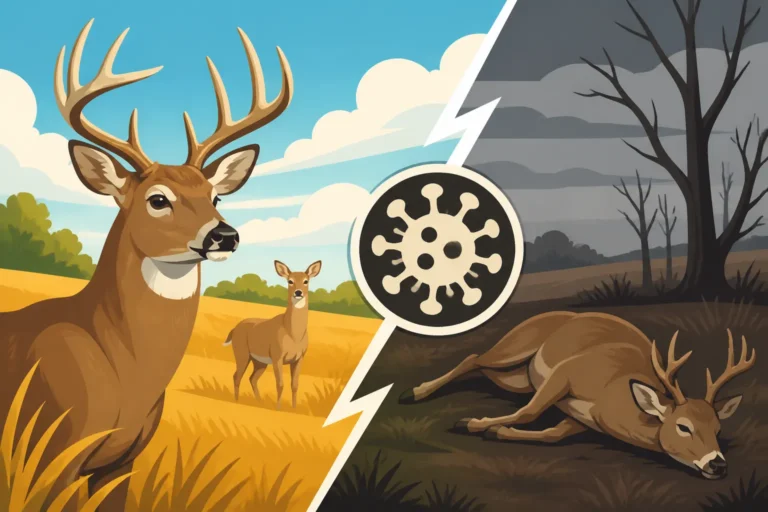
Deer density isn't static; it's a dynamic figure influenced by a complex interplay of environmental and human factors. Habitat quality is paramount: areas with abundant food, water, and cover will naturally support higher deer populations. Think about the rich agricultural fields of eastern Kansas or the dense river bottoms, providing both sustenance and refuge. Disease outbreaks, like Epizootic Hemorrhagic Disease (EHD), can also dramatically reduce local deer numbers, sometimes severely impacting a unit for several years.
Predation by coyotes and other furbearers can impact fawn survival, especially in certain areas, though their overall impact on adult deer density is often less significant than habitat or disease. Weather patterns play a role too; severe winters or prolonged droughts can stress deer herds, leading to lower fawn survival rates or increased mortality among older deer. Lastly, hunting pressure and harvest regulations are designed to manage deer density. In units where buck harvest is consistently high, the buck-to-doe ratio might become skewed, potentially affecting breeding success. Conversely, strategic antlerless hunts are often implemented to control overall population numbers and balance herd health.
Navigating Kansas Deer Units and Their Densities
Kansas is a diverse state, and its deer units reflect that, each offering unique challenges and opportunities based on habitat and deer populations. Understanding the general trends across these regions can dramatically improve your hunt planning. You can see how these units are laid out on a Kansas Deer Unit Map.
Eastern Kansas Units: Timber, Crops, and High Density
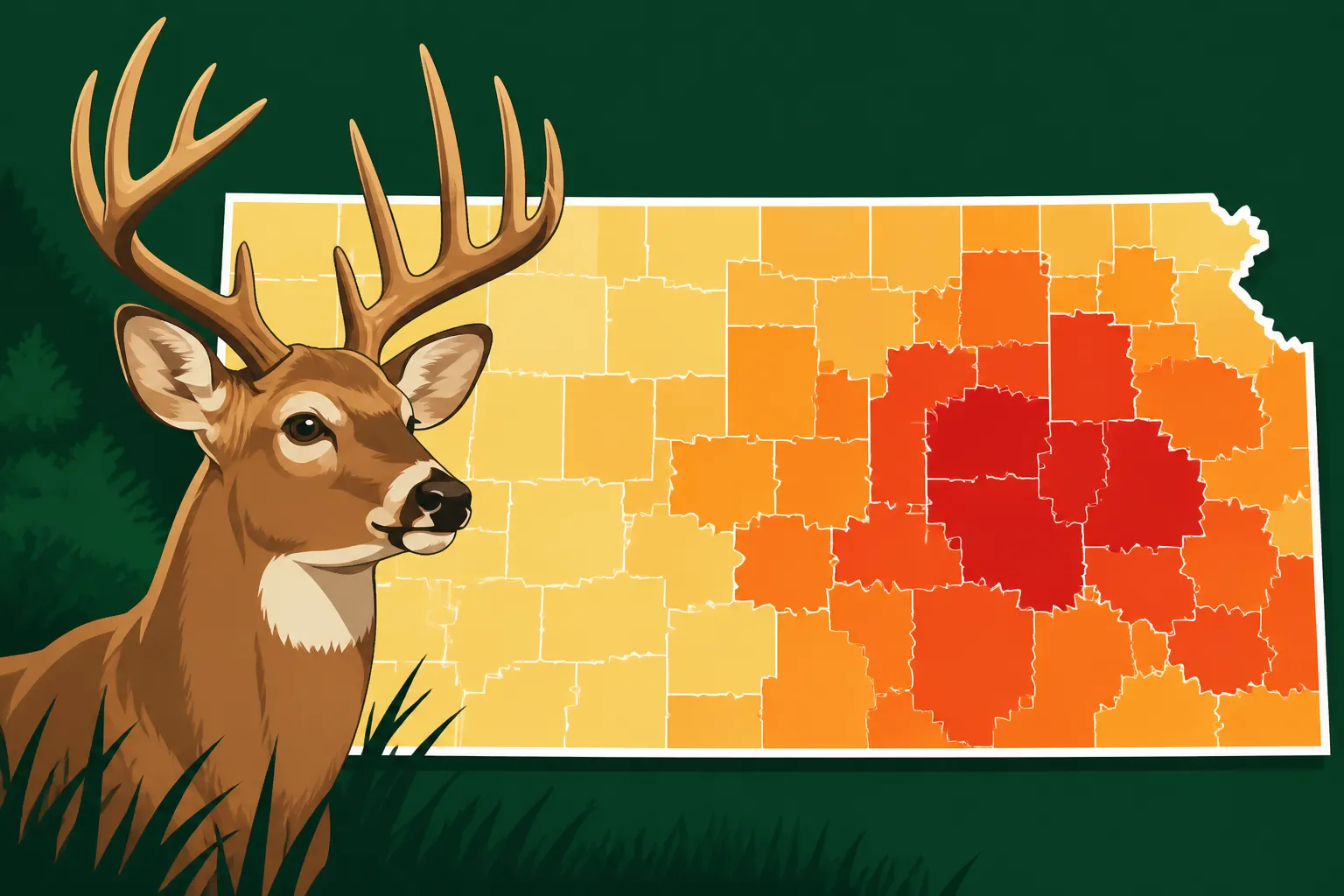
Units in eastern Kansas, generally east of US-77, tend to boast the highest deer densities in the state. This region is characterized by extensive timbered river and creek bottoms, interspersed with vast agricultural fields of corn, soybeans, and milo. This rich environment provides everything a deer needs: abundant food sources from crops, dense thermal and security cover in the woodlands, and consistent water from the numerous waterways.
Units like 10, 11, 14, and 16 often have strong deer populations. These areas are magnets for whitetails, which thrive in this mix of cover and agriculture. The landscape here is ideal for growing big deer, with nutrient-rich soils contributing to robust body weights and impressive antler development. Hunters in these units often find success by focusing on transition areas between timber and crops, or by scouting heavily used Creek Crossings Worth Hanging a Stand On. The downside? Higher density can sometimes mean more hunting pressure, especially on public lands or easily accessible private parcels. You'll need to be strategic in your approach, perhaps focusing on weekdays or less accessible pockets of cover to find unpressured deer. This region is a prime example of Why Kansas Grows Trophy Whitetails.
Central Kansas Units: Transitional Zones and Variable Density
Moving west, central Kansas units (roughly between US-77 and US-281) offer a more transitional landscape. Here, you'll find a blend of agriculture, smaller timber blocks, shelterbelts, and increasing amounts of native prairie and CRP grass. Deer density can be quite variable within this region, often depending heavily on the availability of good cover, particularly larger timber stands or expansive CRP fields.
Units such as 5, 6, 7, and 8 might not consistently have the sky-high densities of the eastern units, but they can still hold excellent deer populations, particularly where creek systems and larger timber draws provide continuous cover. These units often require a different scouting approach, perhaps focusing more on identifying key travel corridors, Shelterbelt Ends and Buck Travel, or isolated timber pockets within a sea of agriculture. Deer in these areas might have larger home ranges due to more fragmented habitat, leading to different movement patterns. Don't overlook the potential here; while densities might be moderate, the deer are often less pressured than in the dense eastern units, offering a different kind of challenge and reward.
Western Kansas Units: Mule Deer, Whitetail, and Lower Density
The westernmost units of Kansas (west of US-281) present a much different hunting experience, characterized by vast expanses of shortgrass prairie, limited timber, and large agricultural fields often centered around irrigation. Deer density here is generally lower than in the central and eastern parts of the state. However, what these units lack in sheer numbers, they can make up for in unique hunting opportunities.
This is the primary range for Kansas mule deer, though whitetails are also present, often along river systems like the Republican, Smoky Hill, or Arkansas. Units like 1, 2, 17, and 18 are where you'll find the best chances for a mule deer tag, especially if you're lucky enough to draw a Kansas Mule Deer Stamp Draw. The open landscape means deer are more visible, but also more wary. Scouting often involves glassing vast areas and using topography to your advantage. Understanding the unique behaviors and habitat preferences of Mule Deer Range in Western Kansas is key. While lower density might mean fewer deer sightings overall, the chance to chase a mule deer in wide-open country offers a truly distinct experience, requiring patience, long-range glassing, and careful stalking techniques. You'll definitely want to understand the differences when Telling a Mule Deer From a Whitetail.
Practical Application for Your Kansas Hunt
Knowing about deer density is one thing, but actually using that knowledge to improve your hunt is where the rubber meets the road. It’s about more than just picking a high-density unit; it’s about integrating that data with your personal hunting style and available resources.
Using Density Data with Other Factors
Deer density is a powerful piece of information, but it's rarely the only factor you should consider. It needs to be combined with other crucial elements to form a complete picture. For instance, a unit might have high deer density, but if it also has extremely high hunting pressure, your chances of success might not be as good as in a unit with moderate density but less pressure. You need to consider public land access versus private land opportunities. The Kansas Online Hunting Atlas is an indispensable tool here.
Think about the specific terrain you'll be hunting. Are you comfortable with the thick timber of eastern Kansas river bottoms, or do you prefer the more open country of the west? Your preferred weapon — bow, muzzleloader, or rifle — will also influence your strategy. A bowhunter might prioritize units with good cover and close-range opportunities, even if overall density is slightly lower, while a rifle hunter might excel in more open, higher-density areas where longer shots are common. Moreover, understanding the Kansas Whitetail Body and Antler Size in a unit, often gleaned from harvest reports and local knowledge, can tell you if the deer are reaching their full potential.
Tools for Accessing Unit-Specific Information
In today's digital age, there's a wealth of information at your fingertips to help you dig into unit-specific deer data. The KDWP website is always your first stop for official regulations, season dates, and detailed harvest reports. These reports often break down harvest numbers by unit, giving you insights into overall deer taken, buck-to-doe ratios, and even age class distributions. Looking at a Reading a Kansas Harvest Report can reveal trends over several years.
Beyond the official sources, several mapping and scouting apps have become indispensable for modern hunters. Platforms like GoHunt, for example, often integrate KDWP data with their mapping tools, allowing you to visualize deer unit boundaries, public land ownership, and sometimes even overlay harvest statistics or population trends. These apps empower you to do extensive E-Scouting Kansas Farm Country From Home before you ever set foot in the field. They can show you not just where the deer are generally concentrated, but also help you identify specific habitat features within those high-density areas, like bedding cover, food sources, and travel corridors. This level of detail helps you move from broad knowledge to pinpoint accuracy in your hunt planning. You can also use tools like onX Layers for Kansas Land Status to confirm boundaries and access points.
Adjusting Hunting Strategies Based on Density
Once you have a good grasp of the deer density in your chosen unit, you can tailor your hunting strategy accordingly. In high-density units, you might focus on finding pockets of unpressured deer by going deeper into public land, or by hunting during weekdays when pressure is lower. Your stand locations might be more about intercepting deer moving between dense cover and food, or focusing on pinch points that funnel a lot of traffic. You might also consider more aggressive tactics like rattling or grunting, as there's a higher chance another buck is in the vicinity to respond.
In lower-density units, especially in western Kansas, your approach will likely shift. You'll need to cover more ground, spend more time glassing, and prioritize stealth and patience. Hunting becomes less about waiting for deer to come to you, and more about actively locating and stalking them. You might focus on isolated water sources in dry country, or the limited timber along river systems. Understanding that every encounter is precious, you'll need to make sure your shot placement is spot-on and your tracking skills are honed, because opportunities can be few and far between. Regardless of density, always remember to respect the land, practice ethical hunting, and leave no trace.
| Kansas Deer Unit Type | General Density | Key Characteristics | Hunting Strategy Focus |
|---|---|---|---|
| Eastern Units | High | Timber, Crops, Water | Intercept, Ambush, Rut Tactics |
| Central Units | Moderate/Variable | Agriculture, CRP, Smaller Timber | Funnels, Cover Pockets, Adaptive |
| Western Units | Low | Prairie, Limited Timber, Irrigation | Spot & Stalk, Glassing, Patience |
Disclaimer
This article is for general informational purposes only and does not constitute professional advice. Laws, prices and regulations vary by location and change over time. Consult a qualified professional for guidance on your specific situation.