Waiting Before Taking Up a Blood Trail
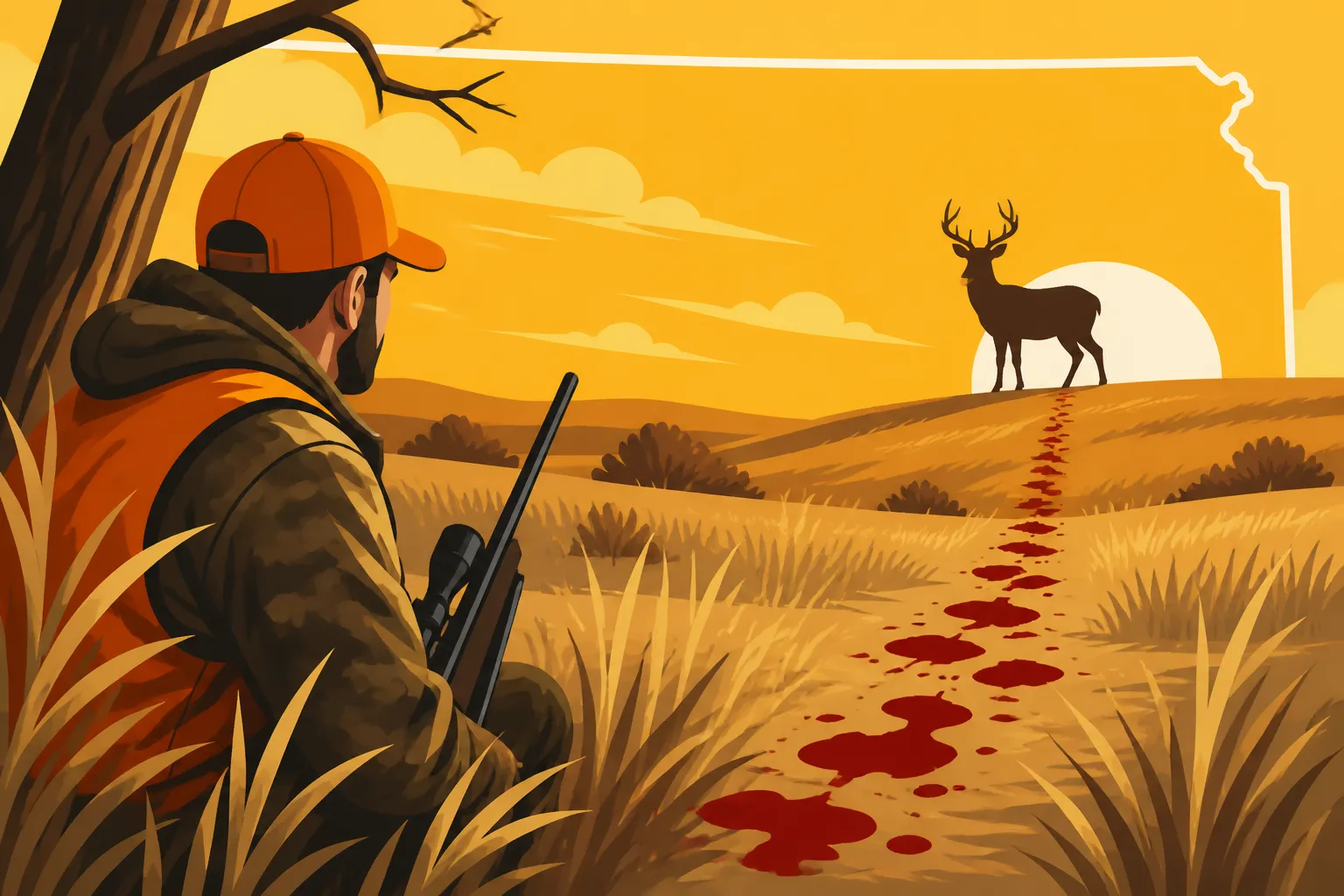
The arrow is gone, the buck crashed into the cedars, and every nerve in your body wants to climb down and follow. Waiting feels wrong, especially on a warm Kansas evening with coyotes yipping on the next section. But taking up a blood trail too soon is the most common way good hunters lose good deer. This guide explains how long to wait after different hits, why the clock matters, and how to use that time well.
Why Waiting Recovers More Deer
Every experienced tracker I know has a story about the deer they pushed. The hit looked fine, the buck went down within sight, and then a cough, a crunch of leaves or a shadow moving through the timber sent it back up and over the next fence. Most of those deer would have been found within a few hundred yards if the hunter had sat tight. That is the hard truth that makes waiting worth it, even when every part of you wants to move.
What Happens Inside a Wounded Deer
A deer hit with a broadhead or a bullet dies from blood loss and the loss of organ function. How fast that happens depends almost entirely on what was hit. A double-lung or heart shot collapses the deer’s ability to move oxygen, and the animal is usually dead within seconds to a minute or two. A liver hit bleeds heavily but more slowly, and the deer may live for an hour or more. A gut hit damages organs that do not bleed fast at all, and the deer may live many hours.
A wounded deer that does not feel pursued tends to walk a short distance, find cover and lie down. Once it beds, it stiffens, weakens and in most cases dies where it lies. A deer that hears or sees you coming before it is dead gets a rush of adrenaline, stands up and runs. That second run can take it a long way, often through thick cover, across a creek or onto a neighbor’s ground, and the blood trail usually gets thinner the farther it goes because the wound clots and the deer’s blood pressure drops.
The Cost of Pushing Too Soon
Pushing a deer does more than add distance. It changes the trail you have to follow. A bedded deer that jumps tends to leave a big pool of blood in its bed, then a much fainter trail as it moves away. Hunters who jump a deer usually find the bed, see the blood, get excited and then lose the trail within a hundred yards. In Kansas river bottoms and tall CRP, that faint trail can disappear entirely.
There is also a fair-chase and ethical side to this. A deer that dies quietly in its bed is a cleaner end than one that runs a mile and dies in a ditch where it will never be found. Waiting is part of respecting the animal.
When Waiting Has a Cost Too
Waiting is not free. In September, when Kansas archery season opens with afternoon temperatures in the eighties, meat can begin to spoil within a few hours, especially in a gut-shot deer. Coyotes are thick across much of the state and will find a dead deer overnight. Rain can wash out a blood trail before morning. These are real pressures, and later sections cover how to weigh them. But in most cases the right answer is still to wait, because a deer you never find is a total loss, while a deer you find with some spoiled meat is still recovered.
How Long to Wait After Each Kind of Hit
The single most important thing you can do after the shot is figure out where you hit the deer. That determines how long to wait, and getting it right starts in the seconds after you shoot. Before you go any further, it is worth reviewing Shot Placement on a Whitetail at Twenty Yards and Quartering-Away Shots on Whitetails, because knowing the angle at the shot makes the hit easier to read afterward.
Reading the Shot Before You Move
Right after the shot, stay still and pay attention. Watch the deer’s reaction, note exactly where it was standing and where it went, and listen. Here is what to note while it is fresh:
- The deer’s position at the shot, including the angle and the spot on the body where you aimed.
- How the deer reacted. A high kick of the back legs often means a heart or lung hit. A hunched-up, slow walk often means a gut or liver hit. A deer that simply runs off with its tail up may have been hit high, low or missed.
- The direction the deer ran and the last place you saw it.
- Any sounds after it disappeared, such as a crash, coughing, or the sound of brush breaking that suddenly stops.
- The time on your watch.
Mark the last place you saw the deer using a landmark you can find again from the ground, such as a dead tree, a fence post or a fork in a cedar. It always looks different once you are down.
Reading the Arrow and the Hit Site
If you shot with a bow and the arrow passed through, it is usually lying near the spot where the deer stood. Do not walk straight to it if you think the deer may be close by; a quick, quiet look from a distance is fine, but give it time if the evidence points to a marginal hit. When you do inspect the arrow, the blood and other material on it tell you a lot:
- Bright red, frothy blood with bubbles usually points to a lung hit.
- Dark red blood without bubbles can mean a liver hit.
- Green or brown material and a foul smell means the stomach or intestines.
- Clean, bright red blood with hair but no froth may be a muscle hit.
- Fat or tallow on the arrow often means a high or low hit through fatty tissue rather than the vitals.
Hair at the hit site helps too. Long, coarse brown hair often comes from the back, while short, dark hair can come from the legs or brisket, and white hair from the belly or the bottom of the chest. The more you look at hit sites, the more these clues start to make sense.
Recommended Wait Times
There is no exact science here, but most experienced trackers use similar guidelines. The table below summarizes them for archery hits and firearm hits. Use these as a starting point and add time when the evidence is mixed.
| Likely hit | Signs at the shot and on the arrow | Wait with a bow | Wait with a rifle or muzzleloader |
|---|---|---|---|
| Heart or double lung | Mule kick, hard run, bright frothy blood, crash heard | 30 minutes to 1 hour | 30 minutes |
| Single lung | Strong run, bright blood that thins out | 3 to 6 hours | 2 to 4 hours |
| Liver | Hunched run, dark red blood | 4 to 6 hours | 3 to 4 hours |
| Gut or stomach | Hunched walk, green or brown material, foul smell | 8 to 12 hours, often overnight | 6 to 8 hours or overnight |
| Muscle, leg or brisket | Little reaction, bright blood with no froth | 2 to 4 hours, then trail carefully | 2 hours, then trail carefully |
| Unknown or no sign | No arrow, no blood at the site | At least 1 hour before a careful look | At least 1 hour before a careful look |
With a heart or lung hit, the deer is usually dead long before you reach it, but a half hour of waiting costs you nothing and lets things settle. With anything less clear, add time. Waiting too long costs a little meat at worst; going too early can cost the deer.
When the Evidence Does Not Agree
Sometimes the reaction says lungs but the arrow says gut. That is common on a quartering shot, where the arrow may pass through the liver and lungs from back to front or the stomach and a lung from front to back. When the evidence disagrees, plan for the worse hit. If there is any sign of gut material, treat it as a gut hit and wait accordingly, because a deer with a gut wound and one lung may still travel a long way if pushed.
How Firearm Hits Differ
Rifle and muzzleloader hits tend to do more damage than a broadhead, and the shock of a bullet often drops a deer on the spot or within a short run. That is why the firearm column in the table runs a little shorter. But a bullet that hits too far back still produces a gut-shot deer, and a deer hit through the brisket or a leg with a rifle can run as far as one hit with an arrow. Muzzleloader hunters in the September season face the same heat and the same coyotes as archers, so the timing logic is the same: identify the hit first, then choose the wait.
One difference is that firearm hunters often lose the visual on the deer quickly because of recoil and smoke. With a muzzleloader in particular, the cloud of smoke can hide the deer’s reaction entirely. Make a habit of reloading quietly and then listening hard. The sound of a deer crashing or going down can tell you as much as watching it run. Muzzleloader Deer Tactics in Warm September Weather covers more on hunting in those early-season conditions.
Three Kansas Scenarios
It helps to think through a few situations before they happen to you.
In the first, you shoot a mature buck at eighteen yards from a stand on the edge of a milo field in late October. He mule-kicks, sprints into a creek bottom and you hear a crash about eighty yards in. The arrow is soaked in bright, frothy blood. This is the textbook double-lung hit. Wait thirty minutes, climb down quietly and follow the trail. You will very likely find him within sight of the crash.
In the second, it is mid-September, the temperature at sundown is still close to eighty degrees, and you shoot a doe slightly quartering toward you. She hunches up and walks off into the cedars. The arrow is covered in dark blood with a few flecks of green. This could be a liver and gut hit. The heat makes you want to go now, but pushing her is the worst thing you can do. Back out, wait at least six to eight hours, and if that runs into the night, plan to be on the trail at first light with a cooler full of ice in the truck. You may lose some meat, but you will likely find the deer.
In the third, you shoot at a buck in the last minutes of legal light and the arrow disappears. You think you heard it hit, but the buck simply trots off with his tail down. You find no arrow and no blood at the hit site with a quick look. Here the honest answer is that you do not know what happened. Back out, give it at least an hour or two, and then do a careful grid search of the area where he ran, looking for blood, the arrow and the deer. If you find little or nothing, come back in daylight. A lot of apparent misses turn out to be high hits that bleed very little at first.
What to Do While You Wait
Waiting does not have to mean sitting in the stand staring at your watch for four hours. Used properly, that time can make the recovery faster and more successful.
Stay Put or Back Out Quietly
If the hit looks good and you only need half an hour, stay in the stand. Getting down makes noise and puts your scent on the ground. If you need to wait several hours, or the deer may be bedded close by, climb down as quietly as you can and back out the way you came in, away from where the deer went. Access Routes That Do Not Bump Deer covers the same principles you use getting into a stand, and they apply just as much when you are sneaking out.
Mark the Scene
Before you leave the area, mark what you know. A mapping app makes this much easier. GoHunt’s maps let you drop a waypoint at your stand, the spot where the deer was standing and the last place you saw it, so you can come back to the exact spot hours later, even in the dark. That is valuable on Kansas ground where every cedar thicket looks the same after sunset. If you prefer, a handheld GPS or a bright piece of flagging tape works too.
Plan the Recovery
Use the waiting time to think through what comes next:
- Look at a map of the area the deer went into, including thick cover, water and fences.
- Check property lines so you know who owns the ground the deer may have run onto. Mapping layers in GoHunt and similar apps show ownership boundaries, which saves a lot of guesswork in the dark.
- Line up help. A second set of eyes makes trailing easier, and a person to stay on the last blood while you search ahead is invaluable.
- Gather what you need: a good flashlight, spare batteries, flagging tape, a knife, water and a drag rope or cart.
- Decide what you will do if the trail runs onto a neighbor’s property.
That last point matters a lot in Kansas, where most ground is private and permission is property-specific. Recovering a Deer Across a Property Line explains what the law requires, but the short version is that you need the landowner’s permission to go after a deer on their ground, even if you shot it on yours. Calling a neighbor at 9 p.m. is far easier when you already have their number.
Think About a Tracking Dog
If you suspect a marginal hit, a leashed tracking dog can make the difference between finding a deer and losing it. Kansas has rules about using dogs to recover wounded deer, so check them before calling in a tracker. Using a Tracking Dog Legally in Kansas lays out what you need to know. Many trackers prefer to start on a cold trail after a long wait, so calling one does not mean you have to rush.
Taking Up the Trail and When to Back Off
When the wait is over, the real work starts. A careful, methodical approach finds more deer than a fast one, and knowing when to stop and wait again is just as important as knowing how to follow blood.
Starting at the Hit Site
Start where the deer stood when you shot, not where you think it went. Look for hair, blood and tracks. Mark the first blood with flagging tape, then move forward slowly, looking for the next sign before you step past the last one. Walk beside the trail, not on it, so you do not smear blood or obscure tracks if you have to go back.
Every so often, look back at the line of flagging. It shows you the direction of travel, and when the trail fades, it points to where the deer was headed. In CRP and cedars, that line can be the only thing keeping you on track. Blood Trailing in CRP and Cedars and Blood Trailing in Tall CRP go deeper on tracking in the kind of cover Kansas deer love.
Reading the Blood as You Go
Blood on the trail tells you how the deer is doing. Heavy blood and spray on both sides of the trail usually means a pass-through with good bleeding. Drops getting smaller and farther apart mean the bleeding is slowing, either because the wound is clotting or because the deer is running out of blood. Pooled blood where a deer stood or bedded briefly is a good sign it was hurting.
A bed with a lot of blood and no deer is the classic sign that you pushed it. If you find one, stop. Do not keep walking. Mark the spot, back out quietly and give it more time, usually several hours, because a deer that bedded and then left on its own is still badly hurt and likely to bed again soon if left alone.
When to Stop and Wait Longer
There are a few moments when backing off is the right call:
- You find a fresh bed with blood and no deer.
- You hear a deer get up ahead of you.
- The trail shows gut material and you are earlier than eight hours from the shot.
- The blood has nearly stopped and you are unsure of the hit.
Each of those is a signal that the deer may still be alive. Mark your spot, back away and give it time. Sometimes the best move is to come back at first light with fresh eyes and help.
Night Tracking, Weather and Coyotes
Most evening shots in Kansas mean tracking in the dark. A strong light helps, and some trackers prefer a light with a warmer color that makes blood stand out on dry grass. Check the regulations before you head out at night, because there are rules about carrying a firearm while searching for a wounded deer after dark, and they are worth reading in the regulations summary before the season starts.
Weather changes the calculation. If rain is moving in, there is a real argument for starting sooner, especially on a good hit, because rain can wash away a trail. If it is hot, as it often is in early archery season, meat spoils quickly. A double-lung deer left overnight in September heat may have lost some meat by morning, and a gut-shot deer even more. Getting a Deer Cooled in September covers how to save as much as possible once you find it.
Coyotes are the other wild card. In much of Kansas they will find a dead deer overnight, and they can do a lot of damage quickly. That is frustrating, but it is not a good reason to push a deer that may still be alive. A deer partly eaten by coyotes is still a recovered deer, still tagged and still part of your season. A deer pushed into the next county is not.
After the Recovery
When you finally find the deer, approach from behind, watch for breathing and make sure it is dead before you touch it. Tag it and report it according to Kansas requirements before moving it. Then get it field dressed and cooled as quickly as you can. Take a moment, too, to think about the shot and the trail. Every recovery teaches you something about shot placement, deer behavior and patience, and the hunters who learn the most from each one are the ones who find more deer in the long run.
Using GoHunt or a similar app to save the track you walked and the spot where the deer died also builds a record you can come back to in future seasons. Over time you will see patterns in where wounded deer go on your ground, which makes the next recovery easier.
Disclaimer
This article is for general informational purposes only and does not constitute professional advice. Laws, prices and regulations vary by location and change over time. Consult a qualified professional for guidance on your specific situation.