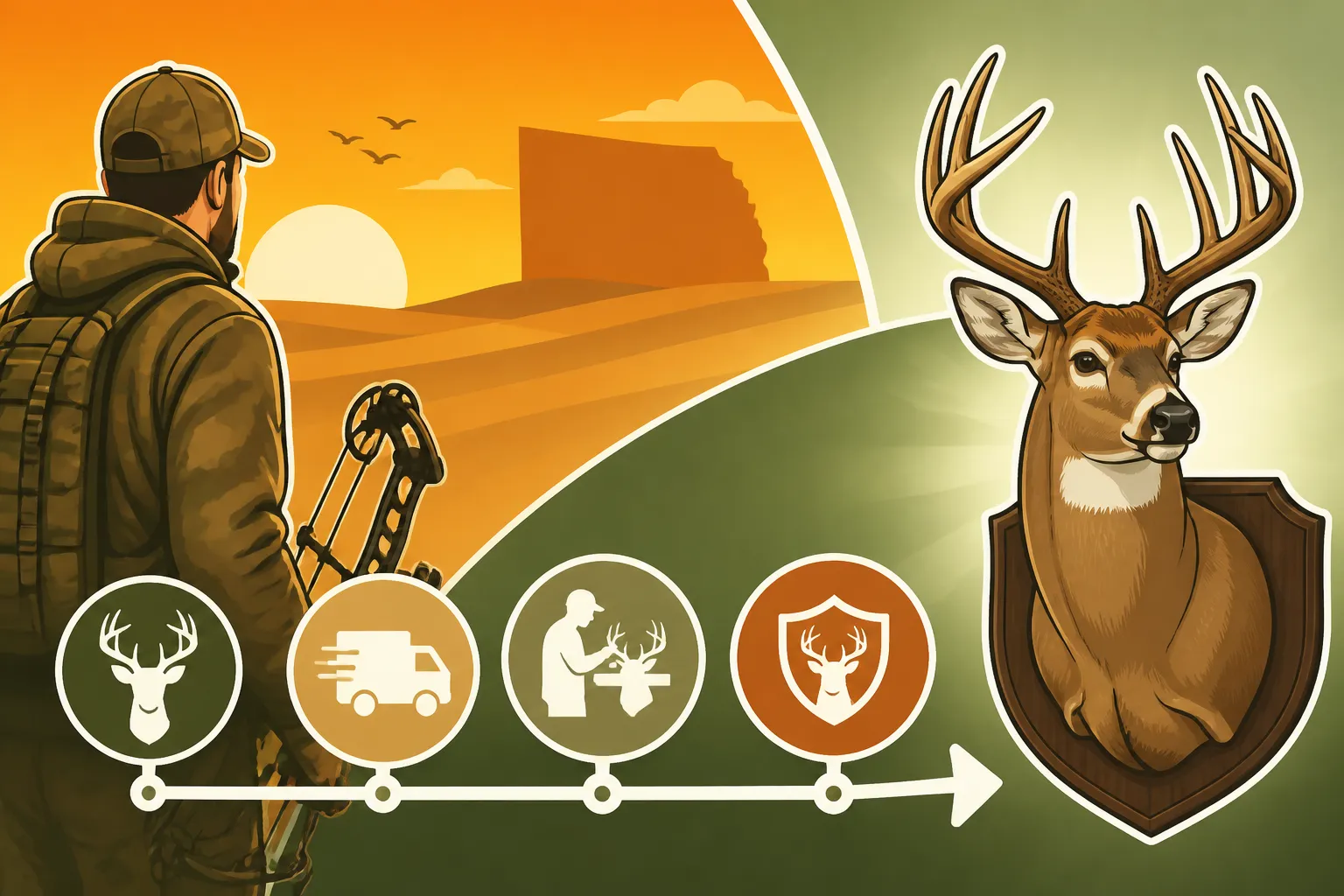
Timeline for Getting a Mount Back
You've just wrapped up an incredible Kansas hunt, maybe a Kansas Whitetail Hunting Tactics Through the Rut trip that ended with the buck of a lifetime, or perhaps a majestic gobbler from your Kansas Turkey Hunting Tactics for Spring Gobblers adventure. The adrenaline has worn off, the stories have been told a dozen times, and the freezer is stocked. Now comes the exciting, yet often agonizing, wait for your prized trophy to come back from the taxidermist. It’s a question every hunter asks: "How long until my mount is ready?" This guide is going to walk you through exactly what goes into that timeline, helping you understand the process so you can set realistic expectations and enjoy the anticipation, rather than fretting over every passing month.
Understanding the Taxidermy Process and Its Stages
When you drop off your hard-earned trophy at the taxidermist, you might think it's a relatively quick process. After all, the animal is already there, right? But what many hunters don't realize is the intricate, multi-stage journey that hide and antlers take before they're transformed into that stunning piece for your wall. Each step requires specialized skill, time, and often, collaboration with other professionals, all of which contribute to the overall timeline.
Field Care and Initial Steps
The clock on your mount's timeline actually starts the moment you pull the trigger or release the arrow. Proper field care is paramount and directly impacts how quickly and successfully a taxidermist can begin their work. If you neglect to properly cool the animal, if you make poor cuts when skinning, or if you don't get the hide to the taxidermist swiftly, you could be adding significant delays or even compromising the mount altogether. Think about it: trying to salvage a hide that has begun to slip hair or has freezer burn is far more time-consuming (and sometimes impossible) than working with one that was perfectly handled from the start. This is why knowing how to properly field dress in varying conditions, like Field Dressing in Warm Kansas Weather, and understanding how to Caping a Buck for a Shoulder Mount correctly for your desired mount type is so critical. A good taxidermist will always appreciate a well-prepared specimen, and it helps them get straight to the next steps without remedial work.
The Tanning Process
Once the taxidermist receives your trophy, one of the most significant chunks of waiting time comes from the tanning process. This isn't something most local taxidermists do themselves in their shop anymore; it's a highly specialized chemical process, typically outsourced to large commercial tanneries. These tanneries handle thousands of hides from all over the country. Your deer hide, or turkey skin, or pheasant pelt, goes into a queue. Tanning is essential for preserving the skin, preventing decay, and making it pliable enough to work with. It's a precise science that involves salting, pickling, neutralizing, and oiling the hide. Depending on the tannery's backlog, the type of animal, and even the time of year (peak hunting season means peak tannery season), this stage alone can take several months, sometimes even half a year or more. It cannot be rushed; trying to speed up tanning often results in a sub-par, brittle hide that won't hold up over time.
The Mounting Stage
After the tanned hide makes its way back to your taxidermist, the true artistry begins. This is where your trophy starts to take shape. The taxidermist selects the correct form (a mannequin-like body blank), meticulously cleans and prepares the hide, and then carefully drapes and glues the hide onto the form. They position the ears, set the eyes, and often sculpt facial features to capture the animal's lifelike expression. This stage involves an incredible amount of detail work: stitching, adjusting, and ensuring every muscle, vein, and hair pattern is accurately represented. Once assembled, the mount needs to dry completely, which can take several weeks or even a couple of months, depending on humidity and the size of the piece. During this drying period, the taxidermist will often make final adjustments and touch-ups to ensure the finished product is flawless. It’s a labor of love and precision, and skilled artisans simply cannot rush perfection.
Factors Influencing Your Mount's Return Time
The universal truth in taxidermy is that "good, fast, cheap" doesn't exist – you can usually pick two. The timeline for getting your mount back isn't arbitrary; it's a reflection of several practical factors, from the individual artist's schedule to global supply chains. Understanding these can help you manage your expectations far better.
Taxidermist's Workload and Reputation
This is often the biggest determinant of your wait time. Talented, reputable taxidermists are in high demand, and for good reason. Hunters want their prized trophies handled by someone who will do them justice. These artists often have a backlog stretching for a year or more, especially after busy hunting seasons. Imagine the rush after Rifle Hunting the Kansas December Firearm Season or during the core Kansas Deer Season Dates when everyone is bringing in their trophies. A taxidermist who promises a two-month turnaround for a shoulder mount is either not very busy (which might be a red flag regarding their quality) or cutting serious corners. It’s always worth checking a taxidermist’s reputation. Sometimes, if you're looking for an outfitter for a future hunt, you might even find recommendations for taxidermists through platforms like BookYourHunt, which often highlight quality operations that know reputable local services.
Type of Mount and Complexity
Not all mounts are created equal in terms of time investment. A simple European mount, which involves cleaning and bleaching the skull, is usually the quickest option, often ready in a few weeks to a couple of months. A standard shoulder mount for a deer is a much more involved process, requiring the full tanning and mounting stages. Beyond that, pedestal mounts, open-mouth poses, or full life-size mounts (like a strutting turkey or a jumping whitetail) are exponentially more complex and time-consuming. They require more materials, more intricate sculpting, more detailed base work, and often specialized forms that might need to be custom-ordered. Each added layer of detail and ambition will naturally stretch out the timeline.
Seasonality and Peak Hunting Periods
Just like retail stores have their peak seasons, so do taxidermists. The months immediately following the major deer seasons in Kansas (think late fall and early winter) see an enormous influx of trophies. Every hunter who tagged a buck during archery, muzzleloader, or firearm season wants to get their trophy to the taxidermist. This surge creates a significant bottleneck. If you drop off your trophy in December or January, you are likely putting your mount at the back of a very long line. If you can, delivering a mount during slower periods, perhaps in late spring or summer, might theoretically shave off a little time, but generally, the established queue is the queue.
Materials Availability and Shipping Delays
Taxidermists rely on a host of specialized materials: forms (mannequins of the animal's body), glass eyes, habitat materials for bases, and various chemicals. While most common forms and supplies are readily available, sometimes a specific form for an unusual pose, or a unique pair of eyes, might be on backorder. Global supply chains and shipping delays, which can affect anything from raw materials to manufactured goods, can sometimes trickle down and impact a taxidermist's ability to complete a mount. If the tannery also faces delays, or if your taxidermist orders custom forms, these external factors, completely out of their control, will add to your wait.
Managing Expectations and Communication
The wait for a trophy mount can test any hunter's patience. It's a significant investment, both financially and emotionally. However, approaching the process with clear communication and realistic expectations from the outset can save you a lot of frustration and ensure a smoother experience for everyone involved.
Setting Realistic Expectations Upfront
When you first meet with your taxidermist, don't be afraid to ask about their current turnaround times. They should be upfront and honest. They’re not just guessing; they have a queue of work. Understand that any timeline they give you is an estimate, not a hard deadline. Life happens, and delays occur, whether it's a tannery taking longer than expected, a new client bringing in an urgent rush job (like a potential world record that needs immediate attention), or even the taxidermist themselves falling ill. Be prepared for a wait that could easily be 12-24 months for a shoulder mount, and potentially longer for more complex pieces. If you're planning future hunts, maybe using a platform like GoHunt to scout areas for Public Land Deer Hunting in Kansas or learning about Kansas Deer Permits and the Nonresident Draw, remember to factor in potential taxidermy wait times when thinking about displaying new trophies.
The Importance of a Written Agreement
A good taxidermist will provide you with a written receipt or contract that outlines the agreed-upon work, the type of mount, the deposit amount, and an estimated completion date. This isn't just a formality; it's a critical document that protects both you and the taxidermist. It confirms the details of your order and the financial agreement. Ensure it specifies the total cost, what portion is required as a deposit, and the payment schedule for the balance. Also, if there are any specific rules regarding your trophy, such as CWD Rules for Taking a Kansas Deer Home which might impact how the skull or other parts are handled, make sure these are discussed and noted. Having everything in writing helps prevent misunderstandings down the road and provides a reference point if you ever need to follow up on your order or refer to any specific terms or conditions mentioned when you dropped off your animal. Some of these points are similar to what you’d review with an outfitter, as covered in Kansas Outfitter Contracts and Deposits in Kansas.
How to Follow Up Professionally
While you’re eager to get your mount back, constantly calling or emailing your taxidermist can actually slow them down by taking time away from their bench. Most taxidermists are small business owners, artists, and hunters themselves, and they're usually working as fast as they can while maintaining quality. A good rule of thumb is to wait until a few months past the initial estimated completion date before making your first check-in, unless they've specified a different communication plan. When you do follow up, be polite and professional. An email is often better than a phone call, as it allows them to respond at their convenience and keeps a written record. A simple, "Just checking in on the status of my deer mount, dropped off on [date] – no rush, just wondering if there's an updated timeframe," is usually sufficient. Remember, a happy taxidermist is more likely to keep you updated.
Alternatives and What to Do While You Wait
The waiting period for a custom taxidermy mount is a marathon, not a sprint. But that doesn't mean you can't celebrate your successful Kansas hunt in other ways or even explore quicker display options for certain trophies. While the main mount is curing and being crafted, there are still plenty of ways to keep the memory alive and plan for future adventures.
European Mounts as a Quicker Option
If you're looking for a quick turnaround or a more minimalist display, a European mount is an excellent alternative, especially for deer, elk, or even smaller predators. This process involves cleaning the skull down to the bone, degreasing it, and then whitening it. Many taxidermists offer this as a separate, much faster service, and some meat processors or even dedicated skull cleaning businesses can do it. The timeline for a European mount is typically weeks to a couple of months, significantly less than a traditional shoulder mount. It’s a striking display that highlights the bone structure and antlers, and it can often be done while you're still waiting for your shoulder mount from a previous season. Plus, it’s a cost-effective option that allows you to commemorate your hunt without the extensive wait or expense of a full shoulder mount.
Celebrating the Memory in Other Ways
While your mount is patiently waiting its turn, don't let the excitement of your hunt fade away! This is the perfect time to go through all those photos and videos you took. Create a photo album, share your story with friends and family, and relish the memories of the chase, the landscape, and the moment of success. Perhaps you can even write down the detailed story of your hunt, including your strategies, like successfully using Rattling and Grunting During the Kansas Rut or how you navigated Hunting Kansas Walk-In Land Without Burning It Out. These narratives become invaluable treasures that will bring the hunt back to life, even without the physical mount. You can also use this downtime to reflect on the season and start planning your next adventure. Spend some time scouting future spots, either physically or using digital tools to map out Best Stand Locations in Flat Farm Country. Or, research permits and application processes for next year. Platforms like BookYourHunt or GoHunt can be great resources for exploring new hunting opportunities, finding reputable guides, or simply immersing yourself in hunting content to fuel your passion.
| Mount Type | Complexity | Estimated Wait Time (General) | Key Stages | Common Use Case |
|---|---|---|---|---|
| European Mount (Skull) | Low | Weeks to 2-3 Months | Cleaning, degreasing, whitening skull | Quick display, minimalist aesthetic, smaller trophies |
| Standard Shoulder Mount | Medium | 12-24 Months | Field care, tanning, mounting, drying, finishing | Whitetail/Mule Deer, Antelope, Elk (partial) |
| Pedestal Mount | Medium-High | 18-30 Months | Field care, tanning, mounting, custom base, drying | Allows for 360-degree viewing, more dynamic poses |
| Full Life-Size Mount | High | 24-36+ Months | Extensive field care, tanning, custom form, intricate posing, base creation, drying | Larger game (deer, elk, bear), birds, predators |
| Bird Mount (Flying/Standing) | Medium | 12-24 Months | Skinning, degreasing, shaping, posing, habitat work, drying | Pheasants, Quail, Turkeys, Waterfowl |
Disclaimer
This article is for general informational purposes only and does not constitute professional advice. Laws, prices and regulations vary by location and change over time. Consult a qualified professional for guidance on your specific situation.