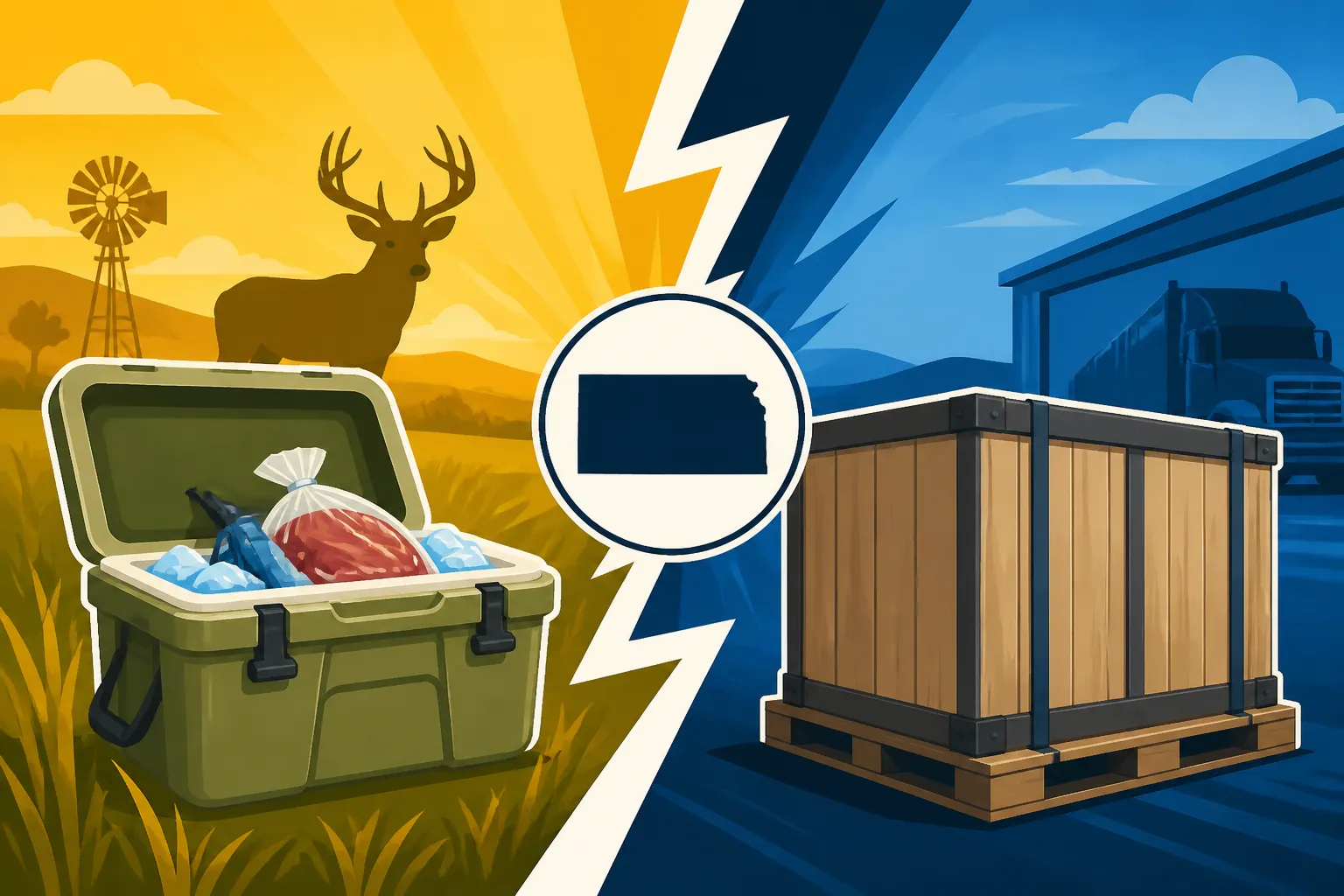
Coolers Versus Freight Shipping
After you've put in the hard work, the early mornings, the long days in the stand or glassing across the prairie, and finally punched your tag on a magnificent Kansas deer, a new challenge often arises: how do you get all that beautiful venison back home? For many hunters, especially those traveling a significant distance, this isn't a small detail. It's a crucial logistical puzzle that can impact the quality of your meat and your overall post-hunt experience. This comprehensive guide will meticulously break down the two primary methods for transporting your prized Kansas deer meat – packing it into coolers for personal transport or entrusting it to a professional freight shipping service – helping you navigate the pros, cons, and practicalities of each option so you can make the best decision for your unique hunting adventure.
The Personal Cooler Method: DIY Transport for Your Trophy
There’s a certain satisfaction that comes with handling every step of your hunt, right down to personally ensuring your venison makes it safely into your freezer. The cooler method embodies this hands-on approach, giving you direct control over your meat’s journey home. However, it's not without its specific demands and considerations.
Preparing Your Meat for the Cooler Journey
The success of transporting your venison in coolers hinges almost entirely on how well the meat is prepared initially. This isn't just about cutting; it's about chilling, cleanliness, and portioning. Imagine spending hours Kansas Whitetail Hunting Tactics Through the Rut or braving the cold during Rifle Hunting the Kansas December Firearm Season, only to have your meat spoil because it wasn't prepped correctly. It's a hunter's nightmare.
First and foremost, your deer needs to be field dressed immediately. That's non-negotiable. Especially if you're hunting during the early season or warmer periods, like the muzzleloader season, Field Dressing in Warm Kansas Weather is paramount to prevent bacterial growth. Once field dressed, the carcass should be cooled as quickly and thoroughly as possible. For many traveling hunters, this means taking it to a local processor or "locker plant." These facilities are experts at rapidly cooling and breaking down deer. They can quarter your animal, or even completely debone and package it for you, which is often the most efficient way to maximize cooler space. Boneless meat, vacuum-sealed, is the gold standard for cooler transport. It takes up less room, minimizes air exposure, and is easier to pack tightly. If you plan on Processing Your Own Deer at Home, ensure you have a clean, cool space to work and get the meat chilled to 38 degrees Fahrenheit or below before packing. Remember, bone-in meat takes up significantly more space and can be challenging to keep uniformly cool.
Packing Principles: Ice, Dry Ice, and Insulation
Once your venison is processed and thoroughly chilled, the real packing begins. This is where your choice of cooling agent and insulation makes all the difference.
For shorter trips, or if you plan to keep a close eye on your coolers, traditional block ice can work well. Block ice melts slower than cubed ice, which is a huge advantage. If you can get it, a few large blocks will outperform bags of cubes every time. The key is to surround the meat as much as possible, ensuring no air pockets. For longer journeys, or if you simply want maximum assurance, dry ice is your best friend. Dry ice, which is frozen carbon dioxide, is significantly colder than water ice and sublimates (turns directly into gas) rather than melting into liquid, which keeps your meat dry. When using dry ice, remember safety first: always handle it with gloves to prevent frostbite and ensure good ventilation in your vehicle, as the CO2 gas can displace oxygen. Place dry ice on top of your meat, as cold air sinks. For optimal insulation, consider using high-quality roto-molded coolers. These aren't cheap, but their superior insulation can extend ice retention for days. Another trick is to use insulated cooler bags inside your main coolers, especially for delicate cuts, creating an extra layer of thermal protection. Don't forget to fill any empty space with crumpled newspaper or towels to further reduce air circulation and temperature fluctuations.
The Road Trip Reality: Challenges and Considerations
Successfully getting your deer home in coolers means being realistic about the demands of the road. It's not just about packing; it's about the journey itself.
First, consider vehicle space. A quartered or deboned deer can take up a surprising amount of room, especially if you're trying to fill Kansas Antlerless Hunts and Filling the Freezer in addition to your buck tag. Multiple large coolers can quickly eat up precious cargo space, potentially limiting other gear or passengers. Next, there's the constant concern of maintaining temperature. Every time you open a cooler, you're letting cold air out. Long stretches of driving in warm weather, unexpected delays, or even just stopping for gas can impact your internal cooler temperature. You'll need to monitor your ice levels and be prepared to replenish them. This can add unexpected stops and costs to your trip. Finally, consider the mess. Even the best-sealed coolers can sometimes leak, especially if you're using water ice. A little melted water in the back of your vehicle is a minor annoyance, but a significant leak could lead to a big cleanup job and potentially a lingering odor. For those considering flying, the rules become even more stringent. Airlines have specific regulations for transporting meat and dry ice, including weight limits and packaging requirements. It’s definitely something you need to research well in advance. Related to this is the detailed advice in Shipping Frozen Venison by Air, which explores the nuances of air transport for game meat.
Freight Shipping Your Venison: A Hands-Off Approach
For many traveling hunters, especially those who've driven hundreds or even thousands of miles to chase deer in the plains and timber of Kansas, the thought of adding several hundred pounds of chilled meat to their already packed vehicle for the return journey can be daunting. This is where freight shipping enters the picture, offering a convenient, albeit often more expensive, alternative that allows you to simply pick up your venison once you're back home.
Understanding Freight Shipping Services
Freight shipping for game meat is a specialized service, and it's important to understand that you're not just dropping a package off at your local post office or typical parcel service. These are generally not equipped to handle frozen meat on a large scale.
Instead, you'll be looking for carriers that specialize in temperature-controlled shipping, or more commonly, working through a local meat processor or outfitter who has established relationships with such services. Many Kansas locker plants, especially those in popular hunting regions, offer shipping services as part of their deer processing packages. They've already got the proper packaging materials, the freezing capacity, and the network to ensure your meat travels safely. Similarly, some outfitters listed on platforms like BookYourHunt or GoHunt might include shipping assistance as part of their comprehensive packages, or at least be able to point you in the right direction. They understand the challenges of getting game home, and a good outfitter will have reliable resources. The process typically involves dropping off your fully processed, vacuum-sealed, and frozen solid meat at their facility. From there, they handle the logistics of packing it into specialized containers (often wax-coated boxes with insulated liners) and arranging pickup by a freight carrier that transports it to a receiving facility near your home.
The Packing and Preparation for Shipping
The golden rule for freight shipping venison is this: it must be frozen solid, like a brick. There's no room for "mostly frozen" or "really cold." If it's not absolutely rock solid when it leaves the processor, it's at a much higher risk of thawing during transit.
Professional processors are equipped with commercial freezers that can get your meat to the necessary temperature. They will typically pack your vacuum-sealed, frozen meat into sturdy, wax-coated cardboard boxes, often lined with insulated foam or heavy-duty plastic bags. These boxes are designed to hold temperature and withstand the rigors of freight travel. It's not uncommon for these packages to include a few layers of newspaper or cardboard between packages for added insulation, acting almost like a buffer. Each box will be clearly labeled with your name, address, contact information, and sometimes a manifest of the contents. This meticulous packaging and labeling by professionals significantly reduces the risk of loss or spoilage. It's also important to confirm with the processor any specific requirements from the shipping company regarding maximum box weight or dimensions. For more general advice on this aspect, see our guide on Getting Venison Home From Kansas.
Costs, Timelines, and Peace of Mind
Let's be upfront: freight shipping your venison is almost always more expensive than hauling it yourself in coolers. However, for many, the added cost is a worthwhile investment for the convenience and peace of mind it provides.
Shipping costs are typically calculated based on total weight, destination distance, and the speed of service you choose. Expedited shipping will naturally cost more. You'll also be paying for the specialized packaging materials. It's wise to get an estimate from the processor or shipping company beforehand. While the exact figures can vary, expect to pay a significant amount per pound, especially for long distances. In terms of timelines, most freight services for frozen goods aim for a transit time of a few days to a week, depending on the distance. It's crucial to coordinate pickup or delivery with the receiving facility near your home to ensure someone is available to accept the meat promptly. The biggest advantage, however, is the complete lack of stress during your drive home. Your vehicle isn't laden with heavy coolers, you don't have to worry about ice replenishment, or a potential leaky mess. You can simply enjoy the drive, knowing your venison is en route, professionally handled. This can be a huge benefit after a mentally and physically demanding hunting trip that might have included rigorous Scouting Kansas River Bottoms and Creek Draws or intense tracking.
Making the Choice: Cooler vs. Freight Shipping Comparison
Deciding between coolers and freight shipping isn't a one-size-fits-all answer. It's about weighing your priorities, assessing your resources, and considering the specific circumstances of your hunt.
Factors to Weigh for Your Hunt
Your decision should be a thoughtful process, taking into account several key elements specific to your hunting trip and personal preferences.
First, consider the distance you're traveling. A four-hour drive back home is a very different proposition than a 20-hour cross-country trek. The longer the journey, the more appealing freight shipping becomes due to the challenges of maintaining consistent cooler temperatures. Next, look at your vehicle and its capacity. Do you have an ample amount of space for several large coolers without compromising safety or comfort for passengers? How heavy will those coolers be? Lifting heavy, water-logged coolers in and out of a truck or SUV can be a real workout. Your personal comfort level with handling raw meat for an extended period is also a factor. Some hunters are perfectly fine with it; others prefer to minimize the hands-on aspect once the animal is down. If you're using a guide or outfitter, inquire about their services. Many reputable operations, which you might find on platforms like BookYourHunt, have established relationships with local processors and shippers, making the process seamless. Finally, think about the number of animals you're hoping to take. If you're on a Kansas Antlerless Hunts and Filling the Freezer trip and expect to harvest multiple deer, the volume of meat can quickly tip the scales in favor of professional shipping.
Cost Versus Convenience Analysis
This is often the core of the debate: what price do you put on convenience and peace of mind?
| Feature | Personal Coolers | Freight Shipping |
|---|---|---|
| Upfront Cost | High for quality coolers, then ongoing for ice/dry ice | High for shipping service, packaging |
| Effort | High (packing, loading, monitoring, unloading) | Low (drop-off, pick-up at home) |
| Control | Maximum (you manage temperature and handling) | Minimal (entrust to professionals) |
| Travel Impact | Added weight, bulk, potential for leaks in your vehicle | No impact on personal vehicle travel |
| Risk of Spoilage | Moderate (if not managed diligently) | Low (if meat is frozen solid and shipped properly) |
| Ideal For | Shorter distances, hands-on hunters, budget-conscious | Long distances, convenience-seekers, busy travelers |
While the initial investment in good coolers can be substantial, they are a one-time purchase that will serve you for many hunts. The ongoing cost is primarily for ice and dry ice, plus the additional fuel consumed by a heavier vehicle. Freight shipping, on the other hand, means a per-pound charge for every hunt, which can add up quickly. However, the convenience of not having to worry about your meat during a potentially long and tiring drive cannot be overstated. Imagine pulling into your driveway after a 12-hour drive, exhausted, and knowing your venison will arrive in perfect condition a few days later, rather than having to immediately unload and deal with multiple heavy coolers. For many, that peace of mind is worth the extra expense. Websites like GoHunt might not directly compare shipping costs, but they often provide resources for planning hunts that might lead you to outfitters who streamline this process.
Legalities and Best Practices for Transport
Regardless of your chosen method, there are critical legal and best practice considerations you cannot overlook, especially when crossing state lines.
The most important legal aspect to be aware of is Chronic Wasting Disease (CWD) regulations. Kansas, like many states, has specific rules regarding the transport of deer carcasses and certain parts out of the state, especially from CWD-management zones. You absolutely must familiarize yourself with CWD Rules for Taking a Kansas Deer Home and the regulations of your home state. Generally, deboned meat, clean skull plates, and capes are allowed, while whole carcasses, brains, and spinal columns are often restricted. Violating these rules can lead to significant fines and penalties. Always ensure your meat is clearly tagged with your permit number, harvest date, and any other information required by Kansas law. This is also important for Kansas Deer Harvest Reporting Deadline, as accurate records are crucial. Beyond legalities, hygiene is paramount. Keep all surfaces, knives, and hands clean during processing. Ensure meat never sits at unsafe temperatures. When packing coolers, consider using heavy-duty plastic bags inside the cooler liners to contain any moisture and provide an extra layer of protection. For freight shipping, double-check that your processor understands and adheres to all relevant regulations for interstate transport of game meat. A reliable processor will be well-versed in these rules.
Disclaimer
This article is for general informational purposes only and does not constitute professional advice. Laws, prices and regulations vary by location and change over time. Consult a qualified professional for guidance on your specific situation.