What the Kansas Mule Deer Stamp Converts
It’s a common point of confusion for so many hunters, especially those of us coming from out of state, trying to wrap our heads around the intricacies of the Kansas deer draw. You’ve heard whispers of the "Mule Deer Stamp," but what exactly is it, and how does it actually change your hunting permit? This guide is going to clear up all that head-scratching, detailing precisely what the Kansas Mule Deer Stamp converts your permit into, ensuring you’re fully equipped with the knowledge to navigate the application process.
Understanding the Kansas Mule Deer Stamp and Its Core Purpose
Let's just be honest, navigating state hunting regulations can feel like trying to read a legal document written in ancient Greek sometimes. The Kansas Mule Deer Stamp is one of those unique elements that often leaves hunters scratching their heads. It's not a standalone permit; think of it more as an enhancement or an option you add to your primary deer permit application if you're hoping for a shot at a mule deer. Its core purpose is to provide a very limited opportunity for non-resident hunters to harvest a mule deer within specific units, without directly drawing a mule deer-specific tag. It's a way for Kansas to carefully manage its mule deer populations while still offering a chance to those drawn for a general deer permit.
What the Mule Deer Stamp Truly Represents
At its heart, the Mule Deer Stamp is a non-refundable application fee for a chance at an upgrade. When you apply for your non-resident deer permit in Kansas, you're primarily applying for an "Either-Sex Whitetail or Mule Deer" permit, even if your main intention is whitetail. If you want the possibility of taking a mule deer, you opt to purchase the Mule Deer Stamp during that same application process. It’s a separate cost, typically around $150, on top of your permit fee and the general application fee. This stamp is your entry into a secondary draw specifically for mule deer. It doesn't guarantee you a mule deer permit; it only grants you the opportunity to potentially convert your whitetail permit into an either-sex mule deer permit if you are lucky enough to be drawn in the mule deer stamp lottery. Many hunters, myself included, will pore over historical draw data, and resources like GoHunt can be incredibly valuable for visualizing how rare this draw can be.
Why Kansas Implemented This System
Kansas, particularly the western portion, is known for its whitetails, but it also has a relatively small, yet cherished, population of mule deer. Unlike many western states where mule deer are the dominant species, in Kansas, they are much less numerous, especially in the eastern part of the state. The Mule Deer Stamp system serves as a highly controlled mechanism to offer non-residents a chance at these unique animals without over-pressuring the population. It essentially layers a lottery on top of another lottery. You first need to draw a regular non-resident deer permit, and then you need to be one of the few selected in the Mule Deer Stamp draw to convert that permit. This two-tiered system ensures that mule deer harvest for non-residents remains very limited, prioritizing conservation while still allowing a sliver of opportunity. This strict management also indirectly protects the quality of Mule Deer in Western Kansas.
The Conversion Process: From Stamp to Tag Specifics
This is where the rubber meets the road. You’ve applied for your non-resident deer permit, hoping for a tag in a good unit, and you decided to fork out for the Mule Deer Stamp, holding onto that dream of spotting big muley racks on the plains. So, what happens if your number comes up for the Mule Deer Stamp?
How the Draw Works with the Stamp
When you participate in the Kansas deer draw, you're essentially applying for a "Deer Permit (Either-Sex Whitetail or Mule Deer)" permit, and then, as an add-on, you purchase the Mule Deer Stamp. The critical thing to understand is that your primary permit draw happens first. Let's say you successfully draw a non-resident deer permit for a unit that allows mule deer harvest. After this, a separate lottery is held for all the hunters who purchased the Mule Deer Stamp. If you are selected in this secondary Mule Deer Stamp draw, your permit then undergoes its conversion. Tools like GoHunt are fantastic for tracking the draw odds for the primary permit in various units, but it's important to remember that the Mule Deer Stamp draw operates on a completely separate, much tougher set of odds. You really need to understand How to Apply for a Kansas Nonresident Deer Permit to even get to this stage.
What the Mule Deer Stamp Converts Into
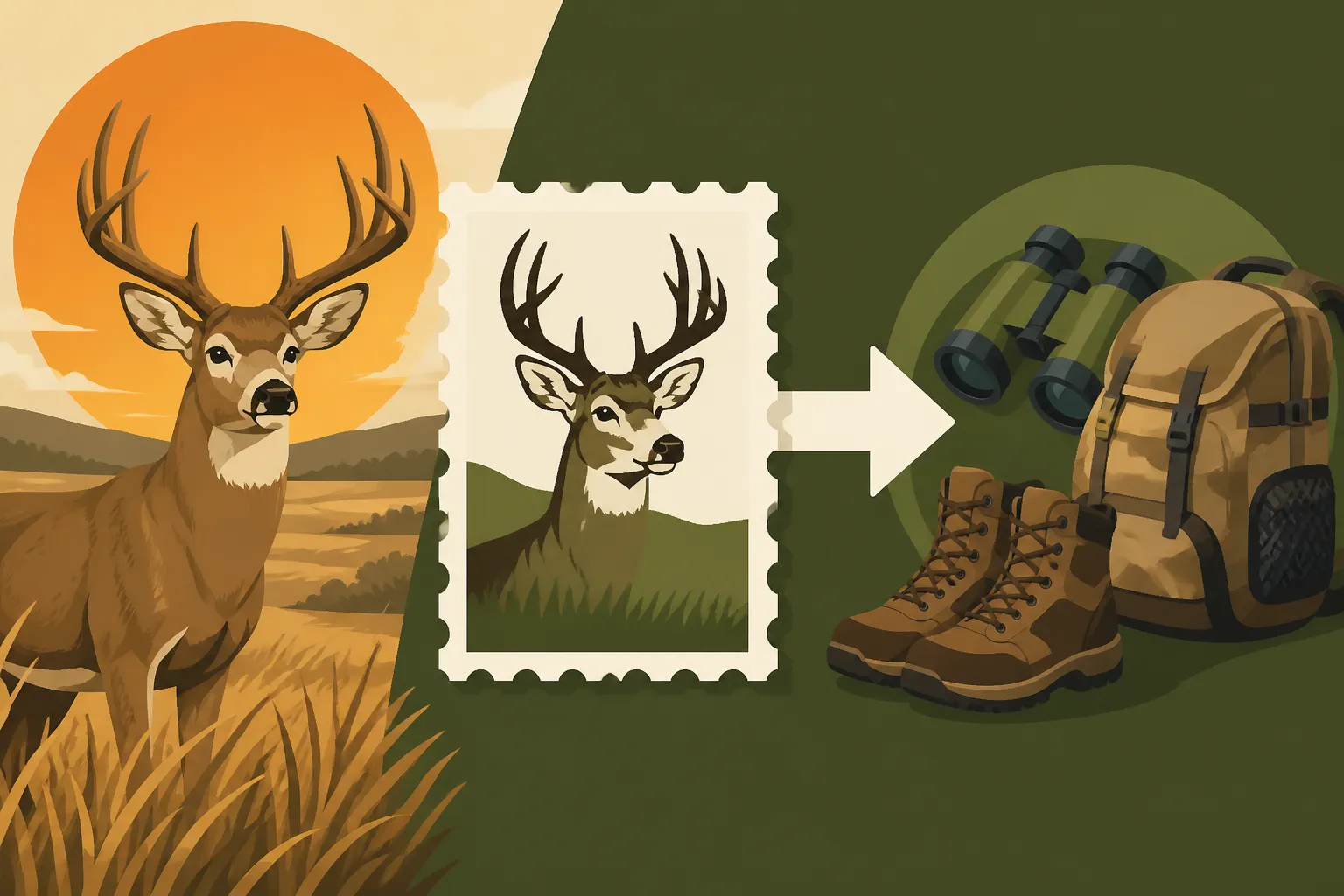
If you are one of the fortunate few to draw the Mule Deer Stamp, your permit, which was initially valid for either an either-sex whitetail or a mule deer, is converted to an Either-Sex Mule Deer Permit. This means that with your now-converted permit, you are legally allowed to harvest an either-sex mule deer or an either-sex whitetail. However, the intent of purchasing the stamp is to gain the right to take a mule deer.
Here’s a breakdown of the permit conversion:
| Original Permit Type (If Drawn) | With Drawn Mule Deer Stamp | Without Drawn Mule Deer Stamp (or Not Applied) |
|---|---|---|
| Non-resident Deer Permit (Either-Sex Whitetail or Mule Deer) | Converts to: Either-Sex Mule Deer Permit (Allows one either-sex mule deer or one either-sex whitetail) | Remains: Either-Sex Whitetail Permit (Allows one either-sex whitetail) |
So, the stamp acts as an "override." It essentially makes the "mule deer" portion of your potential permit a reality. Without drawing the stamp, even if your permit was theoretically valid for either species, you're restricted to only harvesting a whitetail. This conversion is crucial for anyone planning to hunt the western counties where Which Kansas Units Qualify for a Mule Deer Stamp is a key consideration.
What Happens if You Don't Draw the Mule Deer Stamp
This is the more common scenario for most hunters. If you apply for the Mule Deer Stamp but are not selected in the secondary draw, your primary deer permit simply reverts to what it would have been otherwise: an Either-Sex Whitetail Permit. You do not get a refund for the Mule Deer Stamp fee; it's a non-refundable application. This means you’ll still have a valuable Kansas deer tag, but it will be for a whitetail only. This is why it’s so important to have a solid backup plan for Kansas Whitetail Hunting Tactics Through the Rut because you’re far more likely to be chasing whitetails than mule deer. This scenario highlights why many hunters focus their primary strategy on whitetails, even if they throw their hat in the ring for the mule deer stamp.
Eligibility, Application, and Strategic Considerations
Getting your hands on a Kansas Mule Deer Stamp, and subsequently converting your tag, is an exercise in strategy and understanding the odds. It’s not just about clicking a button; it's about making informed decisions.
Who Can Apply for the Mule Deer Stamp
The Kansas Mule Deer Stamp is primarily available to non-resident hunters who are applying for a "Deer Permit (Either-Sex Whitetail or Mule Deer)." Residents have a separate draw process for mule deer, typically requiring more preference points or being drawn in a very limited lottery for specific units. If you're a non-resident, you must be successfully drawn for your primary non-resident deer permit first, and that permit must be for one of the specific western units where mule deer are present. Not all deer units in Kansas hold mule deer, so doing your homework on the units is critical. For instance, the eastern, heavily timbered units rarely, if ever, see mule deer. You need to focus on Kansas Deer Units 1 Through 19 with a strong western representation.
The Application Process and Important Deadlines
Applying for the Mule Deer Stamp is integrated into the main non-resident deer permit application process. When the Kansas Deer Application Window in April opens, you'll go through the steps to select your primary and adjacent units and choose your weapon type. During this process, you'll be given the option to purchase the Mule Deer Stamp. It's a simple checkbox and an additional fee at checkout. You cannot apply for the stamp separately or at a later date. This is why it's crucial to make that decision when you're filling out your primary application. Missing this window means missing your chance entirely for the year. It's also important to remember that the Kansas Mule Deer Stamp Cost is an extra expense that isn't refunded if you don't draw the stamp itself, regardless of whether you draw your primary permit.
Odds and Strategic Planning
Let's not sugarcoat it: drawing the Mule Deer Stamp is tough. Very tough. The number of stamps issued each year to non-residents is extremely limited, often in the single or low double digits. This means your odds are incredibly low, often less than 1%. And here's the kicker, something that often confuses new applicants: preference points do not help you in the Mule Deer Stamp draw. Unlike the main non-resident deer permit draw, where How Many Points to Draw a Kansas Unit is a key calculation, the Mule Deer Stamp draw is a pure lottery every year. Your accumulated preference points only count towards drawing your primary either-sex deer permit. This is why the article Why Points Do Not Help the Kansas Mule Deer Draw is so important to understand. So, while it's exciting to apply for, always go into it with the realistic expectation that you will be hunting whitetails. Use resources like the GoHunt Insider platform to research historical draw odds, but treat the Mule Deer Stamp as a true bonus if it happens, not a core part of your hunt plan.
Impact on Your Kansas Hunting Experience
Successfully drawing a Mule Deer Stamp and converting your permit can fundamentally shift your hunting experience in Kansas. It moves you from chasing the ubiquitous whitetail to pursuing a truly special and rare animal in this state.
Planning Your Hunt Around the Possibility
Because the odds of drawing the Mule Deer Stamp are so slim, the most realistic approach is to plan your hunt primarily as a whitetail expedition. However, if you're targeting one of the western units where mule deer exist, and you've applied for the stamp, you must have a contingency plan in place. This means researching mule deer habitat and behavior in those specific units, even if you expect to be hunting whitetails. If you do draw the stamp, your focus will immediately shift. Suddenly, those wide-open CRP fields and canyons become prime mule deer country, whereas previously you might have been solely focused on river bottoms and timber pockets for whitetails. Even when focusing on whitetails, knowing how to approach Hunting Kansas Walk-In Land Without Burning It Out is a valuable skill that applies across species.
Mule Deer Versus Whitetail Hunting Considerations
The hunting tactics for mule deer are distinctly different from those for whitetails. Mule deer are creatures of open country, often found on large expanses of grassland, CRP fields, and broken, rugged terrain like the Cimarron National Grassland. They tend to "bluff up" or use topography to disappear, rather than hiding in thick cover like whitetails. This necessitates different scouting methods, often relying heavily on optics for long-range glassing. Contrast this with whitetail hunting, which often involves setting up stands in pinch points, along creek draws, or near food sources in timbered areas. When you get a converted tag, you'll need to re-evaluate your scouting. Reading Aerial Imagery for Bedding Cover becomes even more crucial, as identifying those subtle dips and rises or specific cover types that mule deer favor in open country is key. Understanding Mule Deer and Whitetail Overlap areas is also important, as you might find both species in certain transition zones.
The Thrill and Rarity of a Kansas Mule Deer
There’s an undeniable allure to hunting mule deer in Kansas. They represent a unique challenge and a truly special trophy in a state more widely known for its whitetails. Because of their limited numbers and the difficulty in drawing a stamp, harvesting a Kansas mule deer is a lifetime achievement for many. It often means adapting your hunting style, venturing into new types of terrain, and employing different strategies than you might be used to. If you are fortunate enough to convert your tag and find yourself pursuing a muley, remember that the experience itself is a huge part of the reward. It's about connecting with a rare animal in a beautiful, wild part of the state. It's a stark contrast to the more timber-focused hunting strategies you might use in Eastern Kansas Timber and River Bottoms, making for a truly memorable hunt. Make sure you do your pre-hunt research on how to approach these areas, perhaps even Scouting Kansas Walk-In Tracts Before the Opener for prime mule deer habitat.
Disclaimer
Hunting regulations and season dates are subject to change. Always consult the official Kansas Department of Wildlife, Parks and Tourism (KDWPT) regulations before planning and undertaking any hunting activities. This guide is for informational purposes only and should not replace official sources.