Hunter Orange Rules During Firearm Season
It's a common scenario: you're finally out in the crisp Kansas air, gear dialed in, ready for that hard-earned deer. Then, a nagging thought creeps in: "Am I wearing enough hunter orange? Is this vest visible enough?" The rules can feel confusing, a bureaucratic hurdle rather than a genuine safety measure, especially when you're just trying to focus on the hunt. This guide is here to unravel all the ins and outs of hunter orange regulations during firearm season in Kansas, helping you stay safe, legal, and focused on what matters.
Understanding Kansas's Hunter Orange Mandates
Navigating the rules around hunter orange in Kansas can feel like trying to find a shed antler in a CRP field after a fresh snow — it's there, but sometimes hard to spot without a clear guide. However, these regulations are foundational for hunter safety, especially when the woods and fields are bustling with activity during firearm seasons. It's not just about avoiding a ticket; it's about coming home safe and ensuring everyone else does too.
The Core Legal Requirements for Firearm Season
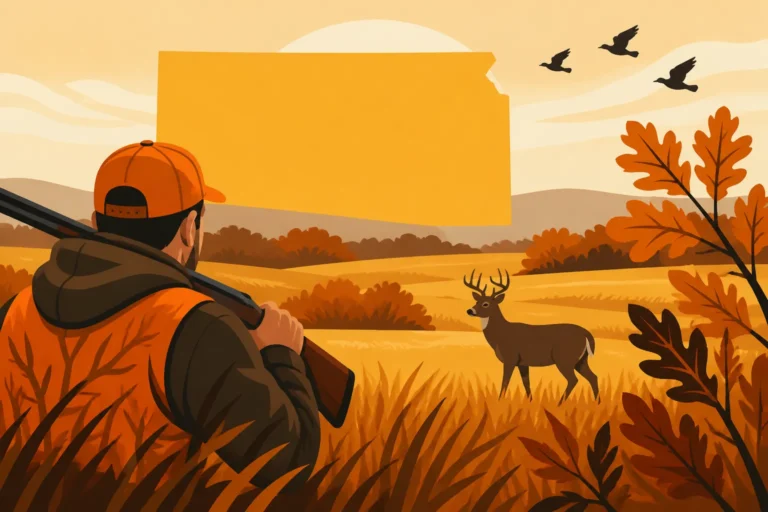
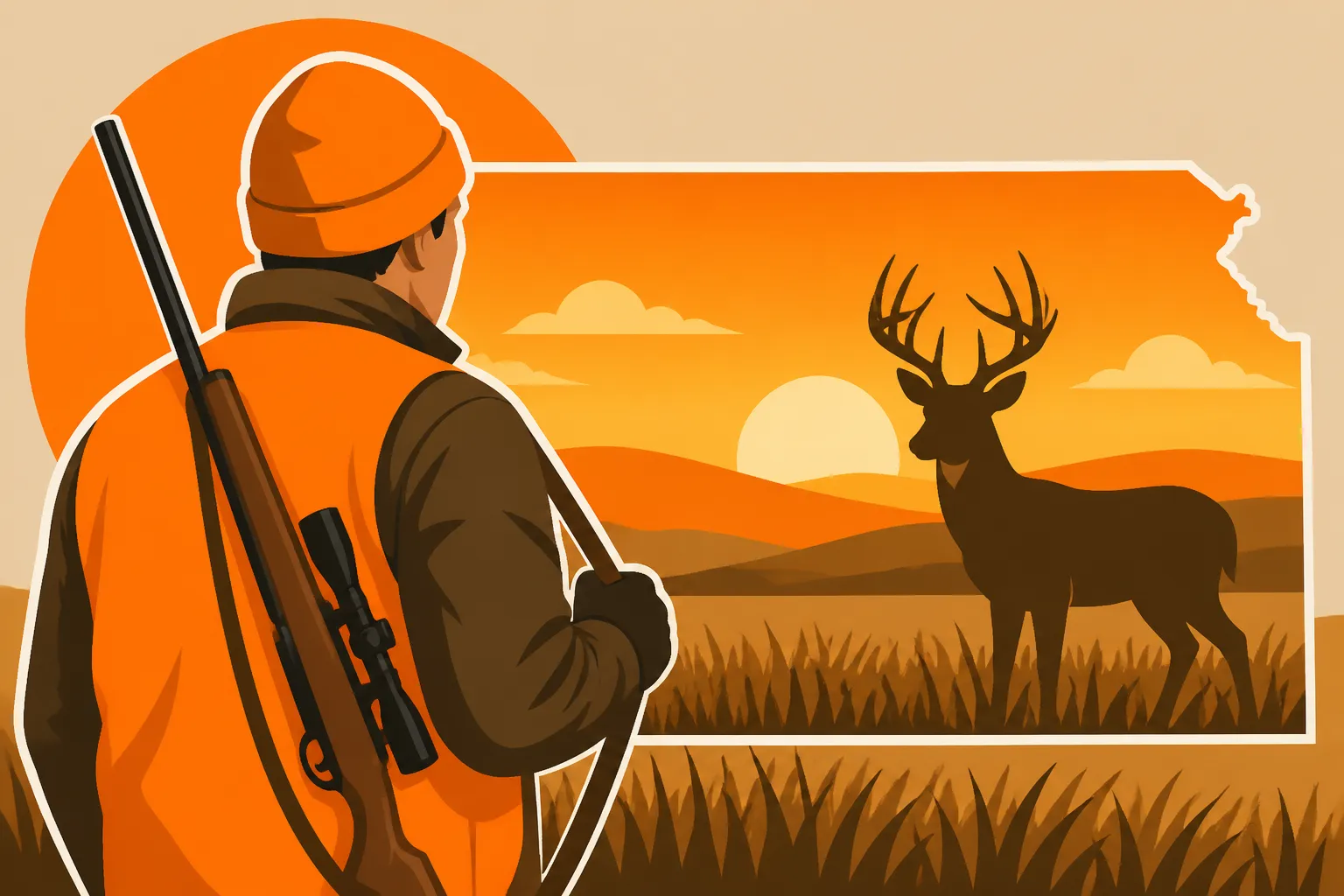
In Kansas, the law is quite clear when it comes to wearing hunter orange during any firearm deer season. This includes the general firearm deer season, the youth and disability season, and any extended antlerless firearm seasons. The primary requirement is that hunters must wear at least 500 square inches of hunter orange material on the upper half of their body. This needs to be visible from all directions, meaning it can't be covered by a backpack or other gear. Think of it as a brightly colored billboard that tells every other hunter in the vicinity, "Hey, I'm a human, not a deer!"
This 500 square inches isn't just a random number; it's a carefully considered amount designed to maximize visibility in varying light conditions and terrains. A typical hunter orange vest will meet this requirement, often combined with a blaze orange hat. It's crucial that this material is worn above the waist. So, wearing orange pants or boots alone won't cut it. The goal is for your torso and head to be highly visible, as these are often the parts of your body most exposed when walking through timber or sitting in a stand. It's also important to remember that this rule applies whether you're actively hunting, traveling to or from your hunting location, or field dressing an animal. The moment you step into the field with a firearm during these seasons, you need to be lit up like a pumpkin in October.
Clarifying Hunter Orange vs. Camo Orange
This is where a lot of hunters get tripped up, and it's a distinction that truly matters for safety. "Hunter orange," often called "blaze orange," is a very specific, vibrant shade of fluorescent orange. It's designed to be instantly recognizable as a safety color. Many hunting apparel companies now produce camouflage patterns that incorporate orange, often referred to as "camo orange" or "safety orange camo." While these patterns might have orange elements, they generally do not satisfy the 500 square inch requirement for hunter orange in Kansas.
The key difference lies in the solidity and brightness of the color. Hunter orange needs to be a solid, uninterrupted block of color to be most effective at long distances and in varied lighting. Camouflage, by its very nature, is designed to break up your outline and blend in. Even if a camo pattern has a lot of orange, those broken-up sections diminish its overall visibility as a solid safety signal. Imagine trying to see a checkered flag versus a solid orange flag from far away in dense timber – the solid color just pops more. Therefore, always err on the side of caution and opt for dedicated blaze orange garments that present a continuous, highly visible surface. Your life, and the lives of others, literally depend on it. Don't compromise by hoping your orange camo will pass muster; it's almost certainly not sufficient.
Exceptions and Exemptions: When You Might Not Need It
While hunter orange is a cornerstone of firearm deer season safety, there are specific hunting scenarios in Kansas where it might not be required. Understanding these exceptions is crucial to avoid unnecessary gear or, more importantly, to ensure you're compliant when you do need it.
For instance, during the Kansas archery deer season, hunter orange is generally not required. Bowhunting relies heavily on stealth and camouflage to get within close range of deer, and wearing bright orange would severely hinder those efforts. However, if you are archery hunting concurrently during a firearm season (which can happen with overlap in some units or during extended seasons), you would still need to follow the firearm season's hunter orange rules. Always check the specific Kansas Deer Season Dates by Weapon for the exact dates and overlaps. Similarly, during dedicated muzzleloader deer seasons, specific orange requirements can vary, so consulting the current regulations is paramount.
Other exemptions include hunting waterfowl or small game like rabbits and squirrels outside of firearm deer seasons. These activities have different safety considerations and do not typically involve the same level of risk from other big game hunters. Even during firearm seasons, if you are hunting certain non-deer species, such as waterfowl, from a blind or stationary position, the rules might be relaxed, but it's best practice to double-check the latest Kansas Department of Wildlife and Parks (KDWP) regulations. Remember, these exemptions are specific and limited. When in doubt, especially during any season where firearms are present for big game, wear your blaze orange. It’s an inexpensive insurance policy for your safety.
Why Hunter Orange is More Than Just a Rule: The Safety Imperative
When you first hear about hunter orange rules, it's easy to dismiss them as just another regulation, an annoyance that might make you feel less "stealthy." But veteran hunters know that these rules are born from decades of experience, tragic accidents, and a deep commitment to making our shared passion as safe as possible. Hunter orange isn't about blending in; it's about standing out in the most critical way, ensuring every human in the field can identify another human at a glance, no matter the conditions.
Preventing Accidental Shootings and Enhancing Visibility
The primary and most critical reason for hunter orange is to prevent accidental shootings. Human error, even by the most experienced hunters, is a factor that can never be completely eliminated. Combine that with low light conditions at dawn or dusk, dense timber, heavy fog, or simply a momentary lapse in judgment, and you have the potential for a catastrophic mistake. Hunter orange acts as a stark, undeniable visual cue that screams "human!" to anyone looking your way.
Deer, unlike humans, are largely dichromatic, meaning they see a limited spectrum of colors compared to us. While they perceive blues and yellows, they struggle to differentiate between red and green, often seeing them as shades of gray or muted yellow. This means that while your blaze orange vest is a beacon to another hunter, to a deer, it simply appears as another muted shade against the landscape, no more alarming than a faded tree trunk. This biological difference is key to why hunter orange works so effectively: it provides human safety without compromising your ability to remain undetected by your quarry. Imagine walking through a thick creek bottom in Kansas, eyes peeled for a buck, and suddenly a flash of bright orange alerts you to another hunter you hadn't seen. That instant recognition can literally be the difference between a close call and a tragedy.
Identifying Other Hunters in the Field
There's a unique kind of stress that comes with hunting public land, especially during the Kansas Firearm Deer Season in December when hunter numbers can be high. You're constantly scanning, not just for game, but for signs of other people. The presence of hunter orange significantly eases this tension. It allows you to quickly and confidently identify another hunter, even if they're partially obscured by brush or at a considerable distance. This immediate recognition enables you to make safer decisions, whether it's adjusting your shooting lane, waiting for them to pass, or simply giving a friendly wave.
Consider a hypothetical scenario: you're still-hunting slowly through a timber edge, focused intently on movement. Suddenly, you catch a glimpse of movement in your peripheral vision. Without hunter orange, that fleeting glimpse might cause an instant of panic, wondering if it's a deer, another hunter, or something else. With hunter orange, that flash of color provides immediate clarity. You instantly register "human," allowing you to stay calm and assess the situation safely. This is especially vital in areas where cover might be sporadic, like a series of shelterbelts in central Kansas, or when several hunters are participating in Firearm Season Drives on Small Timber. Hunter orange fosters a safer hunting community by reducing uncertainty and promoting clear, unambiguous communication between individuals in the field.
Historical Context and Evolution of Hunter Safety Laws
The hunter orange mandate isn't some arbitrary modern invention; it's a direct result of historical data and a proactive approach to hunter safety. Decades ago, before hunter orange became widely adopted, hunting accident rates, particularly those involving "misidentification of game," were significantly higher. Early hunting clothes were often drab, earth-toned, or even fully camouflaged, making it difficult for hunters to distinguish each other from game or from the natural environment.
States began experimenting with bright colors, and studies consistently showed that fluorescent orange was the most visible color in natural settings to the human eye, regardless of background foliage, light conditions, or weather. Following the widespread adoption of hunter orange laws, hunting accident rates plummeted across North America. Kansas, like many other states, implemented these laws to protect its hunting population. The KDWP regulations are updated periodically, and organizations like GoHunt often provide summaries or resources that integrate state-specific rules, helping hunters stay informed. These rules, including those for Kansas Hunting Licence and Permit Costs and specific season dates, are designed to make hunting a safer, more enjoyable pastime for everyone, building on lessons learned from past unfortunate incidents to prevent future ones. It's a testament to the hunting community's commitment to self-regulation and continuous improvement in safety practices.
Practical Application and Gear Choices for Kansas Hunters
Once you understand the "why" behind hunter orange, the next step is practical application. It's not enough to simply own a piece of orange gear; you need to choose the right gear for the Kansas conditions you'll face and ensure it's effective in the field. From bitter cold December days to warmer early firearm seasons, your hunter orange needs to perform its safety function reliably.
Choosing the Right Hunter Orange Gear
Selecting appropriate hunter orange gear involves more than just grabbing the first vest you see. Consider the varying weather conditions Kansas throws at us. For the primary firearm season in December, you'll likely be bundling up, so a larger vest that fits over bulky layers is essential. Many companies offer full hunter orange jackets, which can be an excellent option for warmth and compliance. However, if you're layering, a separate vest that goes over your outermost jacket ensures maximum visibility. Don't forget a blaze orange hat – it adds crucial visibility at head height and is often a separate requirement or a good supplement to the 500 square inches.
Material matters too. Look for durable fabrics that can withstand briars, barbed wire, and the general abuse of a Kansas hunt. Breathability is important if you're walking a lot, even in cold weather, to prevent overheating. And of course, quiet fabrics are always a plus, even when you're wearing hunter orange, as you still want to minimize noise while moving. Some vests come with pockets, which can be surprisingly handy for small items. Brands like Browning, Sitka, and even basic options from places like Bass Pro Shops offer a variety of vests and jackets that meet the requirements, from simple mesh vests to insulated parkas. Always make sure the orange is indeed "hunter orange" or "blaze orange" and not just a fashion orange, to ensure it meets the legal and safety standards.
Maintaining Visibility and Compliance in the Field
Having the right gear is only half the battle; maintaining its visibility and ensuring compliance throughout your hunt is the other. Your hunter orange needs to be seen from all directions. This means being mindful of what might obstruct it. A large backpack, especially one loaded with gear for a day on Public Land Deer Hunting in Kansas, can significantly cover the back of your vest or jacket. If your pack is going to obscure a substantial portion of your orange, consider adding additional orange material to the pack itself or wearing a vest that has extra material designed to extend over a pack.
Dirt, mud, and fading from sun exposure can also reduce the effectiveness of your hunter orange. Regularly wash your hunter orange garments (following care instructions to avoid damage) to keep them vibrant. Store them away from direct sunlight when not in use to prevent premature fading. Before each hunt, take a moment to visually inspect your orange gear. Is it clean? Is it faded? Are there any rips or tears that might reduce its visible area? A quick check ensures that your safety gear is always performing at its best. On a cold, blustery day during Rifle Hunting the Kansas December Firearm Season, the last thing you want is for your orange to be so caked in mud that it becomes indistinguishable from the drab winter landscape.
Integrating Hunter Orange with Scouting and E-Scouting
Even though you won't typically wear hunter orange during your off-season scouting trips, the principles of visibility and safety should still inform how you plan your hunts. When you're using tools like GoHunt to e-scout potential public land tracts or analyze aerial imagery for bedding cover in CRP Grass and Where Bucks Bed, you're mentally mapping out movement. During firearm season, you need to consider how your hunter orange will factor into those movements.
For example, when you identify a great funnel or a prime stand location, think about your entry and exit routes. How visible will you be to other hunters moving through the area? Can you minimize your exposure in high-traffic zones while still reaching your destination safely? Conversely, if you're planning a drive with a partner during small timber hunts, understanding where each hunter will be positioned, and ensuring their hunter orange is clearly visible to everyone, is critical. Even after the shot, when you're blood trailing in tall CRP or recovering a deer from a river bottom, remaining visible with your hunter orange is paramount. It signals to any other hunter that you are working in the area and adds an extra layer of safety to what can be a focused, intense process.
Navigating Specific Scenarios and Avoiding Violations
The Kansas hunter orange rules, while straightforward in their core, can sometimes feel ambiguous depending on your specific hunting situation. Whether you're on private ground, participating in a special hunt, or just trying to understand the nuances, having a clear grasp of these scenarios is key to staying legal and, most importantly, safe.
Public Land vs. Private Land Rules
One of the most common questions revolves around whether hunter orange rules differ between public and private land. In Kansas, the simple answer is no; the hunter orange requirement during firearm deer seasons applies universally, regardless of land ownership. If you are hunting with a firearm for deer during a season where hunter orange is mandated, you must wear it, whether you are on a crowded public wildlife area, a remote WIHA tract, or a private farm that you have permission to hunt.
This universal application makes sense from a safety perspective. A firearm accident can happen anywhere, and the need to be identified as a human by other hunters doesn't change based on who owns the dirt you're standing on. While landowners may have additional rules for their property, they cannot override state safety regulations. Therefore, when you are exercising your Kansas Landowner Permission Basics to hunt a friend's back forty, you still need to adhere to the KDWP's hunter orange guidelines just as strictly as if you were hunting on a state wildlife area. There's no "private land exception" for safety; the rule is there to protect all hunters wherever they pursue game.
Mixed-Weapon Seasons and Special Hunts
Kansas hunting seasons often have overlaps or special segments that can complicate hunter orange requirements. It's crucial to consult the official KDWP hunting regulations guide for the current year, as these dates and rules can be subject to change.
For example, the youth and disability deer season often precedes the general firearm season. During this special season, hunter orange is generally required for firearm hunters. Similarly, Kansas offers Kansas Antlerless Hunts and Filling the Freezer during specific periods, some of which fall within or are designated as firearm seasons. If you're using a firearm for an antlerless-only tag, you'll need your blaze orange. Conversely, if you are strictly bowhunting during the archery season, even if it overlaps with a muzzleloader season, you typically wouldn't need hunter orange unless you're also possessing a firearm during that time. The golden rule here is to always default to wearing hunter orange if there's any firearm hunting for deer happening in the unit during your hunt, even if your specific weapon choice is archery. This proactive approach eliminates doubt and prioritizes safety above all else. When planning your hunt, reviewing the detailed calendar for Kansas Deer Season Dates by Weapon will help clarify these overlapping periods.
Consequences of Non-Compliance
Ignoring hunter orange rules in Kansas isn't just a minor infraction; it carries significant consequences that can impact your hunting privileges, your wallet, and potentially, human lives. If you are found hunting without the required hunter orange during a mandated season, you could face fines and penalties. While the specific amount can vary depending on the discretion of the wildlife officer and any compounding factors, it's certainly more expensive than a basic blaze orange vest or hat.
Beyond the financial cost, a violation could impact your hunting record, potentially leading to increased scrutiny or even the suspension of hunting privileges in severe or repeat cases. More importantly, however, is the moral and ethical responsibility we all carry as hunters. When you fail to wear hunter orange, you're not just risking a ticket; you're putting yourself and every other hunter in the field at an unnecessary and unacceptable risk. The hunting community prides itself on safety, and knowingly disregarding a fundamental safety regulation undermines that collective effort. It reflects poorly on all hunters and can contribute to negative public perception of our sport. Every time you step into the field, especially with a firearm, you are an ambassador for hunting. Being compliant with hunter orange rules is a simple, effective way to demonstrate responsibility and commitment to safety.
Here's a quick summary of general hunter orange requirements in Kansas:
| Hunting Season Type | Hunter Orange Required? | Minimum Coverage | Notes |
|---|---|---|---|
| General Firearm Deer Season | Yes | 500 sq. inches | Upper half of body, visible from all directions. |
| Youth/Disability Firearm Deer | Yes | 500 sq. inches | Same as general firearm season. |
| Extended Antlerless Firearm Seasons | Yes | 500 sq. inches | If using a firearm for antlerless deer. |
| Archery Deer Season (Standalone) | No | N/A | Except when concurrently with firearm season. |
| Muzzleloader Deer Season | Check Regulations | Varies | Can vary by specific dates/unit overlaps. |
| Upland Birds/Small Game (Firearm) | No (Generally) | N/A | Unless also hunting deer concurrently. |
| Waterfowl (from blind) | No | N/A | Specific rules apply for waterfowl hunting generally. |
Remember, this table is a general guide. Always consult the official Kansas Hunting and Trapping Regulations Summary for the most current and precise information. You can usually find the updated guide around the Kansas Regulation Summary Release Date each year.
Disclaimer
This article is intended for informational purposes only and does not constitute legal advice. Hunting regulations in Kansas are subject to change. It is the sole responsibility of each hunter to consult the most current official Kansas Department of Wildlife and Parks (KDWP) regulations and statutes before engaging in any hunting activities to ensure full compliance with all applicable laws.