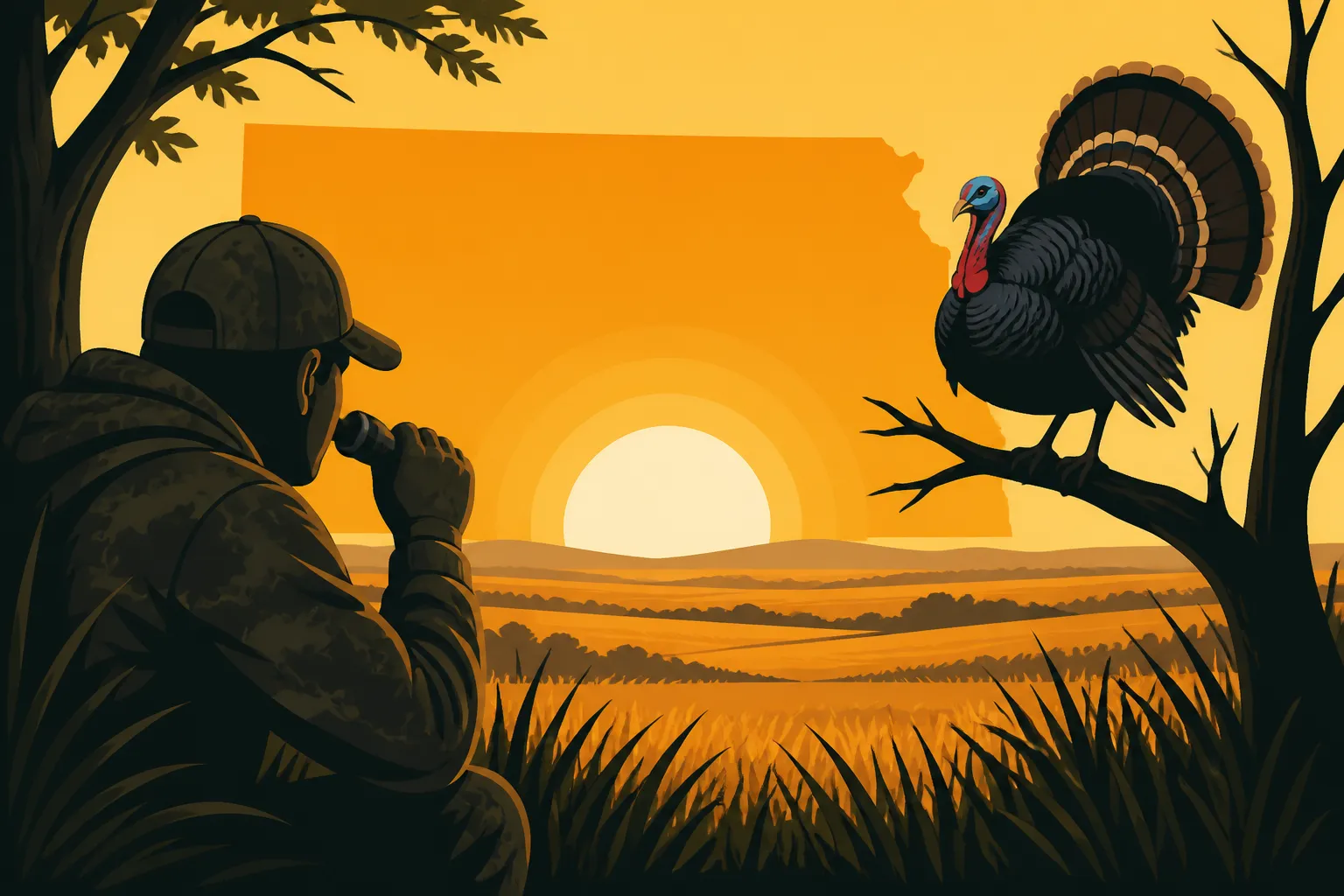
Calling a Gobbler Off the Roost
There's nothing quite like the anticipation of a Kansas spring morning, the woods just starting to lighten, and the spine-tingting gobble of a tom echoing through the trees from his roost. But let's be honest, that thrill can quickly turn into frustration when that gobbler just sits there, or worse, flies down silently and heads the opposite direction. It’s a common challenge for even the most seasoned hunters, and this guide is here to break down the tactics and strategies to consistently coax those stubborn Kansas gobblers off their roosts and into your setup.
Understanding the Morning Habits of Kansas Gobblers
Getting a gobbler to commit off the roost is often less about fancy calling and more about understanding his routine and leveraging it. These birds, especially the wily ones, have a specific morning ritual, and knowing what drives their decisions is key to putting yourself in the right place at the right time.
Why Gobblers Roost Where They Do
Gobblers pick their roost trees for a few core reasons: safety, vantage, and proximity to morning plans. They prefer taller trees, often near water sources like creeks or rivers, or on high points that offer a clear view of their surroundings. In Kansas, this often means cottonwoods along a river bottom, mature oaks in a timber patch, or even isolated stands of trees in otherwise open country. They want to feel secure from ground predators like coyotes and bobcats. If you've ever spent time Scouting Kansas River Bottoms and Creek Draws, you know these areas offer prime roosting habitat. A gobbler will often fly up to roost in an area he feels safe in, but also one that allows him to survey potential morning food sources or strutting zones.
Their roost choice isn't just random; it’s a strategic decision made the evening before. They'll often feed their way towards a preferred roosting spot, taking into account wind direction and potential threats. Knowing this behavior can help you predict their likely fly-down paths. If you can identify these key roosting trees or areas ahead of time, perhaps through a diligent evening scout and a technique like Roosting Kansas Turkeys the Night Before, you've already won half the battle.
The Gobbler's Pre-Fly-Down Routine
Before a gobbler flies down, he typically goes through a series of vocalizations and subtle movements. The first light often brings out the "gobble show" as they announce their presence to hens and other toms. These initial gobbles are usually from the limb, sometimes accompanied by wing beats as they stretch. They're trying to gather their harem or assert dominance. This is a critical window for a hunter.
Hens are usually the first to leave the roost, often making soft clucks and yelps as they prepare to fly down and gather beneath the tree. The gobbler is listening intently for these hens, and his primary motivation to fly down is usually to join them. If he has a group of hens with him on the limb, your job becomes much harder because he has little incentive to come to your calls. Sometimes, an experienced hunter using a platform like GoHunt for e-scouting can identify potential roosting areas by terrain features or historical patterns, giving them an edge in anticipating where these morning routines will unfold.
Pre-Dawn Setup and Stealth for Roosted Birds
Your success in calling a gobbler off the roost hinges almost entirely on your pre-dawn setup. This isn't the time for heroics or last-minute adjustments. Stealth and a well-thought-out approach are paramount to prevent busting the birds before you even get a chance to call.
Accessing Your Setup Location Silently
The pre-dawn woods are a symphony of subtle sounds, and any unnatural noise will immediately put a turkey on high alert. This means approaching your chosen setup location with extreme caution. Walk slowly, pick up your feet, and avoid snapping twigs or rustling through dry leaves any more than necessary. If you're hunting public land, know that other hunters might be doing the same, so be extra vigilant. I always carry a small headlamp with a red or green light setting to preserve my night vision and minimize disturbance.
The ideal access route is one that's quiet, avoids any known roosting areas until you're within comfortable calling distance, and allows you to get into position without being silhouetted against the morning sky. This often means using creek beds, fence lines, or timber edges for cover. Think about the direction of the turkey's likely fly-down and try to get into a position that intercepts him. For hunting on Kansas Walk-In Land Without Burning It Out, this stealthy approach is even more critical, as these areas often see increased pressure.
Choosing the Right Setup Position
Once you're within what you believe is optimal range (typically 80-150 yards from the roost tree, depending on terrain and how loud the bird is gobbling), it's time to set up. You need to be where you can see the gobbler fly down, intercept his path to a strutting area or hens, and remain hidden. This means good back cover, an open shooting lane, and a clear understanding of where the bird is likely to land.
A common mistake is setting up too close to the roost tree. This limits the bird's ability to come to you once he flies down, often leading to him hanging up just out of range. Instead, consider setting up between the roost and a natural strutting or feeding area he'd likely head to. If there are hens roosted with him, try to position yourself slightly away from their anticipated fly-down path, but still in a position where the gobbler will have to pass by your calls to get to them. Remember, turkeys have incredible eyesight, so concealment is paramount. I've heard too many stories of hunters getting busted because they didn't take the time to brush in a ground blind or find adequate natural cover, especially crucial when you're Setting Up Before Fly-Down.
Calling Strategies to Entice a Gobbler Off the Roost
This is where the art and science of turkey hunting truly merge. Your calling needs to be realistic, well-timed, and adaptable to the bird's responses. The goal isn't to just make noise, but to paint a picture of an eager hen ready for company.
Initial Calls and Reading the Gobbler's Response
As legal shooting light approaches, and the gobbler starts to sound off, resist the urge to hammer him with loud, aggressive calls. Start with soft, subtle tree yelps and clucks. Mimic a hen just waking up, stretching on the limb. Listen intently to his response. Is he gobbling harder? Is he turning on the limb to face your direction? This initial conversation is crucial. You want to gauge his interest without giving away your exact position or spooking him.
If he's gobbling consistently, you know he's interested. If he's silent or only gobbles once every few minutes, he might be henned up or just not that interested in your calls. A soft "lost hen" series of yelps can sometimes get a silent bird to sound off again. The key is to be patient and let the morning unfold. Don't call too much; let him think he needs to find you. A great resource like GoHunt can provide weather data, which might influence how vocal a bird is, giving you context for his behavior.
| Call Type | Description | Ideal Use for Roosted Gobblers |
|---|---|---|
| Tree Yelps | Soft, sleepy, often muffled yelps, 3-5 notes. | Mimics a hen waking up on the roost. Used for initial contact. |
| Clucks | Single, sharp, often contented notes. | Soft clucks can express contentment or curiosity. Combine with tree yelps. |
| Fly-Down Cackle | A rapid series of excited yelps and cackles, followed by wing beats. | Mimics a hen flying down to the ground. Use sparingly, just before the gobbler is ready to drop. |
| Puts | Sharp, alarmed single notes. | Indicates a perceived threat; use only if trying to stop a departing bird (often too late). |
| Cuts | Loud, sharp, sporadic yelps. | Aggressive, challenging. Can work on silent birds or to provoke a gobbler, but use carefully. |
Timing Your Calls for the Fly-Down
The moment of fly-down is the most critical. You want the gobbler to fly down in your direction, believing there's a hen waiting for him. As the light improves and you hear hens begin to cluck and fly down naturally, that's your cue. A well-timed "fly-down cackle" followed by the sound of simulated wing beats (flapping a hat against your leg or jacket) can be incredibly effective. This convinces the gobbler that your hen has just hit the ground and is ready to meet him.
Once he hits the ground, immediately go silent for a few minutes. Let him look around and wonder where that hen went. He'll likely gobble a few more times from the ground, trying to pinpoint her. If he starts walking away or seems to be stalling, a soft series of clucks and yelps can reassure him and draw him in. Remember, a gobbler will often fly down with hens already, making the challenge of Working a Henned-Up Tom Midday a more complex scenario. The goal off the roost is to intercept him before he joins them, or pull him away from them if they fly down separately.
Dealing with Hang-Ups and Post-Fly-Down Tactics
Even with the perfect setup and calling, turkeys can be unpredictable. Sometimes they'll hang up, just out of range, or they might fly down and immediately head in the opposite direction. Knowing how to react in these situations can salvage a hunt.
When the Gobbler Flies Down the Wrong Way
It's a common, heartbreaking scenario: the gobbler gobbles his head off, you call perfectly, and then he flies down silently, or worse, lands and immediately heads away from you. Don't panic. If he flies down silently and you don't hear him gobble from the ground, he might still be looking for hens. Give it a few minutes of silence, then try a soft series of yelps and clucks, as if a hen is just now on the ground and calling. This can sometimes pique his curiosity and bring him back.
If he's already on the ground and moving away quickly, you have a couple of options. You can try aggressive cuts and yelps, trying to challenge him or sound like an eager hen he can't ignore. Or, if the terrain allows, you can try to quickly and silently reposition, trying to get ahead of him or intercept his new line of travel. This is a gamble, as movement can easily bust a turkey, but sometimes it's your only play. Platforms like GoHunt can help you analyze topographical maps to identify potential intercept points if a bird goes off script.
Adjusting Your Strategy When He Hits the Ground
Once a gobbler hits the ground, the game changes. He's no longer vulnerable on a limb; he's on his home turf, often with acute awareness of his surroundings. If he's coming in slowly but hangs up just out of range, you need to be patient. A common reason for a hang-up is that he can't see the hen he's hearing. This is where Turkey Decoy Spreads That Work truly shine. If you have a decoy set up, it might be all he needs to take those last few steps. If not, soft clucks and purrs can sometimes reassure him and make him believe the hen is still there, just out of sight.
Another tactic for a hung-up bird is to go completely silent for an extended period, sometimes 15-20 minutes. His curiosity might get the better of him, and he might finally commit. If all else fails and he completely ignores your calls, don't be afraid to change locations and try a different approach later in the morning. Sometimes a gobbler just isn't responsive off the roost, and a "run-and-gun" tactic as described in Run-and-Gun Turkey Tactics on Kansas Walk-In Ground might be your best bet for the rest of the day.
Disclaimer
Hunting is an inherently dangerous activity. Always prioritize safety, understand and follow all Kansas Department of Wildlife, Parks and Tourism regulations, and obtain proper licenses and permits before heading into the field. This guide is for informational purposes only and does not guarantee hunting success.