Extended Antlerless Season Tactics
It can be incredibly frustrating to see the prime hunting seasons wind down, perhaps with an unfilled antlerless tag or the desire to put more venison in the freezer for the long winter ahead. Thankfully, the extended antlerless season in Kansas offers a fantastic opportunity to do just that, especially when you understand how deer behavior shifts in late winter. This guide will walk you through the essential tactics to help you make the most of these late-season opportunities.
Understanding Kansas's Extended Antlerless Season
The Kansas extended antlerless season is a crucial tool for wildlife management, designed to help control deer populations in specific units where the herd might be above management objectives. For hunters, it’s a golden ticket to keep pursuing deer after the main firearm and muzzleloader seasons have closed, and often even after the general archery season has wrapped up. This period typically allows hunters with specific antlerless-only permits to continue hunting into January, sometimes even early February, depending on the unit.
Purpose and Timing of the Season
The primary goal of these extended seasons is herd control. By allowing additional harvest of does, the Kansas Department of Wildlife, Parks and Tourism (KDWP) aims to reduce deer numbers in areas that can sustain it, helping to balance the population with available habitat and reduce conflicts like crop damage or deer-vehicle collisions. For hunters, it translates into a valuable opportunity to fill the freezer, especially if the earlier seasons were challenging or simply didn't yield enough meat.
It’s vital to remember that the specific dates and participating units for the extended antlerless season can vary slightly each year, so always check the latest KDWP regulations carefully. Typically, these seasons kick off right after the general firearm season concludes and can run through mid to late January, with some units occasionally extending into February. Understanding the dates and which units qualify for an extended antlerless hunt is the first step in successful late-season hunting. You'll find that some units, particularly those in eastern Kansas with higher deer densities, are more likely to have these extended opportunities. For more details on specific units, check out our guide on Kansas Extended Antlerless Seasons by Unit.
Permit Requirements and Restrictions
To participate in the extended antlerless season, you generally need an antlerless-only permit. These permits are specifically designated for the harvest of does, and typically, you can purchase more than one if available. The cost of these permits is usually quite reasonable, making it an accessible option for many hunters looking to extend their time afield. For specifics on cost, you might want to review information on the Kansas Antlerless-Only Permit Cost.
It's also important to be aware of any weapon restrictions. While some extended seasons may allow archery, others might permit any legal weapon, including firearms or muzzleloaders, especially early in the extended period. Always confirm the allowed weapon for the specific dates and unit you plan to hunt. Additionally, regulations regarding hunter orange during firearm portions of the extended season will apply, so familiarize yourself with Hunter Orange Rules During Firearm Season if you plan on using a rifle or shotgun. Keep in mind that pressure on deer during this time can be significant, so understanding your unit's rules and how they might concentrate hunters is key.
Scouting for Late-Season Antlerless Success
By the time the extended antlerless season rolls around, deer have been pressured for months, the rut is a distant memory, and their primary focus has shifted entirely to survival: finding enough food, securing thermal cover, and conserving energy. This means your scouting strategy needs a complete overhaul from early season or rut hunting.
Identifying Crucial Food Sources
In late season, food is king. Natural food sources have dwindled, and deer will be concentrating on the most calorie-rich and readily available options. This usually means agricultural fields. Think about fields that haven't been completely picked clean, especially standing corn or milo, which offers both food and cover. Winter wheat fields are also huge attractors, providing green forage when little else is available. Alfalfa fields, while not as common in all parts of Kansas, can also be a magnet.
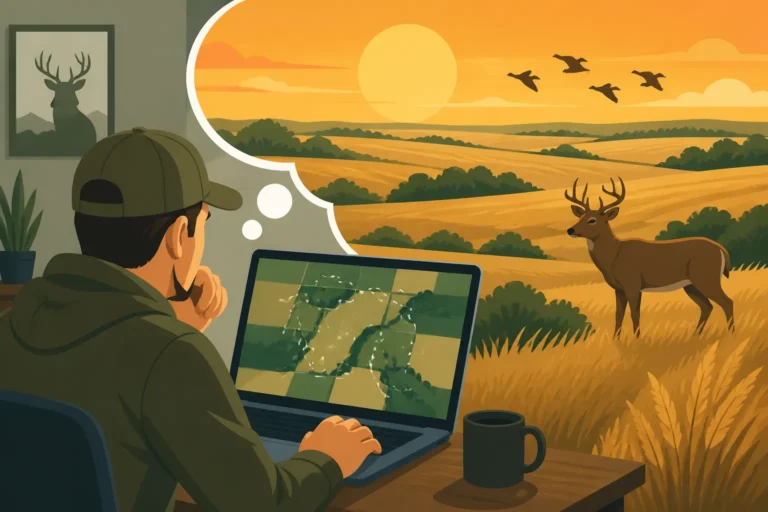
Using aerial imagery and tools like GoHunt or onX maps is invaluable during this phase. You can pinpoint specific fields, look for edges where deer might enter, and identify potential travel corridors. Pay close attention to corners of crop fields, creek bottoms adjacent to agriculture, and areas where crops meet thicker timber or CRP. It's often the remaining food that matters most, not just any food. Look for any unharvested patches or areas that might have been missed by combines. Our guide on Late-Season Food Source Hunting delves deeper into this.
Locating Thermal Bedding Cover
With colder temperatures, particularly when winter truly sets in, deer seek out thermal cover to bed down and escape the wind and cold. This isn't just any thicket; it's often the densest cover available, preferably with a south-facing slope to catch what little sun there is. Cedar thickets, dense plum patches, thick creek bottoms, and heavy CRP grass fields all provide excellent thermal protection. These spots will be close to those crucial food sources, as deer want to minimize energy expenditure traveling between bedding and feeding.
When e-scouting, look for those dark green blobs on the map, especially where they intersect with crop fields or river bottoms. These are often your best bets. Our article on Reading Aerial Imagery for Bedding Cover can give you a leg up on this process. Once you've identified potential bedding areas, look for subtle trails leading out toward feeding locations. These trails will be much more defined than earlier in the year due to consistent use by hungry deer.
Pinpointing Key Travel Corridors
Deer movement in the late season tends to be highly predictable: from bedding to food and back again, with minimal detours. They'll use the path of least resistance, often along field edges, creek beds, fence lines, or timber strips. These travel corridors will be well-worn, especially if snow is on the ground, making them easier to identify.
Focus on pinch points or funnels along these routes. These could be narrow strips of timber connecting two larger woodlots, a tight bend in a creek, or a small draw that allows deer to move concealed across open country. Even in flat farm country, subtle changes in terrain or vegetation can create these natural funnels. The goal is to set up along these high-traffic arteries where you can intercept deer moving during daylight hours. Since daylight movement is often limited to dawn and dusk, being in place before legal light is critical. Consider our insights on Walking In Before Legal Light to optimize your approach.
Effective Hunting Tactics for Antlerless Deer
Hunting in the extended antlerless season demands patience, precision, and an understanding of highly pressured deer behavior. These deer are wary, often moving only during low-light hours, making strategic setups and minimal intrusion paramount.
Strategic Stand Placement
For late-season antlerless hunts, your stand placement should almost always be focused on food sources. Position your stand on the downwind side of a preferred food source, ideally within shooting range of where deer are entering the field. Consider an inside corner of a crop field or a timber edge bordering a winter wheat field. Access to and from your stand must be stealthy, avoiding bumping deer in their bedding areas or on their travel routes.
Elevated stands, whether a ladder stand or a hang-on, provide a good vantage point and help with scent dispersion. If hunting from the ground, brush in a blind meticulously. Consider hunting the transition zones between bedding and feeding during midday, especially if deer are moving short distances to browse or stretch their legs. The colder the weather, the more likely deer are to move in daylight to feed and maintain body temperature. Always account for wind direction when selecting your specific tree or blind location.
Still Hunting and Small Drives
While stand hunting over food is often the most productive method, still hunting can be effective in dense cover, especially during midday or on particularly cold, blustery days. Move slowly, into the wind, scanning constantly for parts of deer. Focus on those thermal bedding areas you identified during scouting. The goal isn't to necessarily jump a deer and shoot it on the run, but to spot one before it sees you and get a clean, ethical shot. This method requires extreme stealth and patience.
Small drives can also be a viable tactic, particularly in small timber patches or dense cover that deer are using for bedding. This works best with a small group of hunters (2-3) who can coordinate their movements. One or two hunters act as "drivers," slowly pushing through the cover towards another hunter or two positioned on the downwind side, covering escape routes. The key is to keep the drive small, slow, and quiet to minimize stress on the deer and maximize shot opportunities. For practical tips, check out our guide on Small Timber Drives With Two Hunters. Always prioritize safety and clearly communicate roles and positions during any drive.
Scent Control and Cold Weather Gear
Deer in the late season are hyper-sensitive to human scent. They've smelled hunters all season, and their survival instincts are on high alert. Rigorous scent control is non-negotiable. This means scent-free laundry detergent for all your hunting clothes, scent-eliminating sprays, and careful attention to hygiene before and during the hunt. Even your breath can give you away in cold, still air.
Staying warm and comfortable is equally critical. You'll likely be sitting for long periods in potentially bitter cold. Layering is key, with a good base layer, insulating mid-layers, and a windproof, waterproof outer shell. Don't forget hand warmers, insulated boots, and a warm hat. Being cold makes you fidgety, leading to unnecessary movement and noise, which will certainly bust wary does. Our advice on Cold Weather Stand Clothing can help you prepare for those frigid Kansas mornings.
Weather and Post-Harvest Considerations
Late-season hunting is inextricably linked to the weather. The conditions don't just affect your comfort; they dictate deer movement and can significantly impact how you handle your harvested game.
Impact of Cold Fronts and Snow
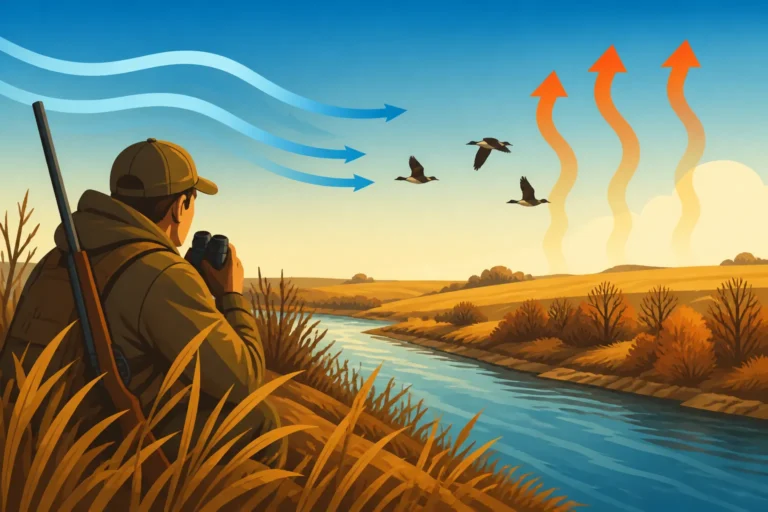
A strong cold front rolling through Kansas, especially after a period of mild weather, can trigger significant deer movement. Deer will often feed heavily before the front hits to fuel up for the ensuing cold. During the coldest days of a front, they might limit movement, but once the severest temperatures pass, they'll be back on their feet searching for food to replenish lost calories.
Snow cover can be a tremendous advantage for the late-season antlerless hunter. Fresh snow quiets your footsteps, making still hunting more effective. More importantly, snow clearly reveals fresh tracks, showing you precisely where deer are traveling, feeding, and bedding. You can use snow to confirm your e-scouting suspicions and identify new, hot travel corridors. Snow also pushes deer to specific, easily identifiable food sources as other options become buried or less accessible.
Post-Harvest Meat Care
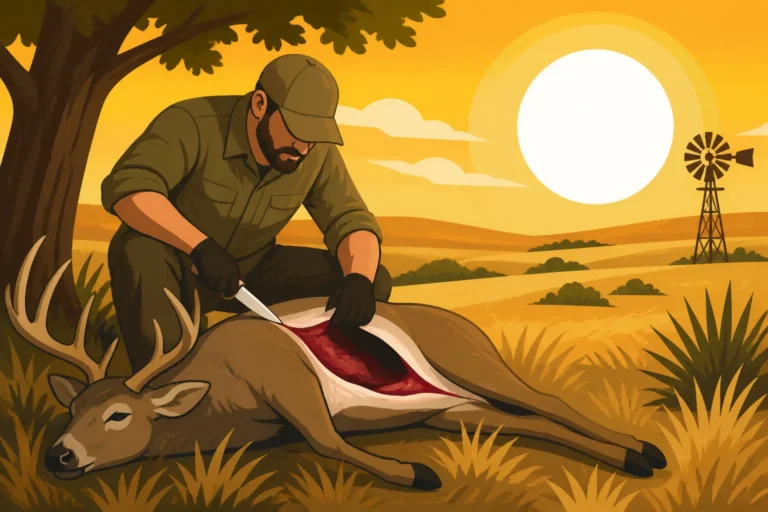
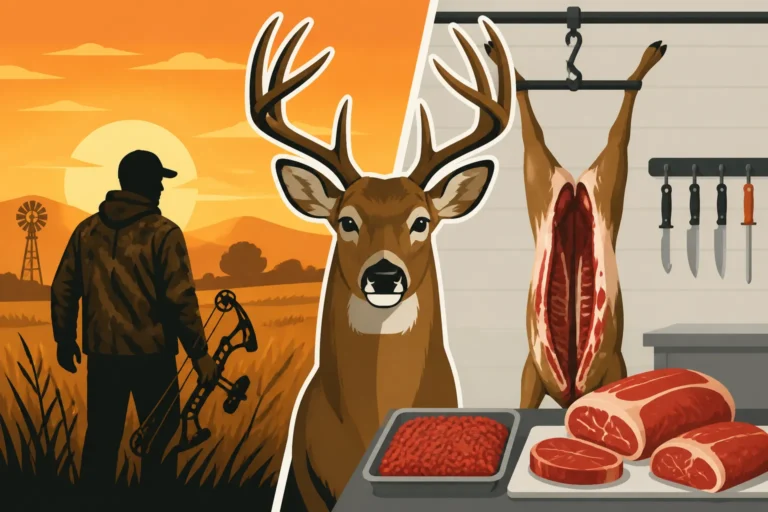
Even in cold weather, proper field dressing and meat care are crucial. While the cold helps with cooling, it's not an excuse to be sloppy. Field dress your deer as quickly and cleanly as possible. Remove all entrails to allow the carcass to cool internally. If you're on public land or a walk-in access area, consider quartering the deer in the field to make extraction easier, especially if you're alone or facing a long haul. For larger deer, our guide on Getting a Deer Out of a River Bottom Alone might offer some useful advice.
Once field dressed, get the deer to a cooler environment as soon as possible. Even if temperatures are below freezing, ambient air temperature in a vehicle or garage might not be ideal for quick cooling, especially if the internal body heat is still high. Hang the deer, allowing air to circulate around it. Consider a local locker plant if you're not processing it yourself; they are often busy during firearm season but may have more capacity during the extended antlerless period. Remember, you'll still need to follow Kansas Deer Harvest Reporting Deadline requirements.
Disclaimer
The information provided in this article is for general guidance and informational purposes only. Hunting regulations, season dates, and permit requirements in Kansas can change annually. It is the responsibility of every hunter to consult the most current official Kansas Department of Wildlife, Parks and Tourism (KDWP) regulations and statutes before engaging in any hunting activities. Always prioritize safety, ethical hunting practices, and respect for wildlife and private property.