Overnight Stand Storage on Public Ground
It’s a frustration almost every public land hunter in Kansas faces: you finally find that perfect pinch point, that hidden creek crossing, or that ideal timber edge, and the thought immediately hits you – "Can I just leave my stand here overnight?" The lure of saving time and effort, especially after a long, quiet sit, is strong, but the rules around leaving gear on public ground are often murky and carry real risks. This guide will meticulously break down the Kansas Department of Wildlife and Parks (KDWP) regulations, discuss the practical implications, and offer solutions so you can hunt public land responsibly and effectively without running afoul of the law or losing your valuable equipment.
The Core Question: Can You Leave a Stand Out Overnight?
Let's get right to it because this is where a lot of confusion and heartache begins. The simple answer, for most public land in Kansas, is no, you cannot legally leave your stand out overnight, or for any extended period. This isn't just a suggestion; it's a regulation with real consequences. Understanding the nuances of what KDWP defines as "temporary" and "unattended" is critical.
Kansas Wildlife and Parks Regulations on Public Land Equipment
The Kansas Department of Wildlife and Parks has specific language governing structures and equipment on public lands, including State Wildlife Areas (SWAs) and Walk-In Hunting Access (WIHA) properties. The core of it boils down to two main points: permanence and abandonment. Regulations typically state that no permanent blinds, stands, or structures may be constructed or left on public land. Furthermore, any portable stand or blind must be removed at the end of the hunting day or, in some specific cases, within a very short, clearly defined period.
For instance, most KDWP regulations explicitly forbid the use of "nails, screws, spikes, or any other device that will damage the tree" for attaching stands. This means even if you're hanging a stand for a single day, you must use methods that don't harm the tree. The intent here is clear: prevent damage to natural resources and ensure fair access for all users. If you plan on Hanging Stands on Public Land Without Getting Burned, it's vital to know these rules inside and out. The broader principle is that public land is for everyone, and leaving your personal equipment out indefinitely effectively "claims" a spot, hindering others' access and potentially causing environmental impact.
Practical Interpretations of "Temporary" and "Left Unattended"
Here's where it gets tricky for many hunters. What exactly constitutes "temporary"? Is it the duration of your hunt? A few hours? A day? The KDWP regulations often define a portable blind or stand as something that must be "removed from the area daily." This usually means from sunrise to sunset for hunting hours, or perhaps even after you finish your morning hunt before returning for an evening sit. It doesn't mean leaving it out for the entire deer season.
"Left unattended" generally means that you, the hunter, are not actively present and in control of the stand. If you walk away from your stand to track a deer, grab a snack from your truck, or even just take a short break, that's usually acceptable if you intend to return shortly. However, if you leave your stand after sunset and don't come back until the next morning, that definitively falls under "left unattended" in a way that violates regulations. This distinction is paramount because if KDWP personnel find a stand left unattended overnight, they have the authority to remove and impound it, and you could face citations and fines. It's a tough lesson to learn when your expensive gear disappears, not because of theft, but because of a regulation misunderstanding.
Types of Stands and Their Suitability for Overnight Storage
Different types of stands present different challenges and interpretations when considering overnight storage on public land. While the general rule is "take it with you," some stands are more tempting to leave, and others are simply impractical to haul in and out daily.
Hang-on Stands and Climbing Sticks
Hang-on stands, often used with climbing sticks, are incredibly popular among mobile hunters. They are lightweight, versatile, and can be set up in a variety of trees. However, they are also easily stolen. From a regulatory perspective, hang-ons and sticks must be removed daily. The temptation to leave them, especially if you've gone to great lengths to find a specific tree and get them perfectly set, is immense. But succumbing to that temptation can lead to confiscation.
The phrase "no permanent alteration" is key here. While your stand might not be permanently attached, the act of repeatedly hanging and removing sticks can still wear on a tree. If you're using this style of setup, it’s best to consider Mobile Hunting With a Saddle in Kansas or using very lightweight, portable climbing sticks that make daily setup and takedown less of a chore. For public land specifically, some KDWP areas might allow for a very short period of temporary placement (e.g., within the same calendar day), but leaving it out overnight is almost universally prohibited.
Climbing Stands
Climbing stands, true to their name, are designed for mobility. They allow a hunter to ascend a tree using the stand itself, eliminating the need for separate climbing sticks. This inherent portability makes them an excellent choice for public land where daily removal is required. However, they are not without their issues. They can be bulky and heavy to carry, especially over long distances or through thick cover, leading to the same temptation to leave them behind.
While a climbing stand might seem less "permanent" than a hang-on with multiple sticks, it still falls under the same KDWP regulations regarding daily removal. Leaving a climber unattended overnight dramatically increases its risk of theft. Even if you're only walking a short distance, a determined thief can quickly make off with your stand. The ease with which they can be removed by legitimate users is also why they are so easily removed by those with ill intentions.
Ladder Stands and Ground Blinds
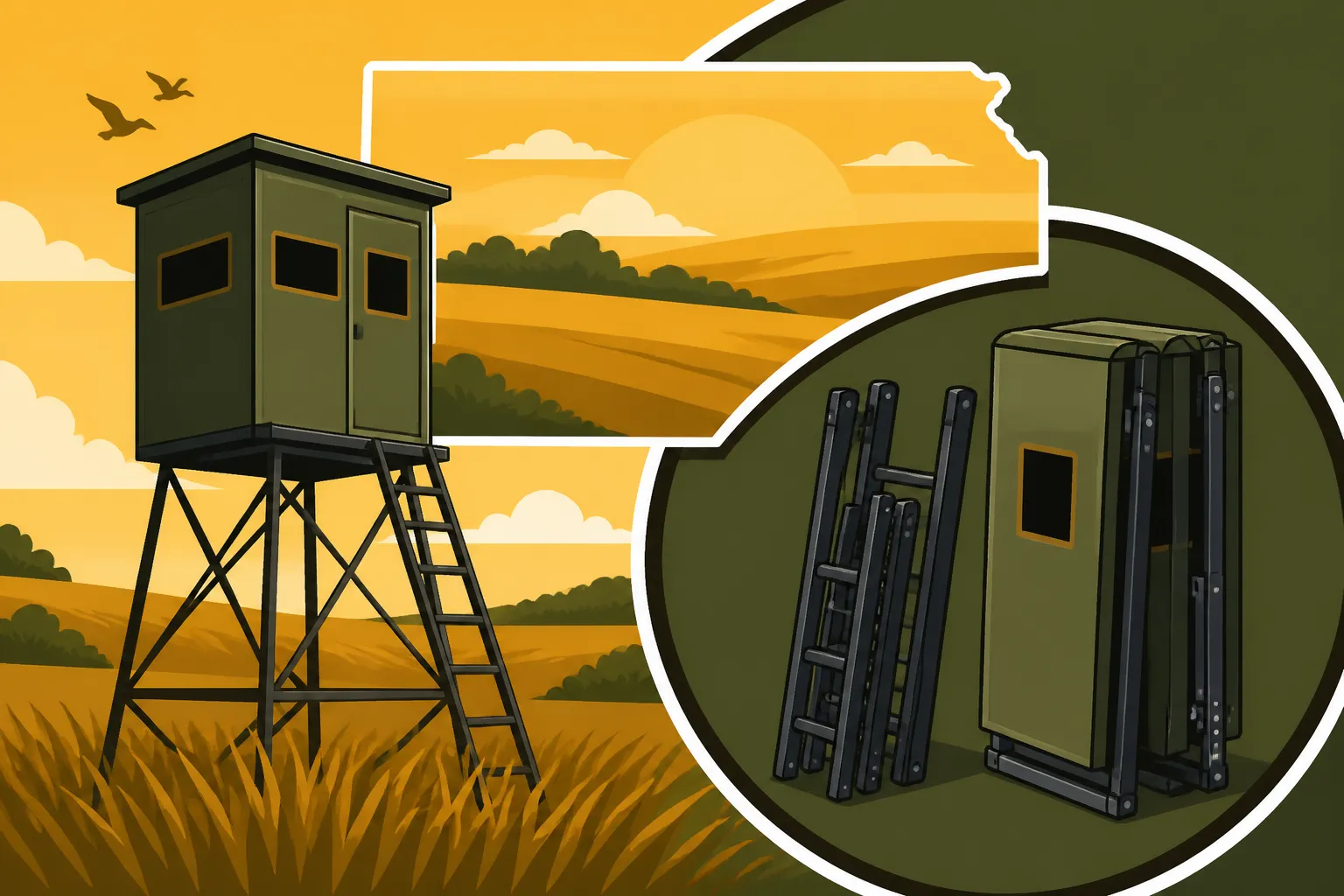
Ladder stands are designed for stability and comfort, often featuring a larger platform and a seated position. They are inherently bulky, heavy, and extremely difficult to move daily, making them completely unsuitable for legal overnight storage on public land in Kansas. Installing a ladder stand often involves a significant setup process, which aligns more with a "permanent structure" in the eyes of KDWP, even if it's technically removable. These are generally reserved for private land where permission has been granted for semi-permanent structures.
Ground blinds, while not elevated, are also considered "structures" by KDWP. Regulations for ground blinds on public land are often quite specific. Many areas require that pop-up or portable ground blinds be removed at the end of each day's hunt. Some wildlife areas might allow blinds to be left for a short period, perhaps a few days, if they are clearly marked with your KDWP ID number and contact information, and only for specific seasons or hunt types. However, this is an exception, not the rule, and you MUST check the specific regulations for the public land you are hunting. Generally, anything that takes a significant effort to set up or is left for an extended period is a no-go for public land without explicit, specific permission. When considering Ground Blind Brushing In, remember that even natural material must be easily removable if you're on public ground.
| Stand Type | Suitability for Overnight Storage (Public Land) | KDWP Interpretation (General) | Theft Risk | Portability |
|---|---|---|---|---|
| Hang-on Stand | No (Must be removed daily) | Portable, but must be removed | High | Moderate |
| Climbing Sticks | No (Must be removed daily) | Portable, but must be removed | High | High |
| Climbing Stand | No (Must be removed daily) | Portable, but must be removed | Moderate | Moderate |
| Ladder Stand | No (Considered permanent/semi-permanent) | Permanent structure, prohibited | Low (due to bulk) | Very Low |
| Pop-up Ground Blind | Generally No (Removed daily, check specific rules) | Portable, but often daily removal required | Moderate | High |
Risks and Ramifications of Leaving Gear on Public Land
Beyond the letter of the law, there are very real and often painful consequences for leaving your hunting equipment unattended on public ground. These aren't just abstract ideas; they're experiences many hunters have faced.
Theft and Vandalism
This is, by far, the most common and gut-wrenching risk. You spend good money on quality hunting gear, and the thought of it being stolen is terrible. Public land is, by nature, open to everyone, and unfortunately, not everyone has the same respect for other people's property. A stand left overnight, even if well-hidden, is a prime target. Thieves know hunters use public land, and they specifically look for unattended items.
Imagine finding that perfect oak overlooking a draw, spending an hour quietly setting up your hang-on and sticks, only to come back the next morning and find an empty tree. It happens. It's not just about the monetary loss of a $200 stand; it's the lost hunting opportunity, the frustration, and the feeling of violation. Even if your stand isn't stolen, it could be vandalized, perhaps rendering it unusable or unsafe. This is why following Portable Stand Rules on Kansas Public Land is as much about protecting your investment as it is about following the law. It’s better to pack it in and pack it out, even if it adds a bit more physical effort to your hunt.
Legal Penalties and Fines
As mentioned, KDWP has the authority to confiscate equipment left illegally. If they find your stand, they will often remove it. You might be able to retrieve it from a regional office, but it's often a hassle, and there could be storage fees involved. Worse yet, you could receive a citation. A KDWP officer may view the abandoned stand as a violation of regulations, leading to fines and potentially even more severe penalties, especially if it's a repeat offense. These penalties can range from minor fines to court appearances, depending on the severity and frequency of the violation.
It's also important to remember that specific public hunting areas might have additional local rules beyond the statewide KDWP regulations. For example, some State Wildlife Areas have stricter rules about what can be left, when, and how. Always consult the specific KDWP regulations pamphlet or the signage at the entrance to the particular area you plan to hunt. Using mapping tools like GoHunt, which often have layers for public land and specific regulations, can be incredibly helpful in avoiding these legal pitfalls before you even step foot in the woods.
Impact on Other Hunters and Fair Chase
Beyond personal loss and legal trouble, leaving stands out overnight has ethical implications for the broader hunting community. Public land is a shared resource. When you leave a stand, it can be perceived as "claiming" a spot, even if unintentionally. This can lead to conflicts with other hunters who feel you are monopolizing an area. It goes against the spirit of fair chase and equal access.
Imagine driving for hours to a promising WIHA tract, finally finding a great looking funnel, only to see someone else’s stand already hanging there. It's disheartening and feels unfair. Such actions contribute to Hunting Pressure Patterns on Kansas Public Land, making it more difficult for everyone to find undisturbed spots. A key tenet of responsible public land hunting is to leave no trace, allowing the next hunter to experience the same opportunity you did. This principle extends to taking all your gear with you, upholding the idea that no one "owns" a spot on public land.
Strategies for Responsible Public Land Hunting Without Leaving Stands
The challenges of public land hunting are real, but they are also part of the appeal. It forces us to be better, more adaptable hunters. There are many effective strategies to pursue deer on public ground in Kansas without violating regulations or risking your gear.
Mobile Hunting Techniques
One of the most effective ways to adapt to public land rules is to embrace mobile hunting. This means using lightweight, portable gear that you can easily pack in and out every day. Saddle hunting is a prime example, offering incredible versatility and portability. A compact saddle setup, combined with lightweight climbing sticks, can be carried in a small pack, allowing you to move quickly and quietly to different spots based on real-time intel. This flexibility is crucial when deer patterns change due to weather or pressure.
Investing in lightweight hang-on stands and compact climbing sticks is another excellent mobile strategy. Brands like Lone Wolf, Hawk, or XOP make excellent, durable, and lightweight options that can make daily carry much more manageable. The goal is to make the in-and-out process so efficient that the temptation to leave your stand becomes minimal. This approach also allows you to adjust to Wind and Thermals on a River Bank or other dynamic factors, enabling you to hunt fresh sign daily without being tied to a fixed, long-term setup.
Scouting and Stand Placement
Effective scouting is the bedrock of successful public land hunting, especially when you can't leave stands out. Modern tools have revolutionized this. Before you even set foot on a property, utilize e-scouting tools like GoHunt to analyze aerial imagery, topographical maps, and public land boundaries. You can identify potential pinch points, bedding areas, and travel corridors from your couch. This cuts down on wasted time walking unproductive ground and helps you pinpoint likely stand locations.
Once on the ground, focus on quick, efficient scouting. Look for fresh deer sign, like rubs, scrapes, and tracks. Identify multiple potential trees for your stand in a given area. The more quickly you can set up your stand, the less impact you'll have on the area, and the more time you'll have to hunt. For Kansas particularly, where much of the deer habitat is found in crop country, knowing how to interpret Milo and Corn Stubble Deer Patterns is critical, as deer often shift their routines based on harvest. When you're Scouting Kansas Walk-In Tracts Before the Opener, focus on mapping out several potential ambush sites so you have options each day.
Securing Gear When Temporarily Left
While the goal is to take everything out daily, there might be rare instances where you need to step away from your gear for a short period during the hunting day – perhaps to retrieve a downed animal or respond to an urgent call. In these situations, securing your gear is paramount.
Use robust cable locks or chains to secure your stand and sticks to the tree. While this won't stop a determined thief with bolt cutters, it will deter opportunistic ones and make it harder to quickly snatch your gear. Additionally, choose stands and climbing sticks in muted, natural colors that blend into the environment. You can even go a step further by using natural foliage to "brush in" your stand or sticks if you must temporarily leave them for a very short duration. The less visible your gear is, the less likely it is to attract unwanted attention. Remember the guiding principle: leave no trace, even if you are just leaving your gear for a few hours while tracking. This also extends to careful planning of Access Routes That Do Not Bump Deer, ensuring your entrance and exit are stealthy and secure.
Disclaimer
This guide is intended for informational purposes only and does not constitute legal advice. Hunting regulations can change frequently, and specific rules may vary by county, wildlife area, or management unit. Always consult the most current Kansas Department of Wildlife and Parks (KDWP) hunting regulations and any specific rules posted at your chosen hunting location before heading into the field. It is the hunter's responsibility to understand and abide by all applicable laws and regulations.