Transport To and From the Stand
There's a frustration many of us know all too well: you've spent hours scouting, hung your stand in the perfect pinch point, and meticulously planned your hunt, only to have it all fall apart because you spooked deer walking in or out. In the vast, open, and often flat landscapes of Kansas, how you get to and from your stand without alerting every whitetail in a mile radius is just as crucial as the stand placement itself. This guide is all about mastering the art of quiet, effective, and smart transportation for your Kansas deer hunts, ensuring your presence remains a secret.
The Undeniable Impact of Your Entrance and Exit
It might sound obvious, but deer are incredibly attuned to their environment. Every rustle of leaves, every unnatural scent, every glimpse of movement that isn't part of their usual world acts as a warning. How you approach and leave your stand isn't just a detail; it's often the deciding factor in whether you even see a mature buck.
Why Deer Pattern Human Intrusion
Whitetails are creatures of habit and survival. They learn quickly. If they regularly detect human presence on a particular trail or at a specific time, they will adapt their movements. Think about it: if you walk the same path to your stand every day, especially if it cuts through a bedding area or a preferred travel corridor, deer will notice. They might start using that area only at night, or they might simply abandon it altogether during daylight hours. This isn't just about scent; it's about sound, sight, and the general disturbance of their sanctuary. You're trying to hunt an animal that thrives on being undetected, and every time you walk into the woods, you're leaving a signature. That signature can ruin an otherwise perfect stand location for days, or even weeks. Understanding this is the first step in truly effective deer hunting.
The Element of Surprise: Hunting Unpressured Animals
The goal, especially when targeting mature bucks, is to hunt an animal that doesn't know it's being hunted. An unpressured deer behaves naturally, following its instincts for feeding, bedding, and breeding. When deer feel safe, they move more during daylight, making them more vulnerable. Our job as hunters is to maintain that illusion of safety. This means your access and egress routes must be chosen with the utmost care to minimize disturbance. Every time you spook deer on your way to or from the stand, you're essentially educating them, making them harder to hunt. A perfect example is leaving your stand after an evening hunt, walking through a field, and busting a group of deer that were just starting to feed. Those deer now associate that field with danger, and it will take time, or perhaps a different approach, before they feel comfortable using it during shooting light again.
Common Transportation Methods and Their Practicalities
When it comes to getting to your stand, you've got options, each with its own set of trade-offs. What works best often depends on the terrain, the distance, and the time of year.
The Traditional Walk-In
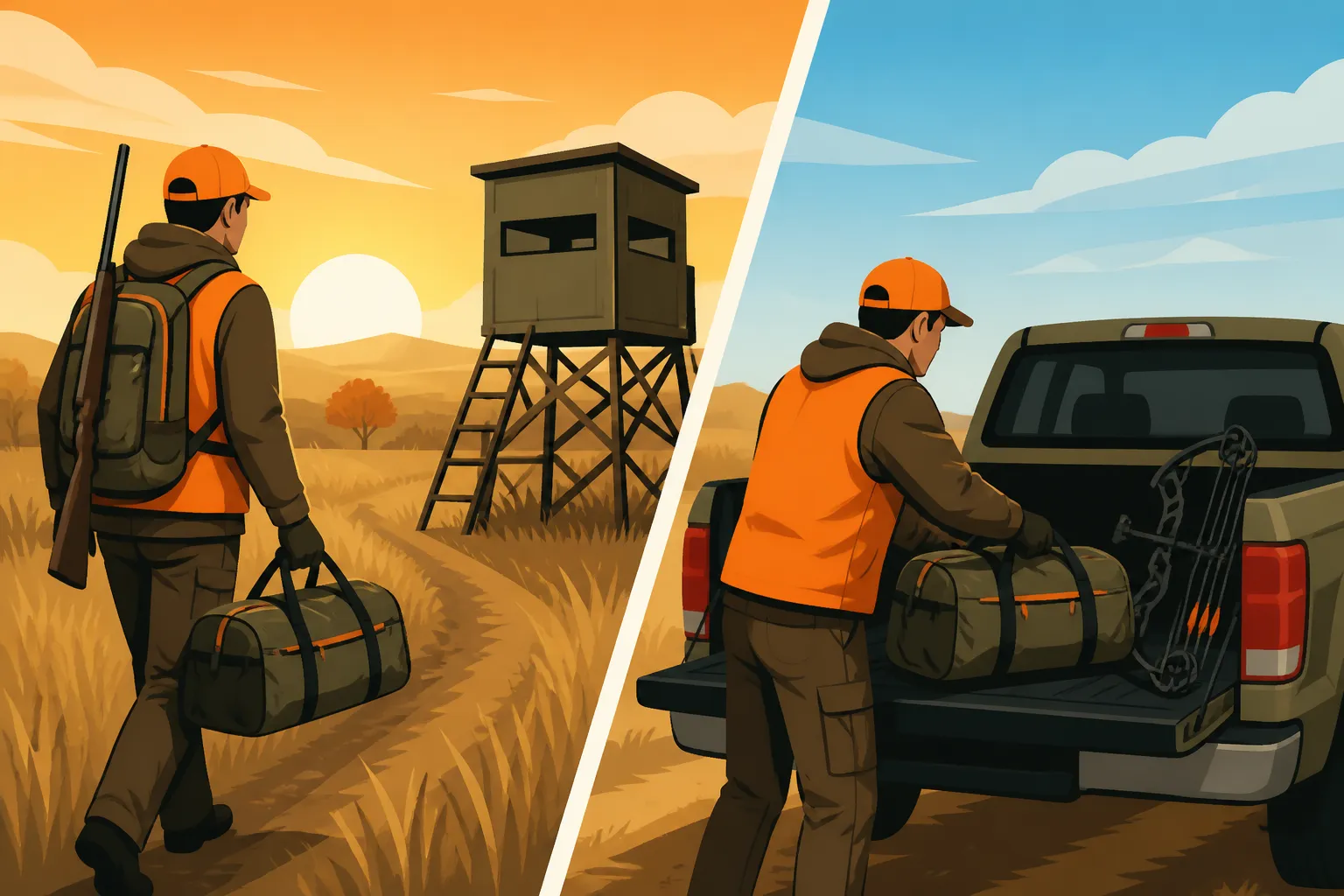
For many hunters, especially on public land or smaller private tracts, walking in is the default. It's simple, requires no special equipment beyond good boots, and allows for maximum stealth if executed correctly. However, a long walk can mean scent dissemination, fatigue, and the temptation to take the easiest, but not necessarily the quietest, path. In Kansas's sprawling crop fields, walking a mile or two to get to a single timber point or a creek crossing can be a challenge, especially in the dark. It also means you're limited by how much gear you can comfortably carry. You might have the perfect spot, but if it takes you 45 minutes of heavy breathing to get there, dripping sweat, you've already contaminated the area with your scent. This method demands discipline and often a willingness to walk extra distance to circle around potential bedding areas. Walking In Before Legal Light is a skill, and it's essential to practice it.
E-Bikes and ATVs: Speed, Efficiency, and Their Drawbacks
E-bikes have exploded in popularity for a reason. They offer speed and efficiency, allowing you to cover significant distances quickly, often with less physical exertion and, crucially, less scent transfer than walking. They are a fantastic tool for accessing those far-flflung sections of a property, especially in flatter country where you might have a long two-track road or a field edge to navigate. Similarly, ATVs or UTVs offer power and capacity, great for hauling gear or even a harvested deer.
However, these motorized options come with significant caveats. Noise is the obvious one; even electric motors make some sound, and gas engines are incredibly loud in the still morning air. This noise travels far, alerting deer to your presence long before you're near your stand. Scent is another factor. While you might sweat less, the machine itself carries foreign odors – gas, oil, exhaust – that deer will recognize as danger. Many public lands also have strict regulations about where and when you can use motorized vehicles, if at all. For example, using a noisy ATV to access a public land treestand just before legal light can disturb not only your hunt but also the hunts of anyone else nearby. It's a balance: the convenience needs to be weighed against the potential for spooking game. If you're using a tool like GoHunt for e-scouting, you can often map out potential e-bike routes that keep you away from known bedding areas, using terrain features to muffle sound.
Kayaks or Canoes for Water Access
Kansas is crisscrossed with rivers and creeks, and these can offer some of the most overlooked and stealthy access routes, especially when hunting riparian zones or remote river bottom timber. Using a kayak or canoe allows you to bypass typical land access points, often putting you deep into areas that receive minimal human pressure. This is particularly effective for deer that bed along River Oxbows and Deer Movement. The water itself masks scent, and with quiet paddling, you can move almost silently.
However, water access isn't without its challenges. It requires specialized equipment and skill. Navigating low water, downed trees, or strong currents can be difficult and even dangerous. Getting out of a small boat quietly and climbing a bank can be cumbersome, especially with hunting gear. Then, there's the challenge of getting a harvested deer back to your vehicle, which can be a monumental task alone. Still, for hunters targeting those elusive river bottom bucks, a quiet paddle down a creek can be the ultimate stealthy entrance. Learning about Wind and Thermals on a River Bank is crucial when considering this method.
Planning Your Routes for Maximum Stealth
Simply picking a direction and walking isn't enough. Effective stand access and egress require forethought and a keen understanding of deer behavior.
E-Scouting Your Approach: Identifying Low-Impact Paths
Before you even step foot on the property, fire up your mapping app. Tools like GoHunt provide invaluable satellite imagery and topographic maps that allow you to virtually scout your entry and exit routes. Look for natural funnels, elevated terrain that might allow you to stay above bedding areas, or thick cover that can shield your movement. Prioritize routes that keep you out of sight and downwind of where you expect deer to be bedded or traveling. Identify specific landmarks you can use in the dark – a distinct treeline, a fence corner, a bend in a creek.
Your e-scouting should focus on:
- Concealment: Can you use a ditch, a fenceline, a hedgerow, or a ridge to stay out of sight?
- Wind Direction: Always aim to approach with the wind in your favor, carrying your scent away from the deer's likely locations. This means having multiple entry/exit plans for different wind conditions.
- Minimizing Disturbance: Avoid walking through known bedding areas, food plots, or heavy travel corridors during daylight hours.
- Quiet Footing: Look for paths with soft ground, short grass, or exposed dirt rather than crunchy leaves or dry corn stubble.
By meticulously planning these routes, you're not just finding a way to your stand; you're creating an Access Routes That Do Not Bump Deer.
Daytime Scouting Versus Hunt Day Execution
There's a big difference between walking a route in broad daylight, casually observing, and trying to navigate it in the predawn darkness with a full pack and weapon. Always scout your planned routes in person before the hunt. Walk them at different times of day, noting any hidden obstacles, muddy spots, or overly noisy sections. How does the wind actually swirl in that creek bottom? Are there dogwalkers or other hunters using a path you planned to take on public land?
During your scouting trips, pay attention to how your scent disperses and how sound carries. What looks like a quiet path on a map might be a crunch-fest of dry leaves in reality. This pre-hunt reconnaissance is vital for avoiding surprises that could compromise your hunt. A quick check of a WIHA tract might reveal a freshly mowed path that's perfect for quiet access, or it might show a field full of tall, rustling weeds that would make a silent approach impossible.
Exiting Without Blowing Out the Area
Your exit strategy is just as important as your entry, if not more so, especially on evening hunts. Many hunters will sit until dark, climb down, and then walk directly through the feeding area they just watched fill with deer. This is a sure-fire way to educate those deer about human presence.
Morning Hunts: After a morning hunt, it's often best to wait a bit, if possible, allowing deer to move out of the immediate vicinity before you climb down. If you've been watching deer bed 200 yards away, waiting 30-60 minutes after legal shooting light ends can make a huge difference. Then, try to exit away from where deer are likely to be moving towards their bedding areas.
Evening Hunts: For evening hunts, the golden rule is to exit undetected. This might mean waiting until well after dark, or having a separate, longer exit route that takes you around known feeding areas. If you're on a food plot or field edge, waiting until all the deer have dispersed into bedding cover can allow for a clean exit. Sometimes, it's better to stay in your stand for an extra hour after dark than to bump every deer off the field on your way out. Consider your exit as carefully as your entry. Parking Away From Your Stand is often the first step in a successful, quiet exit.
Specific Strategies for Diverse Kansas Terrains
Kansas isn't all flat, open fields, though those are certainly prevalent. The state offers a surprising diversity of landscapes, each demanding a slightly different approach to stand access.
Open Farm Country: Minimizing Exposure
In much of central and western Kansas, you're dealing with vast stretches of cropland interspersed with small timber blocks, shelterbelts, and drainages. Cover can be sparse, making stealthy movement challenging.
- Use Field Edges and Drainage Ditches: If legal and accessible, walking along a fenceline or through a drainage ditch can provide crucial cover, both visual and for scent control. These often run deeper than you'd expect and can shield you from the eyes and noses of deer in an open field.
- Stay in the Shadows: If you must cross open ground, use the shadows of treelines or even the low light of dawn and dusk to your advantage. Early morning or late evening often offers enough darkness to mask movement across an open stubble field.
- Walk in Standing Crops: When legal and ethical (and with landowner permission if on private ground), walking through standing corn or tall milo can provide excellent concealment and muffle sound. This is a game-changer for accessing interior timber points or creek crossings. Just be mindful of rustling, especially on windy days. Identifying Best Stand Locations in Flat Farm Country often starts with figuring out how to get there.
River Bottoms and Heavy Timber: Navigating Complexity
Eastern Kansas, and the larger river systems throughout the state, are characterized by dense river bottom timber, thick brush, and often uneven terrain. These areas can be incredibly productive but also present unique access challenges.
- Stick to Established Trails (Carefully): Deer often create their own trails through thick cover. While these can be easy to follow, they are also primary travel routes for deer. Use them, but be exceptionally cautious, staying downwind and moving slowly.
- Utilize Waterways: As mentioned, a kayak or canoe can be invaluable for accessing these dense areas. It can also be the easiest way to retrieve a deer from the heavy cover, avoiding a strenuous drag through thorns and brush. Scouting Kansas River Bottoms and Creek Draws is critical to finding these hidden gems.
- Account for Scent Swirls: In heavy timber, especially in creek bottoms, thermals and wind currents can be unpredictable. What seems like a steady wind on an open ridge can swirl erratically down in a ravine. Always be mindful of shifting breezes and plan your routes accordingly, perhaps setting up further back from a known travel corridor to account for unpredictable scent eddies. Wind and Thermals on a River Bank explores this further.
Public Land Challenges: Dealing with Other Hunters
Public hunting land in Kansas, particularly WIHA tracts or state wildlife areas, can see significant pressure, especially early in the season or during the rut. Your access strategy needs to factor in the potential for other hunters.
- Go Deeper, Go Further: Often, the easiest access points on public land are the most heavily hunted. Be willing to walk further, use less obvious entry points, or explore those corners of a property that others overlook. This is where an e-bike or a canoe can truly shine, allowing you to reach areas that are too far for most walk-in hunters. Hunting Pressure Patterns on Kansas Public Land are real, and avoiding them can be your biggest advantage.
- Avoid Main Trails: While convenient, main hiking or ATV trails on public land are often used by other hunters and recreationalists. If you must use them, do so sparingly and with heightened awareness.
- Early Bird Gets the Worm (Quietly): Getting to your spot well before legal light not only allows you to settle in but also often means you'll beat other hunters who might make more noise on their way in.
Essential Gear for Quiet and Efficient Stand Access
Having the right equipment can make all the difference in your ability to access and exit your stand effectively and discreetly.
Quiet Footwear and Clothing
This is fundamental. Your boots should be comfortable for long walks, provide good traction, and most importantly, be quiet. Avoid heavy, clunky boots that scuff and make excessive noise. Similarly, your outer clothing layers should be made of silent fabrics like fleece or brushed tricot. Nothing gives away your presence faster than noisy clothing rubbing against itself or catching on branches. Think about it: that brand-new stiff jacket might keep you warm, but if it sounds like a sail boat in a hurricane every time you raise your arm, you're not going to see much. Invest in quality, quiet gear, and always test it out before the season.
Deer Carts and Haulers
If you're hunting more than a quarter-mile from your vehicle, especially in open country or dense river bottoms, a deer cart or game hauler can be a lifesaver. These aren't just for getting a harvested deer out; they can also be used to quietly transport your treestand, climbing sticks, blinds, and heavy packs to your location. Using a cart reduces the strain on your body, meaning less sweat and less scent. While some public lands restrict wheeled vehicles, many do not. Just ensure the cart itself is quiet – a squeaky wheel can ruin your whole hunt. Deer Carts on Walk-In Ground are a worthy investment.
| Transportation Method | Pros | Cons | Best Use Cases |
|---|---|---|---|
| Walking | Quietest, cheapest, minimal gear | Slow, fatiguing, limited carry capacity | Short distances, dense cover, stealth is paramount |
| E-Bike | Faster than walking, less scent than ATV | Noise (motor), battery life, restricted areas | Mid-range distances, flatter terrain, long field edges |
| ATV/UTV | High speed, high capacity, can haul deer | Loudest, most scent, most restricted on public | Long distances to boundary, deer retrieval, large private land |
| Kayak/Canoe | Very stealthy access, scent masked by water | Skill required, cumbersome with gear/deer, limited waterways | River bottoms, swampy areas, accessing remote timber |
Headlamps and Lighting
Moving in the dark is a necessity for good access. A reliable headlamp with a red or green light option is crucial. White light is fine for tasks in camp or on a main trail, but using a red or green light significantly reduces your visibility to deer and helps preserve your own night vision. Always walk with your light pointed towards the ground, only flashing it up when absolutely necessary to check a landmark. This minimizes your silhouette and keeps your presence as low-key as possible. While you might be focused on the destination, pay attention to Walking In Before Legal Light safely and discreetly.
Remember, the goal is always to minimize your footprint. Whether you're carefully walking, pedaling quietly, or paddling softly, every action you take before and after the hunt contributes to your overall success.
Disclaimer
This article is for general informational purposes only and does not constitute professional advice. Laws, prices and regulations vary by location and change over time. Consult a qualified professional for guidance on your specific situation.