Hunting Pressure Patterns on Kansas Public Land
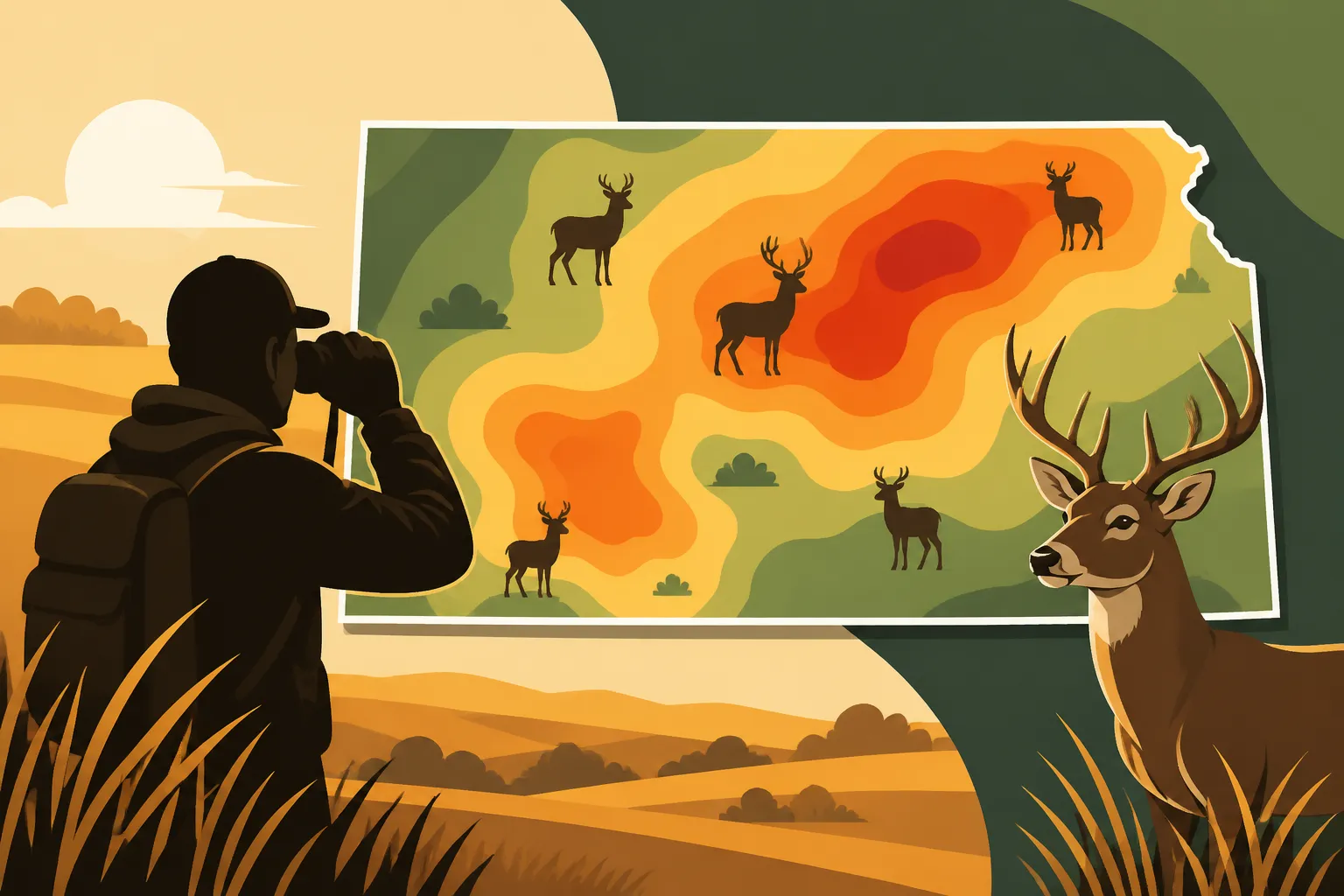
It's incredibly frustrating, isn't it? You spend countless hours scouting, preparing, and dreaming of that perfect Kansas sunrise hunt on public land, only to arrive and find three other trucks already parked at your prime spot. Or worse, you never see another hunter but the deer sign you found a week ago has completely vanished, and the woods feel eerily empty. Hunting pressure on public ground in Kansas can turn even the most promising spots into ghost towns or crowded messes, making it feel impossible to connect with a quality animal. This guide is all about helping you understand those pressure patterns and, more importantly, how to adapt and still find success.
Understanding the Kansas Public Land Landscape
Kansas offers a surprising amount of public hunting ground, but it's not all created equal, especially when it comes to how much pressure it sees. From the well-known Walk-In Hunting Access (WIHA) tracts to sprawling State Wildlife Areas and Corps of Engineers lands, each type has its own characteristics that influence hunter density and deer behavior. Knowing these differences is your first step in predicting and navigating the crowds.
WIHA: The Double-Edged Sword of Access
Walk-In Hunting Access (WIHA) is a fantastic program, and honestly, a lifesaver for many hunters, especially non-residents or those without private land access. It opens up hundreds of thousands of acres of private land to public hunting, often consisting of prime agricultural ground, timbered creek bottoms, and CRP fields. However, this ease of access is precisely what makes many WIHA tracts prime candidates for heavy hunting pressure.
Think about it: a clearly marked public parcel, often visible from a county road, is an easy target for anyone with a Kansas hunting license and a map. On opening day of archery season, or especially the firearm season, these spots can be slammed. Deer on these tracts quickly learn that daylight movement is a bad idea. They'll go nocturnal, move into thicker, harder-to-reach cover, or even temporarily shift off the WIHA land onto adjacent private ground if that pressure becomes too intense. It's not uncommon to hear tales of hunters pulling out their gear after a morning sit only to see deer pouring out of the WIHA onto private property at 10 AM, having been pushed by earlier hunters. This makes Hunting Kansas Walk-In Land Without Burning It Out a crucial skill to develop.
State Wildlife Areas and Corps Lands: Predictable Patterns
Kansas also boasts numerous State Wildlife Areas (SWAs) and Corps of Engineers (COE) lands, often surrounding larger reservoirs or along major river systems. These areas tend to be larger, more permanent blocks of public land compared to the seasonal WIHA tracts. While they provide consistent access, their sheer size and permanent nature often mean consistent, predictable pressure year after year.
Hunters tend to gravitate towards the easiest access points on these lands—the main parking lots, well-worn trails, and areas close to roads. Over time, these become "pressure points." Deer on SWAs and COE lands adapt by seeking out sanctuary areas, often in the thickest, nastiest cover far from trails or deep in overlooked corners. They also learn to use the cover provided by topographical features, like creek bends or thick river bottom timber, to evade hunters. Knowing these patterns means that while these areas will almost certainly have other hunters, you can often find success by venturing off the beaten path, targeting those less-accessible pockets. Understanding the specific regulations of each SWA, such as designated refuges or restrictions on vehicle access, can also clue you into areas that naturally receive less pressure. Many hunters use mapping tools like those offered by GoHunt to scout these areas from home, looking for those hidden corners before they even set foot on the ground.
The Anatomy of Hunting Pressure: What it Looks Like
Hunting pressure isn't just about seeing other hunters; it's about the cumulative effect of human presence on deer behavior. Deer are creatures of habit, but they are also incredibly adaptable survivors. When their patterns are consistently disrupted, they change, often dramatically. Understanding how pressure impacts them is key to predicting their new moves.
Nocturnal Nuisance: When Deer Go Hiding
The most immediate and noticeable effect of hunting pressure is often a shift towards nocturnal movement. During the early archery season, it's common to see deer moving throughout the day, especially near food and water sources. But as soon as the orange army descends, or even after a few weekends of sustained archery pressure, those daylight sightings can vanish. Bucks that were once cruising field edges in the morning suddenly only appear on trail cameras between midnight and 5 AM.
This isn't just a temporary hiccup; it can become their primary mode of operation. They learn that the cover of darkness provides safety. They'll bed down early, often in dense thermal cover or thickets, and won't stir until well after sunset, only to return to those secure bedding areas before the first hint of civil twilight. For the hunter, this means that those prime morning and evening sits become significantly less productive unless you adjust your strategy. You need to think about where these deer are spending their daylight hours and how you might intercept them during those fleeting moments of movement, often closer to their bedding areas than you'd typically prefer to hunt.
Pressure-Induced Migration: Shifting Core Areas
While "migration" might sound like a strong word, deer absolutely shift their core home ranges in response to consistent pressure. It's not necessarily a long-distance journey, but more of a strategic relocation to a safer neighborhood. If a particular public land parcel, or even a section of it, becomes too hot, deer will simply move to an adjacent area that offers more security.
This often means pushing into the nastiest, most overlooked cover on the public tract itself, or, very commonly, slipping onto neighboring private property that sees less hunting activity. They might move across a creek, through a thick hedgerow, or into a dense cedar thicket that hunters tend to avoid. This is where Reading a Kansas Creek Bottom for Deer Sign or understanding how deer use Shelterbelt Ends and Buck Travel becomes invaluable. They'll utilize every bit of available cover and terrain to their advantage, creating "sanctuary zones" where they feel safe enough to move during the day. As a hunter, this means you might need to adjust your scouting and hunting efforts to focus on these often-marginalized pockets that other hunters overlook.
Predicting Pressure: Key Factors and Timing
Successful hunting in pressured areas isn't just about reacting; it's about anticipating. Knowing when and where pressure is most likely to hit allows you to form a proactive plan. Several factors play into this, from the calendar to the physical accessibility of a hunting spot.
The Calendar and Clock: Peak Pressure Times
There's no secret that certain times of the year, and even certain days of the week, see a significant spike in hunter numbers. The opening weekend of Kansas archery season, and especially the much-anticipated firearm season, are absolute magnets for hunters. Public land access points will be bustling, and deer will feel that presence almost immediately. Holiday weekends, like Thanksgiving or the days leading up to Christmas during the December firearm season, also see increased activity as people have more time off work.
Beyond the season opener, the initial week or two of any season tends to be the heaviest. After that, the pressure often tapers off, leaving behind a dedicated few who are willing to put in the extra effort. During the week, public land tends to be quieter, especially in areas not directly adjacent to major metropolitan centers. Weekends, however, are almost guaranteed to be busier. Your strategy should account for this: hit the woods hard mid-week if you can, and on weekends, consider changing your approach to hunt those less-accessible areas or shift your hunting times to catch deer moving at the absolute fringes of legal light, when other hunters might be heading in or out.
Accessibility and Visibility: Hot Spots for Hunters
It's human nature to take the path of least resistance, and hunters are no different. Public land spots with easy road access, clear parking areas, or well-maintained trails are almost always the first to be hunted and the most consistently pressured. A large, visible WIHA sign on a paved road? You can bet it sees more traffic than a small, tucked-away parcel at the end of a muddy two-track.
Similarly, areas that are easy to hunt – open timber, easily traversable terrain, or fields with obvious edges – become hot spots. Deer learn this quickly. They'll often avoid these highly visible and easily accessed areas, instead retreating to dense CRP fields, thick plum thickets, brushy creek draws, or river bottom timber that requires more effort to penetrate. This is where mapping tools become invaluable. Using platforms like GoHunt, you can identify these hard-to-reach pockets, look for natural barriers like creeks or steep banks that deter casual hunters, and plan your approach accordingly. Often, the best spots are just a little farther, a little nastier, or a little more hidden than most hunters are willing to go.
Strategies for Mitigating Pressure: Thinking Differently
Dealing with hunting pressure isn't about avoiding public land; it's about employing smart strategies that counter its effects. It requires a willingness to work harder, think differently, and often, venture into places others won't.
Hunting the Unconventional: Overlooked Pockets
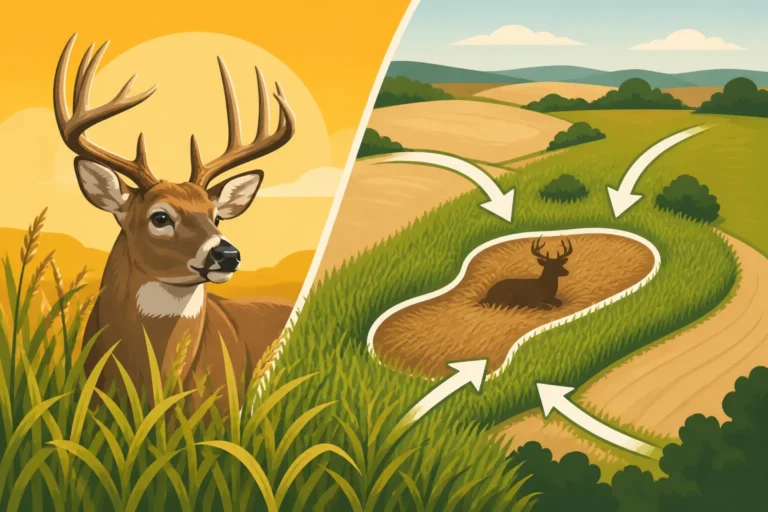
Deer, especially mature bucks, are masters of finding sanctuary. On public land, these sanctuaries are almost always the places hunters ignore. These can be small, isolated pockets of cover surrounded by open fields, dense brush near housing developments, or even small, overgrown ditches that connect larger pieces of timber. The key is to look for areas that, at first glance, might not seem like prime deer habitat but offer a significant level of security.
For example, a small, half-acre clump of cedars in the middle of a quarter-section of CRP might hold a buck all day, simply because no one thinks to hunt it. Or a narrow, brushy finger of timber along a property line, often too small for most hunters to consider, can be a travel corridor for deer moving between larger bedding and feeding areas. The trick is to identify these "micro-sanctuaries" through meticulous e-scouting and then confirm them with boots on the ground. You might find a small Hunting Inside Corners of Crop Fields or a slight depression in the terrain acting as a funnel that deer use to avoid visible movement. These spots may only offer a short window of opportunity, but they often yield encounters with unpressured deer.
Embracing the Grind: Deep & Difficult Access
If you want to escape the crowds, you often have to out-work them. This means being willing to walk farther, cross tougher terrain, and tackle challenging access routes. On large State Wildlife Areas or COE lands, the deepest parts, often miles from any parking area, receive significantly less pressure. These are the areas where deer are most likely to feel secure enough to move during daylight hours.
This strategy often involves packing light, using comfortable boots, and being prepared for a strenuous hike. You might need to ford a creek, navigate dense timber, or push through thick undergrowth. It's not glamorous, but the reward can be finding deer that haven't been constantly harassed. Consider using a topo map or a GPS mapping app like GoHunt to identify natural barriers – creeks, steep ravines, or large blocks of dense timber – that might deter other hunters but provide a secure corridor for you to access those deep, untouched pockets. This is also where understanding Access Routes That Do Not Bump Deer becomes critical, especially when venturing deep.
The Mobile Hunter's Advantage: Adapting on the Fly
One of the most effective ways to combat hunting pressure is to be mobile. Fixed stands or ground blinds in highly visible locations often become ineffective once deer learn their locations or change their patterns due to pressure. A mobile hunting setup, whether it's a lightweight treestand or a saddle hunting system, allows you to quickly adapt to changing deer movement. If your morning spot is dead, or you bump another hunter, you can pack up and relocate to a new area with minimal disturbance.
Mobile hunting allows you to react to fresh sign, track a pressured buck's movements, or shift your focus to a completely different part of the public land if necessary. This agility is particularly effective during the rut, when bucks are constantly on the move, or during the late season when food sources change. Learning Mobile Hunting With a Saddle in Kansas can open up a whole new world of opportunities by allowing you to get into precise, overlooked trees that wouldn't be accessible with a traditional climber or ladder stand. This flexibility prevents you from getting stuck in unproductive spots simply because you've invested time in setting up a static stand.
Leveraging Technology and Scouting for Success
In today's hunting world, technology is your friend, especially when dealing with hunting pressure. Combined with diligent boots-on-the-ground scouting, it can give you a significant edge in finding unpressured deer.
Digital Reconnaissance: E-Scouting for Success
Before you even step foot on public land, modern mapping applications can be your most powerful tool. Platforms like GoHunt allow you to examine aerial imagery, topographical maps, and public land boundaries right from your computer or phone. This "e-scouting" is essential for identifying potential bedding areas, travel corridors, pinch points, and, critically, those hard-to-reach sanctuary zones that other hunters might overlook.
Look for key features:
- Thick Cover: Dense cedar thickets, plum thickets, riparian zones along creeks, or areas of tall, unharvested crops (even on WIHA).
- Terrain Features: Slight elevation changes, ditches, creek bends, or anything that offers a visual barrier for deer.
- Access Points: Identify all roads, trails, and potential parking areas. Then, consciously look for areas that are a significant distance from any of these.
- Property Lines: Note where public land meets private, as deer often use these boundaries for travel or as escape routes.
- Water Sources: Ponds, creeks, or even drainage ditches can be magnets, especially in dry periods, but also potential pressure points.
By spending time on GoHunt, analyzing these features, you can identify multiple potential spots before you ever burn a drop of gas. This saves you time and allows you to prioritize your on-the-ground scouting efforts, focusing only on the most promising, least-pressured areas. For a deeper dive, check out E-Scouting Kansas Farm Country From Home.
Boots on the Ground: Confirming the Intel
E-scouting is fantastic, but it's only half the battle. Nothing replaces actual boots on the ground. Once you've identified potential low-pressure areas, you need to physically scout them to confirm your intel and identify fresh deer sign. This means looking for tracks, droppings, rubs, scrapes, and most importantly, bedding areas.
Early season scouting (before the hunting season starts) is ideal for this, as deer are less pressured. However, even during the season, quick, efficient scouting missions can pay dividends. If you see fresh sign in an unexpected location, it might indicate deer have shifted their patterns due to pressure elsewhere. Pay attention to how deer are using cover to travel, especially if it connects to a safe, unpressured bedding area. Don't be afraid to put in the miles. You're looking for where deer want to be, and those spots are rarely the most convenient for hunters. This is also the time to decide on the best stand locations or Ground Blinds in Open Country and figure out your ideal Access Routes That Do Not Bump Deer.
| Public Land Type | Typical Pressure Level | Best Access Strategy | Common Deer Behavior | Key for Success |
|---|---|---|---|---|
| WIHA (Walk-In Hunting Access) | High (especially opening day/weekends) | Deep dives, non-obvious entry points, walk-in only | Go nocturnal, shift to adjacent private, use thickest cover | Find small, overlooked pockets; hunt mid-week |
| State Wildlife Areas (SWA) | Moderate to High (predictable) | Focus on distant areas from parking, use natural barriers | Seek out established sanctuaries, use terrain for travel | Master e-scouting, get away from main trails |
| Corps of Engineers (COE) | Moderate (often along water bodies) | Use water access (kayak, boat) if permitted, long walks | Relate to water features, use dense river bottom timber | Understand wind/thermals near water, find "island" cover |
Adapting to Pressure in Real-World Scenarios
The biggest challenge with hunting pressure is that it's dynamic. What worked yesterday might not work today, and what works for one hunter might not work for another. Being adaptable and having a few different strategies in your pocket is crucial for consistent success on Kansas public land.
The Mid-Season Reset: Changing Tactics
After the initial rush of opening day and the first few weeks of hunting, many public land deer have completely changed their patterns. The easy-to-hunt spots are burned out, and the deer are largely nocturnal. This is your cue for a "mid-season reset." It means re-evaluating everything you thought you knew about a particular piece of public land.
Instead of continuing to hunt the same old stand, it's time to adapt. Focus on new areas that likely haven't seen much pressure. This might involve tackling a much longer walk to get to a remote corner, exploring a section of the property you previously wrote off, or even shifting to a completely different public land tract. During the mid-season, deer will often be focused on food sources. Use your GoHunt app or other mapping tools to identify less obvious food sources—maybe a forgotten persimmon tree, a small patch of oaks, or a specific type of standing forage that isn't drawing widespread attention. Deer will often approach these during daylight from their secure bedding cover, offering a brief window. You might even find success employing aggressive tactics like Rattling and Grunting During the Kansas Rut if you're in a low-pressure area where a cruising buck hasn't been educated.
Late-Season Lessons: Capitalizing on Leftovers
By the late season, after the firearm hunt has passed and the weather turns cold, public land often feels truly deserted by other hunters. This is a huge advantage. Deer have been hammered, their patterns are likely ingrained, and they are acutely focused on two things: thermal cover and reliable food sources. This can be one of the most productive times to hunt pressured public land, if you know what to look for.
Deer will be seeking out the thickest, most protective cover to bed in, especially on cold, windy days. Think south-facing slopes with dense cedars, deep creek bottoms with heavy brush, or the center of large CRP fields that offer a buffer from the elements. Once you've identified these bedding areas, the next step is to locate the most attractive late-season food source nearby. This could be standing soybeans, leftover corn, winter wheat, or even browse in a sheltered timber block. Deer will often only move the absolute minimum distance necessary between their secure bedding and these high-energy food sources, often just before dark or right after dawn. Setting up between a known bedding area and a preferred Late-Season Food Source Hunting can be incredibly effective, especially if you get in well before light and are willing to sit until legal shooting hours are over. Just remember to practice Leaving No Trace on Walk-In Ground to keep these spots pristine for future hunts.
Disclaimer
Hunting is an inherently dangerous activity. Always prioritize safety, follow all Kansas Department of Wildlife, Parks and Tourism (KDWP) regulations, and obtain appropriate licenses and permits. This guide provides general information and does not guarantee hunting success. Conditions in the field can vary greatly.