Written Permission Requirements in Kansas
One of the quickest ways to ruin a potentially fantastic Kansas hunting trip, or worse, find yourself facing legal consequences, is misunderstanding private land access. It’s a frustrating reality for many hunters, especially those new to the state or used to more open regulations elsewhere: Kansas takes its private property rights very seriously. This comprehensive guide will walk you through the essential rules, best practices, and specific requirements for obtaining and carrying written permission to hunt on private land in Kansas, helping you navigate these waters with confidence and respect.
Understanding Kansas Trespass Law and Written Permission
Navigating the nuances of private land hunting in Kansas can feel like a minefield if you're not fully aware of the laws. Unlike some states where unposted private land might be considered open to hunting by default (though this is increasingly rare everywhere), Kansas operates on an "implied permission" system for certain activities, but hunting is explicitly not one of them. For hunting, you need permission, and in many cases, that permission needs to be in writing.
Why Written Permission is Critical
The core reason written permission is so vital in Kansas boils down to legal protection and clarity. Imagine you’ve spent months scouting, invested in gear, and finally put a big Kansas whitetail on the ground, only for a landowner to appear, claim you’re trespassing, and threaten to call law enforcement. Without written proof, it's often your word against theirs. This can lead to your hunt being ruined, your game confiscated, and potentially hefty fines or even criminal charges for trespassing.
Beyond legal ramifications, written permission fosters trust and a clear understanding between you and the landowner. It documents the agreed-upon terms, dates, and areas, preventing misunderstandings that could strain relationships or jeopardize future access. Landowners appreciate the respect shown by a hunter who takes the time to formalize permission. It shows you're serious, responsible, and understand the value of their property. It also protects them by clearly delineating who is on their land and when. This proactive approach helps secure your hunting opportunities and maintains the good reputation of hunters as a whole. You can dive deeper into the initial approach in our article Asking a Kansas Landowner for Permission.
What Constitutes Valid Written Permission
So, what exactly needs to be on that piece of paper to make it valid in Kansas? It’s not just a quick scribble on a napkin. While the law doesn't prescribe an exact form, it does imply certain critical elements. Essentially, valid written permission should eliminate all doubt about who, what, where, and when.
A robust written permission document should include:
- The Landowner’s Full Name and Contact Information: This verifies who granted permission.
- Your Full Name and Contact Information: So the landowner knows exactly who is on their property.
- Specific Dates of Permission: Is it for a single day, a week, or the entire season? Be precise. "November 1st – November 15th, 20XX" is much better than "fall deer season."
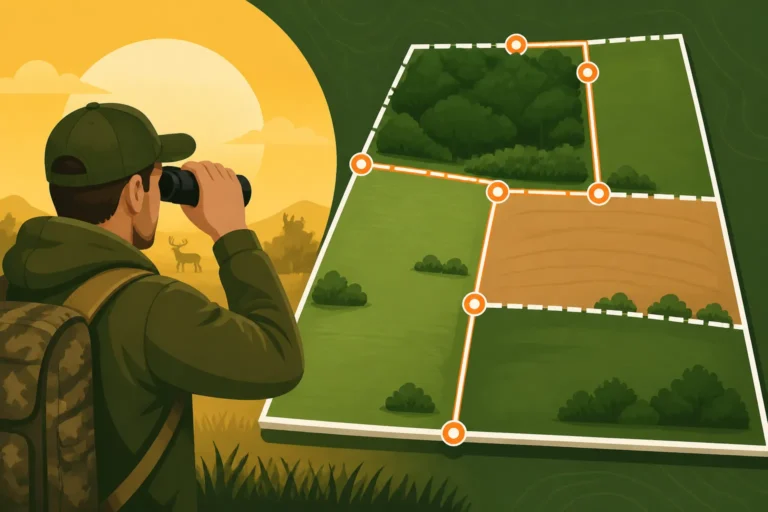
- A Clear Description of the Land: This should include the legal description (section, township, range), county, and ideally, a common address or identifiable landmarks. Many hunters print aerial maps and have the landowner circle the exact areas permitted, then sign and date that map as an attachment.
- The Specific Activity Permitted: Explicitly state "hunting for deer," "hunting for pheasant," or "trapping," etc. If you're only allowed to hunt certain species or with certain weapons, that should be noted.
- Any Special Conditions: Are there areas off-limits? Times when hunting is not allowed? Restrictions on vehicle use? Any other rules the landowner has, such as "no driving across crop fields" or "only hunt from a treestand."
- Both Parties’ Signatures and the Date: This formalizes the agreement and proves both parties consented.
Having this level of detail leaves little to interpretation and provides a solid defense should any questions arise. Remember to carry this document with you at all times while hunting on the property.
When Oral Permission Isn't Enough
Kansas law, particularly K.S.A. 32-1002, generally states that for hunting, fishing, or trapping on private land, you need permission. While oral permission can be legally sufficient, relying solely on it is like playing Russian roulette with your hunting season. The problem isn't necessarily that oral permission is illegal, but that it's incredibly difficult to prove if challenged.
Consider a scenario: you stop by a farmer’s house, have a friendly chat, and he says, "Sure, go hunt my north forty." You shake hands and head out. A week later, he's forgotten the conversation, or perhaps his son (who wasn't present) sees you and doesn't know you have permission. Or worse, the landowner changes their mind or denies ever giving permission, especially if there's a perceived issue like a gate left open or a track through a wet field. Without anything in writing, it becomes a he-said-she-said situation. Law enforcement, in such cases, often sides with the landowner simply because they are on their own property, and there’s no documented proof to the contrary. Save yourself the headache and always aim for written permission, even if you start with a verbal agreement. Always follow up that handshake with a simple written form.
Navigating Private Land Access Without a Guide
For many hunters, a guided hunt simply isn't in the budget or isn't the preferred style. Going it alone on private land in Kansas means taking on the responsibility of securing your own access, which can be immensely rewarding but requires diligent effort.
Proactively Seeking Landowner Permission
Gaining access to private hunting ground in Kansas is often about old-fashioned door-knocking, building relationships, and proving yourself as a responsible hunter. Don't just show up a week before the season opener expecting to walk onto prime ground. Start early—months in advance, if possible. March or April, after sheds are dropped and before planting gets into full swing, can be a great time to approach farmers. They're often less busy and more receptive.
When you approach a landowner:
- Be respectful and polite: Introduce yourself, explain why you're there, and ask if they have a few minutes to talk.
- Look presentable: You're asking for a favor, not demanding a right.
- Offer something in return: Can you help with chores? Offer to mend a fence, fix a gate, or share some of your harvest? Sometimes offering a small lease fee or even a gift certificate to a local restaurant can go a long way.
- Have your plan ready: Be clear about what you want to hunt (species, weapon), when you want to hunt, and how many people will be with you.
- Provide references: If you have them, offer to share contact information from other landowners you've hunted for.
- Leave your contact info: Even if they say no, leave a card or a note with your number. Circumstances change, and they might call you later.
Remember, a "no" today doesn't mean "no" forever. Be persistent but not pushy. The reputation you build in the local community can open or close doors for years to come.
Utilizing Mapping Tools for Landowner Information
In the digital age, mapping applications have become invaluable for identifying private landowners and property boundaries without having to knock on every single door in a county. Tools like onX Hunt and GoHunt have revolutionized the way hunters scout and plan.
These platforms often provide:
- Property Ownership Information: Displaying landowner names and sometimes even mailing addresses, which can be invaluable for sending a respectful letter of introduction if a personal visit isn't feasible.
- Property Boundaries: Clearly delineating public and private land, so you know exactly where you stand and avoid accidental trespass. This is crucial when exploring Kansas Walk-In Hunting Access Explained (WIHA) and adjacent private parcels.
- Aerial and Topographical Maps: Allowing you to e-scout potential hunting spots, identify bedding areas, travel corridors, and access points from your couch. This kind of detailed reconnaissance helps you be more specific and informed when you talk to a landowner.
- Waypoint and Tracking Features: Enabling you to mark gates, access roads, and potential stand locations, which you can then discuss with the landowner.
While these tools are incredibly helpful for initial research, always remember: they are not official legal documents. Always confirm landowner information with local county records or a face-to-face conversation. The most up-to-date and legally binding information will always come directly from the landowner themselves. When looking at potential spots for public land, these tools are also fantastic for E-Scouting Kansas Farm Country From Home.
Essential Information for Your Written Agreement
Once you've secured a verbal "yes," it's time to formalize it. This isn't just about legality; it's about solidifying the relationship and demonstrating your commitment to responsible hunting. Here’s a checklist of what you should aim to include in a written permission form, ideally typed for clarity:
- Header: "Private Land Hunting Permission Agreement"
- Grantor (Landowner) Information: Full Legal Name, Address, Phone Number.
- Grantee (Hunter) Information: Full Legal Name, Hunting License Number, Address, Phone Number.
- Dates of Permission: Clearly state the start and end dates. "From October 1, 20XX, to December 31, 20XX."
- Permitted Activities: "Hunting deer (archery and firearm)," "Hunting pheasant and quail," etc.
- Property Description: Legal description (e.g., "The NW Quarter of Section 10, Township 15 South, Range 2 West, in Smith County, Kansas"), common address, and any specific boundaries (e.g., "all land west of County Road 120 and north of the power line"). Attach a map with the area highlighted and explicitly referenced.
- Conditions and Restrictions: List all specific rules agreed upon (e.g., "No vehicles off established roads," "Access only through north gate," "No hunting within 150 yards of residence," "Must call before each hunt," "No guests without prior approval").
- Release of Liability Clause (Optional but Recommended): While not required by Kansas law for recreational use, some landowners appreciate a statement releasing them from liability for accidents. Consult with a legal professional for appropriate wording.
- Emergency Contacts: Your emergency contact and the landowner's.
- Signatures: Spaces for both the landowner and hunter to sign and date.
- Witness (Optional): A third party to witness the signatures adds another layer of verification.
Keep a copy for yourself and provide one to the landowner. This document is your golden ticket and proof of your legal right to be there.
Specific Scenarios and Common Questions
Even with the best intentions and written permission, certain situations can arise that cause confusion or potential legal issues. Understanding how Kansas law applies to these specific scenarios is crucial.
Retrieving Game Across a Property Line
This is a classic hunter's nightmare: you make a perfect shot, but the deer runs onto the adjacent property where you do not have permission. What do you do? In Kansas, your right to retrieve game is not automatic. You must obtain permission from the landowner of the adjacent property before crossing the boundary, even if you are simply tracking a wounded animal with no intention to hunt further.
Attempting to retrieve game without permission constitutes trespassing. This means you must:
- Locate the landowner: This is where your onX Hunt or GoHunt app can be a lifesaver, allowing you to quickly identify the adjacent property owner.
- Request permission to enter: Explain the situation calmly and respectfully. Offer to show them where the deer crossed and where you believe it is.
- Be prepared for a "No": While most landowners are understanding, they are within their rights to deny you access. If they say no, you have limited options. You cannot force entry.
- Offer to involve law enforcement: Sometimes, if the landowner is hesitant, suggesting you involve a KDWP game warden or local sheriff can help. An officer might be able to mediate or even accompany you to retrieve the animal. However, this is at the discretion of the landowner and law enforcement.
The bottom line is clear: respect private property. Do not cross that fence line without explicit permission, even if it means losing your hard-earned animal. This topic is so common, we have a dedicated article on Recovering a Deer Across a Property Line.
Hunting Adjacent to Posted Land
Kansas law clearly defines posted land, often through signs or, increasingly common, purple paint marks on trees or posts. These markings signify "No Trespassing." When hunting near such boundaries, extreme caution is warranted. Even if you have permission for one piece of property, you must be absolutely certain you do not cross into or shoot over posted land.
Key considerations:
- Know your boundaries: Use your GPS or mapping app like onX Hunt to precisely identify property lines. Regularly check your position.
- Respect setbacks: While Kansas doesn't have a universal mandatory "setback" distance from property lines, good judgment and ethical hunting dictate giving yourself ample space. You are responsible for where your bullet or arrow lands. If your projectile lands on posted land, even if you remain on permitted property, you could still be in violation.
- Visual cues: Keep an eye out for "No Trespassing" signs or purple paint. These are legally recognized indicators. Check out Kansas Trespass Law and Posted Land for more details.
- Noise and disturbance: Even if you're legal, excessive noise or activity right on a property line can cause friction with neighbors. Maintain a courteous distance.
It's always better to err on the side of caution. If there's any doubt about whether a shot is safe or if you're too close to a boundary, don't take it.
Road Right-of-Way and Railroad Land Rules
Many hunters in Kansas wonder about the legality of hunting from road rights-of-way or near railroad tracks. This can be a complex area, and the rules vary depending on the specific location and type of road or railroad.
- Public Road Rights-of-Way: Generally, hunting or shooting from or across a public road or highway is prohibited in Kansas. The right-of-way typically extends beyond the paved or graveled surface. While some rural dirt roads might seem like fair game, you can run into issues with discharging a firearm across a road, or a projectile landing on private property without permission. Always assume the road right-of-way itself is not a hunting zone. Furthermore, many counties or municipalities have specific ordinances against discharging firearms within their limits, regardless of state law. For more specific information, refer to Kansas Road Right-of-Way Hunting Rules.
- Railroad Rights-of-Way: Railroad property is almost universally private property. Hunting or trespassing on railroad rights-of-way without explicit permission from the railroad company is illegal and extremely dangerous. Not only are you risking legal trouble, but you are also putting yourself in harm's way due to active train lines. Never assume implied permission or public access on railroad property.
When in doubt, always treat these areas as private land requiring explicit, written permission. The potential risks and penalties far outweigh any perceived convenience.
Here's a quick summary of permission types:
| Type of Permission | Legal Standing in Kansas (Hunting) | Clarity for Hunter & Landowner | Risk of Misunderstanding / Legal Issue | Best Practice for Hunter |
|---|---|---|---|---|
| Written Permission | Strong and clear | High | Low | Always seek and carry |
| Oral Permission | Legally sufficient, but difficult to prove | Medium | High | Follow up with written form |
| No Permission | Illegal (Trespassing) | N/A | Extremely High | Avoid at all costs |
Disclaimer
This article is for general informational purposes only and does not constitute professional advice. Laws, prices and regulations vary by location and change over time. Consult a qualified professional for guidance on your specific situation.