Why Antelope Numbers Stay Low in Kansas
It's a common scene for anyone who's spent time driving the vast, open expanses of western Kansas: endless horizons, rolling grasslands, and often, the unmistakable silhouette of whitetail deer or even a mule deer in the distance. But ask about pronghorn antelope, and you'll likely get a wistful shake of the head. It's frustrating to see so much seemingly perfect habitat, yet know that these incredible animals remain elusive and few. This guide is here to shed light on precisely why Kansas's antelope numbers stay stubbornly low, delving into the historical, ecological, and environmental factors that shape their tenuous existence in the Sunflower State.
The Pronghorn's Historical Foothold and Early Challenges
Many assume pronghorn were once abundant across all of Kansas, much like they are in states further west. The reality is a bit more nuanced. While they certainly existed, Kansas always represented the eastern fringe of their primary range, a testament to their specific habitat needs. Understanding this historical context is crucial to grasping their current struggles.
The Eastern Edge of Pronghorn Country
Imagine the vast, unbroken shortgrass prairies that once covered huge swaths of North America. This was the pronghorn's kingdom. While Kansas possessed plenty of prairie, the further east you went, the more timbered river bottoms and taller, denser grasses became prevalent. Pronghorn, designed for wide-open spaces and keen eyesight, preferred the drier, shorter grass ecosystems that facilitated their incredible speed and vigilance against predators. Kansas's westernmost counties, with their more arid climate and expansive shortgrass, were truly their optimal habitat within the state. They were never as ubiquitously distributed or as numerous here as they were in, say, eastern Colorado or Wyoming. Our state was, for them, the borderlands.
Near Extinction and Slow Recovery Efforts
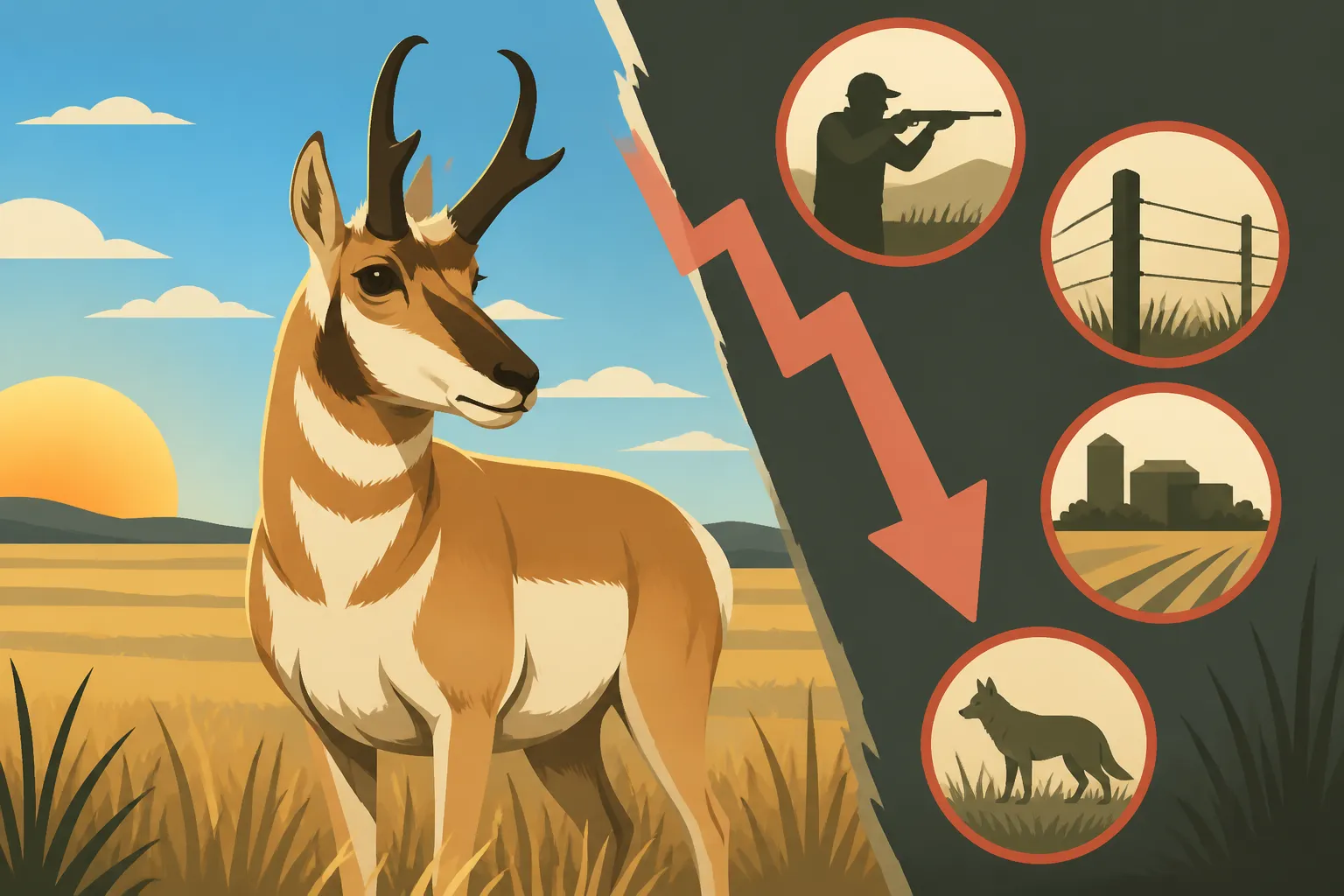
Like many iconic American wildlife species, pronghorn faced catastrophic declines in the late 19th and early 20th centuries. Unregulated market hunting, coupled with settlement expansion and the rapid fencing of the landscape, pushed them to the brink. In Kansas, these pressures were so severe that by the early 1900s, wild pronghorn were virtually extirpated from the state. Unlike white-tailed deer, which rebounded robustly thanks to their adaptability to fragmented forests and agricultural edges, pronghorn required a much more focused and challenging reintroduction effort decades later. The few remaining pockets were extremely vulnerable, and bringing them back from near zero was a monumental task, still facing an uphill battle today. Organizations like GoHunt provide resources that often feature historical data overlays, which can be fascinating for understanding the historical distribution of game animals like these.
Habitat Fragmentation and Modern Land Use Impacts
Even with dedicated conservation efforts, modern land use patterns present ongoing, often insurmountable, challenges for pronghorn populations in Kansas. The very landscape that defines our state for agriculture and ranching creates significant barriers for these unique animals.
The Tyranny of Fences and Croplands
This is perhaps the single biggest hurdle for pronghorn in Kansas. Unlike deer, which are agile jumpers, pronghorn prefer to crawl under fences. A typical barbed-wire fence with a high bottom strand might be passable, but miles upon miles of woven wire, often used for livestock containment in modern ranching, create impenetrable walls. Imagine a small herd trying to move between winter and summer range, or simply seeking new forage after a local patch has been grazed down. Every quarter-section line, every pasture boundary, becomes a potential death trap or, at best, a frustrating barrier.
Add to this the relentless march of agriculture. While crops provide excellent food and cover for deer and upland birds, a vast field of standing milo or winter wheat offers little to a pronghorn. Their preference for open visibility and specialized forbs found in native shortgrass prairie means that conversion of these lands to monoculture crops shrinks their effective habitat dramatically. They simply don't thrive on corn or soybeans. This makes Western Kansas Plains Hunting Country a challenging landscape for antelope, even if it feels open to us.
Loss and Degradation of Native Prairie
While some areas of western Kansas still boast impressive tracts of native shortgrass prairie, the overall footprint has shrunk significantly over the decades. Urbanization, energy development, and, as mentioned, agricultural expansion have all chipped away at these vital ecosystems. Even where prairie remains, changes in grazing practices or the encroachment of undesirable plant species can degrade its quality for pronghorn. They need specific types of forbs and grasses, often preferring areas with a diverse, healthy plant community that provides both forage and low-lying cover for fawns. A monoculture of certain grasses, even native ones, might not offer the nutritional variety or escape cover they require, especially when Antelope Fawn Survival in Dry Years is critical.
Environmental Stressors and Herd Resilience
Beyond direct human impact on the land, pronghorn in Kansas contend with environmental factors that stress their small populations and limit their ability to rebound, making resilience a constant battle.
Drought and Water Scarcity
Kansas is no stranger to drought. While pronghorn are incredibly adapted to arid environments, they still need water. Prolonged dry spells can severely impact the quality and quantity of forage, leading to weaker does and fawns. A lack of readily available surface water, or even dew and succulence in plants, can force pronghorn to travel further, increasing their exposure to fences and predators. This added stress makes it harder for small herds to grow, as fawn survival rates can plummet during lean years. It's a cruel cycle: less rain means less good food and water, which means fewer fawns make it to adulthood, which keeps the overall population down.
Predation Pressure on Vulnerable Herds
Predators are a natural part of any ecosystem, but their impact can be disproportionately high on small, isolated populations. Coyotes, bobcats, and even golden eagles can take a significant toll on pronghorn fawns. When a herd is large and healthy, it can absorb these losses. However, for a struggling population with limited numbers, every fawn lost is a major setback to growth. There simply aren't enough adults to buffer the pressure. While Kansas has healthy predator populations, this is just another factor making it hard for antelope numbers to climb. For hunters serious about understanding draw odds and population trends, resources from sites like GoHunt can provide deeper insights into specific unit data and predator impacts.
Limited Genetic Diversity and Expansion Potential
When a species is reduced to scattered, small populations, genetic diversity can suffer. This makes them more susceptible to disease and less adaptable to environmental changes. Even when reintroduction efforts occur, sourcing genetically robust animals and ensuring their long-term viability in a fragmented landscape is difficult. Establishing new herds or allowing existing ones to naturally expand is challenging when every suitable piece of habitat is surrounded by obstacles or intensive agriculture. Without viable migration corridors and large, contiguous tracts of suitable land, pronghorn in Kansas remain in isolated pockets, preventing the widespread expansion seen in other states. This is a key reason why the Kansas Antelope Population Estimate remains low.
The Reality of Management and Permit Allocation
Given these challenges, the Kansas Department of Wildlife, Parks and Tourism (KDWP) faces a complex task in managing the state's pronghorn population. Their approach reflects the delicate balance between conservation and providing hunting opportunities.
Conservative Permit Allocation for Fragile Herds
Because the antelope population is so small and geographically limited, KDWP must be extremely conservative with the number of hunting permits issued. The goal isn't just to manage a robust population, but to nurture a fragile one back to a healthier state. This means prioritizing herd growth and stability over hunter opportunity. The number of tags released each year is carefully calculated based on population surveys, fawn survival rates, and winter mortality, ensuring that hunting pressure doesn't jeopardize the long-term health of the herds. This is why when you look into the Kansas Antelope Permit Draw, you'll find it's one of the toughest tags to get in the state.
The Elusive Kansas Antelope Draw
For hunters, this conservative management translates into very few available tags and incredibly tough draw odds. Unlike deer, where numerous permits are available and even non-residents have various options for Kansas Deer Permits and the Nonresident Draw, antelope permits are a rare commodity. Residents often wait years, accumulating preference points, for a chance at a tag. Non-residents face even steeper odds, with a tiny handful of permits, if any, often available in the random draw.
This scarcity, while frustrating for hunters, is a direct reflection of the low antelope numbers. The KDWP cannot simply issue more tags without risking the very existence of these unique animals in Kansas. Therefore, the low number of available permits is not the cause of low antelope numbers, but rather a consequence and a necessary management tool to prevent them from declining further. If you're serious about pursuing a Kansas antelope, tools like GoHunt are invaluable for meticulously researching draw odds, unit boundaries, and application strategies years in advance, helping you navigate this incredibly competitive process. Understanding Kansas Preference Points Explained is critical for any serious applicant.
| Factor | Impact on Kansas Pronghorn Numbers | Contrast with Whitetail Deer in Kansas |
|---|---|---|
| Historical Range | Always on the eastern fringe of prime habitat; never widespread across the state. | Whitetails were historically widespread in timbered river bottoms and adapted well to agricultural expansion. |
| Fences | Significant barrier due to their "crawl-under" instinct; woven wire is almost impassable, fragmenting movement. | Whitetails are proficient jumpers; standard fences are less of a barrier, allowing them to traverse landscapes more easily. |
| Agriculture/Crops | Vast crop fields provide little suitable forage or cover; monocultures reduce diversity for specialized diet. | Whitetails thrive on agricultural crops (corn, soybeans, alfalfa, winter wheat) for food and use dense crop fields for bedding and cover, especially Milo and Corn Stubble Deer Patterns. |
| Native Prairie Loss | Dependent on specific forbs and shortgrass prairie ecosystems for diet and visibility; loss severely impacts core habitat. | Whitetails are generalists, adapting to various habitats from timber to CRP to suburban areas, thriving even with significant prairie conversion. |
| Predation | Small, isolated herds are highly vulnerable to coyote/bobcat predation, especially on fawns, hindering population growth. | Larger, more widespread whitetail populations can absorb higher predation rates; fawn survival is less critical to overall herd growth due to higher reproductive rates and broader habitat use. |
| Water Access | Require reliable water sources; prolonged drought impacts forage and forces longer travels, increasing stress and exposure. | Whitetails can often find water in more diverse settings (timber, ditches, ponds) and are more adaptable to varying levels of forage quality during droughts. |
| Genetic Diversity | Small, isolated populations can suffer from reduced genetic diversity, making them less resilient to disease and change. | Widespread and robust whitetail populations maintain strong genetic diversity across their range, contributing to their overall hardiness and adaptability. |
| Management Focus | Primarily focused on species recovery and population growth; conservative tag allocation reflects fragility. | Management focuses on maintaining healthy populations, managing herd numbers through liberal tag allocation (including antlerless) to balance ecological capacity and hunter opportunity, as seen in Kansas Antlerless Hunts and Filling the Freezer. |
The truth is, while we all dream of seeing vast herds of pronghorn across the Kansas plains, the combination of historical limitations, severe habitat fragmentation, ongoing environmental pressures, and the careful, conservative management necessary for their survival means their numbers will likely remain low. They are a precious and unique part of Kansas's wildlife heritage, and their continued presence, however limited, is a testament to resilience and dedicated conservation.
Disclaimer
This article is for general informational purposes only and does not constitute professional advice. Laws, prices and regulations vary by location and change over time. Consult a qualified professional for guidance on your specific situation.