Kansas Antelope Population Estimate
If you've ever dreamt of pursuing pronghorn, those incredible speedsters of the plains, then Kansas might pop into your mind, quickly followed by a question mark. "Are there even enough antelope in Kansas to hunt?" That's a valid concern, and it's a question many hunters grapple with. Finding accurate information about the Kansas antelope population can feel like chasing a mirage across the vast high plains. This guide aims to pull back the curtain on the estimated numbers of Kansas antelope, the factors that influence their herds, and what this all means for hunters hoping to draw a coveted tag in the Sunflower State.
Understanding the Kansas Antelope Population
The image of vast herds of pronghorn sweeping across the plains is often associated with states further west, like Wyoming or Montana. When you think of Kansas, whitetail deer or pheasants usually come to mind first. But believe it or not, Kansas does have a small, yet persistent, population of pronghorn, primarily confined to its far western reaches. However, unlike their abundant cousins in other states, the Kansas antelope population is relatively modest, and their numbers fluctuate. These aren't the thousands-strong herds you see elsewhere; rather, they exist in more isolated, smaller groups.
This limited population makes pursuing them a unique challenge and privilege. Hunters who dream of adding a Kansas pronghorn to their trophy room are often looking for a true needle-in-a-haystack experience, or at least a very carefully managed draw opportunity. The Kansas Department of Wildlife, Parks and Tourism (KDWP) closely monitors these herds to ensure their long-term health and provide limited, sustainable hunting opportunities. Understanding their current status and the historical journey of pronghorn in the state is crucial for anyone interested in this remarkable species.
Current Population Status and Trends
Currently, the Kansas antelope population is considered stable but small. It's not a burgeoning herd by any means, and you won't find them spread across the entire state like deer. Their numbers are managed very conservatively, reflecting the delicate balance of their habitat and the challenges they face. While KDWP doesn't always release granular, exact population estimates down to the last animal, the general consensus is that the state hosts a few thousand individuals. These numbers can see slight increases or decreases year to year, largely dependent on environmental factors like rainfall and the success of fawn recruitment.
Observing trends over time, Kansas has seen periods of both decline and cautious growth for its pronghorn. Modern management practices focus on maintaining healthy numbers within their historical range, preventing overharvest, and working with landowners to improve habitat. The goal isn't necessarily to expand their range dramatically, but to ensure the existing populations remain viable and robust in the areas they currently inhabit. This careful stewardship is what allows for any hunting season at all.
Historical Context of Kansas Pronghorn
Pronghorn are native to the North American plains, and their presence in Kansas dates back centuries. Historically, these animals roamed much of the western half of the state, well-suited to the open grasslands and sparse vegetation. However, as European settlement intensified in the late 19th and early 20th centuries, their populations suffered dramatically. Habitat conversion for agriculture, unregulated hunting, and the construction of extensive fencing—which can be a significant barrier for pronghorn that prefer to crawl under rather than jump over—all contributed to a severe decline.
By the early to mid-20th century, pronghorn were nearly extirpated from Kansas, much like many other big game species. Conservation efforts in the latter half of the century, including reintroductions and stricter wildlife management, helped bring them back from the brink. The current population is a testament to those efforts, a successful, albeit limited, restoration project. They are a symbol of conservation success, reminding us that even in a highly agricultural state, native wildlife can persist with dedicated management and public support.
Factors Influencing Kansas Antelope Numbers
Maintaining a healthy and stable antelope population in Kansas is an ongoing challenge, influenced by a complex interplay of environmental factors, human land use, and wildlife dynamics. Understanding these elements is key to appreciating why Kansas's pronghorn numbers aren't as prolific as, say, its whitetail deer or pheasant populations. Every year, KDWP biologists are assessing these factors, trying to predict herd health and set appropriate hunting quotas.
The open plains environment, while seemingly ideal for pronghorn, presents its own unique set of difficulties. These aren't creatures of the deep timber or dense cover; they thrive on vast, unobstructed landscapes. When those landscapes change, so do their fortunes. These considerations are vital when you're looking at Why Antelope Numbers Stay Low in Kansas.
Habitat Challenges and Land Use
One of the most significant limiting factors for Kansas antelope is habitat. The prime, unbroken shortgrass prairie that pronghorn prefer has been extensively converted to cropland over the last century. While Kansas still boasts incredible stretches of open country, particularly in the west, the fragmentation of these grasslands by fences, roads, and agricultural fields directly impacts antelope movement and survival. Pronghorn are built for speed across open expanses, and their instinct is to go under, not over, fences, which can trap or injure them.
Modern farming practices, even when beneficial for other species like deer or upland birds, often aren't conducive to thriving antelope herds. The loss of native prairie, coupled with increasing human development, means less suitable habitat for these animals to roam, feed, and reproduce successfully. This ongoing pressure on their preferred habitat significantly caps the potential for population growth, making every acre of suitable land critically important for their survival.
Environmental Impacts: Drought and Weather
Weather patterns play a massive role in the annual success of Kansas antelope herds. Just like with many other plains species, persistent drought conditions can be devastating, especially for fawns. Pronghorn fawns are particularly vulnerable during dry years; reduced forage means less nutrition for lactating does, leading to weaker fawns and lower survival rates. A lack of accessible water can also stress adult animals, making them more susceptible to disease and reducing their reproductive success.
Conversely, years with ample, well-timed rainfall can lead to a boom in forage, providing does with the nutrition they need to raise healthy fawns. These favorable conditions often result in an uptick in population numbers, which KDWP monitors closely. However, even good years might only offer a modest increase, given the other limiting factors. You can delve deeper into this by reading about Antelope Fawn Survival in Dry Years.
Disease, Predation, and Management Efforts
Like all wild populations, Kansas antelope are subject to predation and disease. Coyotes are the primary natural predators of antelope fawns, and while healthy adult pronghorn can outrun most threats, young fawns are susceptible. Disease outbreaks, though less common than for, say, deer, can also occur and impact local herds. KDWP actively monitors for diseases to mitigate their impact when possible.
The core of Kansas antelope management revolves around precise population monitoring and carefully controlled hunting seasons. The state issues a very limited number of permits each year, ensuring that harvest levels remain well below what the population can sustain. This conservative approach helps to protect the core breeding population and allows for slow, incremental growth when conditions are favorable. It’s a testament to dedicated conservation that these unique animals still offer a hunting opportunity in Kansas at all.
Where Kansas Antelope Roam
The perception of Kansas as uniformly flat, agricultural land isn't entirely accurate, especially when you consider the unique landscapes of the western region. This is where you'll find the remnants of vast shortgrass prairie, a crucial factor in the survival and distribution of the state's antelope population. These areas provide the specific type of open habitat that pronghorn need, distinctly different from the river bottoms and timber of eastern Kansas where whitetails thrive. If you're hoping to catch a glimpse of a Kansas pronghorn, or even pursue one, you need to be looking in very specific places.
Knowing their preferred haunts is the first step in any successful hunting or viewing venture. While some animals are incredibly adaptable, the Kansas antelope population clings to a particular ecological niche. For more insight into the broader landscape, check out Western Kansas Plains Hunting Country.
Geographic Distribution on the High Plains
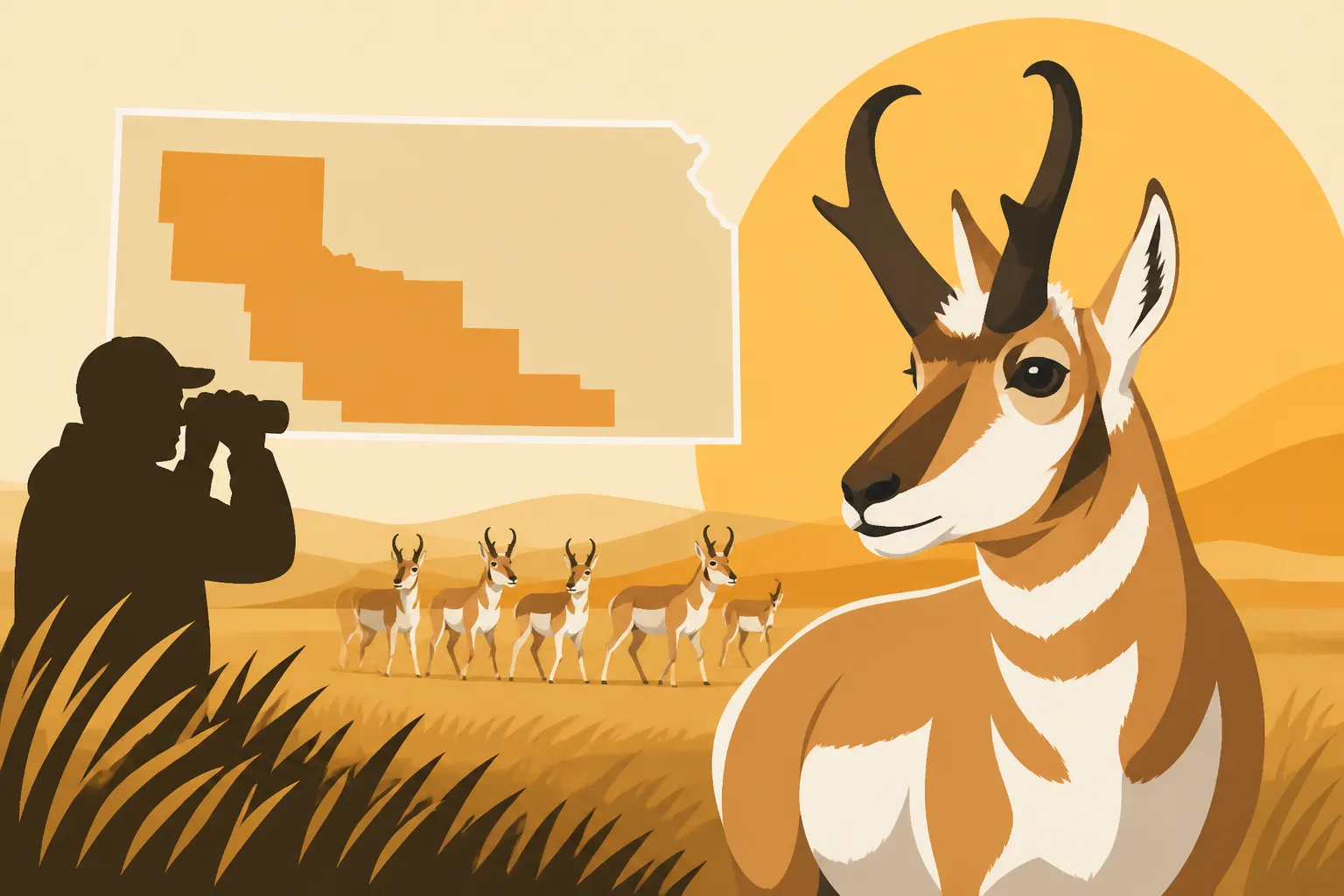
The vast majority of Kansas's antelope population is concentrated in the far western tier of counties, particularly in the northwest corner of the state. Counties like Sherman, Wallace, Greeley, Logan, and portions of neighboring counties are typically where you'll find these elusive animals. This region is part of the high plains, characterized by its drier climate, higher elevation, and extensive rangeland. It's an environment that closely mirrors the prime antelope country found in states further west.
While occasional sightings might occur in other western or even central Kansas counties, these are generally transient animals or small, isolated groups that struggle to maintain a foothold. For all practical purposes, if you're looking for sustainable populations, your focus needs to be on these dedicated western counties. The KDWP uses this limited geographic range to define their antelope hunting units, ensuring that permits are allocated to where the animals actually exist. You can explore this further by looking at Antelope Range in Northwest Kansas.
Preferred Habitats
Pronghorn are intrinsically tied to open, treeless habitats. They thrive in shortgrass and mixed-grass prairies, areas with low-growing vegetation, minimal brush, and panoramic visibility. Their incredible eyesight, often compared to that of a set of 8x binoculars, is a key survival tool in these wide-open spaces, allowing them to spot predators from vast distances. They prefer areas where they can run unimpeded, relying on their unparalleled speed to escape danger.
In Kansas, this translates to native rangelands, pastures, and undisturbed grasslands. While they might occasionally venture into stubble fields or winter wheat for forage, their core habitat remains the more wild, uncultivated prairie. Areas with some topographical relief, like gentle draws and rolling hills, can offer a bit of thermal cover in harsh weather and provide subtle travel corridors, but generally, the flatter and more open, the better. These habitats are increasingly rare and fragmented, underscoring the delicate nature of their survival in the state.
Hunting Opportunities and Population Management
Given the relatively small and localized Kansas antelope population, hunting opportunities are, as you might expect, extremely limited and highly regulated. This isn't a species where you can just buy an over-the-counter tag. Instead, hunting for pronghorn in Kansas operates on a strict draw system, making success a long-shot for most applicants. This careful management is crucial to maintaining the health and stability of the herds, ensuring that the small number of animals isn't overhunted.
Understanding this system is paramount for any hunter dreaming of pursuing a Kansas pronghorn. It's a testament to how prized and rare these tags are that hunters will apply for years, accumulating preference points, all for a chance at a single permit. For those willing to put in the time and effort, the reward is a truly unique and challenging hunting experience.
| Factor | Impact on Kansas Antelope Population |
|---|---|
| Habitat Loss | Significant negative impact |
| Drought Conditions | High negative impact, especially on fawn recruitment |
| Fence Obstructions | Moderate negative impact on movement |
| Predation | Moderate impact, primarily on fawns |
| Disease Outbreaks | Localized, potentially significant |
| Limited Range | Restricts population growth potential |
| Conservation Efforts | Positive, but slow to show results |
The Limited Permit System
Hunting Kansas antelope requires drawing one of a very small number of permits issued annually by KDWP. These permits are typically allocated through a lottery system, often involving preference points, similar to how other coveted big game tags are handled in various states. Non-residents, in particular, face extremely long odds, often requiring many years of accumulating points just to have a reasonable chance at drawing a tag. The number of permits varies slightly each year, based on population surveys and management objectives, but it always remains very conservative. You can find detailed information on the specific application periods and draw procedures by looking into Kansas Antelope Permits and Seasons.
Researching the draw odds and application strategies is crucial for anyone serious about hunting Kansas antelope. Resources like GoHunt can be invaluable for analyzing historical draw data, helping you understand the realistic chances of success for different units and application scenarios. It’s a process that demands patience and persistence, as many successful applicants have spent years putting in for these highly sought-after permits. This rigorous system ensures that hunting pressure remains minimal, directly contributing to the sustainability of the small population.
Managing for Sustainability
The primary goal of KDWP's antelope management program is the long-term sustainability of the species in Kansas. This means balancing the desire for hunting opportunities with the biological needs of the population. By issuing a very limited number of tags, KDWP ensures that the harvest does not negatively impact the breeding potential of the herds. Biologists conduct aerial surveys and ground observations to monitor population trends, fawn recruitment rates, and overall herd health. This data directly informs the number of permits offered each year, ensuring that management decisions are rooted in sound science.
Conservation efforts for pronghorn in Kansas often involve working with private landowners to promote habitat friendly practices, such as modifying fences to be more antelope-friendly or maintaining native grasslands. While drawing a Kansas antelope tag is undoubtedly challenging, it's an opportunity that exists precisely because of these dedicated management strategies. It represents a privilege to pursue an animal that has made a hard-fought return to the Kansas landscape, a true testament to the value of careful wildlife stewardship.
Disclaimer
This article is for general informational purposes only and does not constitute professional advice. Laws, prices and regulations vary by location and change over time. Consult a qualified professional for guidance on your specific situation.