Eastern Turkeys in Eastern Kansas
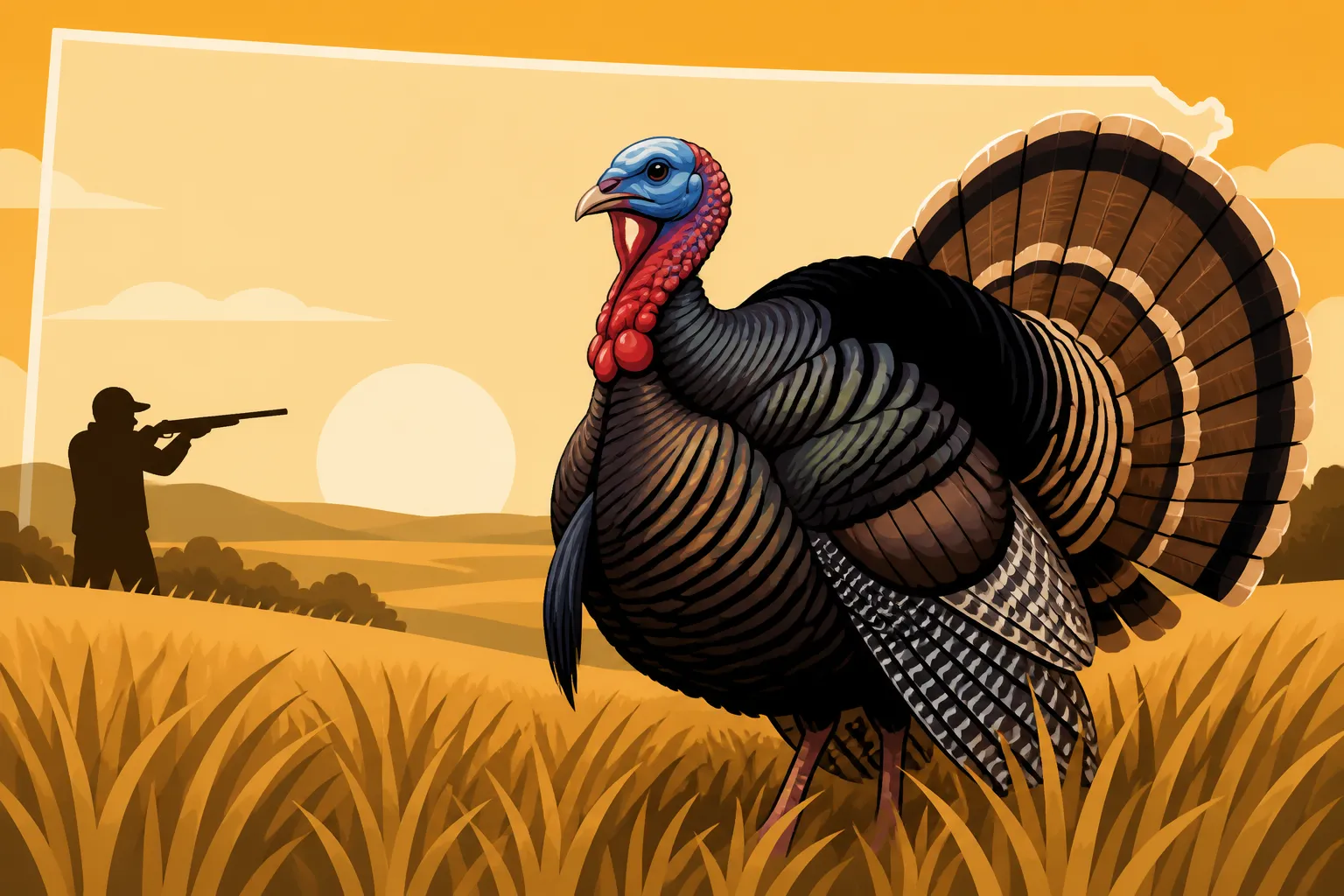
It's easy to get swept up in the allure of chasing big Rio Grande turkeys out west in Kansas, with their reputation for being vocal and visible in open country. But for many hunters, the distinct challenge of pursuing Eastern turkeys in the timbered river bottoms and dense creek draws of Eastern Kansas can feel like an entirely different ballgame, leaving you wondering where to even begin. This guide will help you understand the unique world of Eastern gobblers in the Sunflower State, offering tailored insights and strategies to increase your success in their more secluded domains.
Understanding the Eastern Turkey's Range and Habitat in Kansas
When we talk about Kansas turkeys, most folks immediately picture the widespread Rio Grande subspecies, known for their preference for vast grasslands and scattered timber. However, as you push further east into Kansas, particularly east of the Flint Hills, the landscape shifts dramatically, and with it, the dominant turkey subspecies. Here, in the more forested regions, river corridors, and dense creek systems, you'll find the Eastern wild turkey. These birds thrive in areas with substantial mature timber, offering them ample roosting cover, foraging opportunities, and protective seclusion.
The geographical line isn't always sharp and clear; sometimes you'll encounter a hybrid, especially where the ranges of Rios and Easterns overlap. But generally, if you're hunting in the eastern third of the state, especially counties bordering Missouri, you're looking at pure Easterns. Their presence is a testament to the persistent, often overlooked, forest ecosystems that exist within this predominantly agricultural state. This type of habitat means a completely different approach to scouting and hunting compared to the more open country further west.
Key Characteristics of Eastern Turkeys in Kansas
Eastern wild turkeys are distinct from their Rio Grande cousins in several notable ways, and recognizing these differences can greatly inform your hunting strategy. Physically, Easterns tend to be larger and darker overall. Their tail feather tips, which are typically tan or buff-colored on a Rio, often present a rich, chocolate brown or chestnut hue on an Eastern. Their primary wing feathers are generally more barred with black and white, giving them a darker appearance in flight. These aren't just cosmetic differences; they reflect adaptations to their more wooded environments, where camouflage within the shadows is crucial.
Behaviorally, Easterns can be a different beast to hunt. While Rio Grandes are often described as being more "gobble-happy" and responsive in open terrain, Easterns in denser cover can be notoriously more wary and less visible. They've learned to navigate thick woods, using terrain features and dense vegetation to their advantage, making them masters of appearing and disappearing without a trace. This doesn't mean they don't gobble or respond to calls, but their approach can be more cautious, often requiring greater patience and a more finessed calling sequence. Understanding these subtle but significant behavioral traits is key to successfully putting an Eastern gobbler in your vest. You might find that Calling a Gobbler Off the Roost requires a lighter touch than you'd use on a boisterous Rio.
Preferred Habitats and Food Sources for Easterns in Eastern Kansas
Eastern turkeys are creatures of the timber. Their preferred habitats are inextricably linked to mature hardwood forests, often found along major river systems and their tributaries. Think of places like the Kansas River, Marais des Cygnes River, and Neosho River bottoms, along with the countless creeks that feed into them. These areas provide the tall, sturdy trees—oaks, hickories, pecans, cottonwoods, and sycamores—that gobblers seek out for safe roosting spots, particularly large branches overhanging water or open fields.
Beyond roosting, these timbered areas are rich foraging grounds. Easterns feast on a varied diet, including acorns, pecans, wild berries, insects, and grasses. Adjacent agricultural fields, especially those planted with corn, soybeans, or wheat, also become vital food sources, particularly in late fall and winter when natural mast crops might be scarce. The edges where timber meets fields are prime locations for feeding and strutting. Using mapping tools like GoHunt can be incredibly helpful for identifying these critical transition zones, as well as locating dense timber blocks and secluded creek crossings. This blend of mature timber and nearby crops provides everything a healthy turkey population needs, influencing their daily movements and seasonal patterns. Turkey Flock Behaviour in Winter might see them congregating near these reliable food sources.
Hunting Strategies Tailored for Eastern Kansas Turkeys
Hunting Eastern turkeys in Eastern Kansas often demands a more stealthy and patient approach than chasing Rios. Given their preference for denser cover, effective scouting becomes even more critical. You'll need to spend time on foot, listening for gobbles at dawn and dusk to pinpoint roosting areas, and looking for fresh tracks, droppings, and strut marks on logging roads or field edges. Using an app like GoHunt can help you e-scout from home, pinpointing potential roosting timber along river bends or identifying key travel corridors between bedding and feeding areas before you even set foot in the woods. This detailed digital reconnaissance can save you countless hours of aimless wandering in dense timber.
When it comes to calling, remember that Easterns can be more reserved. While aggressive calling can sometimes work, a more subtle, realistic approach often yields better results. Start with soft tree yelps and clucks from the roost, and be prepared to wait. If a bird gobbles, don't immediately hit him with another loud call. Let him work it out, and only call again if he loses interest or starts moving away. Understanding Working a Henned-Up Tom Midday is crucial, as often these birds will be reluctant to leave their hens, requiring a lot of patience and finesse in your calling.
Setting up your ambush requires careful consideration of the terrain and cover. Ground blinds can be exceptionally effective in Eastern Kansas, offering excellent concealment in dense woods or along field edges. Always brush in your blind thoroughly to break up its outline. When choosing a setup location, think about visibility and shot lanes; you might only have a small window to see and shoot a bird in thick timber. Focus on natural funnels, pinch points, and areas where terrain might force a gobbler into a specific travel path. Being familiar with Public Land Turkey Safety is paramount, especially when choosing a blind location, to ensure you are seen by other hunters.
| Feature | Eastern Turkey | Rio Grande Turkey |
|---|---|---|
| Primary Range | Eastern third of Kansas, timbered river bottoms | Western two-thirds of Kansas, open grasslands |
| Physical Size | Often larger, more robust | Slightly smaller, leaner |
| Tail Tips | Chestnut/Chocolate Brown | Tan/Buff |
| Coloration | Generally darker overall | Lighter, more iridescent |
| Behavior | Warier, more cautious, uses dense cover heavily | More prone to gobble readily, visible in open country |
| Preferred Cover | Mature hardwood forests, dense creek draws | Scattered timber, shelterbelts, tall grass |
Decoy usage can be a game-changer, but placement is everything. In open country, a lone hen or jake decoy might be enough to draw a gobbler in, but in the thick woods of Eastern Kansas, sometimes less is more. A single hen decoy placed where it’s easily visible from an approaching bird’s likely travel path can be deadly. Consider the wind direction carefully, as a cautious gobbler will often circle downwind to get a better look. Always be prepared for a silent approach; many Eastern gobblers will come in without making a sound, just appearing from the underbrush. This is where patience, stillness, and knowing Turkey Decoy Spreads That Work for your specific situation really pay off.
Finally, persistence is your most valuable tool. Eastern turkeys don't always gobble their heads off, and they certainly don't always cooperate. You might spend hours calling without a response, only to have a silent gobbler sneak in. If you're struggling to locate birds, use tools like GoHunt to analyze land features for Where Turkeys Roost in Farm Country or identify less pressured areas on public land. Don't be afraid to change locations, especially if you're not getting responses. Often, a mobile, run-and-gun approach, quietly slipping through timber and calling periodically, can be effective. Remember, every hunt is a learning experience, and adapting to the subtle behaviors of Eastern Kansas turkeys will make you a much more effective hunter.
Disclaimer
This article is for general informational purposes only and does not constitute professional advice. Laws, prices and regulations vary by location and change over time. Consult a qualified professional for guidance on your specific situation.