Where Kansas Mule Deer Live
Many hunters dream of chasing mule deer, and when they look at a state like Kansas, known predominantly for its incredible whitetails, they might wonder if those iconic big-eared bucks even exist here. It's easy to assume Kansas is all whitetail country, but that's not quite the full story. While their numbers aren't as widespread or abundant as their whitetail cousins, mule deer do call a specific corner of the Sunflower State home. This guide is going to peel back the curtain and show you exactly where to look for mule deer in Kansas, detailing their preferred habitats, the unique challenges you might face trying to find them, and how their range compares to that of whitetails.
The Geographic Heartbeat of Kansas Mule Deer
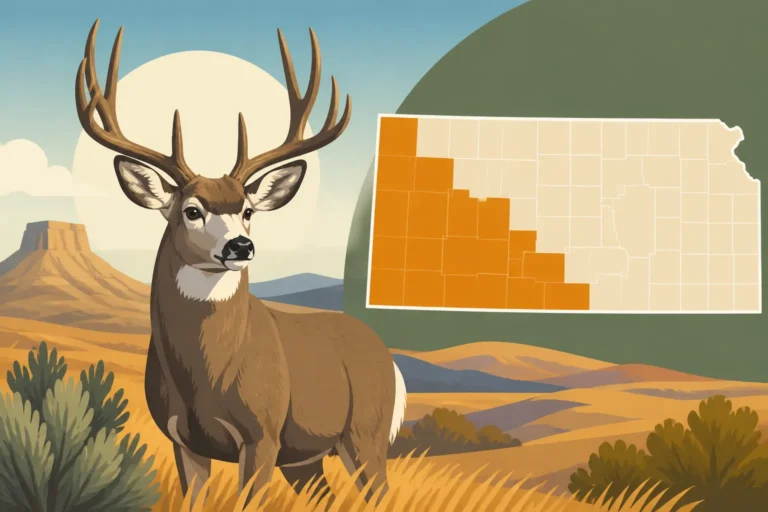
When you think of Kansas, vast agricultural fields and rolling prairie might come to mind, and that's largely accurate for much of the state. However, to find mule deer, you have to shift your mental map squarely to the western third, specifically the very far western counties. This isn't where you'll find them bounding across every fence line; it's a much more localized and specialized pursuit.
The Western Edge: Units and Landscapes
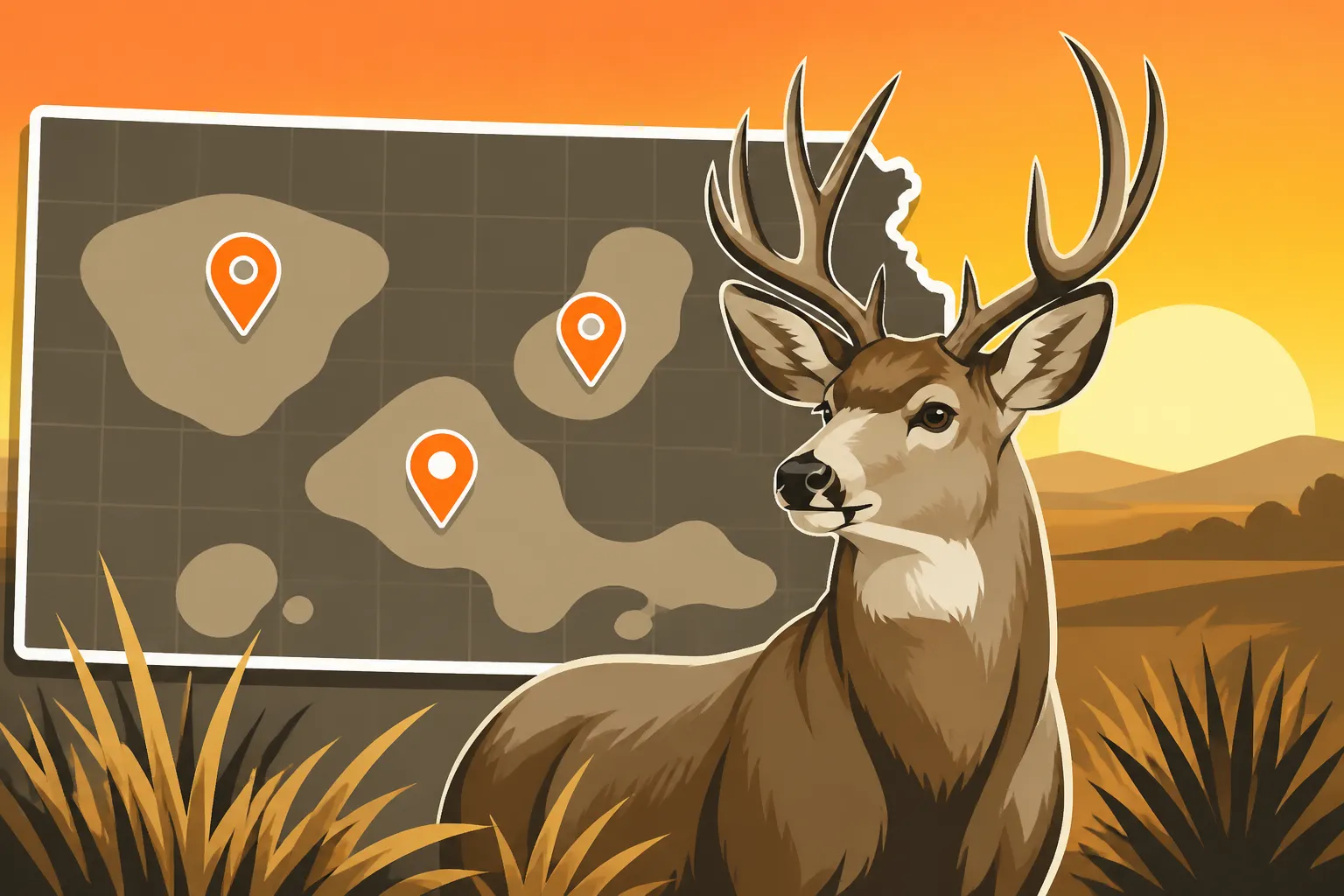
Mule deer in Kansas are primarily concentrated in the western deer management units, particularly those bordering Colorado. We're talking about units like 1, 2, 3, and 17, stretching into counties such as Cheyenne, Sherman, Wallace, Greeley, Hamilton, and Morton. These areas represent the eastern fringe of the mule deer's larger range, which extends much further west into the Rocky Mountain states. The landscape here is dramatically different from the timbered river bottoms and dense creek draws of eastern Kansas. Instead, you'll encounter expansive shortgrass prairie, broken by rolling hills, subtle draws, and surprisingly deep canyons or breaks that offer pockets of cover and escape terrain.
These subtle terrain features are absolutely critical. While the overall impression might be flat and open, a closer look, perhaps with the aid of a detailed mapping application like GoHunt, reveals a network of shallow coulees, small rock outcrops, and erosional features that provide just enough concealment for a mature buck to bed down or travel undetected. They aren't going to be hiding in dense forests, but rather blending into the contours of the land itself. Hunters often underestimate how much cover a few feet of elevation change or a sparse brush line can offer in this open country. The very far southwest of the state, including the Cimarron National Grassland, can also hold pockets of mule deer, utilizing the breaks and sparse timber found within that unique public land tract.
Overlap Zones: Where Whitetails Meet Muleys
It's not uncommon to find both whitetails and mule deer existing in the same general areas in western Kansas, especially where their preferred habitats merge. This creates interesting hunting scenarios and requires a keen eye to differentiate between the species, especially if you're holding a specific tag. The lines get a little blurry where the dry, open prairie meets areas of irrigated agriculture or the more defined, albeit sparse, riparian corridors along intermittent streams and rivers. Whitetails, being more adaptable to cover and denser vegetation, tend to stick closer to these linear strips of timber and brush, or the edges of cultivated fields like corn and milo.
Mule deer, while they will certainly feed in agricultural fields, generally prefer the wide-open spaces and rougher terrain for bedding and security. You might spot a whitetail buck sneaking through a treeline along a creek, while a mule deer buck watches from a distant ridge across the prairie, well away from the timber. The key difference often comes down to how much "cover" they need to feel safe. A mule deer often feels perfectly secure just a few hundred yards from a road, as long as there's a dip or rise in the land that breaks up its outline. Understanding this subtle distinction in habitat preference can help you make better decisions about where to focus your efforts. Knowing how to tell them apart, especially when they might be standing near each other or at a distance, is also vital for compliance with tag regulations; for more on that, you can check out "Telling Mule Deer From Whitetails at Distance".
Understanding Mule Deer Habitat Preferences
Unlike the whitetails that thrive in the lush river bottoms and dense timber of eastern Kansas, mule deer are creatures of the open, often arid, landscapes. Their physical adaptations and behavioral patterns are perfectly suited to these more challenging environments.
Shortgrass Prairie and Canyons
The vast shortgrass prairie is the quintessential home of the Kansas mule deer. Here, they don't rely on thick timber for hiding but rather on the subtle undulations of the land, the scattered sagebrush, and the sparse yucca plants for concealment. These plants, while seemingly insignificant, provide crucial visual breaks and forage. Mule deer are masters of using topography to their advantage, often bedding on north-facing slopes in summer for coolness, or south-facing slopes in winter to catch the sun's warmth. They'll also use shallow draws and the occasional cedar thicket for cover, especially during extreme weather. These cedar thickets, as discussed in "Cedar Thickets as Bedding Cover", offer valuable thermal and visual protection, even if they're not as extensive as timber stands further east.
The true gems of mule deer habitat in western Kansas, however, are the "breaks" or canyon lands. These are areas where erosion has carved out steeper, more dramatic terrain, creating a maze of draws, ravines, and small cliff faces. These breaks provide much-needed escape cover, thermal regulation, and often support a more diverse range of vegetation that mule deer favor. A buck can disappear into a canyon or a series of breaks and be almost impossible to find without thorough glassing and patient observation. They'll often feed on the open prairie and retreat into these rugged areas for security during the day. Glassing these areas thoroughly with good optics is paramount; a quality spotting scope and a pair of high-magnification binoculars are your best friends in this country.
Agricultural Edges and Riparian Areas
While mule deer prefer the open prairie, they are not oblivious to the benefits that agriculture can provide. Western Kansas, though drier, still boasts significant farming operations, especially with irrigated fields. Mule deer will readily move into crop fields, particularly alfalfa, wheat, and sometimes corn or milo, to feed. These fields offer a rich, reliable food source, especially during dry periods when natural forage might be scarce. You'll often find them grazing along field edges or even moving into the standing crops for security cover, much like whitetails. The difference is, they're less likely to bed deep in the timber adjacent to these fields and more likely to melt back into the prairie breaks after feeding.
The riparian areas in western Kansas are also important, though they differ significantly from their eastern counterparts. Here, a "creek bottom" might be a dry wash for much of the year, lined with a sparse scattering of cottonwood trees, willows, and thickets of wild plum. These linear strips, even when narrow, act as vital travel corridors and provide much-needed shade and occasional water sources. Mule deer will use these areas, but often in conjunction with the surrounding prairie. They might move along a creek bottom to get from one feeding area to another, or to access a waterhole, but they're less likely to spend their entire day bedded in them like a whitetail might. Understanding these travel corridors is key, and you can learn more about reading them in "Reading a Kansas Creek Bottom for Deer Sign".
Challenges and Conservation for Kansas Mule Deer
Hunting mule deer in Kansas is not like hunting whitetails; it's a more challenging endeavor that requires different strategies and a realistic understanding of their population dynamics.
Declining Numbers and Limiting Factors
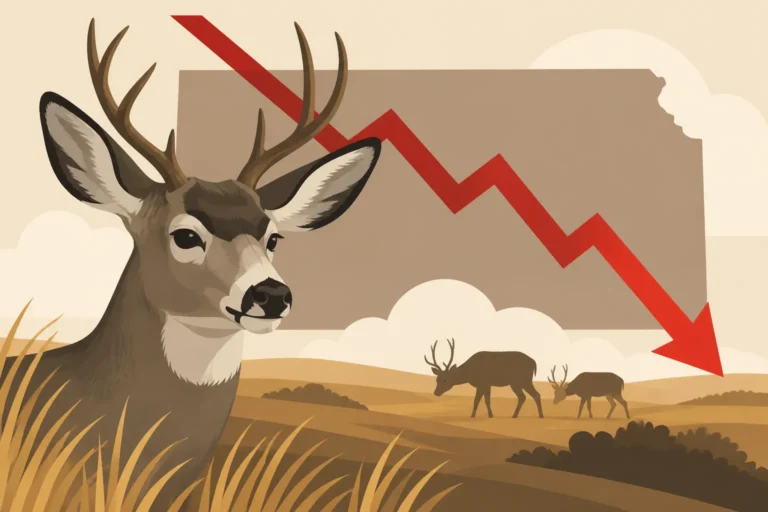
The unfortunate reality is that mule deer populations in Kansas have faced significant declines over the years. Their numbers are relatively low compared to whitetails, and their range has somewhat contracted. Several factors contribute to this trend. Habitat loss is a major culprit; as more prairie land is converted to agriculture or developed, the specific open-country habitat mule deer need shrinks. They are particularly sensitive to habitat fragmentation. Competition with whitetails for resources, especially in the overlap zones, can also play a role. Whitetails are incredibly adaptable and can thrive in a wider variety of habitats, sometimes outcompeting mule deer where resources are limited.
Environmental factors like drought also heavily impact mule deer. Their survival, particularly fawn survival, is closely tied to moisture levels, which directly affect forage quality and quantity. Severe winters, though less common in western Kansas than in some mountain states, can also take a toll. Conservation efforts are ongoing to monitor these populations and manage hunting opportunities sustainably. The Kansas Department of Wildlife, Parks and Tourism carefully allocates permits for mule deer, recognizing their limited numbers. Hunters need to be aware of these trends; if you are interested in applying for a mule deer permit, it's a separate process from the general whitetail draw, and you'll typically need to apply for a "Kansas Mule Deer Stamp Draw".
Hunting Strategies for Western Kansas Muleys
Successfully hunting mule deer in Kansas almost always boils down to one primary strategy: spot-and-stalk. This is truly wide-open country, and mule deer have incredible eyesight, often spotting you long before you spot them if you're not careful. This means you'll be spending a significant amount of time behind quality glass, systematically scanning vast expanses of prairie, breaks, and distant hillsides. Patiently picking apart the landscape, looking for an ear, a patch of hide, or an antler tine, is how these hunts are won. Using a reliable mapping tool like GoHunt can aid in identifying potential bedding areas, travel corridors, and stalking routes, even when e-scouting from home.
Once a buck is spotted, the real chess match begins. The stalking conditions are often unforgiving, with minimal cover. You'll need to use every wrinkle in the terrain, every sparse clump of brush, and often the wind, to close the distance without being detected. This isn't a game of sitting in a treestand overlooking a food plot; it's an active, physically demanding hunt that requires stealth, endurance, and excellent marksmanship, as shots can often be at longer ranges. Remember that "E-Scouting Kansas Farm Country From Home" can give you a crucial edge, helping you identify potential vantage points and approach routes before you even set foot in the field.
It's a humbling experience, and you'll likely cover many miles on foot, both scouting and hunting, if you're serious about taking a Kansas mule deer.
Mule Deer Versus Whitetail: A Quick Comparison
When hunting in western Kansas, knowing the subtle (and sometimes not-so-subtle) differences between mule deer and whitetails can be crucial, not just for identification but for understanding their behavior and habitat use. Here’s a quick overview to help you out in the field:
| Feature | Mule Deer | Whitetail Deer |
|---|---|---|
| Ears | Distinctively large, often described as "mule-like" | Smaller, more proportionate to their head |
| Antlers | Typically bifurcated (forking), non-main beam. Each tine forks again. | Main beam with individual tines (points) branching off. |
| Tail | Rope-like, relatively short, white with a distinct black tip. Usually held down. | Broad, flat, brown on top, white underneath. "Flags" white when alarmed. |
| Movement | Unique "stotting" or bounding gait when alarmed, all four feet leaving the ground simultaneously. | Runs in a more fluid, powerful motion, often with a distinctive "rocking horse" gallop. |
| Primary Habitat | Open plains, badlands, breaks, rough canyons, sparse sagebrush | Dense timber, river and creek bottoms, agricultural fields, edge habitat |
| Body Size | Generally larger and more robust, especially bucks | Can be very large, but mule deer often have a stockier build |
This table provides a handy reference, but nothing beats in-field experience. Pay attention to how they move, how they use the terrain, and what kind of cover they seek. These observations will not only help you identify them correctly but will also teach you how to hunt them more effectively in their specific Kansas domain.
Planning Your Kansas Mule Deer Hunt
Chasing mule deer in Kansas is a truly unique experience. It demands patience, keen observation, and a willingness to adapt your hunting style to the vast, open landscapes. While it can be more challenging to secure a tag and locate these elusive animals, the reward of encountering a magnificent prairie buck in its natural element is unparalleled. If you're considering this endeavor, start your research early, understand the draw system, and prepare for a physically engaging hunt. Remember, success often lies in your ability to patiently glass the landscape and then execute a flawless stalk when the opportunity finally presents itself.
For more information on the application process, make sure to check out guides like "Kansas Deer Permits and the Nonresident Draw" and understand the specifics of "Kansas Preference Points Explained" as they apply to these more limited opportunities. Good luck out there, and enjoy the challenge of the prairie!
Disclaimer
This article is for general informational purposes only and does not constitute professional advice. Laws, prices and regulations vary by location and change over time. Consult a qualified professional for guidance on your specific situation.