Opportunity Rate Versus Kill Rate
Opportunity rate and kill rate metrics for guided hunts explain outfitter performance versus individual hunter success.
Book the hunt, not the brochure.
Guided, semi-guided, and drop-camp options, which outfitters work which units, guide licensing requirements, booking timelines, and what a deposit actually covers.

Opportunity rate and kill rate metrics for guided hunts explain outfitter performance versus individual hunter success.
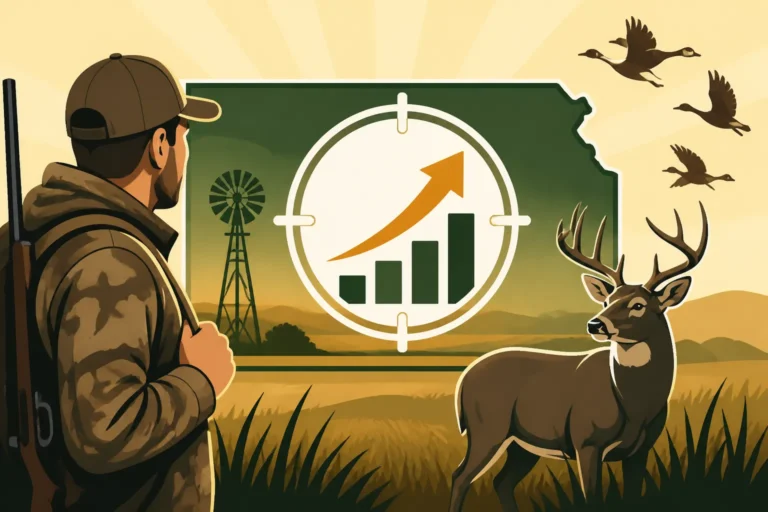
Kansas deer outfitter success rates and terminology explained, including opportunity metrics and harvest statistics for hunters.

Kansas hunting lease food plots and habitat improvements require reading lease contracts and discussing plans with landowners.

Neighboring pressure on Kansas hunting leases alters deer behavior, causing animals to become nocturnal or shift bedding areas.

An outfitter holding Kansas hunting land for five to twenty years understands deer movement and improves guided hunt success.
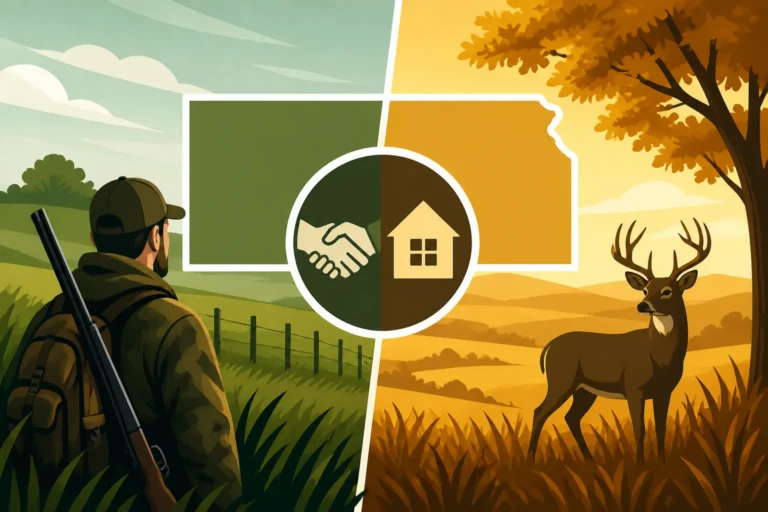
Kansas hunting outfitters using leased versus owned land affects habitat management, property stability, and overall hunt quality.
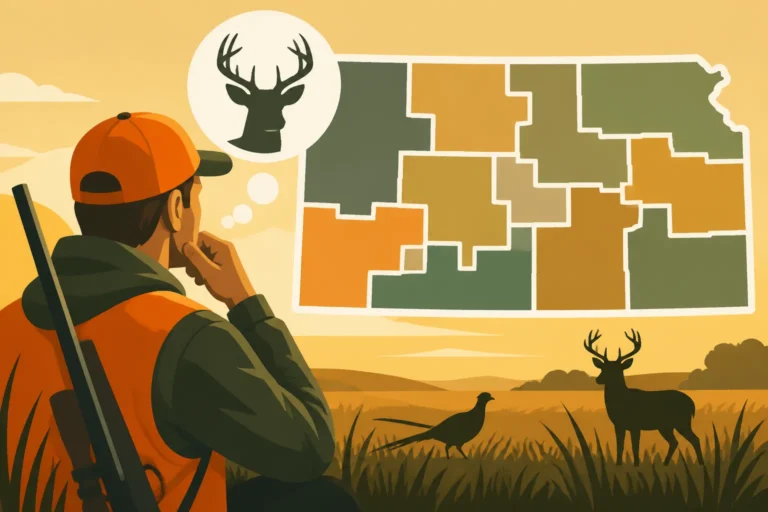
Kansas whitetail outfitters often hide specific deer unit details to protect trade secrets and manage changing land leases.

Kansas public land treestand regulations explain daily removal rules and tree protection limits for deer hunters using state wildlife areas.
Kansas deer stand density determines wind strategy, hunting flexibility, and success rates for your whitetail deer hunt.
Hunter density on Kansas hunting leases depends on property acreage, habitat quality, landowner expectations, and management styles.