Kansas Elk Near Fort Riley
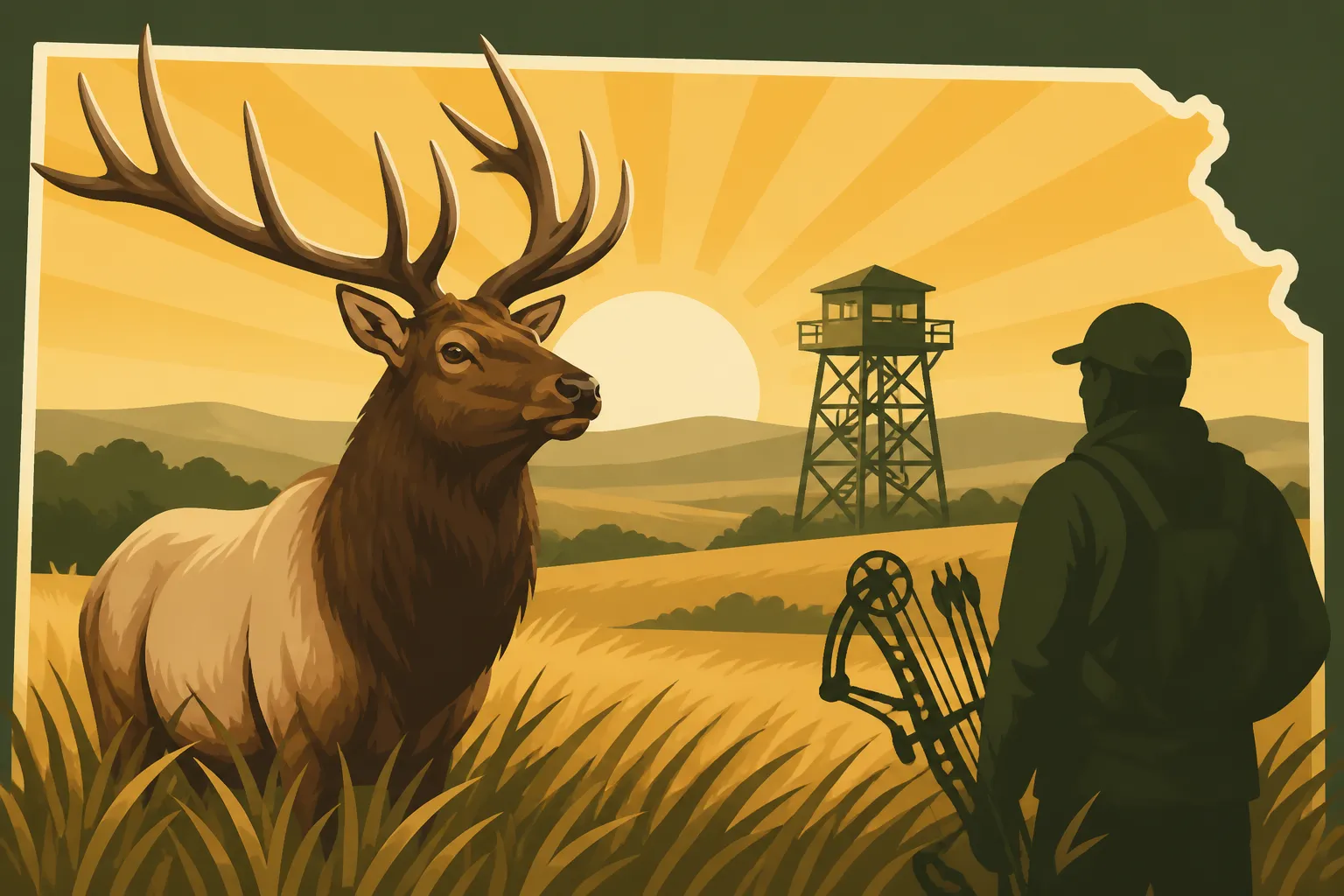
The thought of hunting elk probably conjures images of majestic mountains, vast wilderness, and crisp, high-altitude air. Most hunters scratch their heads at the mention of elk in Kansas, often dismissing it as a tall tale or a typo. But for a select few, the opportunity to pursue these magnificent animals in the heart of the Great Plains is a very real, albeit incredibly rare, experience. This guide will peel back the layers of misconception and mystery surrounding Kansas elk, specifically focusing on the herd that calls the sprawling Fort Riley military reservation home, and help you understand the realities, challenges, and dreams associated with drawing one of these highly coveted tags.
The Unexpected History and Resurgence of Kansas Elk
For many, discovering that elk even exist in Kansas is surprising enough, let alone the idea of hunting them. The truth is, elk were once native to the entire state, roaming freely across the prairies and timbered river bottoms. However, westward expansion, unregulated hunting, and habitat destruction in the 19th century led to their complete extirpation from Kansas by the late 1800s. It seemed like elk were gone from the Sunflower State for good, a forgotten piece of its wild heritage.
A Native Species Lost and Found
The original elk that roamed Kansas were likely a mix of Merriam's elk and Eastern elk subspecies, though their exact lineage is debated among biologists. They were a vital part of the prairie ecosystem, influencing vegetation and serving as a key food source for native peoples and predators. Their disappearance left a significant void, a silence where once their bugles echoed across the plains. For decades, Kansas was simply not elk country in the minds of most.
However, nature, with a little human intervention, often finds a way. The modern story of Kansas elk began in the early to mid-20th century, with scattered sightings of free-ranging animals trickling in from neighboring states like Colorado and Oklahoma. These were often lone individuals or small groups venturing into Kansas from established herds. It sparked a curiosity: could elk truly re-establish a foothold here?
The Fort Riley Introduction and Management
The most significant chapter in Kansas elk history, and indeed the reason a hunt exists today, centers around Fort Riley. In the mid-1980s, the Kansas Department of Wildlife and Parks (KDWP) collaborated with the military post to introduce a small herd of Rocky Mountain elk. These elk were sourced from other states and released onto the vast, relatively undisturbed lands of the reservation. The hope was that these animals would adapt to the unique prairie and riparian habitat, establish a self-sustaining population, and potentially offer limited hunting opportunities in the future.
This wasn't a simple endeavor. Reintroducing a large ungulate species like elk requires careful planning, habitat assessment, and ongoing management. The initial releases were successful, and the elk found suitable forage, cover, and water within the military post's boundaries. The herd grew, slowly but steadily, benefiting from the limited human disturbance and excellent habitat management provided by the military and KDWP. Today, the Fort Riley herd is the primary focus of Kansas elk hunting, representing a remarkable conservation success story.
Where Kansas Elk Roam: Fort Riley's Unique Habitat
The vast majority of huntable elk in Kansas are found within the confines of Fort Riley. This sprawling military installation, located in the Flint Hills region of north-central Kansas, offers a unique blend of habitat that has allowed elk to thrive. Understanding this landscape is paramount for any hunter hoping to draw a tag and successfully pursue a Kansas elk.
Fort Riley's Diverse Landscape
Fort Riley encompasses over 100,000 acres, dominated by the rolling tallgrass prairies of the Flint Hills, interspersed with dense timber stands along the Republican and Kansas River drainages, and numerous smaller creeks and draws. This isn't the timbered mountain country most associate with elk; instead, it's a mosaic of open grasslands, dense cedar thickets, riparian woodlands, and some agricultural fields bordering the installation. The elk utilize all of it, adapting their behavior to this distinctive plains environment.
The open grasslands provide ample forage, particularly during the growing season, while the timbered creek bottoms offer crucial cover for bedding, especially during the heat of the day or when seeking refuge from harsh winter weather. The proximity to permanent water sources is also a key factor in their distribution. Hunters need to adjust their scouting and tactics to this blend of terrain, often focusing on the transition zones where timber meets grass, or along the edges of agricultural plots near dense cover.
Elk Movement and Public Access Challenges
Unlike deer, elk have expansive home ranges and can cover significant ground, especially during the rut or when pressured. While the Fort Riley herd generally stays within the reservation, occasional animals do wander off, sometimes onto adjacent private lands. This creates an interesting dynamic, as hunting on Fort Riley itself requires special permits and adherence to military regulations, which can differ significantly from standard KDWP rules.
Access to Fort Riley for hunting is strictly controlled. Hunters who draw a Fort Riley elk permit must go through an additional application process with the military post and adhere to their specific entry, safety, and check-out procedures. This can include background checks, orientation sessions, and daily check-in/check-out requirements depending on military training schedules. It's a layer of complexity that adds to the challenge, but also ensures a managed and safe hunting experience on this unique property. The KDWP hunting atlas is a good resource, but for Fort Riley, additional research directly with the post's natural resources office is essential.
Small, Dispersed Herds Beyond Fort Riley
While Fort Riley is the stronghold, there are small, scattered herds of elk in other parts of Kansas, primarily in the southeastern and southwestern corners of the state. These herds are significantly smaller, less stable, and often arise from individual elk dispersing from neighboring states or the Fort Riley population. Hunting opportunities for these "free-ranging" elk are extremely rare, usually involving over-the-counter landowner permits or specific circumstances where a depredation permit might be issued.
For example, some isolated pockets might exist near the Oklahoma border in areas with extensive riparian timber or large tracts of private land. However, these are not consistent, huntable populations in the way the Fort Riley herd is managed. Therefore, if you're seriously considering a Kansas elk hunt, your focus, statistically and practically, will be almost entirely on the Fort Riley draw. Understanding the specific Kansas Elk Unit Boundaries can provide a general idea of where these few other animals might exist, but the Fort Riley hunts remain the most viable option.
Elk Biology and Behavior in a Kansas Landscape
Kansas elk, primarily Rocky Mountain elk stock, exhibit many of the same behaviors as their mountainous cousins, but their adaptations to the prairie and timbered creek bottoms of Kansas are fascinating. Understanding their unique adaptations to this "non-traditional" elk habitat is key to successfully locating and hunting them.
Adapting to the Plains Environment
Elk are highly adaptable animals, and the Fort Riley herd is a testament to that. Instead of dense conifer forests for cover, they utilize thick cedar breaks, plum thickets, and mature hardwood timber found along river and creek systems. Forage comes from the vast grasslands and, at times, from agricultural crops on or bordering the post. They've learned to use the subtle undulations of the prairie for concealment, often bedding down in tall grass where they can be surprisingly difficult to spot.
Water is abundant across Fort Riley, with the Republican and Kansas Rivers, numerous creeks, and ponds. This means elk don't have to travel far for a drink, but knowing primary water sources can still be a strategic advantage, especially in drier periods. Their diet is primarily grasses and forbs, supplemented by woody browse in the winter and opportunistic feeding on crops like corn and soybeans when available, offering them excellent nutritional intake that contributes to healthy herds and impressive antler growth in bulls.
Rutting and Calving Cycles
The elk rut in Kansas typically mirrors that of other Rocky Mountain elk populations, usually peaking in September and early October. This is when bulls are most vocal, bugling loudly to attract cows and challenge rivals. The sounds of a bugling bull echoing across the Flint Hills is an experience few get to witness, let alone hunt. During this period, bulls will be highly active, sometimes moving long distances in search of receptive cows, making them vulnerable.
Calving usually occurs in late May and early June. Cows seek out dense, secluded cover to give birth and hide their calves from predators. Fort Riley's extensive cedar thickets and dense timber provide ideal nursery habitat. During this time, the herd tends to be more dispersed, with cows and calves remaining hidden, and bulls often forming bachelor groups in remote areas to feed and grow their antlers. Knowing these cycles can help hunters anticipate elk behavior during specific Kansas Elk Season Dates.
Herd Dynamics and Movement Patterns
The Fort Riley elk herd is managed to maintain a healthy population balance, with KDWP and Fort Riley natural resource staff conducting regular surveys. Herd sizes fluctuate, but the goal is to keep them within ecological carrying capacity while providing limited hunting opportunities. Elk often move in social groups: cow-calf herds, and bachelor groups of bulls. During the rut, these groups mix, and intense competition among bulls occurs.
Daily movement patterns are influenced by food, water, cover, and human disturbance. On Fort Riley, military training exercises can certainly impact elk movements, pushing them into quieter zones. Elk are generally most active at dawn and dusk, feeding in open areas before retreating to dense cover during midday. Understanding these patterns, and how they might be altered by human activity or weather, is crucial for developing an effective hunting strategy. Tools like GoHunt can provide insights into habitat types and terrain, allowing for effective e-scouting before ever setting foot on the installation.
Hunting Kansas Elk: The Permit Draw and Regulations
Getting a Kansas elk permit is perhaps the most challenging aspect of hunting these magnificent animals. Unlike deer, where permits are more widely available, elk permits are extremely limited, and the draw process is highly competitive. For most, this will be a once-in-a-lifetime opportunity if they are lucky enough to draw.
The Elusive Kansas Elk Draw
Kansas offers very few elk permits each year, typically only a handful, and almost all are designated for the Fort Riley herd. The number of permits issued depends on the KDWP's annual population surveys and management objectives. These permits are allocated through a weighted preference point system, meaning applicants accumulate points over years to increase their odds, though it's never a guarantee. The odds for non-residents are even more stacked against them, with typically only one or two non-resident permits available, if any, in a given year.
The application period usually opens in the spring, often coinciding with the Kansas Deer Application Window in April. It's a critical time for anyone hoping to pursue elk. Applicants choose their desired weapon (archery, muzzleloader, or firearm) and specific hunt unit/type. The Fort Riley hunts often have sub-units or specific periods designated by the military post. The cost of applying for the permit is modest, but the actual permit fee for successful applicants is substantial, reflecting the rarity and value of the tag.
| Permit Type | Weapon Type | Typical Season Dates | Estimated Permits (Annual) | Avg. Preference Points to Draw (Resident) | Avg. Preference Points to Draw (Non-Resident) |
|---|---|---|---|---|---|
| Fort Riley Any Elk | Archery | Mid-September to Mid-October | 1-2 | 15-20+ | N/A (Extremely Rare) |
| Fort Riley Any Elk | Muzzleloader | Late October | 1-2 | 12-18+ | N/A (Extremely Rare) |
| Fort Riley Any Elk | Firearm | Early December | 2-3 | 10-15+ | N/A (Extremely Rare) |
| Fort Riley Antlerless | Firearm | Late November to Early December | 3-5 | 5-10+ | N/A (Extremely Rare) |
| Fort Riley Antlerless | Archery | Mid-September to Mid-October | 1-2 | 8-12+ | N/A (Extremely Rare) |
| Statewide Elk (Any) | Archery/Firearm | Varies (Depredation) | 0-1 (Opportunistic) | 20+ | N/A (Nearly Impossible) |
Note: These numbers are approximate and can change significantly year to year based on KDWP management decisions and herd health. "N/A" for non-resident indicates that drawing an Any-Elk permit is exceedingly rare, often only one or zero are offered, requiring maximum points and a lot of luck.
Preference Points and Draw Strategies
Because the draw is so difficult, building preference points is the most common strategy. Each year you apply and are unsuccessful, you accrue another point. The more points you have, the better your statistical odds in subsequent draws, as higher-point applicants are drawn before lower-point applicants. However, it's not a guaranteed draw, and it can take many years, even decades, to accumulate enough points for a reasonable chance, especially for an "any elk" (bull) permit. GoHunt's draw odds data can be incredibly valuable for understanding the typical point creep and success rates for different Kansas elk hunts.
It's also important to understand the specific type of permit you're applying for. "Any-Elk" permits allow you to harvest a bull or a cow, while "Antlerless-Only" permits are restricted to cows. Antlerless permits generally require fewer points to draw and are a more realistic goal for many hunters simply looking to experience a Kansas elk hunt. However, even these are highly sought after. Researching the typical Kansas Preference Points Explained is crucial for setting realistic expectations.
Fort Riley Specific Regulations
If you're one of the fortunate few to draw a Fort Riley elk permit, your journey has only just begun. You'll then need to contact Fort Riley's Directorate of Public Works, Environmental Division (DPW-ENV) to understand and complete their additional permitting and safety requirements. This involves a separate application, often a safety briefing, and strict adherence to post-specific rules regarding access, weapon transportation, hunt boundaries, and check-in/check-out procedures.
These rules are non-negotiable and are in place to ensure both hunter safety and the security of military operations. Ignoring them can result in severe penalties, including loss of hunting privileges and legal action. Hunters might also need to be flexible with their hunt dates, as military training can temporarily close certain areas or even the entire post to hunting. It's a testament to the unique nature of hunting on a live military installation and requires a level of respect and flexibility from the hunter.
Scouting and Tactics for Fort Riley Elk
Drawing a Kansas elk tag is a monumental achievement, but the real work begins once that permit is in hand. Fort Riley presents a unique hunting environment, blending open plains with dense cover. Effective scouting and adaptable tactics are crucial for success in this unexpected elk country.
E-Scouting the Fort Riley Landscape
Before you ever set foot on Fort Riley, intensive e-scouting is your best friend. Utilize satellite imagery, topo maps, and online resources to familiarize yourself with the terrain. Look for drainages, river and creek bottoms, and timbered fingers that extend into the grasslands – these are natural travel corridors and bedding areas. Identify dense cedar thickets or plum patches that offer thermal and security cover. Look for potential food sources, including agricultural fields on or adjacent to the post, and areas of lush grassland.
Mapping tools like those offered by GoHunt or onX Hunt are invaluable for this process. They allow you to mark potential bedding areas, water sources, and travel routes, creating a virtual plan before your boots ever hit the ground. Given the military restrictions and potential for limited on-the-ground scouting time, a thorough e-scouting strategy becomes even more critical for identifying promising areas and understanding how elk might move through them. Consider how Reading Aerial Imagery for Bedding Cover might apply to cedar thickets or dense riparian zones, not just mountain slopes.
On-the-Ground Scouting and Adaptability
Once you're able to access Fort Riley for pre-season scouting (if permitted, always check post regulations), focus on confirming your e-scouting observations. Look for fresh elk sign: tracks, droppings, rubs (especially during late summer/early fall as velvet sheds), and wallows. Pay attention to how the elk are using the available cover and forage. Are they consistently hitting a particular creek bottom for water, or are they feeding heavily in a certain grass patch?
Elk, particularly on Fort Riley, can be sensitive to pressure and military activity. They might alter their patterns based on training exercises, so being adaptable is key. Don't get fixated on one spot if the sign isn't there or if military operations are pushing them elsewhere. Be prepared to cover significant ground, as elk can be nomadic and range widely across the reservation. Even if you've drawn an archery tag, scouting with a rifle in mind for open country glassing might give you a broader understanding of where the elk are concentrated.
Hunting Strategies: Still-Hunting, Calling, and Spot-and-Stalk
Given the mix of open prairie and dense cover, a blend of hunting tactics is usually most effective.
- Spot-and-Stalk: In the more open grassland areas, or where timber fingers meet the prairie, spot-and-stalk can be highly effective. Utilize binoculars and a spotting scope to scan distant hillsides, draws, and timber edges at first light and last light. Once an animal is spotted, plan a careful approach, using terrain features and wind direction to your advantage. This is especially true for Hunting Terrain Funnels in Flat Country, where subtle rises or depressions can offer critical concealment.
- Still-Hunting: In the thicker timbered river bottoms and cedar breaks, still-hunting becomes the primary method. Move slowly and deliberately, stopping frequently to scan, listen, and glass. Elk, especially cows and calves, can melt into dense cover and be incredibly difficult to see. Pay close attention to wind direction, as their sense of smell is legendary.
- Calling: During the rut, calling can be highly effective for "any elk" permits. Bugles, cow calls, and even social mews can pique an elk's curiosity or challenge a bull. However, be cautious; Fort Riley isn't vast wilderness, and over-calling can educate animals or attract other hunters. Learn to read the elk's response and adjust your calling strategy accordingly. Knowing when and how to implement Rattling and Grunting During the Kansas Rut for deer can provide a foundational understanding, but elk calling is a different beast entirely, requiring specialized knowledge and equipment.
Regardless of the tactic, patience and persistence are paramount. Kansas elk are not found around every corner, and success requires dedication and a deep understanding of their localized behaviors.
Challenges and Conservation Efforts for Kansas Elk
Hunting elk in Kansas is a remarkable opportunity, but it’s one that comes with unique challenges, both for the hunter and for the long-term health and management of the herd. The rarity of the permits and the specific nature of the Fort Riley environment contribute to these complexities.
Maintaining a Healthy, Sustainable Herd
The KDWP, in partnership with Fort Riley’s natural resource managers, works tirelessly to ensure the Kansas elk population remains healthy and sustainable. This involves regular aerial and ground surveys to estimate herd numbers, assess age and sex ratios, and monitor overall health. Data gathered from hunter harvest reports, including antler measurements and biological samples, also contributes valuable information to these management efforts.
One of the ongoing challenges is balancing the herd size with the available habitat and preventing conflicts with military operations or adjacent private landowners. While elk are primarily contained within Fort Riley, occasional dispersal events do occur. Conservation efforts also focus on habitat enhancement, such as prescribed burning in the grasslands to promote new growth, and careful management of timber resources within the reservation. This delicate balance is why permit numbers are so low; conservation is prioritized over maximizing hunting opportunities. The comprehensive data gathered, often aided by tools like GoHunt that integrate KDWP harvest reports, helps biologists make informed decisions about herd management and future permit allocations.
Disease Monitoring and Management
Like all wild populations, Kansas elk are susceptible to various diseases, some of which can have significant impacts on herd health and management. Chronic Wasting Disease (CWD) is a persistent concern, and KDWP conducts ongoing surveillance for CWD in deer and elk populations across the state. Hunters who harvest an elk on Fort Riley will typically be required to submit a sample for CWD testing, contributing to this crucial monitoring effort.
Other diseases, while less prevalent, are also monitored. The health of the elk herd is paramount for sustaining hunting opportunities. Should a disease outbreak occur, management strategies might include adjusting harvest quotas or focusing on specific areas to control the spread. Hunters play a vital role in this by cooperating with KDWP requests for samples and reporting any unusually behaving or sick animals they observe. Understanding CWD effects on Kansas deer herds provides context for why this monitoring is so critical for elk as well.
Hunter Ethics and Respect for the Resource
Given the rarity and prestige of a Kansas elk tag, ethical hunting practices and respect for the animal and the resource are paramount. This means making every effort for a clean, ethical shot, meticulously tracking wounded animals, and adhering to all regulations, both state and Fort Riley-specific. Retrieving a large animal like an elk, especially from difficult terrain, can be a significant undertaking, and hunters should be prepared with appropriate gear and potentially a plan for assistance.
Respect also extends to the unique environment of Fort Riley. This is a working military installation, and hunters must always be mindful of military personnel, equipment, and training schedules. Following all rules, treating the land with care, and leaving no trace are not just good practices, but necessities when hunting on such a sensitive and important property.
Preparing for Your Kansas Elk Hunt
Drawing a Kansas elk tag is just the first step. The next is meticulous preparation, both physically and logistically, to ensure you’re ready for the unique challenges this hunt presents. This isn't your typical whitetail hunt, and being underprepared can quickly turn a dream tag into a frustrating experience.
Physical Conditioning and Gear Selection
While Kansas lacks the towering mountains of traditional elk country, Fort Riley's rolling Flint Hills, deep river bottoms, and extensive cover can still demand a significant physical effort. You'll likely be covering many miles on foot, potentially through dense brush or across uneven terrain, and packing out a quartered elk is no small feat. Begin a comprehensive fitness regimen well in advance, focusing on cardiovascular endurance, leg strength, and core stability. Don't underestimate the physical demands, especially if you plan to hunt solo.
Gear selection is equally important. Unlike deer, elk are large, tough animals, so ensure your weapon is adequate. For archery, a compound bow with sufficient draw weight and heavy, well-tuned arrows with sharp broadheads is critical. For firearm seasons, a rifle chambered in a cartridge suitable for elk (e.g., .300 Win Mag, .338 Win Mag, .7mm Rem Mag) is advisable, paired with premium bullet construction. Optics – quality binoculars and a spotting scope – are essential for glassing open country. Good quality boots, layered clothing suitable for varying Kansas weather conditions (which can swing wildly), and a comfortable, capable pack for hauling meat are also non-negotiable. Don't forget a rangefinder for accurate shot placement in potentially open terrain. If you've ever needed a reminder for Cold Weather Stand Clothing for deer, remember that December elk hunts can be equally bitter.
Logistics and Planning for Fort Riley
The logistical side of a Fort Riley elk hunt requires careful planning. First, thoroughly understand all Fort Riley regulations and permit requirements beyond the KDWP tag. This includes specific access points, areas open for hunting, safety protocols, and check-in/check-out procedures. Confirm hunt dates and potential closures due to military training. Having a detailed map of the post (provided by Fort Riley or from your e-scouting efforts) is crucial.
Consider lodging and travel. Fort Riley is near Junction City and Manhattan, Kansas, which offer various accommodations, but plan ahead, especially during peak hunting seasons. Think about your meat care strategy: how will you cool and process a large animal, especially if temperatures are warm (as they can be even in September for early archery hunts)? Have coolers, ice, and a plan for a local processor or home processing readily available. Given the size of an elk, knowing how to approach Field Dressing in Warm Kansas Weather is vital for meat preservation.
Mental Preparation and Realistic Expectations
Perhaps most importantly, prepare yourself mentally for a challenging hunt. Drawing a tag is a huge victory, but actual success rates are relatively low due to the limited number of animals, the nature of the terrain, and the sheer difficulty of finding and ambushing an elk. You might go days without seeing an animal, or only catch glimpses of cows and calves. Stay persistent, patient, and positive.
Understand that this isn't a high-volume hunt. The thrill often comes from the pursuit itself, the chance to be in the field for such a unique opportunity, and the potential to harvest a truly special animal. Embrace the experience, learn from every outing, and appreciate the rare privilege of chasing elk in the heart of Kansas.
Ethical Hunting and Post-Harvest Considerations
Successfully harvesting an elk in Kansas is a monumental achievement, but the hunt doesn't end when the animal is on the ground. Ethical considerations and proper post-harvest handling are crucial, ensuring respect for the animal, the resource, and fellow hunters.
Ethical Shot Placement and Recovery
Given the size and resilience of elk, shot placement is paramount. Whether you're using archery equipment or a rifle, strive for a shot that guarantees a quick, humane kill. This means understanding elk anatomy and waiting for the best possible angle, even if it means passing on a marginal shot. For bowhunters, the broadside or slightly quartering-away shot targeting the heart and lungs is ideal. Rifle hunters should aim for the same vitals, avoiding shoulder shots that can be difficult to penetrate or head/neck shots that are often low-percentage.
Once an animal is hit, the responsibility shifts to recovery. Elk can travel surprising distances, even with fatal wounds. Give the animal time, if appropriate, and then commit to a thorough and diligent blood trail. If the trail runs cold, mark your last known spot and widen your search. Consider returning with more light or additional help if necessary. Losing an animal is devastating, and every effort must be made to recover it. This often ties into being prepared for Blood Trailing in CRP and Cedars, which can be particularly challenging in Kansas.
Field Dressing and Meat Care
An elk is a large animal, and field dressing it properly and quickly is critical, especially in the often-mild or warm Kansas weather. Work efficiently to eviscerate the animal, allowing its body heat to escape. If you're alone, quartering the animal in the field into manageable pieces is often the most practical way to remove it, particularly if you’re far from an access point. Have a sharp knife, a game bag, and a bone saw ready.
Once quartered, get the meat cooled as rapidly as possible. This means either hanging it in a cool, shaded place, or packing it immediately into coolers filled with ice. Never let meat sit directly on the ground or in standing water. The quality of your table fare depends heavily on proper post-harvest care. For those hunting the Fort Riley herd, be prepared for the logistical challenge of moving a large amount of meat, possibly miles, back to your vehicle. This might involve multiple trips with a good pack or even a game cart, though Deer Carts on Walk-In Ground for elk are often insufficient.
Reporting and Check-In Procedures
Upon harvesting an elk, immediately tag it according to KDWP regulations. This usually involves attaching your permit to the animal's antler or ear. Beyond state requirements, Fort Riley will have its own specific check-in procedures for harvested animals. This might include reporting your harvest to the post's natural resources office, providing location data, and potentially submitting biological samples for disease monitoring.
It's crucial to follow these steps meticulously. Failure to properly tag and report your harvest, or to comply with Fort Riley's specific requirements, can lead to serious legal consequences. These procedures are in place to gather vital data for herd management and ensure accountability among hunters.
Disclaimer
Please note that hunting regulations, permit availability, and specific military post rules can change. Always consult the most current Kansas Department of Wildlife and Parks (KDWP) regulations and directly contact the Fort Riley Directorate of Public Works, Environmental Division (DPW-ENV) for the most up-to-date and accurate information before planning any hunt. This guide is for informational purposes only and does not supersede official regulations.