Kansas Turkey Unit With the Fewest Permits
Trying to navigate the labyrinth of Kansas turkey permits can feel like you're trying to solve a riddle without all the clues, especially when you're a nonresident just trying to figure out where you can even begin to hunt. It’s frustrating to spend hours researching only to find that some units are essentially a no-go zone. This comprehensive guide will pull back the curtain on the Kansas turkey unit with the fewest permits, helping you understand why it's so restrictive and how to still plan a successful turkey hunt in the Sunflower State.
Unveiling the Most Restrictive Kansas Turkey Unit
For many nonresident hunters, the dream of chasing spring gobblers across the diverse landscapes of Kansas is a strong draw. However, when it comes to permit availability, not all units are created equal. You’ll quickly discover that one particular unit stands out for its extreme limitations, effectively making it the "Kansas Turkey Unit With the Fewest Permits" for nonresidents.
Why Unit 4 Stands Apart for Non-Residents
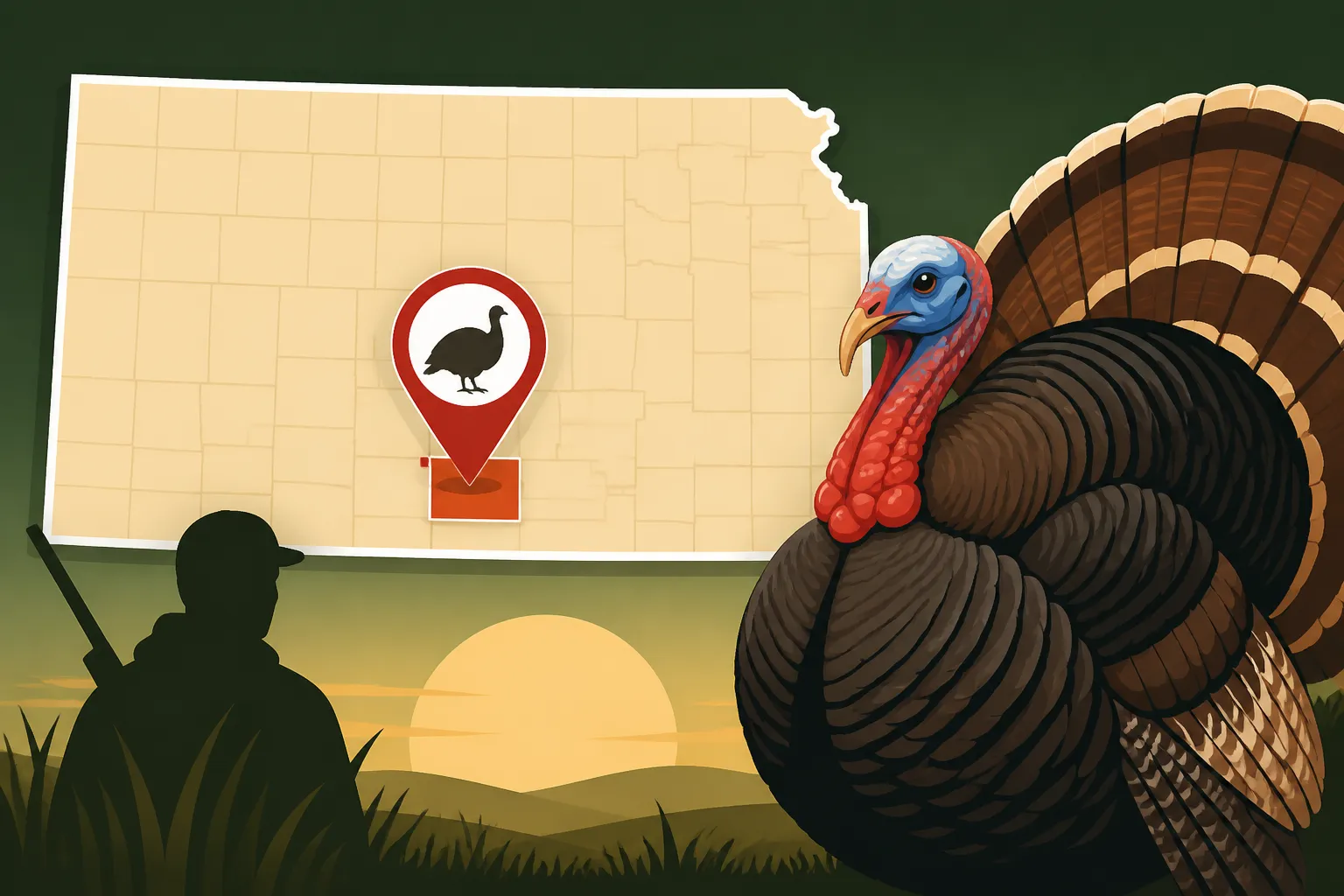
If you've been poring over the Kansas Department of Wildlife, Parks and Tourism (KDWP) regulations, you've likely come across the infamous Unit 4. This unit, located in the far eastern part of the state, consistently has the fewest permits available to nonresidents—which is to say, generally, zero. Yes, you read that right. For all intents and purposes, Unit 4 is designated as Resident-Only for turkey hunting.
This means that if you're traveling from out of state, you simply cannot apply for or purchase a turkey permit for Unit 4. It's a hard stop. While other units (like 1, 2, 3, 5, and 6) offer statewide non-resident permits, Unit 4 remains off-limits. This isn't just a minor restriction; it fundamentally changes how nonresidents must approach their Kansas turkey hunt planning. It's not about having "fewest" permits in the sense of a small quota, but rather a complete exclusion for a significant portion of the hunting population. The rationale behind this decision often ties into managing local hunting pressure, ensuring resident opportunities, and potentially addressing specific turkey population dynamics within that region.
Historical Context of Permit Restrictions
The resident-only status of certain hunting units isn't unique to Kansas or to turkey hunting. These restrictions often evolve from a combination of factors over time. Historically, areas with high population density or strong local hunting traditions sometimes face greater pressure from an increasing number of nonresident hunters. To maintain a balance, wildlife agencies implement measures like resident-only units or specific quotas.
For Kansas Unit 4, its location near major population centers and proximity to neighboring states likely plays a role. KDWP aims to provide ample opportunity for Kansas residents while carefully managing the overall turkey population and hunter experience. These types of regulations can be frustrating, especially when you've heard great things about a particular area, but they are crucial for sustainable wildlife management. Understanding this historical context helps temper the disappointment and shifts focus towards where opportunities genuinely lie. The KDWP carefully monitors Kansas Turkey Population Trends and adjusts regulations accordingly, and sometimes, that means restricting access in certain areas to benefit the overall health of the herd and resident hunters.
Navigating the Limited Permit Landscape
So, if Unit 4 is off the table, what does that mean for your Kansas turkey hunting aspirations? It means you need to be strategic and well-informed about the statewide permit system for nonresidents. The good news is that opportunities still abound in other units, but you need to know how to find them.
Understanding the Kansas Nonresident Turkey Unit Quotas
Unlike deer permits, which are often unit-specific and require a draw, Kansas typically offers nonresidents a statewide turkey permit. This permit is generally valid in Units 1, 2, 3, 5, and 6. This means that once you secure your nonresident turkey permit, you have the flexibility to hunt across a vast portion of the state, excluding the resident-only Unit 4.
The KDWP sets a total quota for nonresident spring turkey permits. For instance, in recent years, the quota has often been around 2,500 total permits for the spring season. This quota is for all nonresidents, statewide, across the available units. Once this quota is met, no more permits are issued. This system contrasts with a unit-by-unit draw for nonresidents, which is common in many other states. Therefore, while Unit 4 has zero permits for nonresidents, the other units collectively have a shared, limited pool. This system means that understanding the Kansas Nonresident Turkey Application Dates and applying promptly is crucial, rather than worrying about drawing a specific unit (apart from Unit 4). You'll also need to be aware of the Kansas Turkey Application Fee associated with the permit.
Here’s a simplified breakdown of typical nonresident permit scenarios in Kansas:
| Kansas Turkey Unit | Nonresident Permit Availability | Notes |
|---|---|---|
| Unit 1 | Statewide Permit (Shared Quota) | Good opportunities, popular units |
| Unit 2 | Statewide Permit (Shared Quota) | Good opportunities, popular units |
| Unit 3 | Statewide Permit (Shared Quota) | Good opportunities, popular units |
| Unit 4 | Resident-Only | No Nonresident Permits Available |
| Unit 5 | Statewide Permit (Shared Quota) | Good opportunities, popular units |
| Unit 6 | Statewide Permit (Shared Quota) | Good opportunities, popular units |
Note: Always consult the current KDWP regulations for the most up-to-date information, as rules can change annually.
The Strategic Importance of GoHunt for Permit Planning
In an environment where permits are limited and regulations can be confusing, tools like GoHunt become invaluable. GoHunt offers detailed insights into drawing odds, permit allocation, and unit data that can dramatically simplify your research process. Instead of sifting through dozens of KDWP PDFs, you can use GoHunt's comprehensive platform to quickly grasp the big picture for Kansas turkey hunting.
With GoHunt, you can easily see the historical nonresident permit quotas, application deadlines, and even get an idea of hunter success rates in various areas. This kind of data is gold when you're trying to decide where to focus your efforts. For example, while the statewide nonresident permit might seem broad, GoHunt can help you understand which units historically see higher hunting pressure or offer better habitat, helping you refine your target areas within the available units. It’s an essential resource for anyone serious about hunting Kansas, especially when dealing with specific restrictions like those in Unit 4, allowing you to focus on the units where you can hunt.
Strategies for Hunting Kansas Turkeys with Limited Access
Just because Unit 4 is off-limits doesn't mean your Kansas turkey hunt is doomed. Far from it! Kansas offers fantastic turkey hunting opportunities across its other units. The key is to shift your focus and apply effective strategies to the areas where you can hunt.
Exploring Alternative Units for Nonresidents
Once you've accepted that Unit 4 isn't an option, your next step is to research and identify the best alternative units for your hunt. Units 1, 2, 3, 5, and 6 all hold viable turkey populations. Each of these units offers different terrain and habitat types, from the eastern timber fringes to the central river bottoms and western agricultural lands.
For example, the eastern units (outside of Unit 4) might offer more timbered river corridors and smaller woodlots interspersed with agriculture, which can be fantastic for turkeys. As you move west, you'll encounter more open country, large agricultural fields, and sprawling grassland, which can still hold plenty of birds, especially along creek draws and shelterbelts. Consider what kind of hunting experience you prefer: do you like the cover of dense timber or the wide-open challenge of Run-and-Gun Turkey Tactics on Kansas Walk-In Ground? Researching the topography and land use of these units using tools like GoHunt's mapping features can help you narrow down your choices. Pay attention to Kansas Turkey Unit Quotas Compared across the state, even if nonresidents have a statewide permit, as this can give you an idea of overall management strategies.
When you're looking at these units, remember to investigate available public access. While Kansas is largely private land, the state has an excellent Walk-In Hunting Access (WIHA) program, as well as State Wildlife Areas and Corps of Engineers land around reservoirs. Don't be afraid to put in the time to scout these areas on maps and even make a pre-season trip if possible.
Maximizing Opportunities with Public Land Turkey Safety and Scouting
Hunting public land, especially in a state like Kansas with limited permits and widespread private ownership, requires a smart approach. First and foremost, prioritize Public Land Turkey Safety. This includes wearing orange when appropriate, being aware of other hunters, and having a clear understanding of property boundaries. Kansas public lands can sometimes see pressure, particularly on opening weekend, so planning your access routes carefully is vital.
Scouting is your secret weapon. Even without being physically present, you can do an incredible amount of e-scouting from home using aerial imagery and digital mapping tools. Look for key turkey habitat: roosting timber along river bottoms or creek beds, fields where turkeys might feed, and areas with good cover. Once you arrive, focus on finding fresh sign—tracks, droppings, and dusting bowls. Don't be afraid to move and cover ground. Turkeys are mobile, and you might need to be too.
Consider your setup strategies. While some hunters like static setups, being mobile can be incredibly effective. Practicing Roosting Kansas Turkeys the Night Before can give you a massive advantage for an early morning setup. If you find yourself up against tough, henned-up birds, understanding how to adjust your calling to Calling a Henned-Up Kansas Gobbler can make all the difference. Remember, the fewest permits in Unit 4 are a non-issue if you effectively hunt the units that are available to you.
The Path Forward: Planning Your Kansas Turkey Hunt
Successfully hunting Kansas turkeys, even with the Unit 4 restriction, is entirely achievable with careful planning and a proactive approach. Understanding the application process, permit structure, and leveraging available resources are your keys to success.
Applying for Kansas Spring Turkey Permits and Units
The first and most critical step is to correctly apply for your permit. As a nonresident, you'll be applying for a statewide permit that is valid in the open units (1, 2, 3, 5, 6). You’ll need to ensure you apply within the Kansas Nonresident Turkey Application Dates to have the best chance of securing one of the limited permits. These dates are usually in late winter or early spring, so mark your calendar or set reminders through services like GoHunt. The KDWP website is the official portal for all applications, and it's essential to follow their instructions precisely.
Remember, the nonresident turkey permit is often a "first-come, first-served" system once the application period opens, until the quota is met. This means procrastination could cost you a tag. So, get your application in early, secure your permit, and then you can focus on the exciting part—planning your hunt within the five available units.
Considering Kansas Leftover Turkey Permits as an Option
What happens if you miss the initial application period or the nonresident quota fills up before you apply? Don't despair! Sometimes, the KDWP will offer Kansas Leftover Turkey Permits. These permits are typically available for purchase later in the season, often on a first-come, first-served basis, and are subject to availability. While they can be a great backup plan, they are not guaranteed. The availability of leftover permits often depends on how quickly the initial quota was filled and if any permits become available due to cancellations or other administrative reasons.
If you find yourself in this situation, keep a close eye on the KDWP website and official announcements. GoHunt can also be a valuable resource for tracking such opportunities. While it's always best to secure your permit during the primary application period, knowing about leftover permits provides a potential second chance to get out and chase those Kansas gobblers, even if Unit 4 remains stubbornly off-limits.
Disclaimer
Please note that hunting regulations, permit availability, and season dates are subject to change annually by the Kansas Department of Wildlife, Parks and Tourism (KDWP). Always consult the most current KDWP regulations and official publications before planning and undertaking any hunting activities. This guide provides general information and recommendations but should not replace official sources.