Which Kansas Units Qualify for a Mule Deer Stamp
Trying to figure out which Kansas deer units actually qualify for that coveted Mule Deer stamp can feel like deciphering an ancient riddle. It’s not just about drawing a permit; it’s about understanding the specific, limited areas where these magnificent animals truly thrive and where your hard-won stamp can be legally utilized. This guide will walk you through the nuances of the Kansas Mule Deer program, pinpointing the units and offering insights into maximizing your chances.
Understanding the Kansas Mule Deer Stamp Program
The Kansas Mule Deer Stamp isn't just another piece of paper; it's a golden ticket into a highly specialized hunting opportunity. Unlike the ubiquitous whitetail found across the state, mule deer in Kansas are a much rarer sight, concentrated in specific western regions. This stamp program reflects the Kansas Department of Wildlife and Parks' (KDWP) careful management of this unique population.
What Exactly is a Mule Deer Stamp?
When you apply for a non-resident deer permit in Kansas, you're primarily applying for a whitetail deer permit, which typically allows you to harvest a whitetail buck in your chosen unit. However, if you have your heart set on pursuing a mule deer, you need to apply for an Either-Species/Either-Sex permit and, crucially, also apply for the separate Kansas Mule Deer Stamp Draw. This stamp, if drawn, converts your standard deer permit into an "either-species" tag, meaning you can then harvest either a whitetail or a mule deer buck within your assigned unit. It's an additional step, an additional cost, and a completely separate draw from the primary deer permit, highlighting the scarcity and specific management needs of mule deer in Kansas.
The Mule Deer stamp program is designed to control harvest pressure on a sensitive population. It ensures that only a limited number of hunters can pursue mule deer each year, helping to maintain healthy herd numbers and genetic diversity in areas where they exist. This distinction is vital because a regular whitetail permit, even if drawn for a unit known to hold mule deer, does not grant you the legal right to harvest a mule deer without that specific stamp. It's a critical detail that many hunters, especially those new to hunting Kansas, often overlook, leading to potential disappointment or even accidental violations.
The Rarity and Value of a Kansas Mule Deer Opportunity
Let's be honest, Kansas is primarily known for its world-class whitetail hunting. But for those who appreciate the challenge and beauty of mule deer, the prospect of drawing a Kansas Mule Deer Stamp is highly sought after. These animals are a true western icon, and their presence in the farmlands and breaks of western Kansas offers a unique blend of plains hunting with Midwestern charm. However, the opportunity is incredibly rare. The number of stamps issued each year is very low, far fewer than the number of applicants. This makes the draw odds exceptionally tough, often making it one of the hardest deer tags to acquire in the entire state.
The value isn't just in the rarity; it's in the experience itself. Hunting mule deer often requires a different approach than whitetails, demanding more glassing, longer walks, and an understanding of expansive, open country. Successfully drawing a stamp and then harvesting a mule deer in Kansas is a significant achievement that speaks to a hunter's dedication and patience. Many hunters will apply for years, accumulating preference points for their primary whitetail tag, but knowing that those points don't influence the mule deer draw can be a tough pill to swallow. It truly comes down to luck of the draw for that special mule deer opportunity, emphasizing the high value placed on each successful draw. This intense competition means hunters often utilize advanced mapping tools like GoHunt to meticulously research units and potential mule deer strongholds long before applying.
Identifying the Designated Mule Deer Stamp Units
This is where the rubber meets the road. Not every unit in Kansas holds mule deer, and even fewer have a population robust enough to warrant the special stamp draw. The KDWP carefully designates specific units where the Mule Deer stamp is valid, focusing on areas with established mule deer populations and suitable habitat.
The Core Western Kansas Units
The vast majority, if not all, of Kansas's huntable mule deer population resides in the western third of the state. When you look at a Kansas Deer Unit Map, you'll notice a distinct shift in landscape as you head west, transitioning from timbered creek bottoms and rolling hills to expansive plains, agricultural fields, and rugged breaks. It's in these western units that mule deer have made their home, adapted to the more open, arid environment.
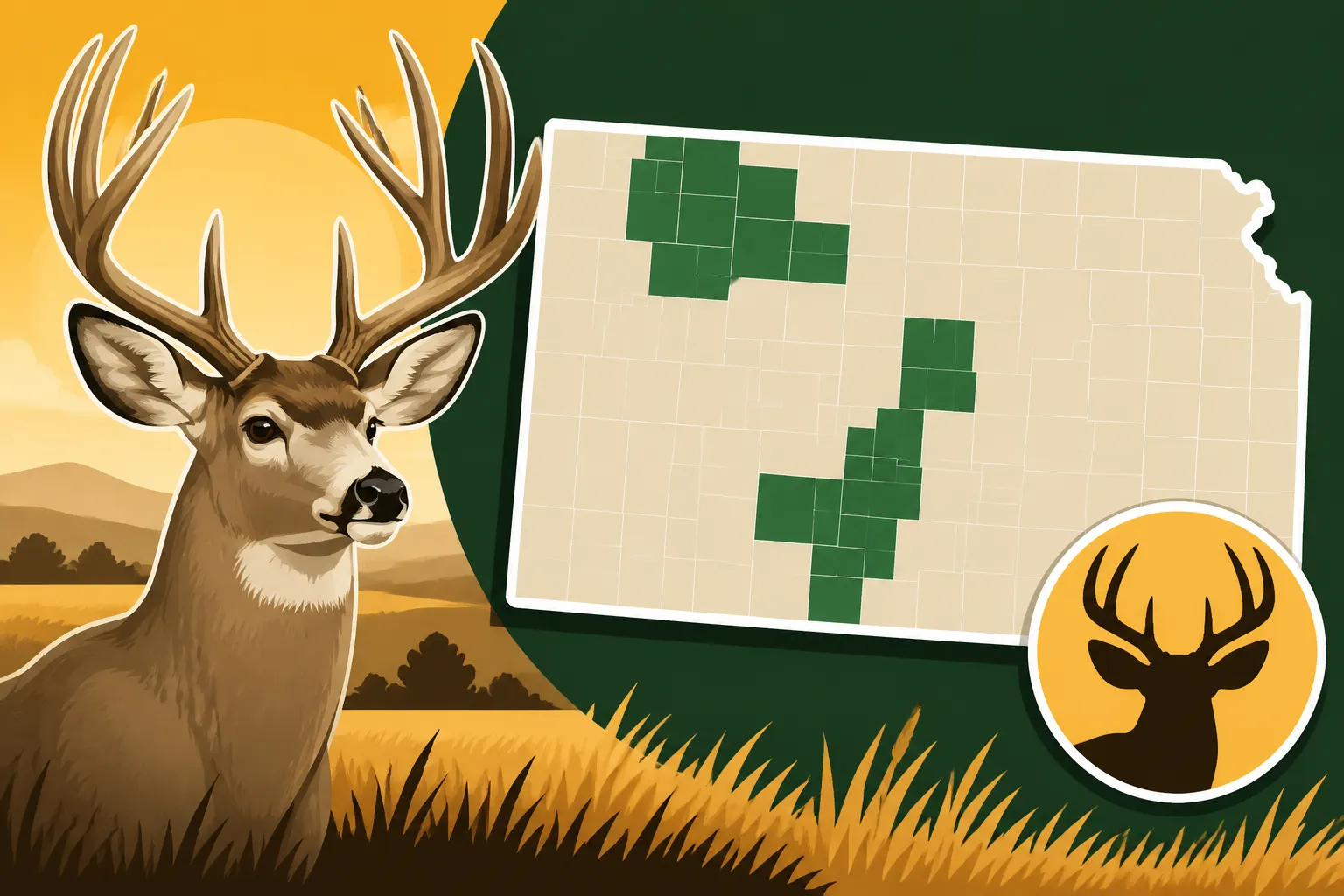
The core units consistently offering a Mule Deer stamp opportunity are typically those in the northwest and west-central parts of the state. These include, but are not limited to, Units 1, 2, 3, 4, 17, and 18.
- Unit 1: Located in the extreme northwest, Unit 1 is classic High Plains country. It encompasses counties like Sherman, Cheyenne, and Wallace, known for their large agricultural fields, strong CRP (Conservation Reserve Program) enrollment, and breaks along the Arikaree and Smoky Hill rivers. This unit consistently holds a solid mule deer population, making it a prime target for stamp applicants.
- Unit 2: Just east of Unit 1, Unit 2 covers counties such as Rawlins, Decatur, and Thomas. Similar to Unit 1, it features extensive farmlands and grass, with mule deer often found utilizing the scattered timber and brushy draws for cover. The mule deer density here is respectable, offering a good chance for those who draw.
- Unit 3: Moving south of Unit 1, Unit 3 spans counties like Greeley, Hamilton, and Wichita. This area is characterized by vast plains and irrigated farmland, with mule deer often found in river breaks along the Arkansas River or utilizing the expansive native grasslands.
- Unit 4: East of Unit 2, Unit 4 includes Norton, Graham, and Sheridan counties. While perhaps not as renowned for mule deer as the units further west, it still offers legitimate opportunities in areas with good cover and less pressure.
- Unit 17: This unit is located in the west-central part of the state, covering counties like Gove, Logan, and Ness. It's a transitional zone with ample agriculture and significant canyons and breaks, particularly along the Smoky Hill River and its tributaries. Mule deer here thrive in these more rugged, broken habitats.
- Unit 18: Situated south of Unit 17, Unit 18 includes counties like Lane, Scott, and Finney. This area also offers classic western Kansas terrain, with mule deer found in the river bottoms and the open country where adequate cover exists.
It is crucial for hunters to always consult the current year's KDWP Hunting Regulations Summary or the Kansas Wildlife, Parks and Tourism website before applying, as specific unit designations can sometimes change based on population surveys and management objectives. While these units typically offer the mule deer stamp, confirmation each year is paramount.
Adjacent Units with Potential Overlap
While the units listed above are the primary strongholds, there are other units where mule deer sightings occur, and where, depending on annual KDWP assessments, a Mule Deer stamp might occasionally be valid. These are generally units that border the core mule deer range or have specific pockets of suitable habitat.
Units like 16 and 19, for example, are further south and east but can still have transient or localized mule deer populations, especially in their westernmost fringes.
- Unit 16: This unit covers counties like Ford, Hodgeman, and Gray in southwest Kansas. While predominantly whitetail country, the western and northern parts of Unit 16 that border the more arid, open country of units like 3 and 18 can occasionally host mule deer. However, the density here is typically much lower, and drawing a stamp for this unit would be a rarer occurrence.
- Unit 19: Located in the far southwest, including areas like Morton and Stanton counties, Unit 19 is largely characterized by dryland farming and native grass. While still primarily a whitetail unit, there are historical records of mule deer, and occasionally, a limited number of stamps might be available here. Hunters should have realistic expectations for mule deer numbers in these peripheral units compared to the core areas like Unit 1 or 17.
It's important to understand that KDWP's unit designations for the Mule Deer stamp are tied directly to the health and distribution of the huntable mule deer population. If a unit's mule deer numbers dip below a certain threshold, or if habitat changes significantly, it may be removed from the list of qualifying units. This dynamic aspect makes thorough research each year essential for any serious mule deer applicant. Using resources like the Kansas Hunting Atlas Online or detailed mapping software can help you visualize the habitat and potential mule deer strongholds within these designated units.
| Kansas Deer Unit | Primary Mule Deer Status | Typical Habitat | General Location | Notes |
|---|---|---|---|---|
| Unit 1 | Core Mule Deer Unit | High Plains, CRP, river breaks, agriculture | Northwest Kansas | Strongest mule deer numbers |
| Unit 2 | Core Mule Deer Unit | Farmland, grass, draws | Northwest Kansas | Consistent mule deer presence |
| Unit 3 | Core Mule Deer Unit | Vast plains, irrigated farmland, river breaks | Southwest Kansas | Good opportunities, especially near Arkansas River |
| Unit 4 | Mule Deer Unit | Farmland, timber, draws | Northwest/North Central KS | Respectable mule deer, more mixed habitat |
| Unit 17 | Core Mule Deer Unit | Agriculture, significant canyons, river breaks | West-Central Kansas | Robust mule deer in broken country |
| Unit 18 | Mule Deer Unit | Open country, river bottoms, agriculture | West-Central Kansas | Consistent mule deer, requires extensive glassing |
| Unit 16 | Potential Overlap | Mixed farmland, some open country | Southwest Kansas | Mule deer sightings, but lower density |
| Unit 19 | Potential Overlap | Dryland farming, native grass | Extreme Southwest Kansas | Limited mule deer, but historically present |
Note: Always verify current year's regulations from KDWP for precise unit eligibility.
Factors Influencing Mule Deer Presence and Habitat
Mule deer aren't just found anywhere; they thrive in specific environments that cater to their unique ecological needs. Understanding these factors is key to not only identifying qualifying units but also effectively scouting and hunting them once you draw that coveted stamp. Their presence in Kansas is a testament to their adaptability, but also a reflection of the state's diverse, albeit often overlooked, western landscapes.
Geographic and Ecological Characteristics
The western third of Kansas presents a dramatically different ecological profile than its eastern counterpart. Gone are the dense timber stands and major river systems. Instead, you'll find:
- High Plains and Prairies: Much of western Kansas falls within the High Plains ecoregion, characterized by vast, flat to gently rolling grasslands. This open terrain is critical for mule deer, allowing them to utilize their keen eyesight to detect predators from a distance. Within these grasslands, areas of native prairie or CRP offer excellent bedding cover and forage, especially where tall grasses can conceal deer.
- Breaks and Canyons: While generally flat, the landscape is punctuated by a network of breaks, draws, and small canyons, often associated with rivers like the Smoky Hill, Cimarron, and Arkansas. These broken areas provide essential escape cover, thermal regulation, and a diverse range of browse that mule deer prefer. They act as natural travel corridors and bedding sanctuaries, particularly important in a landscape dominated by agriculture. Scouting these features is paramount for anyone planning to be Hunting Terrain Funnels in Flat Country or Reading a Kansas Creek Bottom for Deer Sign.
- Agriculture and Crop Fields: Western Kansas is heavily agricultural, with vast fields of wheat, corn, milo, and alfalfa. Mule deer, like whitetails, have learned to adapt to and even thrive on these abundant food sources. Standing crops, especially corn or milo, provide both food and excellent cover, attracting deer. However, unlike whitetails, mule deer tend to be more wary of dense timber associated with eastern farming and prefer the more open, but still brushy, cover found in the breaks and uncultivated edges. The presence of these crops directly impacts the nutritional intake of deer, contributing to larger body and antler size, which is one reason Why Kansas Grows Trophy Whitetails.
These ecological characteristics create a mosaic of habitat. Mule deer in Kansas are often found where these elements converge: open grasslands for foraging and visibility, adjacent to rugged breaks for security, and within reasonable proximity to agricultural fields for supplemental food. This intricate balance is why certain units consistently hold mule deer populations while others do not.
Herd Dynamics and Population Trends
Understanding the current health and trends of the mule deer population in Kansas is vital for any serious hunter. The KDWP actively monitors these herds to make informed management decisions, which directly impact the number of stamps issued each year and the specific units where they are valid.
- Population Stability and Decline: While Kansas mule deer populations are generally stable in their core range, there have been concerns and localized declines in recent years, mirroring trends seen in other Western states. Factors such as habitat fragmentation, increased competition with whitetails, disease outbreaks like Epizootic Hemorrhagic Disease (EHD), and drought conditions can all impact herd numbers. KDWP aims to manage for a stable, healthy population within the mule deer's limited range, hence the restrictive nature of the stamp draw. More information on Mule Deer Decline in Kansas can provide context to these challenges.
- Whitetail Competition: In many areas of western Kansas, whitetail deer populations are expanding into traditional mule deer habitat. Whitetails are often more adaptable to disturbed landscapes and can outcompete mule deer for resources in certain transitional zones. This overlap can influence mule deer distribution and density, making pure mule deer hunting areas more isolated. Recognizing the difference between a mule deer and a whitetail, especially at a distance in mixed habitats, is a critical skill for hunters who draw the stamp.
- Harvest and Age Structure: The limited number of Mule Deer stamps issued each year ensures that harvest pressure on mule deer bucks is carefully controlled. This conservative approach helps maintain a healthy age structure within the buck population, allowing more bucks to reach maturity and express their full antler potential. While drawing a stamp is difficult, it often means that the bucks you do encounter, especially in the prime units, have a better chance of being mature animals. This management strategy contributes to the reputation of Kansas as a destination for quality deer.
The KDWP's ongoing research into Kansas Deer Herd Numbers by Unit directly influences how many mule deer stamps are allocated. Hunters should pay close attention to KDWP's annual reports and projections, as these can provide clues about the health of the herd and potential changes to the stamp program.
Applying for the Mule Deer Stamp and Permit Draw
Applying for any coveted hunting permit can be a nerve-wracking process, and the Kansas Mule Deer Stamp is no exception. It's a system that requires careful attention to detail, adherence to deadlines, and an understanding of how it differs from the standard whitetail deer permit draw.
Navigating the Application Process
The application for a Kansas deer permit, including the Mule Deer Stamp, is an entirely online process handled through the KDWP's Go Outdoors Kansas platform. The primary Kansas Deer Application Window in April is when most hunters, especially non-residents, will submit their applications.
Here’s a general rundown of what you’ll need to do:
- Purchase Your Hunting License: Before you can even think about a deer permit, you'll need to purchase a valid Kansas Non-resident Hunting License. This is a prerequisite for any big game application. You can find information on the Kansas Nonresident Hunting Licence Cost to help budget for your trip.
- Select Your Permit Type: When applying for a non-resident deer permit, you'll choose an "Either-Species/Either-Sex Deer Permit." This is critical because only this permit type can be converted by a Mule Deer stamp. Do not select a "Whitetail Either-Sex" permit if your goal is a mule deer.
- Choose Your Primary and Adjacent Units: You will need to select a primary unit and an adjacent unit. For mule deer hunters, these units must be among those designated by KDWP as eligible for the Mule Deer Stamp. This is where your research on Which Kansas Units Qualify for a Mule Deer Stamp becomes paramount. It's not enough for a unit to simply have mule deer; it must be explicitly on the KDWP's list for that year's stamp draw.
- Apply for the Mule Deer Stamp: This is a separate checkbox or selection within the deer permit application. You must specifically indicate your desire to be entered into the Mule Deer Stamp draw. There is an additional application fee for this stamp, usually around $15.50 to $27.50, on top of your permit fee. This fee is non-refundable, even if you don't draw the stamp or the primary deer permit.
- Submit and Pay: Review all your selections carefully before submitting your application. Double-check unit choices, permit types, and ensure you've ticked the Mule Deer Stamp box. The system will then prompt you for payment for your hunting license, primary deer permit, and the Mule Deer Stamp application fee.
It’s important to remember that applying for the Mule Deer Stamp does not guarantee you will draw it, nor does it guarantee you will draw your primary deer permit. You can draw a deer permit but not the mule deer stamp, in which case you will only be able to hunt whitetails in your assigned unit. The draw results for the Mule Deer Stamp are typically announced around the same time as the primary deer permit draw results, often in late May or early June. Using an online platform like GoHunt can assist in understanding historical draw odds and application strategies for specific Kansas units.
The Role of Preference Points
This is a common point of confusion for many non-resident hunters applying in Kansas, and it's particularly important for those hoping to harvest a mule deer: preference points do not help you draw a Kansas Mule Deer Stamp.
- Whitetail Preference Points: For the standard non-resident whitetail deer permit, Kansas operates a preference point system. Hunters who fail to draw their chosen unit accrue a preference point, which improves their odds in subsequent draws. You can even purchase a preference point without applying for a permit if you know you won't be hunting but want to build points for the future. The more points you have, the better your chances of drawing a desirable whitetail unit become.
- Mule Deer Draw is a Lottery: The Mule Deer Stamp draw, however, is a pure lottery. Every applicant, regardless of whether they have 0 or 20 preference points for whitetail, has an equal chance each year. There is no preference point system for the Mule Deer Stamp. This means that a first-time applicant has the same statistical chance as someone who has been applying for a decade. This system underscores the KDWP's desire to keep the mule deer harvest very low and distribute the extremely limited opportunities purely by chance. This aspect is covered in more detail in Why Points Do Not Help the Kansas Mule Deer Draw.
While it might seem frustrating that years of accumulating points don't give you an edge for mule deer, it simplifies the process for that specific draw. It means every year is a fresh start for a chance at that special tag. However, it also means that the odds of drawing are consistently very low, often in the single digits or even fractions of a percent, depending on the number of stamps issued and applicants. Be prepared for disappointment, but also know that every application holds the same slim, exciting possibility.
Strategic Considerations for Mule Deer Hunters
Drawing a Kansas Mule Deer Stamp is a tremendous achievement, but it's just the first step. Successfully hunting these wary animals in the relatively open landscapes of western Kansas requires thorough preparation, smart scouting, and a solid understanding of mule deer behavior. It’s a completely different game than chasing whitetails in dense timber.
Scouting and Research for Designated Units
Even if you've drawn a tag for a specific unit, your work is far from over. Effective scouting is paramount to success, especially for an animal like the mule deer that relies on its vision and vast home range.
- E-Scouting is Your Best Friend: Before you ever set foot in Kansas, digital tools can give you a massive head start. Platforms like GoHunt or onX Hunt are invaluable for E-Scouting Kansas Farm Country From Home. Look for key terrain features within your unit:
- River and Creek Breaks: These are often the most obvious places to find mule deer. Scan for deep cuts, steep banks, and areas with dense brush or cedars along drainages. These provide vital cover and travel corridors.
- CRP and Native Grasslands: Look for large blocks of undisturbed Conservation Reserve Program (CRP) land or native prairie. These offer bedding areas and forage. Mule deer often prefer the edges where these grasslands meet agricultural fields.
- Isolated Timber Patches/Shelterbelts: While mule deer aren't timber dwellers like whitetails, isolated groves of trees or shelterbelts, particularly those on higher ground or along draws, can serve as bedding and staging areas, especially during harsh weather or if there's significant hunting pressure.
- Water Sources: In dry western Kansas, identifying available water sources can be critical, especially during the early season. Stock tanks, farm ponds, or natural seeps will attract deer.
- Historical Data and Local Knowledge: Research historical harvest reports from KDWP for your unit. While not specific to mule deer, they can give you an idea of overall deer density and general success rates. If possible, connecting with local landowners, farmers, or even KDWP biologists can provide invaluable, up-to-date insights into mule deer movement and patterns within your unit. They'll often have a better pulse on specific pockets where deer concentrate.
The sheer scale of western Kansas units can be daunting. E-scouting helps narrow down vast areas to manageable segments, identifying likely bedding, feeding, and travel routes before you invest time on the ground. This detailed preparation can make or break your hunt, especially when hunting Public Land Deer Hunting in Kansas where pressure can shift deer patterns quickly.
Public vs. Private Land Access
Access is always a primary concern for hunters, and in Kansas, it’s a constant balancing act between abundant private land and the often-pressured public options. For mule deer hunters, this balance can be even more critical due to the specific habitats these deer prefer.
- Private Land Dominance: A significant portion of prime mule deer habitat in western Kansas lies on private land. Gaining permission from landowners is often the most straightforward path to consistent success. This can be done through direct door-knocking, networking, or securing a hunting lease. While this can be challenging for non-residents, investing the time to find a private land opportunity can dramatically increase your odds. For more on this, consider reading Finding Private Land Access in Kansas. Remember that written permission is often required, and always respect landowner wishes.
- Walk-In Hunting Access (WIHA): Kansas's renowned Kansas Walk-In Hunting Access Explained (WIHA) program offers invaluable public access to private lands. Many WIHA tracts in western Kansas consist of native grass, CRP, and agricultural fields, which can hold mule deer. However, WIHA tracts can experience significant hunting pressure, especially on opening weekends or during the rut. Hunters need to be diligent in Scouting Kansas Walk-In Tracts Before the Opener and understanding Hunting Pressure Patterns on Kansas Public Land. Using the KDWP's online atlas or the Kansas WIHA Atlas can help you identify tracts within your unit, but always be prepared to walk long distances to get away from other hunters.
- Corps of Engineers and State Wildlife Areas: While less common for prime mule deer habitat, some Corps of Engineers land around reservoirs or certain State Wildlife Areas in western Kansas might offer opportunities. These areas typically have specific regulations, so always check the local rules for each area you plan to hunt. Mule deer are less likely to be found in the timbered areas of these public lands and more likely in the open, brushy fringes or grassland sections.
Regardless of whether you are hunting private or public land, a successful mule deer hunt often involves extensive walking and glassing. Spot-and-stalk tactics are often employed, necessitating quiet movement and patience. Having good optics – binoculars and a spotting scope – is non-negotiable for finding these elusive deer in the vastness of western Kansas.
What Happens if You Don't Draw a Mule Deer Stamp?
Given the incredibly low draw odds for a Kansas Mule Deer Stamp, it's far more likely that you won't draw it than you will. This reality can be disappointing, especially after putting in the time and effort to apply. However, not drawing a mule deer stamp doesn't mean your Kansas hunting dreams are shattered; it just means adapting your plans.
Alternative Hunting Opportunities
The good news is that if you applied for an "Either-Species/Either-Sex" permit and did not draw the Mule Deer Stamp, your permit defaults to a Whitetail Either-Sex permit for your chosen unit. This means you still have a fantastic opportunity to hunt in Kansas.
- Focus on Whitetails: Kansas is legendary for its whitetail deer, boasting exceptional trophy potential. The same western units that hold mule deer also hold robust whitetail populations. These whitetails will utilize the river bottoms, creek draws, shelterbelts, and crop fields. You'll simply shift your focus from scanning vast plains for mule deer to deciphering whitetail travel patterns in the available cover. This can be an exciting challenge, especially if you're prepared to dive into Kansas Whitetail Hunting Tactics Through the Rut or understand Milo and Corn Stubble Deer Patterns.
- Consider Antlerless Hunts: If your primary goal is simply to fill the freezer, Kansas offers numerous opportunities for antlerless deer permits. These permits are much easier to acquire, especially during extended seasons, and can be a great way to put meat on the table. You might not be chasing a trophy, but the experience of Kansas Antlerless Hunts and Filling the Freezer can be incredibly rewarding.
- Explore Other Species: Kansas offers a wide array of other hunting opportunities. If you're coming from out of state, you might consider extending your trip to include small game, upland birds, or even coyotes. Kansas is a premier destination for Upland Bird Hunting Kansas Grass and Milo Edges, with excellent pheasant and quail populations. Having a general hunting license allows you to pursue these species, adding another dimension to your trip even without a mule deer tag.
Remember, a Kansas hunting trip is about the experience, the camaraderie, and the beauty of the outdoors, not solely about a specific animal. Be flexible, and you'll still have a memorable hunt.
Planning for Future Applications
While the Mule Deer Stamp draw is a pure lottery, there are still ways to strategically plan for future applications and improve your overall hunting prospects in Kansas.
- Consistent Application: Since there are no preference points for the Mule Deer Stamp, the only way to increase your total number of chances over time is to apply consistently every year. The more years you apply, the more entries you accumulate into the draw pool across your hunting career. This is a long-term game, so don't get discouraged after just a few tries.
- Building Whitetail Preference Points: Even if your heart is set on a mule deer, it's wise to continue building whitetail preference points. If you consistently fail to draw the Mule Deer Stamp, having a high number of whitetail points will eventually guarantee you a prime whitetail permit in a highly desirable unit. This gives you a reliable backup plan and ensures you'll eventually draw a quality deer tag. You can always apply for the Mule Deer Stamp and build points simultaneously.
- Stay Informed: Keep a close eye on KDWP publications, news releases, and their website for any changes to the Mule Deer Stamp program. Population changes, habitat improvements, or shifts in management strategies could potentially alter unit designations or the number of stamps issued in future years. Being informed means you can adapt your application strategy.
- Budgeting for the Future: Understand the full financial commitment. The Kansas Mule Deer Stamp Cost is just one part of the equation. Factor in the hunting license, the primary deer permit, and potential travel and lodging costs for your future hunts. Planning these expenses makes it easier to commit to consistent applications and trips.
Ultimately, drawing a Kansas Mule Deer Stamp is a low-odds proposition, but the reward of hunting these magnificent animals in their unique western Kansas habitat makes it worth the effort for many. By understanding the rules, diligently researching, and planning for both success and disappointment, you can maximize your enjoyment of what Kansas hunting has to offer.
Disclaimer
Please note: Hunting regulations, season dates, and permit requirements are subject to change annually by the Kansas Department of Wildlife and Parks (KDWP). Always consult the most current KDWP hunting regulations summary before planning any hunting trip or applying for permits. This guide is for informational purposes only and does not supersede official KDWP regulations.