Rangefinding in Flat Country
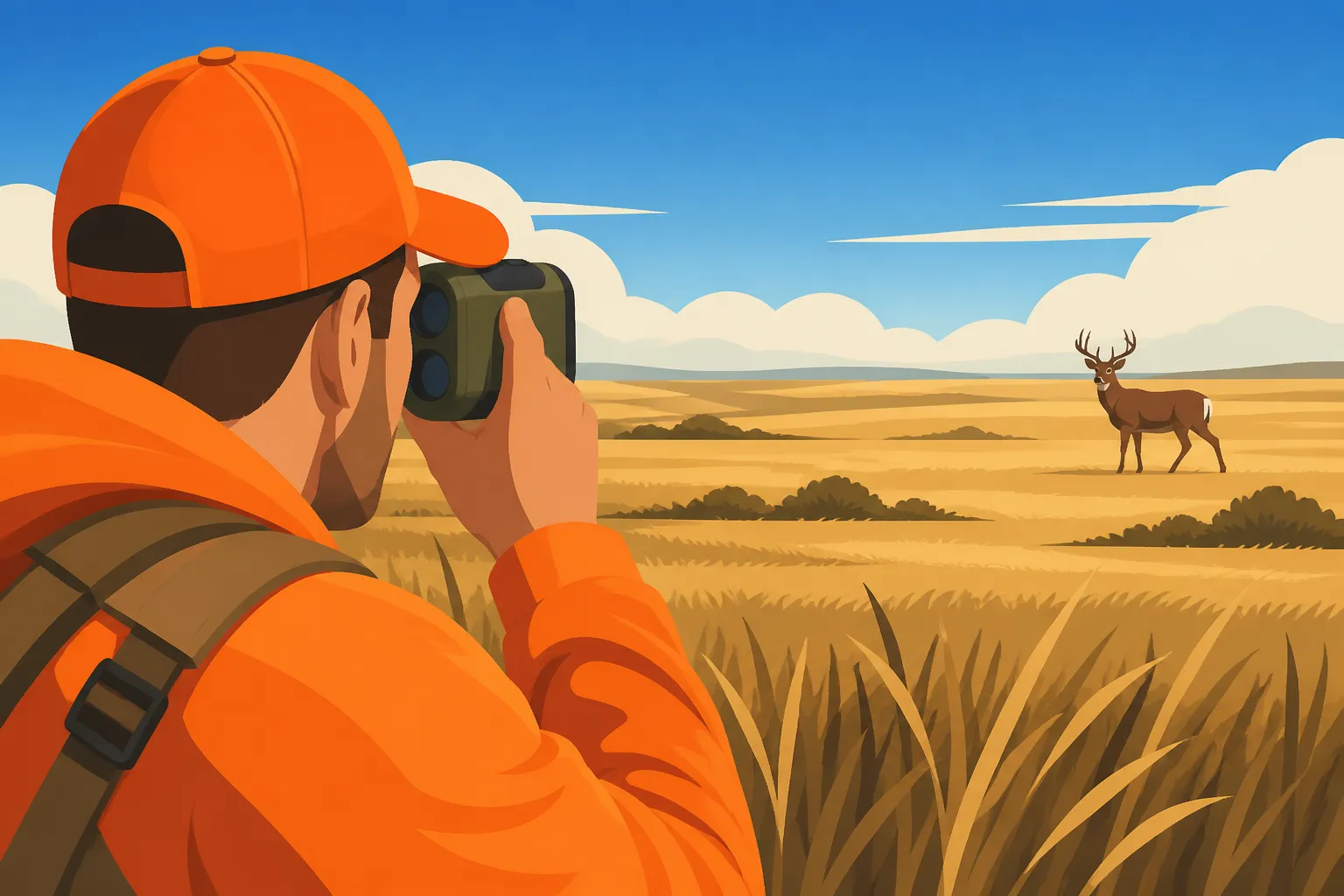
Hunting in the vast, open expanses of Kansas can be incredibly rewarding, but it throws unique challenges your way, especially when it comes to accurately judging distance. That wide-open feeling, while beautiful, can play tricks on your eyes, making a deer at 40 yards look like 60, or worse, vice versa. This guide is all about navigating those optical illusions and mastering your rangefinder to ensure ethical, precise shots in flat Kansas country, whether you're chasing whitetails in a milo field or pheasants across a CRP tract.
The Unique Challenges of Distance Perception in Flat Landscapes
If you've spent any time hunting the flat farmlands and prairies of Kansas, you know how deceptive distances can be. It’s not like hunting timbered ridges or mountainous terrain where you have constant elevation changes and visual anchors to help your brain process depth. Here, the world often stretches out in a seamless, unbroken panorama, and that’s precisely where our natural distance-judging abilities can go haywire.
Lack of Visual Cues and Reference Points
Imagine standing at the edge of a massive, cut milo field or a sprawling CRP grass expanse. How many trees, rocks, or distinct terrain features are there to provide scale? Often, very few. Without those obvious landmarks, our eyes struggle to triangulate distances effectively. In a dense forest, every tree, every boulder, every subtle dip and rise in the ground gives your brain data points. In flat country, you might see a distant deer against a uniform backdrop of crops or grass, and without anything in between to break up that space, your brain fills in the blanks, often inaccurately. This is a common frustration, making a simple shot feel like a gamble.
Atmospheric Conditions and Distance Distortion
Kansas weather adds another layer of complexity. Bright, sunny days can create mirages, making distant objects appear wavy or closer than they actually are. Hazy or overcast conditions can absorb light, making everything look further away. Early morning and late evening light, with their long shadows and softer glow, can also significantly alter how you perceive distance. You might think that big buck is "just out there" at 70 yards, only for your rangefinder to reveal he's actually pushing 100, or conversely, he might be closer than your eyes are telling you. These distortions aren't just annoying; they can lead to missed shots or, even worse, unethical hits if you misjudge your hold.
Choosing the Right Rangefinder for Kansas Hunting
Navigating those deceptive distances demands the right tool. Not all rangefinders are created equal, and some features are far more beneficial for the wide-open, flat terrain typical of Kansas than they might be for dense woods.
Basic Versus Angle-Compensating Models
For the most part, hunting the flat ground of Kansas means you won't be dealing with extreme angles up or down. A basic rangefinder that simply gives you line-of-sight distance will work just fine for the majority of your hunting scenarios. However, if you find yourself hunting creek bottoms or river breaks where there might be significant elevation changes, or if you plan to hunt from a treestand, an angle-compensating rangefinder becomes invaluable. These models calculate the "shoot-to" distance, which is the horizontal distance to the target, taking gravity's effect on your arrow or bullet trajectory into account. This is particularly useful if you're ever Hunting Terrain Funnels in Flat Country that might involve subtle elevation changes or hunting from a slightly elevated position, even if it's just a small cottonwood tree.
Magnification, Display, and Scan Modes
When selecting a rangefinder, consider a few key features. A magnification of 6x or 7x is generally plenty for deer-sized game and provides a stable enough image for ranging. Anything higher can make it harder to hold steady. The display is crucial: a red LED or OLED display is far superior in low-light conditions, like dawn and dusk, which are prime hunting times in Kansas. Black LCD displays can be almost impossible to read when shadows lengthen. Look for a model with a "scan" mode, which continuously ranges as you pan across an area. This is incredibly helpful when deer are moving or when trying to pick out a specific animal from a group, allowing you to quickly get readings on multiple targets or re-range a moving animal. Brands like Leupold, Vortex, and Sig Sauer offer excellent options with these features, providing reliable performance in varied Kansas conditions.
Essential Rangefinder Features for Open Country
| Feature | Benefit in Flat Country | Why It Matters |
|---|---|---|
| High Light Transmission | Brighter image, especially in low light. | Crucial for dawn/dusk ranging when deer are most active. |
| Red/OLED Display | Easy to read against dark or busy backgrounds. | Black displays wash out easily against crops, timber edges, or dark animal hides. |
| Scan Mode | Continuously ranges multiple objects as you pan. | Great for ranging moving animals, multiple targets, or finding exact distance to small objects. |
| Long Ranging Capability | While not always necessary for ethical shots, useful for scouting distant areas. | Allows you to range features hundreds of yards away for strategic planning. |
| Compact & Lightweight | Easy to carry in a bino harness or pocket. | You’ll use it constantly, so portability is key; don't leave it in the truck. |
| Waterproof/Fogproof | Protects against dew, rain, and humidity. | Kansas weather can change quickly, protecting your investment is smart. |
Practical Rangefinding Techniques for Open Kansas Landscapes
Having a good rangefinder is just the first step; knowing how to use it effectively in the challenging environment of Kansas is where true proficiency lies. It’s about more than just pointing and clicking; it's about making it an integral part of your hunting process.
Ranging Multiple Objects and Creating a Mental Map
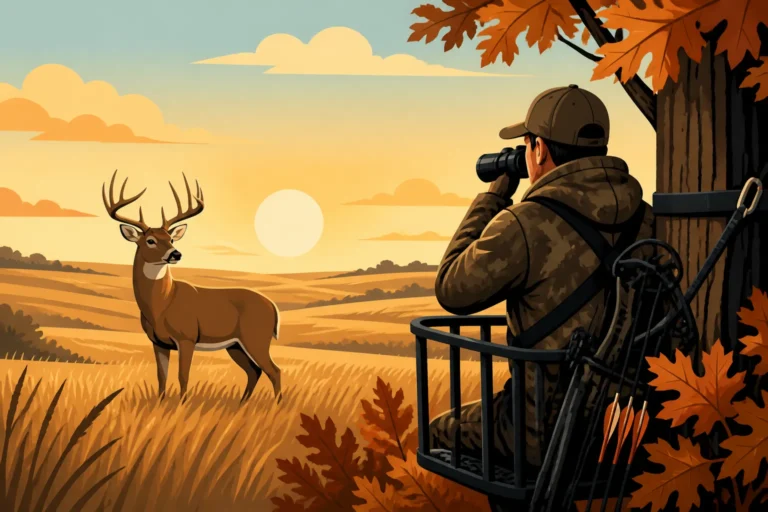
In flat country, you can’t rely on a single range. Instead, make it a habit to range multiple objects around your hunting position as soon as you settle in. From your treestand overlooking a Milo and Corn Stubble Deer Patterns field, range that fence line, the single cedar tree, the edge of the creek, and any distinct patches of weeds or brush. Commit these distances to memory. When a deer steps out, you'll have instant reference points. "Okay, he's just past that 70-yard fence post, probably 85 yards." This takes the guesswork out of the moment of truth and reduces hesitation. If you're hunting from a ground blind, do the same, making note of any field edges or prominent features. This proactive approach saves precious seconds when a deer appears.
Utilizing Landmarks and Terrain Features
Even in flat Kansas, there are always subtle features you can leverage. A lone cottonwood, a distinct fence corner, a small drainage ditch, or even a change in crop type can serve as an excellent rangefinding landmark. Use your rangefinder to get precise distances to these features when you're scouting or first setting up. When you're scouting CRP Grass and Where Bucks Bed, you might identify a specific clump of yucca or a single, large tumbleweed that could serve as a range reference. Consider using mapping apps like GoHunt to mark these pre-ranged spots on your digital map. This creates a powerful combination of on-the-ground intelligence and technological assistance, turning those vast, featureless plains into a grid of known distances.
The Importance of Consistent Practice
You wouldn't expect to hit a bullseye without practice, and the same goes for rangefinding. Take your rangefinder with you on walks, to the grocery store parking lot, or even just around your yard. Practice quickly acquiring targets and getting readings. Try to guess the distance first, then verify with your rangefinder. This trains your eye and brain to work together. When you're Practicing Shots From a Treestand, don't just practice shooting; practice ranging as well. Range the targets, then range the obstacles, and then re-range the targets. The more you use it, the more instinctive it becomes, making you faster and more confident when it truly matters. Think of it as muscle memory for your eyes and hands.
Integrating Rangefinding with Your Kansas Hunting Strategy
A rangefinder isn't just for checking the distance right before a shot; it's a vital component of your overall hunting strategy, especially when planning and executing a hunt in the open country of Kansas.
Pre-Ranging Your Stand and Shooting Lanes
Before you even step into the woods or fields for a hunt, rangefinding should be part of your setup. When choosing your Best Stand Locations in Flat Farm Country, use your rangefinder to identify natural shooting lanes and mark out your maximum ethical shooting distance in every direction. If you're hunting a particular field edge, know exactly how far it is to the opposite side, to that far timber patch, or to any prominent features where deer might appear. This allows you to visualize potential shot opportunities before they happen, reducing stress and increasing confidence when a deer finally makes an appearance. If you're setting up a decoy, use your rangefinder to confirm proper Decoy Placement and Wind Direction within your comfortable shooting range.
Using E-Scouting and Mapping Tools
Modern hunting has been revolutionized by e-scouting, and your rangefinder pairs perfectly with it. Platforms like GoHunt allow you to drop pins and measure distances from potential stand locations to food sources, bedding areas, and travel corridors, all from the comfort of your home. You can E-Scouting Kansas Farm Country From Home by using satellite imagery to identify key features like pinch points, inside corners of crop fields, or isolated patches of cover. Then, once you're on the ground, use your physical rangefinder to verify those distances and find the exact spots. This combination provides an unparalleled level of precision, ensuring you're setting up in the sweet spot and know your ranges before a deer even steps into view. When Reading Aerial Imagery for Bedding Cover, use the tools within GoHunt to estimate travel distances, then confirm with your rangefinder once in the field.
Adapting to Different Hunting Scenarios
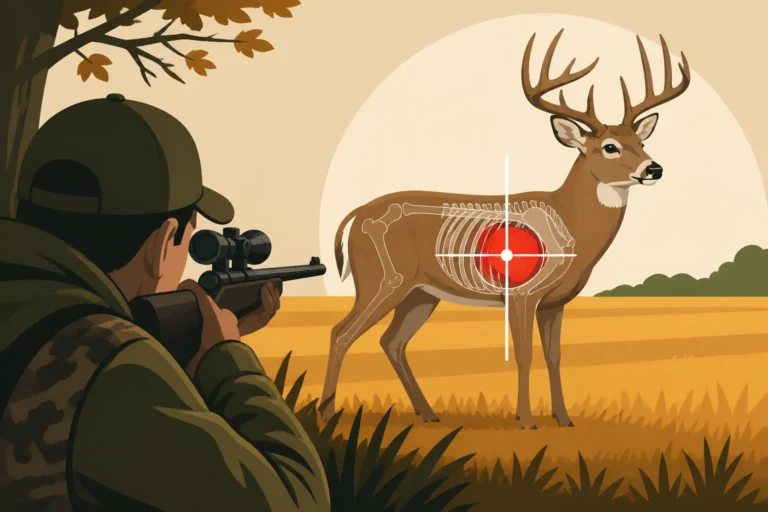
Your rangefinding approach will vary slightly depending on your hunting method. For a bowhunter trying to capitalize on Kansas Whitetail Hunting Tactics Through the Rut, quick, accurate ranging is paramount for those close-range, fleeting opportunities. For a rifle hunter sitting over a vast expanse of winter wheat during the late firearm season, confirming longer distances is critical. If you're hunting public access ground like a Kansas Walk-In Hunting Access Explained tract, mobility might mean you can't pre-range extensively, but a good scan mode on your rangefinder will be your best friend. Always be prepared to range and re-range, especially as light changes or if you reposition. If you're Hunting From a Blind Without Movement, you have more time to range and confirm, but still, practice quick acquisition.
Ultimately, a rangefinder is an indispensable tool for any serious Kansas hunter, especially in the state’s characteristically flat and open terrain. By understanding its nuances, practicing consistently, and integrating it seamlessly into your overall hunting strategy, you'll significantly increase your confidence and success in the field, making those once-deceptive distances crystal clear.
Disclaimer
The information provided in this article is for educational and informational purposes only and is not a substitute for professional hunting instruction, ethical judgment, or compliance with all applicable state and local hunting regulations. Always consult the official Kansas Department of Wildlife, Parks, and Tourism (KDWPT) regulations before any hunting activity. Hunting is an inherently risky activity, and readers should exercise extreme caution and prioritize safety at all times.