Night Hunting Rules for Coyotes in Kansas
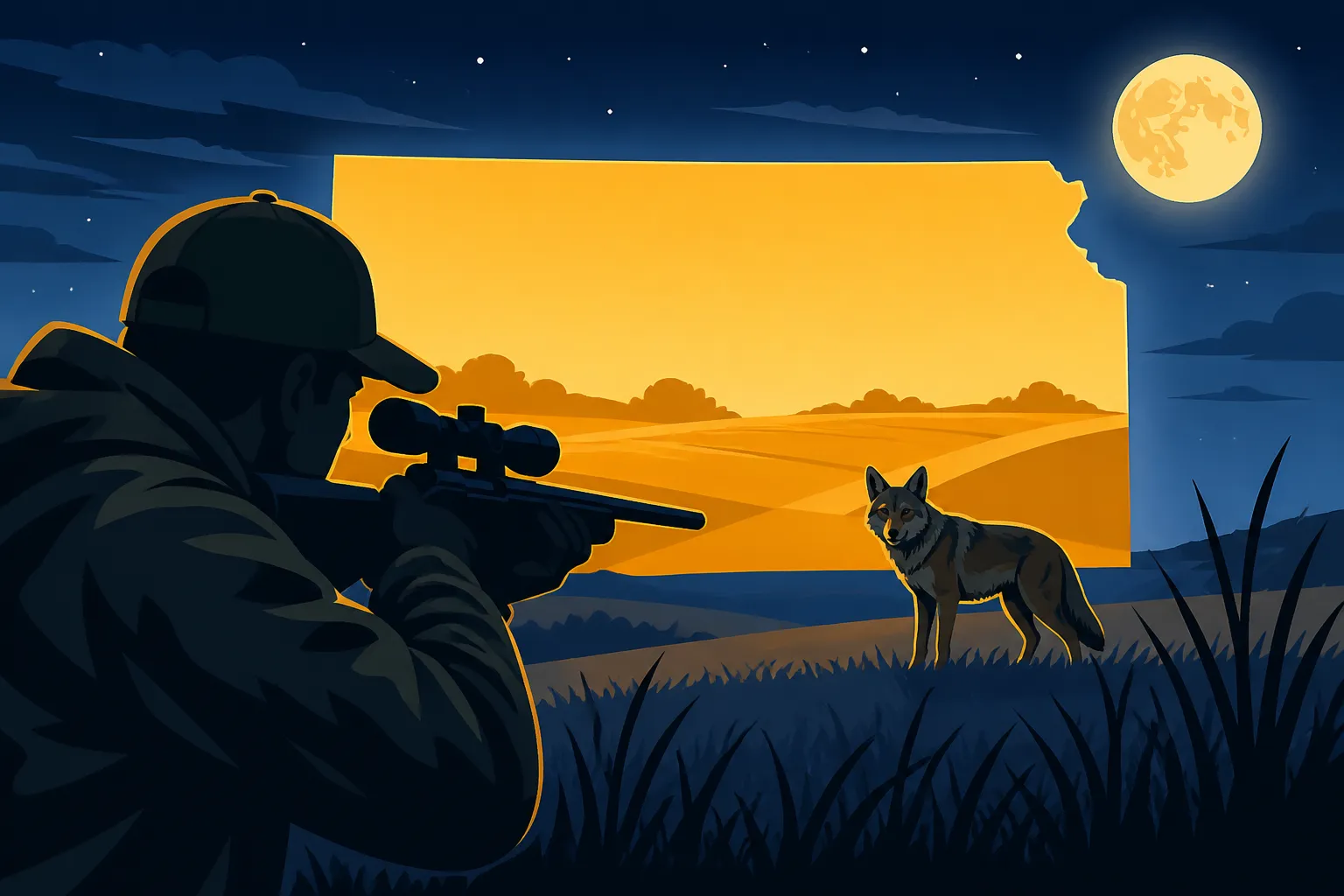
There's nothing quite like the sound of a coyote howling under the vast Kansas night sky, and for many landowners and hunters, that sound signifies a problem that needs addressing. Coyote populations can be a real nuisance, impacting livestock and even deer herds, making effective predator control a priority. Night hunting offers an exciting and often highly successful method for managing these clever canids, but it comes with a unique set of rules and considerations. This guide will illuminate the specific regulations and best practices for ethically and legally hunting coyotes after dark in Kansas, ensuring you're both effective and compliant.
The Legal Landscape of Night Hunting in Kansas
Venturing out into the dark to hunt coyotes isn't something you can just do on a whim. The Kansas Department of Wildlife and Parks (KDWP) has specific guidelines that differentiate daytime hunting from nighttime activities, particularly when it comes to equipment and safety. Understanding these nuances is crucial for any hunter looking to effectively manage predator populations under the cover of night.
General Rules and Regulations for Predator Hunting
Before we even talk about the dark, let's nail down the basics. In Kansas, coyotes are generally considered furbearers and predators, and they can be hunted year-round. There isn't a specific closed season for coyotes, which is a huge advantage for continuous population management. However, you still need a valid hunting license. Residents typically need a Kansas hunting license, and non-residents will need a nonresident hunting license. It's always a good idea to double-check the current Kansas Hunting Licence and Permit Costs each year, as fees can change. Beyond the license, general hunting ethics apply: identify your target, know what's beyond it, and always prioritize safety. You can hunt coyotes with most legal firearms, archery equipment, or even crossbows, subject to local ordinances or specific hunting area restrictions.
Specifics of Night Hunting for Coyotes
This is where things get interesting and where Kansas sets itself apart. For many game species, hunting is strictly prohibited from half an hour after sunset to half an hour before sunrise. However, coyotes are an exception. In Kansas, it is legal to hunt coyotes at night. The primary tool that differentiates night hunting from day hunting is the use of artificial light. Kansas law specifically allows for the use of an artificial light for hunting coyotes and other furbearers (like bobcats, foxes, badgers) on private land, provided you have explicit landowner permission.
This permission isn't just a verbal "go ahead"; it needs to be direct and clear that you're allowed to use a light. On public land, however, the rules tighten significantly. The use of artificial light to hunt wildlife is generally prohibited on state-owned or managed lands, including Walk-In Hunting Access (WIHA) properties, unless specifically authorized. This means if you're on a wildlife area or other public ground, you typically cannot use spotlights or vehicle lights for hunting after legal shooting hours. The only exception often involves specific permits or areas designated for such activities, which are rare for coyotes. This difference between public and private land rules is a major factor to consider when planning your hunt. While standard night vision and thermal imaging devices are generally legal for coyote hunting on private land, their use on public land is often restricted or prohibited due to the "artificial light" clause. Always consult the most current KDWP hunting regulations for any specific unit or public land parcel you plan to hunt.
Understanding Public vs. Private Land Restrictions
The distinction between public and private land for night hunting coyotes cannot be overstated. On private land, with the landowner's express permission, you have far more flexibility. This includes using various artificial lights, night vision, and thermal imaging. This permission should ideally be in writing, clearly stating that you are allowed to hunt coyotes at night and use lights. This protects both you and the landowner. You can learn more about securing these permissions by checking out resources on Finding Private Land Access in Kansas.
When it comes to public hunting lands, the situation changes. While coyotes are often present on public ground, the restrictions on artificial light mean that traditional spotlighting is out of the question. If you plan to hunt public land, you'll need to rely on passive night vision or thermal optics (if explicitly permitted by specific area regulations, which is rare for light-emitting devices), or hunt during legal daylight hours. This is why many dedicated night hunters focus their efforts on private land where they have a better chance of success and can fully utilize specialized gear. It’s also wise to check the rules for specific public areas you're interested in; some Corps of Engineers lands or state wildlife areas might have their own nuanced rules beyond general KDWP statutes. A helpful tool like the Kansas Hunting Atlas or even GoHunt can assist in identifying land ownership and general public access areas.
Essential Equipment and Tactics for Kansas Night Hunters
Night hunting isn't just regular hunting after dark; it's a whole different ballgame. The tools you use and the strategies you employ need to be specifically adapted for the challenges of limited visibility, heightened senses of your quarry, and maintaining safety.
Lighting, Optics, and Other Gear
The right gear can make or break a night hunt. For private land where artificial lights are permitted, you'll want a powerful, handheld spotlight or a vehicle-mounted light, often with red or green filters. These filters can be less alarming to coyotes, as they sometimes perceive these colors differently than white light, allowing you a moment longer to make a shot. Brands like Wicked Lights or Predator Tactics are popular for their dedicated predator hunting lights, offering adjustable beams and colored LEDs. Beyond simple illumination, thermal imagers and night vision devices have revolutionized night hunting.
- Thermal Imagers: These devices detect heat signatures, making coyotes glow against the colder background, even in complete darkness or through light fog. They are fantastic for scanning large areas and quickly locating animals. Top brands include Pulsar and ATN.
- Night Vision Devices: These amplify ambient light (starlight, moonlight) to create an image. While not as effective in absolute pitch black as thermal, they offer a more traditional "view" of the landscape.
- Calling Devices: Electronic callers are almost essential for night hunting coyotes. They allow you to broadcast a wide range of prey distress calls, pup howls, or challenge barks from a distance, luring coyotes into range. Foxpro and ICOtec are leaders in this field.
- Firearms: A flat-shooting rifle chambered in .223 Remington, .22-250 Remington, or similar calibers is ideal. Accuracy is paramount, so ensure your rifle is properly zeroed, perhaps even with a specific load you'll be using for night hunts. Sighting In Before Firearm Season is crucial, and it’s a good idea to practice shooting in low-light conditions to get accustomed to your optics and light source.
- Rangefinders: In the dark, judging distance is incredibly difficult. A good laser rangefinder is invaluable for confirming your shot distance, especially when using lights or thermal which can distort perception.
- Mapping Apps: Tools like GoHunt are invaluable for understanding land ownership, tracking your location, marking stand setups, and planning ingress/egress routes. Knowing your exact boundaries is paramount, especially at night.
Effective Night Hunting Strategies
Coyotes are incredibly wary, and under the cover of darkness, their senses are even more acute. Your strategy needs to account for this.
- Wind is Your Friend (or Enemy): Always hunt with the wind in your favor, blowing from the target area towards you. Coyotes will almost always circle downwind to scent-check the source of a call. Set up to intercept them before they get a whiff of you. This is similar to deer hunting strategies when considering Wind and Thermals on a River Bank, but even more critical at night.
- Stealthy Approach: Accessing your setup location without alerting coyotes is crucial. Plan your Access Routes That Do Not Bump Deer or, in this case, coyotes. Park your vehicle far enough away and walk in quietly. Avoid slamming doors or making unnecessary noise.
- Setup Location: Look for locations that offer good visibility, a clear shooting lane, and a natural funnel point. Inside corners of crop fields, shelterbelt ends, or prominent terrain features can be excellent spots. Having a good backdrop for safety is also important when using lights.
- Calling Sequences: Start with softer, more subtle calls (e.g., mouse squeaks, rabbit whines) and gradually increase volume or switch to more aggressive calls (e.g., full-blown dying rabbit, pup distress, coyote howls) if you don't get a response. Be patient. Coyotes can take time to respond, especially if they are coming from a distance. A typical stand might last 20-30 minutes.
- Scanning and Spotting: With thermal or night vision, constantly scan the area, especially downwind of your calling location. Once you spot a heat signature or eyes, identify the animal positively before considering a shot.
- Shot Placement: In low light, positive identification and ethical shot placement are paramount. Aim for the vital organs – a clean shot is always the goal. Practice shooting from various positions and at different distances to ensure you're confident in your abilities.
Safety Protocols for Hunting After Dark
Night hunting adds layers of complexity to safety. Visibility is limited, and misidentification or accidents are much more likely without strict adherence to safety protocols.
- Positive Target Identification: This is the golden rule of night hunting. Never, ever point a light or a firearm at something you haven't positively identified. What looks like a coyote could be a domestic dog, another hunter, or livestock. Use binoculars or a scope to confirm your target before switching to a firearm.
- Backdrop Awareness: Always be aware of your backdrop. Even with lights, judging distances and what's beyond your target can be challenging. Hunt areas with natural backstops like hillsides or open fields that extend for a safe distance. Avoid shooting towards roads, buildings, or areas where people or livestock might be present.
- Communication: If hunting with a partner, establish clear communication protocols. Use hand signals or low-power radios to coordinate movements and prevent accidents. Always know where your partner is at all times.
- First Aid and Emergency Preparedness: Carry a comprehensive first-aid kit, a fully charged cell phone (though service can be spotty in rural Kansas), and inform someone of your hunting location and expected return time. Even on well-scouted ground, the dark can make familiar terrain disorienting.
- Firearm Handling: Treat all firearms as if they are loaded. Keep the muzzle pointed in a safe direction. Keep your finger off the trigger until you are ready to shoot. These basic rules become even more critical in low-light situations. Always ensure the safety is on until you are ready to fire.
Navigating Permits, Seasons, and Reporting
While Kansas offers a relatively liberal approach to coyote hunting, understanding the specific requirements for permits and general hunting ethics is important.
Licenses and Permits for Coyote Hunting
For residents and non-residents alike, a valid hunting license is typically all you need to hunt coyotes in Kansas. Unlike deer or turkey, there isn't a specific "coyote tag" or additional permit required for each animal harvested. This means once you have your general hunting license, you're good to go for coyotes year-round. It's always smart to have a physical copy or digital proof of your license on your person while hunting. Remember, even with modern technology, carrying physical identification is often the safest bet when dealing with enforcement. While you might not need to worry about Kansas Deer Permits and the Nonresident Draw for coyotes, understanding general licensing is still critical.
When and Where to Hunt at Night
As mentioned, coyotes can be hunted year-round in Kansas. This continuous season provides ample opportunity for predator control whenever issues arise or conditions are favorable. For night hunting, the best times are often during the colder months when coyotes are more active and their fur is prime. The breeding season (late winter into early spring) can also be productive as coyotes are more vocal and responsive to calls.
The "where" largely depends on your access. Private agricultural lands, especially those with livestock or abundant deer, are prime locations. These areas often have higher coyote densities due to food sources and cover. Using a detailed mapping application, like GoHunt, can help identify potential areas with good cover, drainages, or edges where coyotes travel. Areas with thickets, timber points, or creek draws provide excellent daytime bedding cover and travel corridors that coyotes use regularly. Consider scouting these areas during the day to plan your approach and setup for night hunts, using tools like Reading Aerial Imagery for Bedding Cover. Remember the critical distinction: night hunting with artificial lights is primarily for private land with explicit permission. If you're considering public land, stick to daylight hours or verify specific rules for that parcel. Be mindful of hunting pressure; public lands, in particular, can have significant Hunting Pressure Patterns on Kansas Public Land which can make coyotes even more elusive.
Post-Hunt Reporting and Carcass Disposal
Currently, Kansas does not require specific harvest reporting for coyotes. However, ethical considerations remain. If you harvest a coyote, decide beforehand what you'll do with the carcass. If you're saving the hide, proper skinning and care are necessary, especially if you plan to sell it or have it tanned. If not, proper disposal is important. This means moving the carcass away from roads, trails, or public view, and ensuring it won't become a nuisance. Burying is often the best option, if practical. Leaving it in a remote field, away from human activity, is also an option, allowing nature to take its course. Just be sure it’s not near waterways or residential areas.
It's also worth noting that if you're traveling across state lines with a coyote carcass or hide, be aware of any regulations in your home state or states you're passing through regarding the transport of furbearer parts, especially related to disease management.
Here's a quick summary of general night hunting equipment rules for coyotes in Kansas (primarily private land):
| Equipment Category | Legal Status (Private Land w/ Permission) | Notes |
|---|---|---|
| Artificial Lights | Legal | Handheld spotlights, weapon-mounted lights (red/green filters often preferred). Explicit permission required. |
| Night Vision (Digital/Analog) | Legal | Devices that amplify ambient light. Generally not restricted on private land. |
| Thermal Imaging Devices | Legal | Detects heat signatures. Very effective for spotting in total darkness. |
| Electronic Calls | Legal | Used to mimic prey or coyote sounds. Widely accepted and effective. |
| Firearms | Legal (most calibers) | Rifles are common. Check local ordinances if hunting near populated areas. |
| Archery Equipment | Legal | Bows/crossbows can be used, though more challenging at night. |
| Vehicles | Restricted | Cannot shoot from a moving vehicle. Lights from a stationary vehicle are permitted with permission. |
Please remember, these rules are specific to Kansas and mostly apply to private land with explicit landowner permission. Always verify current regulations with the Kansas Department of Wildlife and Parks, as laws can change.
Disclaimer
The information provided in this guide is for general informational purposes only and does not constitute legal advice. Hunting regulations can be complex and are subject to change. Always consult the most current Kansas Department of Wildlife and Parks (KDWP) hunting regulations and local ordinances before engaging in any hunting activity. It is the hunter's responsibility to know and follow all applicable laws.