Blood Trailing in Tall CRP
Losing a blood trail is arguably one of the most disheartening experiences a hunter can face, especially when that perfectly placed shot seems to vanish into the impenetrable fortress of tall Conservation Reserve Program (CRP) grass. The vast, often chest-high fields of thick prairie grasses that blanket much of Kansas can turn a seemingly routine recovery into a soul-crushing quest, leaving you wondering if you'll ever find your deer. This guide is dedicated to providing you with proven strategies and practical steps to navigate the challenges of blood trailing in tall CRP, helping you maximize your chances of a successful recovery and bring home your hard-earned venison.
Understanding the Challenges of CRP for Deer Recovery
Kansas is renowned for its expansive CRP lands, offering incredible habitat for deer, pheasants, and quail. But what makes it such a sanctuary for wildlife also makes it a nightmare for blood trailing. The sheer density and height of the vegetation create a unique set of challenges that can quickly turn a hopeful pursuit into a frustrating ordeal.
The Nature of CRP and Its Obstacles
CRP, or the Conservation Reserve Program, pays landowners to convert highly erodible cropland or other environmentally sensitive land into vegetative cover. In Kansas, this often means fields upon fields of tall, native grasses like switchgrass, big bluestem, and Indian grass, sometimes mixed with various forbs. These grasses can easily grow six to eight feet tall, creating a matted, tangled labyrinth that is incredibly difficult to penetrate and even harder to see through.
When a deer runs into such cover after being hit, the dense vegetation quickly wipes away small blood drops, scatters any larger splashes, and can absorb the scent trail. It's like trying to find a needle in a haystack, but the haystack is constantly moving and obscuring your vision. The ground itself can be uneven, further complicating the search. The grass blades can be sharp, making it uncomfortable to crawl, and in warmer weather, ticks and chiggers become another unwelcome challenge. If you've ever tried to push through a mature CRP field without a clear path, you know the struggle is real.
Why Deer Seek Out CRP After Being Hit
Deer are wired to seek refuge when they feel threatened or injured. For a deer that's been hit, CRP fields offer the ultimate sanctuary. Their instinct drives them to the thickest, most impenetrable cover available for several reasons. First and foremost, it provides a sense of security. The dense canopy conceals them from predators, including human hunters. They feel hidden and safe, which encourages them to bed down more quickly, ideally allowing their body to shut down without expending more energy.
Beyond safety, CRP also offers excellent thermal cover. In the colder months, the tall grasses act like insulation, trapping warmth and protecting them from biting winds. Conversely, on a hot September day, the shade provided by the dense vegetation offers a crucial respite from the sun. This combination of security and comfort makes CRP fields prime real estate for a wounded deer looking to escape and hide. Knowing that CRP Grass and Where Bucks Bed is a key factor in successful hunting, it also means understanding where they'll retreat when injured.
Pre-Shot Preparation and Immediate Post-Shot Actions
The success of any blood trail, especially in daunting CRP, often hinges on what you do before and immediately after the shot. These crucial steps can make the difference between a quick recovery and a lost animal. It’s all about creating a mental roadmap and giving the deer the space it needs.
Knowing Your Shot Placement
Before you even draw your bow or shoulder your rifle, it's vital to have a mental game plan for shot placement. Understand the anatomy of a deer and where your projectile needs to go for a quick, ethical kill. Then, after the shot, pay incredibly close attention to how the deer reacts and exactly where you believe your arrow or bullet impacted. Was it a high shoulder, double lung, gut, or a leg hit? This initial assessment is paramount because it dictates your next steps and what kind of blood trail—if any—you can expect.
For example, a solid lung shot often results in a deer bolting for 30-80 yards, sometimes kicking or humping up before crashing. The blood trail might be bright red and frothy, indicating lung tissue. A gut shot, however, often leads to a slower, hunched reaction, and the deer might not run as far initially, but it will seek out the thickest cover. The blood from a gut shot is typically darker, with stomach contents or green liquid, and often smells foul. A muscle or leg hit usually produces dark red blood, sometimes in spurts, but often sparse. Every detail you can recall, from the exact spot the deer stood to its direction of travel and the sound of the impact, will be a critical piece of the puzzle. Always use nearby trees, bushes, or other unique landmarks to pinpoint exactly where the deer was standing when you took the shot, even if it feels obvious at the moment.
The Importance of the Waiting Period
This cannot be stressed enough: do not rush the trail. The waiting period is arguably the most critical step, especially when hunting in dense CRP where a pushed deer can become nearly impossible to recover. Your instinct might scream at you to go immediately, to see if you can catch a glimpse, but that impulse is often your worst enemy. A deer that is only marginally hit, or one that has a gut shot, can travel miles if pushed. The adrenaline of being pursued will keep it moving, often strengthening its resolve to find even deeper cover.
The recommended waiting times vary based on your perceived shot placement:
- Obvious Lung/Heart Shot (double lung, heart): If you saw the deer fall within sight, or heard it crash within earshot, a 30-60 minute wait is generally sufficient. The deer is likely expired.
- Liver Shot: This can be a longer wait, typically 2-4 hours. The deer will bleed internally, but not always profusely, and will die, but takes time.
- Gut Shot: This requires the longest wait, at least 4-6 hours, and ideally 8-12 hours or even overnight if conditions allow. The goal is for the deer to bed down and expire from internal bleeding and infection, rather than running for miles.
- Muscle/Leg Hit: These are the trickiest. If you suspect a non-lethal muscle hit or a leg shot, a long wait (6-8 hours minimum) is often best, hoping the deer will eventually expire or at least stiffen up. Often, these deer survive, and chasing them just prolongs their suffering and wastes your time.
Factors like weather also play a role. If it’s raining, you might need to start sooner to preserve the blood trail, but you still risk pushing the deer. If it's warm (especially above 60-70 degrees Fahrenheit), the waiting period needs to be carefully managed to prevent meat spoilage. In such cases, leaning towards the shorter end of the recommended wait times or seeking a Field Dressing in Warm Kansas Weather strategy might be necessary if you're confident in your shot. Patience is a virtue in hunting, and nowhere is it more critical than on a blood trail.
Systematic Trailing Techniques in CRP
Once you’ve respected the waiting period, it's time to put on your detective hat and employ systematic techniques. Blood trailing in CRP is less about following a clear trail and more about meticulously searching for minuscule clues.
Marking the Last Known Blood and Grid Searching
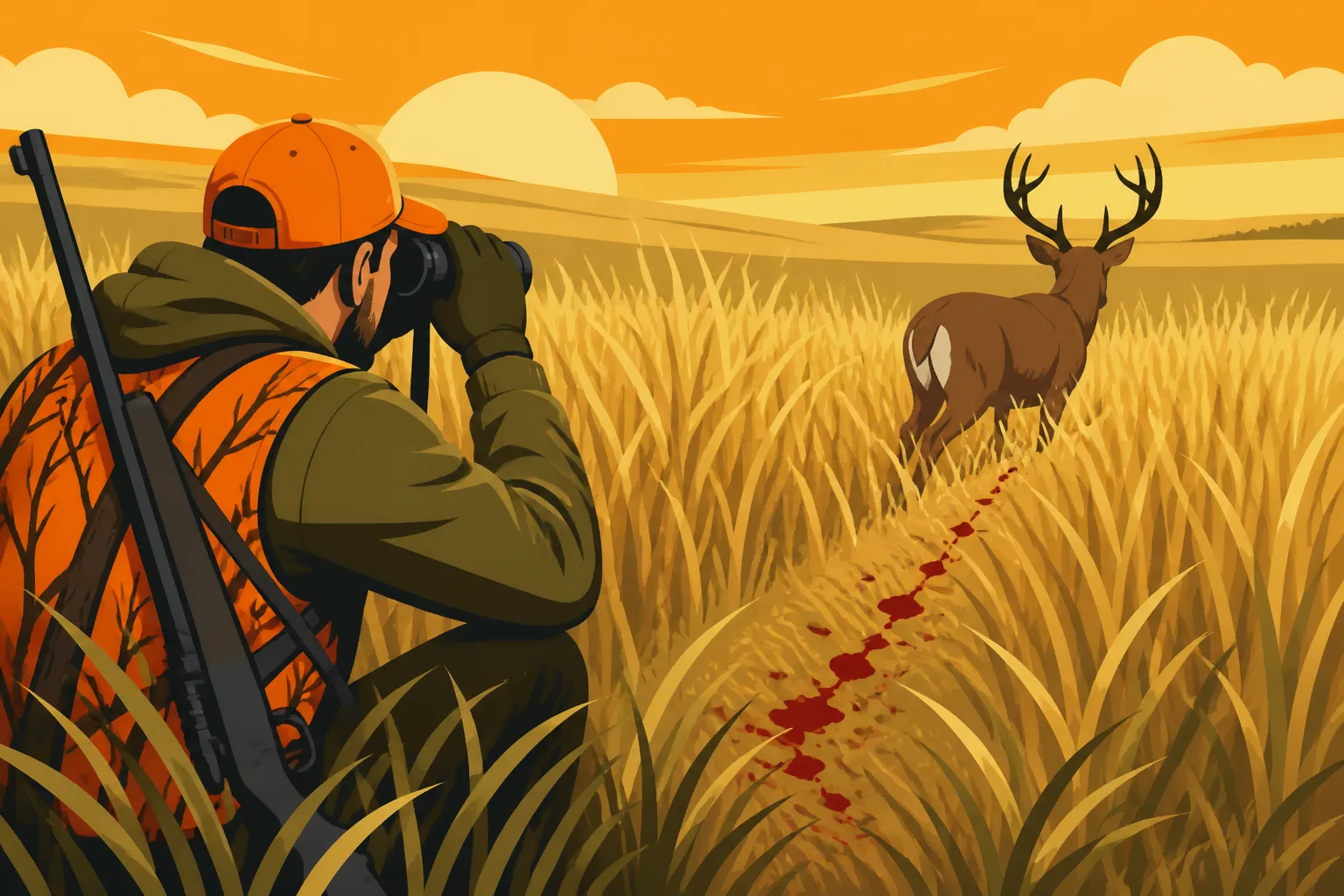
Your blood trail truly begins at the point of impact. Go directly to where the deer was standing when you shot it and mark that spot clearly. Use flagging tape, bright-colored surveyor's tape, or even strips of toilet paper tied to nearby grass or bushes. This is your anchor point. From there, locate the very first sign of blood, and mark that too. Continue this process, marking every single speck of blood you find. This creates a breadcrumb trail that helps you visualize the deer's path and, crucially, lets you backtrack if you lose the trail.
In CRP, blood can be incredibly sparse. You'll often find yourself on your hands and knees, parting tall grass with your hands or feet, scrutinizing every blade. When you lose the trail, return to the last marked spot. Instead of just walking aimlessly, initiate a systematic grid search. Imagine a large circle or square around your last blood mark, and slowly work your way out in ever-widening circles or a grid pattern. Have one person be the "anchor" at the last blood, while others slowly move out, scanning the ground. If you have multiple people, form a line and slowly sweep the area, maintaining arm's length or a few feet apart. Don't be afraid to crawl; sometimes, the only way to see blood is from ground level, looking up at the undersides of grass blades. Powerful flashlights, even in broad daylight, can help illuminate blood, making it "pop" against the green or brown foliage. Some hunters even swear by UV lights, though their effectiveness varies.
Interpreting the Blood Trail
Every drop of blood tells a story. Learning to read these clues can give you invaluable insight into the deer's injury and behavior.
-
Color and Consistency:
- Bright Red, Foamy/Bubbly: This is often a good sign, indicating a lung hit. Air bubbles mean the shot likely passed through the lungs. You should expect a relatively short trail.
- Dark Red, Thick, Clotting: This suggests a muscle, vein, or liver hit. The deer may bleed less externally, and the trail could be longer.
- Pinkish/Watery: Often a sign of a superficial wound or a hit in an area with less blood volume. These trails can be incredibly tough.
- Greenish/Brown with Undigested Food Particles: A definite gut shot. This is a tough trail, requires a long wait, and often has a distinct, unpleasant odor.
- Yellowish or Clear Fluid: Could indicate a bladder hit or other internal injury where little blood is present.
-
Amount and Pattern:
- Heavy, consistent blood typically means a good hit and a shorter trail.
- Sparse, sporadic drops, or drops only on one side of the trail, might indicate a hit on one side of the body or a less severe injury.
- Blood splatters high on vegetation suggest the deer was moving fast, potentially spraying blood as it ran.
- Blood concentrated in one area could mean the deer stopped to rest or that it coughed up blood.
-
Hair and Bone Fragments:
- Short, stiff, dark body hair: Usually from the back or sides.
- Longer, coarser, white hair: Often from the belly or brisket. This can indicate a lower hit.
- Bone fragments: Tiny white shards can indicate a shoulder or leg bone hit. A very small fragment of rib bone might not be as serious as a larger piece from a leg.
Understanding these signs, combined with visualizing the terrain using mapping apps like GoHunt, can help you predict where the deer might be headed—perhaps towards a known bedding area or a water source. Having this knowledge can turn a blind search into a more informed one.
Utilizing Other Signs Beyond Blood
While blood is the primary indicator, don't overlook other subtle clues. In dense CRP, these non-blood signs can sometimes be more telling, especially if the blood trail is minimal.
- Scuffed Ground and Tracks: Even in thick grass, a running deer will often scuff the ground, break small branches, or leave disturbed vegetation. Look for impressions where the deer's hooves may have dug in. While clear tracks are rare in deep CRP, a distinct "path" of matted-down grass, even without visible hoof prints, can be a crucial sign.
- Broken Branches and Rubs: As a wounded deer pushes through dense cover, it might break small branches or snap tall grass stalks. Look for freshly broken stems or leaves. Sometimes, blood might be wiped off onto these, or you might see hair caught on thorns or sharp edges.
- Dragging Marks: A low hit, especially to a leg or the brisket, can cause a deer to drag a part of its body. Look for a discernible drag mark in the flattened grass, which can be easier to spot than individual blood drops in thick cover.
- Sound: Recall any sounds you heard after the shot. Did you hear the deer crash? What direction did the sound come from? Even if you didn't hear a crash, listening for the subtle rustle of a deer moving ahead of you, or the deep breaths of an injured animal, can guide your search.
- Gut Piles: In a worst-case gut shot scenario, a deer might even leave behind small piles of gut contents as it moves. While grim, this is a clear indicator of the type of wound and confirms the deer's path.
Always be looking down, but also up and around. A bent blade of grass, a single hair snagged on a thorn, or an overturned rock can all be part of the story. Integrating all your senses into the search is key.
Advanced Strategies and Recovery Tools
When the going gets tough, and a traditional blood trail fades into the Kansas prairie, it's time to deploy advanced strategies and leverage specialized tools. Sometimes, persistence and the right help are all it takes.
When to Call for Backup: Dogs and Friends
Don't be afraid to ask for help. Blood trailing, especially in challenging environments like tall CRP, is often best done with multiple people. Extra sets of eyes increase the chances of spotting minuscule clues. Designate a leader for the group, and have everyone systematically search. One person can focus on the blood, another on tracks, another on disturbed vegetation. Spreading out in a line, slowly advancing, can be highly effective in dense grass, allowing you to sweep a wider area.
Perhaps the most potent "tool" for a lost blood trail is a tracking dog. In Kansas, using a leashed dog to recover a legally wounded big game animal is permitted, provided the dog and handler are registered with the Kansas Department of Wildlife, Parks and Tourism (KDWP). This is a game-changer, especially for cold trails or those in thick cover where human eyes simply can't compete with a dog's nose. These dogs are specifically trained to follow the scent of a wounded animal, ignoring other deer or human scent. If you find yourself in a bind, search for registered tracking dog services in Kansas. They often save what would otherwise be a lost animal. For more details on the regulations, refer to Using a Tracking Dog Legally in Kansas.
Technology and Resources for Tough Trails
Modern technology has revolutionized blood trailing. Gone are the days of relying solely on flagging tape and memory.
- GPS Mapping Apps: Apps like OnX Hunt or GoHunt are indispensable. Use them to mark every single blood drop you find. This creates a digital breadcrumb trail that shows you the deer's exact path, even if you lose a visual on the ground. You can also use these apps to mark the point of impact, the last blood, and potential bedding areas you want to grid search. GoHunt, with its various map layers, can help you identify subtle changes in vegetation density within a large CRP field or pinpoint small creek draws where a deer might seek refuge.
- Aerial Imagery: Before or during your trail, pull up satellite imagery on your mapping app. Look for darker green areas within the CRP that might indicate even thicker cover, or nearby timber blocks or River Oxbows and Deer Movement where a deer might try to hide. These visual cues can help you predict likely escape routes and focus your search.
- Thermal Imaging: While a significant investment, thermal imagers are becoming more accessible. They work by detecting heat signatures and can be incredibly effective, especially at night or in cooler temperatures, for finding a downed deer that is still retaining body heat. However, they aren't foolproof and can be hindered by dense vegetation or warm ground temperatures.
- Physical Tools: Beyond the tech, don't forget practical items:
- Powerful Flashlight: Essential for low light or meticulously searching dense cover.
- Knee Pads: Your knees will thank you after hours of crawling in CRP.
- Flagging Tape/Toilet Paper: For marking the trail.
- Gloves: To protect your hands while parting dense grass.
- Water and Snacks: Trailing can be physically and mentally draining. Stay hydrated and fueled.
- First-Aid Kit: For minor scrapes and scratches.
Remember that recovering a deer is often a marathon, not a sprint. Maintain focus, stay systematic, and use all the resources at your disposal. If the trail is completely gone, consider returning at first light the next day if temperatures are cool, as the dried blood might be easier to spot in the morning dew, and you'll have fresh eyes. Just ensure you've waited sufficiently for the deer to expire and consider the legal implications of overnight searching, especially on Public Land Deer Hunting in Kansas. Utilizing tools to keep track of your movements can also prevent you from Hunting Kansas Walk-In Land Without Burning It Out by trampling areas unnecessarily.
Maintaining Hope and Ethical Recovery
Losing a blood trail can be incredibly frustrating, sometimes even heartbreaking. You've invested time, effort, and emotion into your hunt, and the last thing you want is a lost animal. However, maintaining a positive, persistent mindset is crucial. Every deer found against the odds is a testament to diligence and ethical commitment.
The Role of Persistence and Knowing When to Quit
Persistence is a hunter's best friend on a blood trail. Often, just one more grid search, one more careful crawl, or one more sweep of an area can yield that critical, elusive drop of blood. It’s easy to get discouraged, especially when the CRP seems endless and the signs are nonexistent. Take breaks if frustration sets in. Step away for a few minutes, clear your head, and then return with fresh eyes. Sometimes, even leaving the area for an hour or two can make a difference, as a refreshed perspective can spot clues you previously overlooked.
However, there also comes a point where continued searching becomes unproductive. Knowing when to call it quits, while difficult, is also part of being an ethical hunter. If you've exhausted all options—systematic searches, multiple people, potentially a tracking dog—and the trail has genuinely vanished for an extended period, you might have to accept that the deer was not mortally wounded or has moved beyond recovery. While rare, it happens. Reflect on what you could do differently next time, perhaps sharpening your Shot Placement on a Whitetail at Twenty Yards skills.
Reflecting and Learning from Each Trail
Every blood trail, whether successful or not, is a learning opportunity. Take the time to reflect on the experience:
- Shot Placement: Was your shot where you intended? How did the deer react? Did it match what you expected?
- Waiting Period: Did you wait long enough? Was the weather a factor?
- Trailing Method: Was your search systematic enough? Did you miss any clues?
- Equipment: Could better optics, a brighter flashlight, or a different arrow setup have helped?
By critically evaluating each situation, you can improve your skills for future hunts. Perhaps you'll decide to try a new broadhead or spend more time practicing different shot angles. Maybe you'll invest in a GoHunt subscription to better scout Scouting Kansas River Bottoms and Creek Draws or potential bedding areas. Remember, ethical hunting isn't just about the shot; it's about the entire process, including a diligent and respectful recovery.
Hunting in Kansas, especially on its vast CRP lands, offers incredible opportunities. With a solid understanding of blood trailing techniques, patience, and the right tools, you can significantly increase your chances of recovering your deer, even when the tall grass conspires against you.
Disclaimer
This guide is intended for informational purposes only and does not supersede local, state, or federal hunting regulations. Always consult the official Kansas Department of Wildlife, Parks and Tourism (KDWP) regulations before engaging in any hunting activities. Laws regarding tracking dogs, carcass transport, and public land use can change, so it's essential to stay informed and compliant.