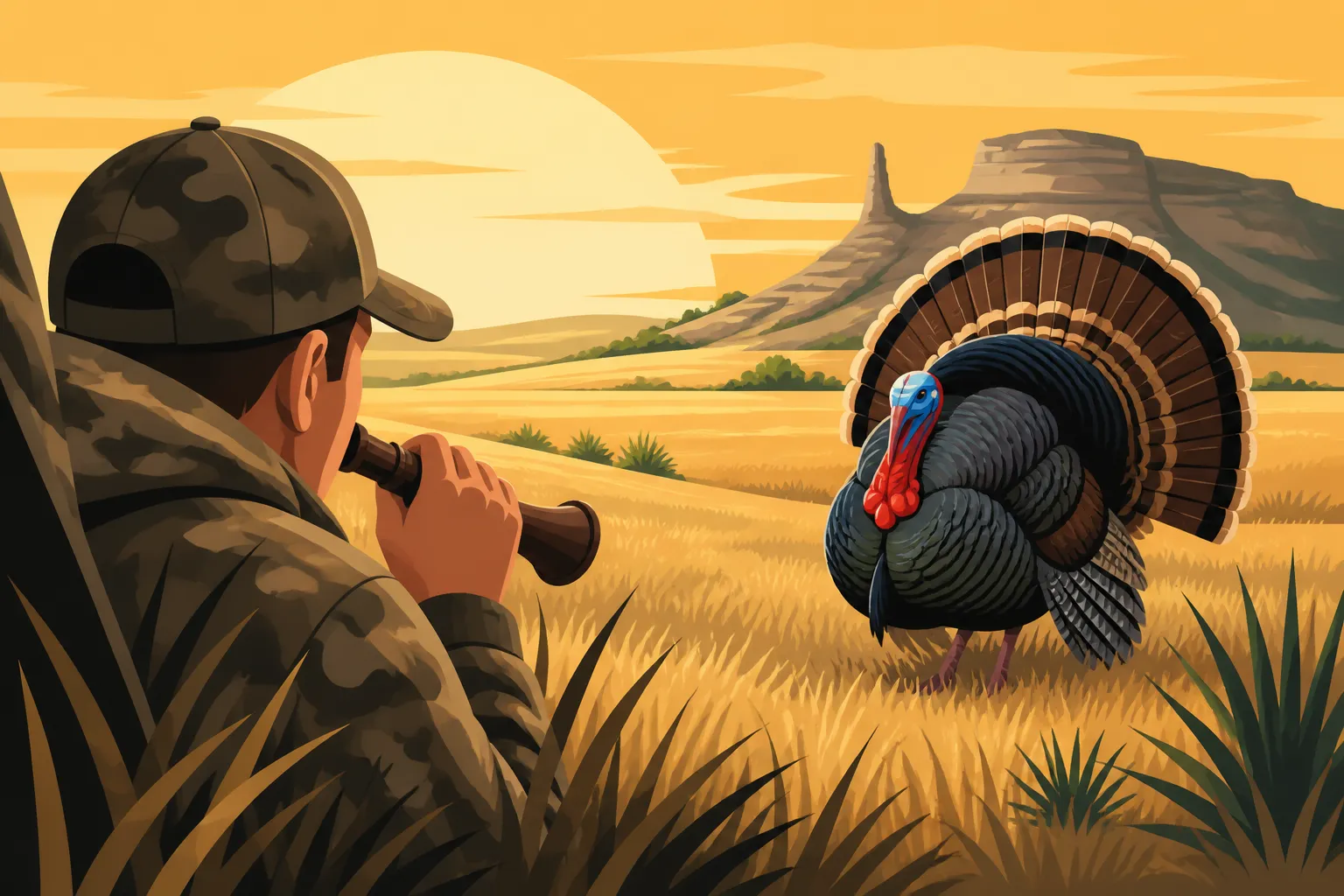
Calling a Henned-Up Kansas Gobbler
Many Kansas spring turkey hunters have felt that familiar pang of frustration: you've located a hot gobbler, he's hammering hard, only for him to hang up just out of range, surrounded by his personal harem of hens. It's a classic scenario that can turn an exciting morning into a deflating exercise in futility. He's gobbling, sure, but he's not coming in, because why would he? He's got everything he thinks he needs right there. This comprehensive guide is dedicated to dissecting the "henned-up" gobbler dilemma, offering practical, field-tested strategies to break through his devotion and coax him into range, even when he believes he's got all the company he could ever want.
The Universal Frustration: Understanding Henned-Up Gobblers
We've all been there. You put in the time, scouted your Kansas Public Land Turkey Hunting Spots, found a good roost, and then that magnificent gobbler flies down with six hens already glued to his side. It feels like an uphill battle from the start, and frankly, it often is. Understanding why he's acting this way is the first step to figuring out how to outsmart him. He's not trying to annoy you personally; he's just doing what nature tells him to do.
The Dynamics of the Spring Breeding Cycle
The spring turkey season, particularly in the earlier weeks, is all about procreation. Gobblers are driven by the urge to breed, and if they've already managed to gather a harem of receptive hens, their motivation to leave that comfortable situation dramatically decreases. It's not a personal snub; it's pure biology. These early-season gobblers have already done the hard work of attracting females, so why would they abandon their current success for a distant, unseen hen? They're living the dream, from a turkey's perspective. The hens themselves often act as a protective barrier, keeping him close and steering him away from potential rivals or unknown threats.
Furthermore, these hens often dictate the gobbler's movements more than he dictates theirs. They lead him to prime feeding spots, water sources, and safe nesting cover. He's essentially a follower in these situations, albeit a vocal one. The gobbler's established dominance within his flock means he's not actively seeking out new challenges or trying to impress new hens from afar. He’s already proven his worth to the hens he’s with, so a distant call often means less to him than the real, tangible hens strutting around him. Understanding these fundamental aspects of Kansas Wild Turkeys and the Population Decline can give you an edge, as changes in hen numbers can certainly impact gobbler behavior.
Reading the Body Language and Vocalizations
Recognizing a henned-up gobbler isn't always about seeing the birds. Often, it's about what you hear and how he responds—or doesn't respond—to your calls. The classic "hanging up" syndrome is the most telling sign. You hear him gobbling consistently, perhaps even double gobbling with enthusiasm, but he stays put or seems to move parallel to your position, never truly closing the distance. He’s excited, sure, but he’s not committing. He’s putting on a show for his ladies, not for the unseen hen he hears.
Listen closely for subtle vocalizations from his entourage of hens. Soft clucks, contented purrs, and even subtle yelps emanating from the same area as the gobbler are dead giveaways. If you hear hens actively calling back to you, sometimes even aggressively, they're likely trying to pull him away or challenge your perceived presence. They're telling you to back off, and their boss is listening. If you're fortunate enough to spot them, visual confirmation is, of course, the ultimate proof. Seeing a magnificent tom strutting in a field with three or four hens pecking around him leaves no doubt. He's performing for them, not for the lonely hen he hears in the distance. These observations are crucial and help you decide whether to escalate your calling or try a more patient approach.
Aggressive Tactics: Breaking Up the Harem
Sometimes, being polite just isn't going to cut it. When a gobbler is firmly entrenched with his hens, you might need to throw caution to the wind and go on the offensive. This isn't about being subtle; it's about making him think there's a serious situation unfolding that he simply can't ignore.
The "Boss Hen" Approach: Dominance through Decibels
One of the most effective ways to break up a henned-up situation is to become the most obnoxious, dominant hen in the woods. You need to challenge the existing pecking order and make him believe there's a new, more desirable, or even threatening hen nearby. This means throwing out loud, sharp yelps, fast and excited cutts, and aggressive cackles. The goal is two-fold: either make him think there's a hot hen he absolutely must investigate, or, perhaps more likely, infuriate his current hens enough that they lead him to you to run off the intruder.
Timing is key here. Let him gobble, then immediately cut him off with a loud, aggressive sequence of calls. Don't be timid. You want to sound like a hen that is not to be trifled with. You can even try mimicking a hen fight – a less common but surprisingly effective tactic. Sharp, agitated cackles interspersed with fighting purrs can sometimes draw a gobbler in, either out of sheer curiosity or to intervene in the fracas. This chaos can also lure in other hens, further disrupting the flock dynamics and potentially separating the gobbler. While it feels counterintuitive to call so aggressively when he already has hens, sometimes a confrontation is the only thing that will get him to move.
Strategic Interception: Get Ahead of the Flock
If a henned-up flock is actively moving, your best bet might be to forgo the calling battle entirely and use their natural movement against them. This often requires a more mobile, assertive approach. Pay close attention to the direction they're heading – are they moving towards a known feeding area, a water source, or simply covering ground after flying down from the roost? Once you have a bead on their general trajectory, the goal is to circle wide and get ahead of them.
Utilize natural terrain features like creek beds, dense timber, or small ridges to conceal your movement. This means knowing your hunting ground and being able to navigate it efficiently. A reliable GPS app like GoHunt can be invaluable here for quickly identifying terrain features and planning your route. Once you've successfully positioned yourself ahead of the flock, reduce your calling volume dramatically. Now, more subtle, enticing clucks and yelps can work wonders. The element of surprise, combined with a less threatening but still alluring sound, can often pull the gobbler away once he's temporarily separated from his dominant hens. This is a classic application of Run-and-Gun Turkey Tactics on Kansas Walk-In Ground, adapting movement to the birds' patterns rather than forcing them to your static position.
The Art of Patience and Subtle Persuasion
Sometimes, aggressive calling just pushes the hens further away, taking the gobbler with them. When that happens, it's time to switch gears entirely. You need to become less of a challenge and more of an irresistible mystery, appealing to the gobbler's natural curiosity and desires without making him feel threatened or pressured.
The Power of the Silent Treatment
If aggressive calling has failed, or if the gobbler seems particularly wary and unresponsive, sometimes the most powerful call you can make is no call at all. A gobbler, accustomed to hens eagerly responding to his every gobble, might become incredibly curious if he hears a hen's presence but she then goes completely silent. This unexpected lack of response can often be more alluring than any yelp. He might wonder what happened, or why she's not coming to him, and decide to investigate.
When employing the silent treatment, it's critical to get into a well-concealed position with clear shooting lanes and be prepared for a long wait. Turkeys, especially those that are wary, have an uncanny ability to show up silently, appearing as if from thin air. Give it ample time – an hour or more if you can. Often, as the morning progresses, hens will eventually wander off to nest, feed, or just take a break from the gobbler's constant attention, leaving him feeling lonely and suddenly much more susceptible to a subtle call or even just pure curiosity. The midday period is particularly ripe for this tactic, as those henned-up birds tend to separate.
Enticing with Contentment Calls and Soft Yelps
Instead of challenging a gobbler with aggressive calls, try to sound like a lost, lonely, or simply contented hen subtly looking for company. Soft clucks, contented purrs, and quiet, drawn-out yelps can signal an easy, non-threatening opportunity for a gobbler. He might come to investigate, thinking there's an easy new addition to his harem, or even his current hens might get curious and lead him your way, wanting to check out the new girl.
The contented cluck and purr are incredibly effective because they signal safety and availability without any hint of aggression. Use a slate call, box call, or a diaphragm call for these softer sounds; they often produce a more natural, subtle tone than loud, raucous yelps. The key is to be just audible enough to pique his interest, making him work to find you. This is where precision in your calling technique, honed by understanding comprehensive strategies found in resources like Kansas Turkey Hunting Tactics for Spring Gobblers, truly pays off. You're not trying to impress him with volume, but rather with subtle realism.
Decoy Dynamics: Visual Appeal to Break the Bind
Calling is one thing, but adding a visual element can often be the missing piece of the puzzle, especially when dealing with a gobbler who already has hens and isn't keen on moving for sound alone. Decoys provide a focal point and can trigger a gobbler's instinctual responses in ways that calling cannot.
Single Hen Decoy: Drawing Curiosity
A single, submissive hen decoy placed in an open area can be a powerful draw for a henned-up gobbler. He might interpret this "new" hen as an easy breeding opportunity or simply want to bring her into his existing flock. The key is to make her visible and realistic. Position your decoy 15-20 yards from your concealed position, ideally directly in front of you, ensuring it's the first thing the gobbler sees as he approaches. This pulls his focus away from your blind or natural cover.
Consider using motion decoys, even subtle ones, which can add incredible realism and draw a gobbler's eye from a significant distance. Brands like Avian-X or Mojo Outdoors offer fantastic, lifelike options that can make all the difference. Sometimes, the gobbler's own hens will lead him towards the decoy, wanting to investigate or challenge what they perceive as a rival. This creates a prime opportunity as he follows them directly into your setup.
Jake or Breeder Pair: Challenging Dominance
When you need to really get a dominant gobbler fired up, a jake decoy combined with a hen can be an incredibly potent setup. The jake represents a rival that a mature gobbler simply cannot ignore. He'll often come in quickly and aggressively, looking to assert his dominance and chase off the younger pretender. Place the jake decoy near your hen decoy, angled slightly towards you, mimicking a breeding scenario or a small flock.
While a jake decoy is generally preferred due to being less intimidating, a full-strut tom decoy can also be effective, especially if you know the gobbler is exceptionally dominant. However, be cautious with full-strut decoys, particularly on public land, and always prioritize safety. The goal here is to trigger that innate territorial response. He wants to be the biggest, baddest gobbler in the woods, and a rival decoy directly challenges that. Reviewing different strategies for Turkey Decoy Spreads That Work can provide even more detailed insights into effective placements and combinations.
Midday Resets and Adapting to Movement
The early morning fly-down and initial gobbling can be intense, but often, the middle of the day is when things truly change. Hens become less interested in the gobbler's strutting and more interested in food or nesting, creating a crucial window of opportunity for the persistent hunter.
The Midday Separation Strategy
Turkey habits often shift dramatically as the morning progresses. Hens, driven by their nesting instincts and need for sustenance, frequently disperse in the mid-morning to feed alone or attend to their nests. This sudden lull in hen activity is your golden opportunity. A gobbler, accustomed to a constant retinue, suddenly finds himself alone and often becomes much more responsive to calls as he actively searches for company. He's no longer "henned up"; he's lonely.
Don't be afraid to move, but do so quietly and cautiously. This is a great time to implement what we call "reconnaissance by fire" – moving through the woods, stopping to call every few hundred yards. Use your GoHunt app to identify potential midday haunts like shaded areas, water sources, or patches of soft mast like wild berries or acorns. Listen intently for lonely gobbles or subtle clucks that indicate a single bird. If your initial setup didn't yield results, relocating to a fresh area, perhaps closer to where you last heard the birds heading, can make all the difference. Sometimes, a change of scenery and a fresh perspective are all it takes to find that now-isolated gobbler. You might even find success in areas typically scouted for deer, like those detailed in Reading a Kansas Creek Bottom for Deer Sign, as turkeys use similar travel corridors.
Post-Engagement Tactics: When They Hang Up Again
Even after all your efforts, a gobbler might still hang up out of range, even if he's now alone. He's heard you, he knows where you are, but he just won't commit. In these frustrating situations, resist the urge to keep calling from the same spot. He's already pegged your location. Instead, implement a "circle-and-re-engage" tactic. Circle away from him, putting a natural barrier – a small ridge, a thicket of cedars, or a brushy draw – between you and the bird. Then, re-engage with softer, more subtle calls from a new, unexpected angle. The goal is to make him think you're moving away, or that he's somehow lost you, sparking his curiosity and encouraging him to come looking.
After moving, try very soft, pleading lost hen yelps and purrs. This can trigger his natural instinct to investigate or round up a stray hen. Remember, he's already wary from hanging up once, so a subtle, non-threatening approach from a new direction is often more effective than continuing to press him. If you were using decoys, consider adjusting their position or even removing them entirely if the gobbler seems fixated on them but unwilling to commit. Sometimes, presenting a blank slate can make him commit. Always use scouting tools like the GoHunt app to find those new, advantageous setup locations quickly, helping you adapt to the birds' unpredictable movements.
| Tactic Category | When to Use | Calling Style | Pros | Cons |
|---|---|---|---|---|
| Aggressive Calls | Gobbler actively gobbling, with visible hens; hens challenging you; attempting to break up a flock. | Loud, sharp yelps; aggressive cutts; cackles; fighting purrs. | Can pull a dominant gobbler in quickly; forces a reaction from hens. | Can spook wary birds; may make hens pull the gobbler away further. |
| Subtle Calls | Gobbler seems wary, occasionally gobbling; after aggressive calls fail; trying to "lure" a new hen. | Soft clucks; contented purrs; quiet yelps; lost hen calls. | Less likely to spook birds; can create curiosity; works when birds are call-shy. | Requires more patience; might not be heard over natural hen calls; slower results. |
| Decoys | When birds are in open terrain; as a visual focal point; to challenge a dominant gobbler. | Paired with appropriate calling. | Offers a visual that calling alone cannot; can trigger territorial responses. | Can be intimidating if not placed correctly; requires safe setup; adds bulk to carry. |
| Movement | Birds moving away; need to intercept a flock; midday lull when birds disperse. | Combined with soft or no calling. | Allows you to get into a better position; adapts to changing turkey movements. | Risk of spooking birds; requires knowledge of terrain and turkey patterns. |
Disclaimer
Hunting regulations and private land access can change. Always consult the latest Kansas Department of Wildlife, Parks and Tourism (KDWP) regulations before heading afield. Ensure you have all necessary permits and licenses, such as those discussed in Kansas Spring Turkey Permits and Units. It's your responsibility to know and follow all applicable laws.