CWD Rules for Taking a Kansas Deer Home
It's incredibly frustrating when you've put in the work, filled your tag, and are ready to head home with your hard-earned Kansas deer, only to realize you're not entirely sure about the rules for transporting it, especially concerning Chronic Wasting Disease (CWD). The last thing any hunter wants is to run afoul of regulations and potentially lose their deer or face a fine. This guide is here to walk you through the essential CWD rules for taking your Kansas deer home, ensuring you comply with the law and help protect our deer herds.
Understanding CWD and Its Impact on Kansas Deer
Chronic Wasting Disease (CWD) is a serious concern for deer hunters and wildlife managers across North America, and Kansas is no exception. It's a fatal neurological disease that affects cervids, including deer, elk, and moose. What makes CWD particularly concerning is that it's always fatal once an animal contracts it, and there's no known cure or vaccine. More importantly for hunters, the prions that cause CWD can persist in the environment for a very long time, making prevention of its spread absolutely critical.
What CWD Means for Hunters
For you, the hunter, understanding CWD isn't just about following rules; it's about being a responsible steward of the land and its wildlife. When CWD is present in a herd, it can lead to a decline in deer populations over time, affecting future hunting opportunities. The symptoms in infected deer can be subtle at first, but often include drastic weight loss, stumbling, listlessness, and other neurological signs. However, many deer can carry the disease without showing visible symptoms, which is why carcass handling and testing are so important. Kansas has active CWD management zones and ongoing surveillance efforts, making it essential for hunters to be aware of the specific requirements that apply to their harvest. Services like GoHunt often compile state-specific regulations, which can be a valuable resource for staying informed before your hunt even begins.
Why Carcass Transport Rules Exist
The primary reason for strict carcass transport rules is to prevent the spread of CWD to new areas. The prions are concentrated in certain parts of the deer's body, particularly the brain, spinal cord, lymph nodes, and spleen. If an infected carcass, or these high-risk parts, is transported from a CWD-positive area to a CWD-negative area, it risks contaminating new soil and water sources, potentially infecting more deer. These rules are designed to ensure that only low-risk parts of the animal are moved, thereby minimizing the chance of spreading the disease. It might feel like a hassle, especially after a long day in the field, but these regulations are truly in place to protect the future of deer hunting. You can learn more about the broader issue in Chronic Wasting Disease in Kansas.
Field Dressing and Carcass Handling to Minimize CWD Risk
Proper field dressing and carcass handling are your first lines of defense against spreading CWD, whether you're staying in Kansas or heading out of state. It's not just about getting your deer cooled down quickly for good meat quality; it's also about strategically removing the parts that are most likely to harbor CWD prions. This means being prepared in the field to do more than just gutting your deer.
Immediate Steps After Harvest
Once your deer is down and you've tagged it, the first thing is to field dress it. This involves removing the internal organs (evisceration), which is common practice for all hunters. However, if you're in a CWD-positive unit or planning to travel, you'll need to think beyond just the gut pile. Be mindful of where you leave the gut pile; ideally, it should be in the immediate vicinity of the kill site. Many hunters will debone their deer in the field, or at least quarter it, to reduce the bulk and remove the spinal column and skull, which contain high-risk tissues. Field Dressing in Warm Kansas Weather can offer additional tips for handling your deer quickly and efficiently, especially when time is of the essence.
Removing High-Risk Parts
Kansas, like many states, restricts the transportation of certain parts of harvested deer from CWD management units. The goal is to leave the "risky" bits behind. This typically means you cannot transport:
- The intact head (unless for taxidermy or CWD testing, with specific conditions).
- The spinal column.
- The entire carcass.
- Spleen and lymph nodes.
What can you transport? Generally, boned-out meat, cleaned skull plates (with antlers attached), antlers themselves, hides, and capes (without the skull or spinal column) are allowed. If you're planning to take your deer to a taxidermist, make sure they are aware of CWD rules, as specific requirements might apply for transporting a head to a licensed facility. If you're using an outfitter, especially one found through platforms like BookYourHunt, always inquire about their CWD protocols and how they assist clients with proper carcass handling and transport.
Kansas Carcass Transport Regulations for Hunters
Navigating carcass transport rules within Kansas itself can be straightforward, but it requires awareness, especially if you harvest a deer in a designated CWD Management Unit. These units are where the state has detected CWD and is actively working to monitor and control its spread. Understanding which parts you can move and where is crucial for every hunter.
Transport Within Kansas
If you harvest a deer within a CWD Management Unit in Kansas, there are specific limitations on what you can transport out of that unit. The general rule is to reduce the carcass to only the lowest risk parts before leaving the unit. This often means boning out the meat, leaving the head and spinal column behind, and properly disposing of other high-risk tissues.
However, there are usually exceptions for transporting the head directly to a licensed taxidermist or a CWD sample collection site within a specified timeframe. It's vital to check the latest Kansas Department of Wildlife, Parks and Tourism (KDWP) regulations for precise details, as these can be updated. Failing to comply can lead to significant penalties, as outlined in Kansas Wildlife Violation Penalties. Always remember, the regulations are there to protect the health of the entire state's deer population, which benefits all hunters in the long run.
Here's a quick overview of what's generally allowed and restricted:
| Carcass Part | Allowed for Transport (Generally) | Restricted for Transport (Generally) | Notes |
|---|---|---|---|
| Boned-out meat | Yes | No | All muscle tissue, free of bone, brain, and spinal cord tissue. |
| Cleaned skull plate with antlers | Yes | No | Must be free of all brain and soft tissue. |
| Antlers (shed or detached) | Yes | No | Naturally shed antlers or antlers detached from a skull plate without brain tissue. |
| Hides and capes | Yes | No | Must be free of brain, spinal cord, or other nervous tissue. |
| Teeth | Yes | No | Used for aging, but ensure no soft tissue is attached. |
| Whole or partial carcass | No | Yes | Unless transported directly to a processor or taxidermist within a CWD unit, or for CWD testing under specific rules. |
| Brain, spinal column, spleen, lymph nodes | No | Yes | These are high-risk parts and should be left at the kill site or disposed of properly within a CWD unit. |
Remember, this table is a general guide. Always consult the most current Kansas hunting regulations for the definitive rules regarding your specific hunting unit and situation.
Using Local Processors and Taxidermists
One of the easiest ways to ensure compliance with Kansas CWD carcass transport rules is to utilize local deer processors and taxidermists within or very near the CWD Management Unit where you harvested your deer. These professionals are typically well-versed in the local regulations and can handle the carcass in a compliant manner.
If you bring your deer to a processor, they will take care of boning it out, which leaves you with just the low-risk meat products to transport home. Similarly, a taxidermist can properly prepare the skull plate or cape for mounting, ensuring all restricted tissues are removed and disposed of correctly. This approach not only keeps you compliant but also supports local businesses. Just make sure to confirm their CWD protocols when you drop off your deer. For those considering processing their own deer, Processing Your Own Deer at Home offers valuable guidance, but be sure to do so in adherence to CWD rules.
Out-of-State Transport: Getting Your Kansas Deer Home
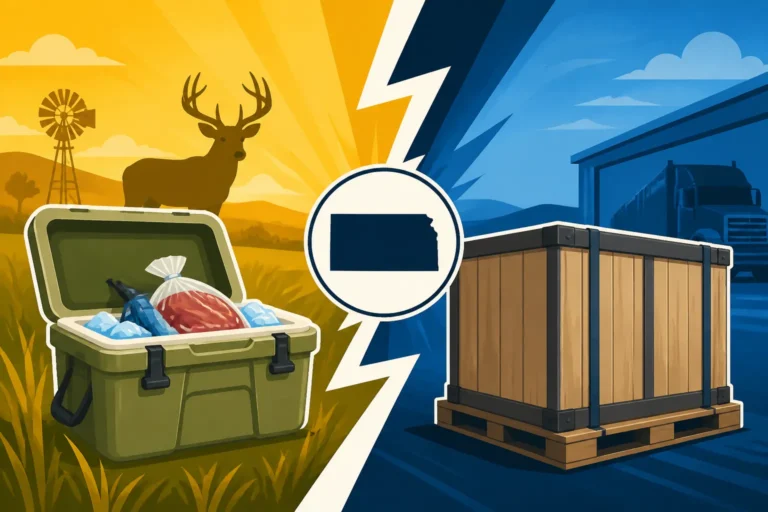
For nonresident hunters, taking a Kansas deer home across state lines adds another layer of complexity to CWD regulations. You're not just dealing with Kansas's rules but also the regulations of your home state and any states you might travel through. This is where proactive planning becomes absolutely critical to avoid any issues.
Kansas Out-of-State Transport Rules
Kansas has specific rules about what can leave the state, especially concerning CWD Management Units. In general, Kansas restricts the movement of intact carcasses, heads, and spinal columns out of the state from any CWD Management Unit. The goal is to prevent the introduction of CWD prions to areas where it might not yet be detected.
What you can take home are boned-out meat, cleaned skull plates, antlers, hides, and teeth. If you want to take the head for taxidermy, the skull plate must be free of all soft tissue, especially brain material. Some states may require CWD testing results before allowing any part of a deer into their borders, regardless of its origin in Kansas. This is where using a service like GoHunt to check both Kansas's regulations and your home state's rules simultaneously can be incredibly helpful. You need to ensure you meet both sets of requirements.
Your Home State's Import Regulations
This is arguably the most overlooked aspect for many nonresident hunters. Just because Kansas says you can take certain parts out doesn't mean your home state will let them in. Many states have enacted their own import restrictions on deer, elk, and moose carcasses from any state where CWD has been detected.
Before you even travel to Kansas, you must research your home state's regulations regarding importing cervid carcasses or parts. Some states might have a blanket ban on all parts except boned-out meat, while others might allow cleaned skulls or hides with specific conditions. Some even require a CWD negative test result for a deer harvested in a CWD-positive area, even for boned-out meat. A quick call to your home state's wildlife agency or checking their official website is a non-negotiable step. Don't assume anything; confirm everything. Kansas Deer Permits and the Nonresident Draw is a good starting point for planning your overall nonresident hunt, but always layer CWD rules on top of that initial planning.
Best Practices for Traveling with Your Harvest
To make your journey home as smooth as possible and ensure compliance, here are some best practices:
- Debone in the Field: This is the safest and most compliant option for most situations. It reduces bulk, helps cool the meat, and removes all high-risk parts.
- Keep Proof of Origin: Always have your hunting license, deer permit, and confirmation of harvest (if applicable) readily available. This proves your deer was legally taken in Kansas. Kansas Deer Harvest Reporting Deadline is also important to remember for your post-hunt paperwork.
- Pack Smart: Use coolers with plenty of ice or dry ice to keep your meat cold and prevent spoilage. If you have a cleaned skull plate or antlers, secure them to prevent damage. Getting a Deer Cooled in September discusses methods for ensuring meat quality, which is doubly important when considering transport.
- Know Your Route: If you're driving through multiple states, quickly check their CWD import regulations as well. It's rare, but some states might have transit rules you need to be aware of.
- Consider Professional Processing/Taxidermy: If you're unsure or just want peace of mind, have your deer processed and/or caped out by a reputable Kansas professional. They'll ensure compliance, and you can simply transport the finished, legal product.
- Stay Informed: Regulations can change. Before each hunting season, make it a point to review the latest CWD rules from Kansas and your home state. The KDWP website is the official source for Kansas regulations, and services like BookYourHunt often link to relevant state wildlife agency pages.
By following these guidelines, you can ensure that your memorable Kansas hunt concludes not with regulatory headaches, but with delicious venison and trophy memories safely back in your home state, all while doing your part to protect our valuable deer resource.
Disclaimer
This article is for general informational purposes only and does not constitute professional advice. Laws, prices and regulations vary by location and change over time. Consult a qualified professional for guidance on your specific situation.