Whether You Can Hang Your Own Stand
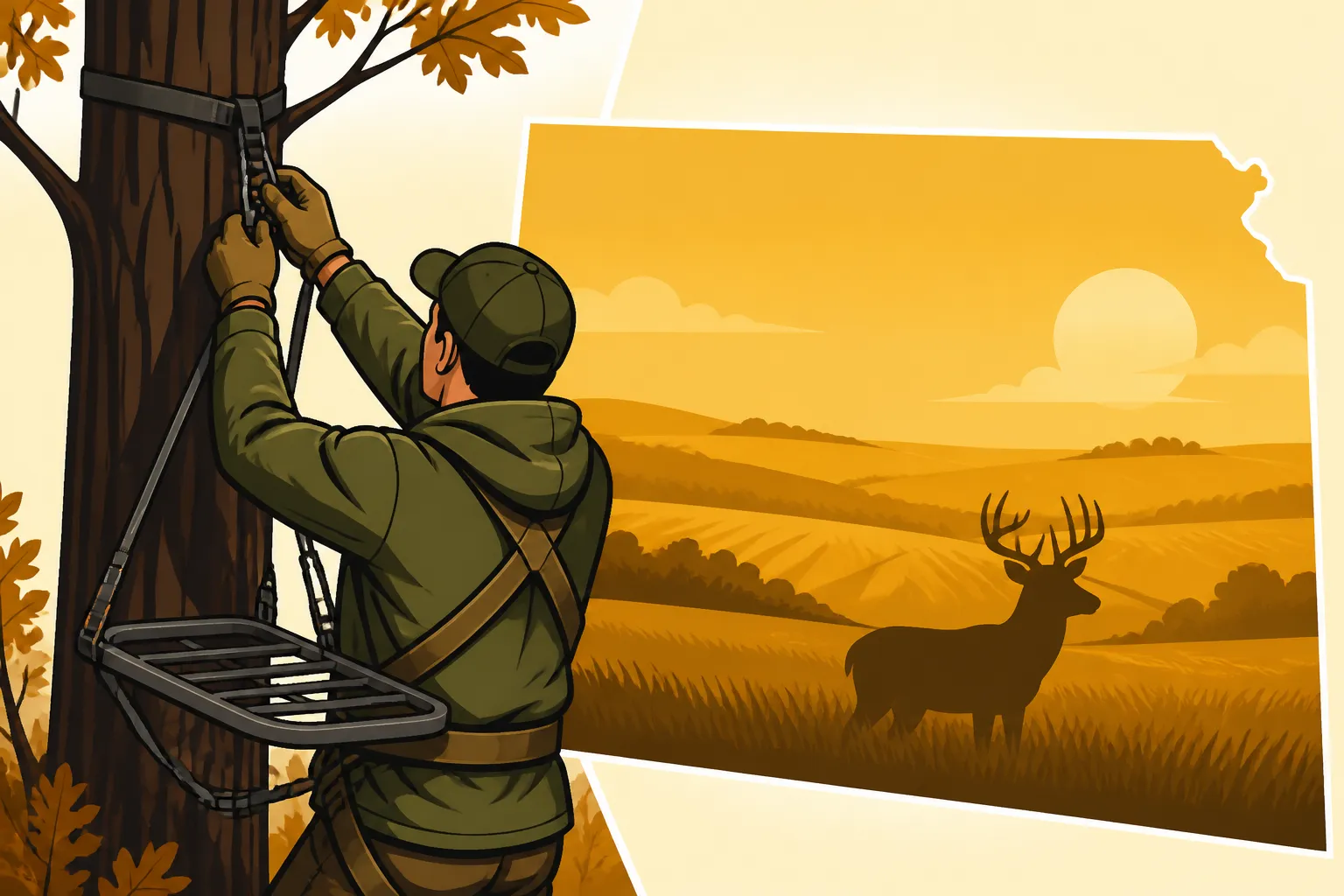
It's a question every deer hunter in Kansas has wrestled with, especially those of us venturing onto public land: can you actually hang your own trusty treestand, or are you stuck to ground blinds and saddles? The frustration is real. We spend good money on stands we trust, we practice with them, and we know exactly how they perform. Then you hit a new public tract, look up at that perfect crotch in a cottonwood, and a little voice in your head screams, "Can I really put my stand there?" This guide is all about cutting through the confusion, explaining the rules, and helping you understand exactly what's permissible when it comes to setting up your elevated ambush on Kansas's public hunting grounds.
Understanding Kansas Public Land Stand Regulations
Kansas offers a fantastic array of public hunting opportunities, from sprawling Walk-In Hunting Access (WIHA) tracts to State Wildlife Areas and federal lands. However, each type of public ground often comes with its own nuances when it comes to treestand usage. This isn't just arbitrary bureaucracy; it's about protecting the natural resources, ensuring fair access for everyone, and preventing long-term damage to the environment. The core principle usually revolves around the idea of "temporary" and "minimal impact."
General Rules for Kansas Department of Wildlife and Parks (KDWP) Lands
When you're hunting on land managed directly by the KDWP – think State Wildlife Areas or State Parks that allow hunting – the rules are typically the most stringent. The main goal here is preservation and managing a high volume of recreational users.
Most KDWP-managed areas prohibit the use of screw-in steps, nails, bolts, or any device that would permanently alter or damage a tree. This means your trusty screw-in steps are usually a no-go. The reasoning is sound: repeated use of such devices can create entry points for disease, weaken the tree, and over time, turn a healthy timber stand into a scarred landscape. Instead, you're generally limited to stands that use straps, chains, or ropes that do not penetrate the bark. This is why climbing sticks, ladders, and certain strap-on hang-on stands are popular choices.
Furthermore, leaving a stand on these properties overnight or for extended periods is often forbidden. The rule of thumb is usually "pack it in, pack it out" with each hunt. Imagine if every hunter left their stand up all season; the woods would be littered with equipment, creating an eyesore and inviting theft. This daily removal requirement means you need a stand setup that's truly portable and quick to deploy and take down. If you're wondering Are Screw-In Steps Legal in Kansas?, the answer is almost universally no on public lands managed by KDWP.
Walk-In Hunting Access (WIHA) Property Guidelines
WIHA is a phenomenal program that opens up hundreds of thousands of acres of private land to public hunting through agreements with landowners. The rules here are designed to respect the private landowner's property while allowing public access. As such, WIHA tracts often have similar, if not identical, restrictions to KDWP lands when it comes to treestands.
The emphasis on WIHA is that you are a guest, and you must treat the property with respect. This means no damaging trees, fences, or other property. Therefore, permanent stands, screw-in steps, or anything that causes lasting damage is almost always prohibited. Your stand must be portable, easily removable, and leave no trace. If you're setting up on a WIHA tract, plan on taking your stand down every time you leave. The goal is that when you walk away, there's no evidence you were ever there, beyond perhaps some flattened grass where you sat. This aligns perfectly with the ethos of Leaving No Trace on Walk-In Ground. The official KDWP hunting atlas and signs at the property access points will be your definitive source for specific rules on each tract, but generally, assume "portable only, removed daily."
Federal Lands: Corps of Engineers and Cimarron National Grassland
Kansas also boasts some federal public lands, such as areas around Corps of Engineers lakes and the vast Cimarron National Grassland. These areas typically adhere to similar principles of minimal impact and temporary structures.
On Corps of Engineers managed lands, which often surround popular reservoirs, you'll usually find rules consistent with KDWP. No damaging trees, and stands must be portable and removed daily. These areas are multi-use, so rules are in place to ensure everyone, from hikers to anglers, can enjoy the natural beauty without permanent installations from hunters.
The Cimarron National Grassland, out in the far southwest, is unique in its vast, open plains environment. While treestands might not be your primary tactic here for deer or antelope, if you find one of the rare timber pockets or shelterbelts, the same "no damage, temporary use" rules apply. Given the sensitive nature of grassland ecosystems, any alteration to vegetation is typically strictly controlled. Always check the specific regulations for the particular federal land you plan to hunt, as they can sometimes have slight variations.
The "Why" Behind the Regulations: More Than Just Rules
It's easy to feel frustrated by hunting regulations, especially when they dictate how you can use your own equipment. However, understanding the reasoning behind these rules can actually help you embrace them and become a more ethical and effective public land hunter. These regulations aren't designed to make your life harder; they're in place for important reasons related to environmental stewardship, hunter safety, and ensuring equitable access.
Protecting the Trees and Habitat
One of the most significant reasons for prohibiting permanent stands or devices like screw-in steps is to protect the health of the trees. Every time a screw-in step or a nail penetrates a tree's bark, it creates an open wound. These wounds can become entry points for diseases, fungi, and insects that can weaken or even kill the tree. Over years of repeated use, an otherwise healthy timber stand on public ground could become riddled with compromised trees.
Furthermore, leaving stands up for extended periods can cause issues. Straps left on trees for months or even years can girdle the tree, essentially choking off its ability to transport nutrients and water, leading to its slow death. Imagine the environmental impact if hundreds or thousands of hunters did this across all public lands. The long-term health of these vital habitats for deer, turkeys, and other wildlife would be severely compromised. The rules are in place to ensure future generations of hunters and wildlife have healthy, thriving forests to enjoy.
Ensuring Fair Access and Preventing Resource Monopolization
Public land, by its very definition, belongs to everyone. The regulations regarding stand usage are crucial for maintaining this principle of fair access. If hunters were allowed to leave stands up indefinitely, it could lead to a "claiming" mentality, where individuals effectively monopolize prime hunting spots. This would undermine the very spirit of public hunting, where opportunities should be available to all on a first-come, first-served basis.
Imagine rolling up to a promising-looking public tract only to find every decent tree already "claimed" by a permanent stand. This creates conflict and unfairness. Requiring daily removal means that every hunter starts fresh each day, and no one can stake out a spot for the entire season. This helps manage Hunting Pressure Patterns on Kansas Public Land by preventing certain areas from being continually occupied or perceived as someone's private territory. It levels the playing field, making public land hunting more accessible and enjoyable for everyone. This is also a good reason to avoid leaving your gear unattended or marked on public lands, as KDWP wants to prevent any appearance of claiming.
Reducing Litter, Theft, and Safety Hazards
Abandoned stands and equipment left on public land pose several problems. First, they contribute to litter and detract from the natural aesthetics of the wilderness. No one wants to hike through a forest littered with rusty treestands and old straps. Second, they become targets for theft. Leaving expensive hunting equipment unattended is an invitation for it to disappear, leading to frustration for the hunter and potentially contributing to criminal activity.
Finally, unmaintained or abandoned stands can become safety hazards. Over time, straps can degrade, bolts can rust, and platforms can become unstable. An unsuspecting hunter, or even a casual recreational user, could stumble upon or attempt to use an unsafe stand, leading to injury. The rules about Overnight Stand Storage on Public Ground are a direct response to these concerns, prioritizing safety and resource management. If you're ever looking for outfitters or guided hunts to simplify the logistics of stand placement and access, resources like BookYourHunt can help you find options where these details are handled for you on private ground.
Navigating the Public Land Challenge: Portable Solutions
Given the restrictions, it's clear that successful public land hunting in Kansas requires a different mindset when it comes to elevated setups. The good news is that the hunting industry has responded with fantastic innovations that allow you to be mobile, efficient, and compliant with regulations.
Embracing the Mobile Hunting Philosophy
The limitations on permanent stands aren't really limitations at all, but rather an invitation to embrace mobile hunting. This philosophy centers around being nimble, adapting to deer movement, and using lightweight, temporary setups. Instead of hoping deer come to your fixed stand, you go to where the deer are.
This often means scouting heavily, understanding travel corridors, and identifying fresh sign. Tools like GoHunt can be invaluable for e-scouting Kansas farm country, helping you pinpoint potential bedding areas, food sources, and pinch points from your home before you even set foot on the ground. Once you're there, you can move quickly, hang a stand for a single sit, and then relocate as conditions or deer patterns dictate. This approach can be incredibly effective, especially when hunting dynamic environments like Hunting Terrain Funnels in Flat Country or Milo and Corn Stubble Deer Patterns.
Choosing the Right Portable Treestand Setup
There are several excellent options for portable, public-land-friendly treestand setups. Each has its pros and cons, but all adhere to the "no damage, pack it in, pack it out" principle.
- Climbing Stands: These stands allow you to ascend a suitable, straight tree without needing separate climbing aids. They are self-contained and relatively quick to set up and take down. They excel in timber with plenty of straight, limbless trees, common in some river bottoms or larger timber blocks in eastern Kansas. However, they are limited to certain tree types and trunk diameters.
- Hang-On Stands with Climbing Sticks: This is a very versatile combination. Lightweight hang-on stands pair with strap-on climbing sticks, allowing you to ascend a wide variety of trees, even those with branches lower down. The sticks strap securely around the tree, leaving no penetrative marks. This setup gives you great flexibility in tree choice and height. It's often favored by hunters who want to get higher in the canopy.
- Tree Saddles: The ultimate in mobile hunting, tree saddles are a minimalist approach where you wear a harness and use lightweight climbing methods (like a single stick or aiders) to ascend. You then "sit" in the saddle, leaning into the tree. Saddles offer incredible flexibility for shooting angles, allow you to hunt a huge variety of trees, and are incredibly compact and quiet to pack in. They have a steeper learning curve but are becoming increasingly popular for public land. Many hunters find Mobile Hunting With a Saddle in Kansas to be a game-changer for adaptability.
Here's a quick comparison of these popular portable stand types:
| Stand Type | Pros | Cons | Public Land Suitability |
|---|---|---|---|
| Climbing Stand | Self-contained, quiet setup, good for straight trees, often comfortable. | Limited to specific tree types (straight, limbless), can be bulky to pack. | Good for specific timber |
| Hang-On + Sticks | Very versatile tree selection, high vantage possible, relatively stable. | More pieces to pack/carry, can be slower to set up/take down, can be noisy if not careful. | Excellent for varied terrain |
| Tree Saddle | Extremely lightweight, ultimate mobility, 360-degree shooting, hunt nearly any tree. | Steeper learning curve, less "comfortable" for long sits, requires practice. | Superior for maximum flexibility |
Remember, no matter which portable setup you choose, always practice with it at ground level first. Get comfortable with setup, climbing, and descent before you ever go up in the dark before a hunt. Safety first, always.
Ethical Stand Placement and Removal
When using any portable stand on public land, ethical considerations are paramount. Always strive to leave the area exactly as you found it. This means:
- No Damage: Ensure your straps aren't overtightened to prevent girdling. Avoid excessive trimming of branches; only cut what's absolutely necessary for safety and shooting lanes, and always check regulations first as some areas prohibit any cutting.
- Pack It In, Pack It Out: This includes your stand, climbing sticks, ropes, and any trash. Don't leave anything behind, not even a single piece of flagging tape if it's not removed.
- Respect Other Hunters: While you have the right to hunt public land, avoid setting up too close to another hunter's location if you discover they are already in the area. A little courtesy goes a long way in promoting a positive hunting environment. Hanging Stands on Public Land Without Getting Burned is a great resource for navigating these shared spaces respectfully.
- Scout Diligently: Before you even think about hanging a stand, spend time scouting. Understand the lay of the land, deer patterns, and potential stand trees. This makes your actual stand placement more efficient and less intrusive. Scouting Kansas Walk-In Tracts Before the Opener can give you an edge.
Ultimately, whether you can hang your own stand on Kansas public land boils down to using a truly portable, non-damaging setup that you pack in and pack out with every hunt. Embrace the mobile hunting lifestyle, respect the rules, and you'll find incredible opportunities across the Sunflower State.
Disclaimer
This article is for general informational purposes only and does not constitute professional advice. Laws, prices and regulations vary by location and change over time. Consult a qualified professional for guidance on your specific situation.