Walk-In Ground That Holds Standing Crops
Hunting walk-in access land, especially those tracts with vast expanses of standing crops, can feel like you're playing hide-and-seek with a ghost. You know the deer are in there, probably by the dozens, but seeing them, let alone getting a shot opportunity, is a whole different ballgame. This guide is all about tackling that specific challenge, helping you unlock the secrets of those big, green, or golden walls of corn and milo on Kansas Walk-In Hunting Access (WIHA) ground and turn frustration into opportunity.
Why Standing Crops on Walk-In Land are a Puzzle
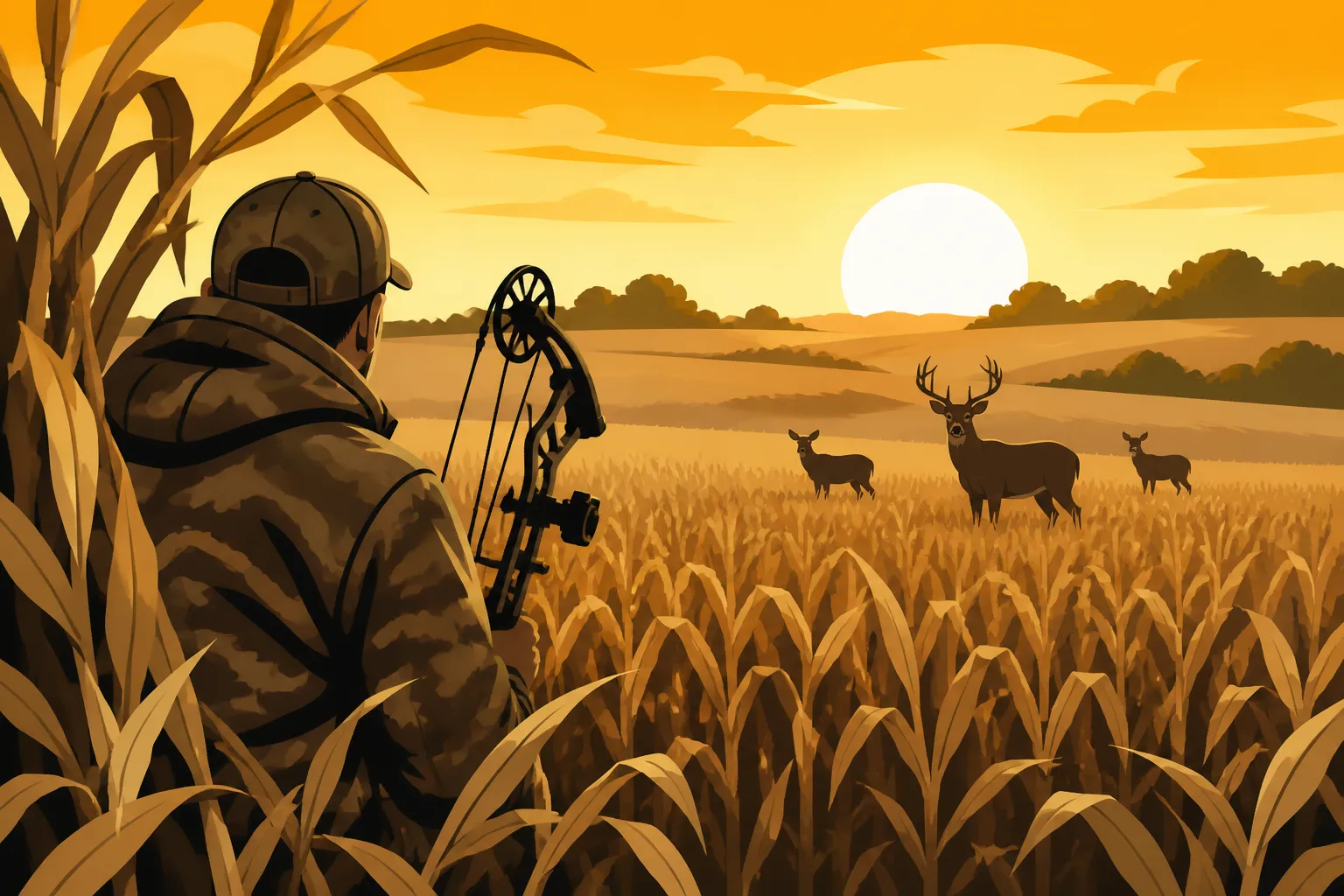
Let's be real, a standing corn or milo field on a WIHA tract can look completely impenetrable. You drive by, see a field stretching for acres, and your mind immediately goes to two places: "There's gotta be deer in there!" and "How on earth do I hunt that?" It's a common dilemma, and one that often sends hunters looking for easier terrain. But with a bit of understanding and a willingness to adapt, these agricultural havens can become some of the most productive spots in Kansas.
The Frustration of the Unseen Deer
There's nothing quite like the feeling of knowing deer are just feet away, yet completely invisible. You might hear rustling, a snort-wheeze, or even the distinct sound of a deer munching on corn, but the visual confirmation simply isn't there. This leads to a lot of frustration, making hunters feel like they're just walking through a deer bedroom, bumping animals without ever getting a chance. The sheer density of standing crops provides unparalleled cover, allowing deer to move with incredible stealth, often just out of sight. It's a game of cat and mouse where the mouse knows the maze intimately, and you're just trying to find the entrance. This challenge is especially pronounced on public lands where other hunters might be pushing deer around, further complicating patterns.
Understanding the Cover and Food Dynamic
Standing crops, whether it's tall corn or dense milo, offer deer the ultimate combination of food and sanctuary. From a deer's perspective, it's a five-star resort. They have an endless buffet of high-energy food right at their hooves, negating the need to travel far for sustenance. Simultaneously, the towering stalks and thick canopy provide excellent thermal cover from both sun and wind, plus incredible concealment from predators—including us hunters. During the warmer parts of the season, these fields can be surprisingly cool. As the season progresses and temperatures drop, they can also offer a bit of a buffer against harsh winds. This dual advantage means deer often bed down deep within these fields, emerging only when they absolutely need to, or, more often, just moving along the edges or through internal lanes. This dynamic is crucial to understand if you want to successfully hunt these areas; you're not just looking for a food source, but a complete habitat.
E-Scouting and Boots-on-the-Ground for Crop Deer
Before you ever set foot in a standing crop field, you should be doing your homework. Kansas farm country, with its grid of roads and often flat terrain, lends itself perfectly to advanced scouting techniques. You need to gather as much information as possible from afar before you disturb the area. Then, and only then, do you go in for a quick, strategic look.
Mapping Deer Movement with Technology
Modern mapping applications are an absolute game-changer when it comes to breaking down large agricultural fields on WIHA land. Tools like onX Hunt or GoHunt allow you to zoom in and look for subtle terrain features or anomalies within the seemingly endless rows. What kind of things are you looking for? Think about finger ridges that might run into the field, small timbered draws that cut through the middle, or even subtle changes in crop density that might indicate an old fence line or drainage ditch. These are all potential highways for deer.
You should be studying the edges of the fields meticulously. Look for pinch points where deer might enter or exit, especially where the crops meet a timbered creek bottom or a CRP field. High-resolution satellite imagery can reveal subtle trails worn into the crop edges or even through shorter patches within the field. Mark these spots as waypoints. Pay close attention to how these crop fields relate to surrounding cover and water sources. A field of standing corn adjacent to a river bottom is an entirely different puzzle than one surrounded by cut wheat stubble. E-Scouting Kansas Farm Country From Home is an excellent resource for really diving into this digital reconnaissance.
Finding the Hotspots Before You Hunt
Once you've identified potential entry and exit points and internal features through e-scouting, it's time for a very quick, very low-impact boots-on-the-ground scout. This isn't about stomping through the entire field; it's about confirming your suspicions and finding fresh sign. Focus your efforts on the edges you identified. Look for heavy trails leading into the standing crops from adjacent timber or bedding areas. These trails will often be well-worn, almost like cow paths, indicating consistent use.
Within the first 20-30 yards of the field edge, you might find rubs and scrapes, especially if it's nearing the rut. These are clear indicators of buck activity. Look for tracks where deer are entering and exiting. Are they fresh? Are there multiple sets? This intel is priceless. If you absolutely have to venture further into the field, stick to existing deer trails or old farm two-tracks if they exist. Avoid busting through rows randomly, as this will only alert deer to your presence. The goal is to be a detective, not a bull in a china shop. Remember, on WIHA ground, you might not be the only one scouting, so fresh sign is paramount.
Tactical Approaches to Hunting Standing Crops
Hunting standing crops requires a shift in mindset and tactics. You can't just set up on the nearest timber edge and hope for the best. You need to think like the deer, anticipating their movements within this dense cover. It's about precision, patience, and often, mobility.
Playing the Wind and Entry/Exit Routes
The wind is your absolute best friend and worst enemy when hunting standing crops. Deer rely heavily on their sense of smell, and in such dense cover, a swirling wind or an incorrect approach will blow your hunt before it even starts. Always, and I mean always, hunt with the wind in your favor, blowing away from where you expect deer to be. This means having multiple stand or blind locations identified, allowing you to choose the best option based on the day's wind direction.
Your entry and exit routes are equally critical. You need to approach your setup without alerting any deer already in the field or along its edges. This often means walking along ditch lines, creek bottoms, or field access roads that are away from anticipated deer movement. Using topography, even subtle dips and rises in flat Kansas farm country, to conceal your approach can be invaluable. Access Routes That Do Not Bump Deer is a must-read for planning these critical parts of your hunt. If deer are using an internal trail to move from a bedding area deep in the crops to an edge feeding area, you need to intercept them without crossing their main travel corridor.
Setting Up for Success on Crop Edges and Interior
When it comes to actual stand placement, you have a few options, each with its own pros and cons:
- Crop Edges: This is often the most accessible and popular option. Look for corners where two fields meet, or where the crops butt up against timber, a fenceline, or a strip of CRP. Deer will often follow these hard edges. A stand or blind placed 10-20 yards inside the timber, overlooking the crop edge, can be incredibly effective. Consider using a ground blind brushed into the edge, especially if the crop is thick and offers immediate cover. Ensure your shot lanes are clear, but don't over-trim, as that will alert deer.
- Internal Pockets and Funnels: If your e-scouting revealed a finger of timber or a small drainage that extends into the standing crops, these are absolute gold mines. Deer will use these natural funnels for secure travel. A stand placed here can catch deer moving between bedding and feeding within the crop fields. Similarly, a small isolated clump of trees or a brushy island in the middle of a large field will almost certainly hold deer and warrants investigation. Remember Best Stand Locations in Flat Farm Country will help you think about these kinds of features.
- Mid-field Setups (Advanced): This is for the truly mobile and dedicated hunter. If you've identified a heavily used internal trail or a specific hot spot deep within the crops, you might consider setting up a lightweight stand or saddle. This means carefully walking in, often through the rows themselves, to a pre-scouted spot. This approach requires extreme stealth, the perfect wind, and a willingness to accept that you'll likely bump some deer on the way in or out. It's a high-risk, high-reward strategy.
| Setup Type | Pros | Cons | Ideal Conditions |
|---|---|---|---|
| Crop Edge | Easy access, good visibility of entry/exit | Can be pressured, limited shots into deep cover | Evening hunts, changing winds, visible deer trails |
| Internal Pocket | Intercepts secure deer movement, less pressure | Harder to access quietly, precise scouting required | Bucks cruising for does, stable wind, known travel corridors |
| Mid-Field | Highest chance of intercepting bedded deer | Extreme stealth needed, high risk of bumping deer | Very stable wind, deep cover, mobile setup |
Midday and Late Season Crop Strategies
Many hunters pack up around midday, but deer in standing crops often stay active. During the rut, bucks will cruise relentlessly through these fields, scent-checking for does, even in the middle of the day. A patient sit from a well-placed stand overlooking a funnel or a key trail can pay off handsomely during these hours. Consider a slightly longer sit than usual.
As the season progresses, especially into late November and December, standing crops become even more critical. If they haven't been harvested, they offer exceptional thermal cover against cold winds and snow, and the remaining grain is a crucial late-season food source. Late-Season Food Source Hunting is exactly what you'll be doing here. Deer will often stage in adjacent timber or brush during the morning, then filter into the standing crops as the day warms, or bed in the crops all day, only emerging to feed heavily at last light. This is when driving small timber blocks that funnel into crops, or even slowly still-hunting along the internal edges of a standing field, can be effective if done carefully and with the right wind. Remember the cold weather demands too, Staying Warm on a December Sit is key if you’re out all day.
Essential Gear and Mindset for Walk-In Crop Hunting
Hunting standing crops on public land, particularly WIHA, often means you can't leave stands up indefinitely, and you'll be covering some ground. This demands a specific approach to gear and a resilient mindset.
Portable Gear for Mobile Hunters
Since many WIHA regulations prohibit leaving stands overnight, or because you're adapting to changing conditions, a mobile setup is often your best bet. Think lightweight climbing sticks or a tree saddle system. A saddle, in particular, offers incredible versatility, allowing you to quickly set up in suitable trees along crop edges or within small timber patches that finger into the fields. Mobile Hunting With a Saddle in Kansas can really open up new possibilities in this environment.
If you prefer a ground blind, choose a lightweight, easy-to-deploy model that you can quickly brush in. You might even consider a run-and-gun approach with just a leafy suit and a small stool, hiding along a natural depression or a thick fenceline that offers just enough cover. Binoculars are absolutely essential, not just for spotting deer, but for scanning the far reaches of the field edges and any open lanes you can see. A rangefinder is also critical for accurately gauging distances in such an open, yet visually complex, environment. And don't forget a good deer cart if you plan on tagging out; dragging a deer out of a massive cornfield, especially alone, is no small feat. Deer Carts on Walk-In Ground are a lifesaver.
Patience, Persistence, and Adapting to Conditions
The biggest "gear" you can bring when hunting standing crops is patience. You're not always going to see deer, even if they're there. They have the advantage of cover, and they know it. Expect longer waits, fewer visual sightings, and be prepared for deer to materialize seemingly out of nowhere. Persistence is key; if a spot looks promising based on sign and conditions, give it multiple tries. Deer patterns can change with pressure, weather, and even the maturity of the crops themselves.
Finally, you must be adaptable. The perfect plan you made from your couch using onX Hunt might need to change the moment you arrive and see a different wind, fresh boot tracks from another hunter, or notice that a portion of the field has been harvested. Have a Plan B, C, and even D. Be ready to move your setup, change your approach, or even switch to a different WIHA tract if conditions demand it. The hunter who learns to read the land and react to what the deer are telling them will be the one who finds success in these challenging but rewarding standing crop fields. Remember, the beauty of Kansas WIHA is that there's usually another promising spot just a short drive away. Kansas Walk-In Hunting Access Explained provides a great overview of the program, so you can always find a new puzzle to solve.
Disclaimer
This article is for general informational purposes only and does not constitute professional advice. Laws, prices and regulations vary by location and change over time. Consult a qualified professional for guidance on your specific situation.