Overnight Parking at Kansas Wildlife Areas
It's incredibly frustrating when you're planning an early morning hunt or a multi-day trip to a new area, and you can't get a clear answer on where you can legally leave your truck overnight. The last thing any hunter wants is a ticket, or worse, a towed vehicle, just because they misunderstood a parking regulation. This guide will walk you through the nuances of overnight parking at Kansas Wildlife Areas, helping you understand the rules, find the right information, and avoid any unwanted surprises so you can focus on the hunt.
Understanding the Landscape of Kansas Wildlife Areas and Their Parking Rules
Kansas offers a fantastic array of public hunting opportunities, from sprawling State Wildlife Areas to countless Walk-In Hunting Access (WIHA) tracts. But with this diversity comes a patchwork of rules, especially concerning where you can park your vehicle, and for how long. It's not always a simple "yes" or "no" answer, and digging into the specifics is crucial for a stress-free experience.
The General KDWP Stance on Public Land Access
The Kansas Department of Wildlife and Parks (KDWP) manages numerous properties specifically for wildlife and public recreation, including hunting. Their primary goal is conservation and providing access, but this comes with a responsibility to manage impact. Generally, parking is allowed in designated areas, often marked with signs or clearly established gravel lots. The default assumption, especially on smaller tracts or those primarily designated as day-use areas, is that vehicles should not be left overnight unless explicitly stated otherwise. This helps prevent issues like illegal dumping, vandalism, and ensuring emergency access. Think of it as leaving no trace – and that includes your vehicle for extended periods without permission. You'll find many of these principles apply broadly across all Public Hunting Land in Kansas.
Why Parking Rules Vary So Much Between Areas
The reason for the varied rules is simple: each wildlife area has unique characteristics, management objectives, and local pressures. A large reservoir wildlife area might have designated campgrounds with ample overnight parking, while a smaller, river-bottom tract adjacent to private land might prohibit it entirely to prevent conflicts. Factors like the size of the area, its proximity to urban centers, whether it has facilities (like boat ramps or restrooms), and historical usage all play a role. Some areas might have specific regulations to protect sensitive habitats, while others are designed for high-turnover day use. Always remember that general KDWP rules are often supplemented by specific local regulations for each area, which is why a bit of research is always warranted. This variability is a key aspect of Kansas Wildlife Area Special Regulations.
Common Signs and Posted Information You'll Encounter
When you arrive at a Kansas Wildlife Area, pay close attention to all signage. These signs are your first and best source of information. You'll often see:
- "Day Use Only": This is a clear indicator that overnight parking is not permitted.
- "Parking in Designated Areas Only": Fairly standard, but if no specific "overnight" area is marked, assume day use.
- "No Camping": While not directly about parking, if camping isn't allowed, it's a strong hint that leaving a vehicle overnight without a camper attached (or designated space) is likely prohibited.
- Specific Hours of Operation: If an area closes at sunset and opens at sunrise, your vehicle shouldn't be there between those times.
- Permit Requirements: Some areas, especially those with limited capacity or special management, might require a permit for any use, including parking.
- WIHA Signs: These distinct yellow signs typically mark private land enrolled in the Kansas Walk-In Hunting Access Explained program. On WIHA tracts, your vehicle should generally remain on public rights-of-way or in designated parking spots (which are usually roadside pull-offs) unless otherwise specified in the Reading the Kansas WIHA Atlas for that specific tract. Overnight parking of vehicles on a WIHA tract itself is almost universally forbidden, as the landowner permits public access for hunting, not long-term storage or camping.
Navigating Overnight Parking: Regulations and Practicalities
So, you've decided to head out to a Kansas Wildlife Area for a hunt that might span more than a single day. What are the practical steps and considerations for dealing with overnight parking? It's more than just finding a spot; it's about understanding the nuances of legality and courtesy.
Designated Overnight Parking vs. Day-Use Lots
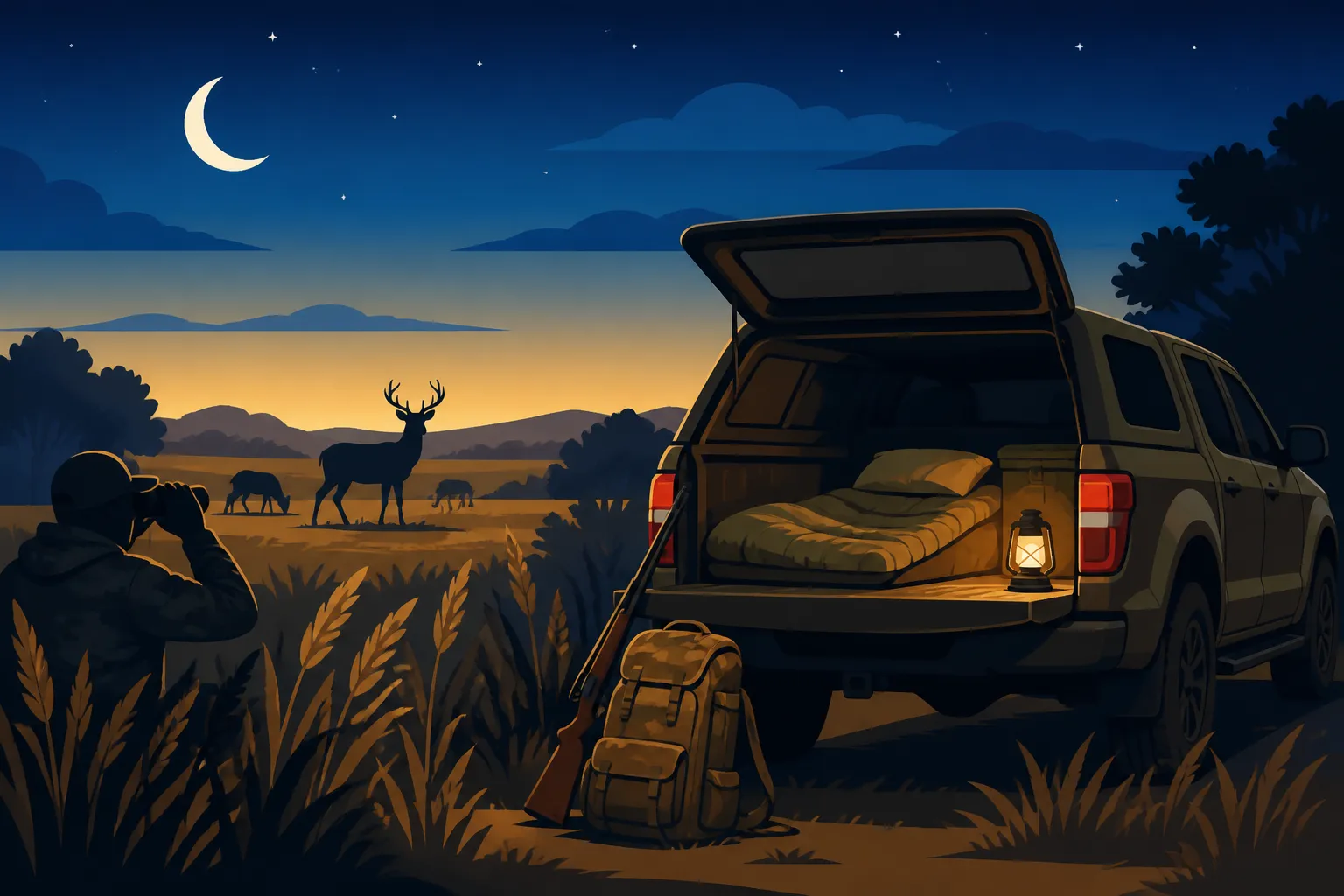
The most straightforward scenario is finding a wildlife area that explicitly offers designated overnight parking. These areas are usually larger, more developed, and might have associated amenities like campgrounds, boat ramps with multi-day parking, or trails designed for backpacking. Look for signs that specifically say "Overnight Parking Permitted" or "Campground Parking." If you're planning to leave your vehicle for an extended period, particularly for more than 24 hours, these are the spots you should prioritize. Parking your vehicle in a "Day Use Only" lot overnight, even if you're sleeping elsewhere, can lead to fines, especially if the area has a reputation for issues or is heavily patrolled. Always remember that even in designated areas, there might be time limits (e.g., 72 hours) or require a camping permit if you're staying in the vehicle.
The Importance of Permit Requirements and Check-In Systems
Some Kansas Wildlife Areas, particularly those managed with specific goals in mind or those that see heavy use, implement permit requirements. These might be general access permits, specific hunting permits, or even vehicle permits. While not all directly relate to parking, obtaining the necessary permits demonstrates compliance and often provides access to more detailed information about the area's rules. For certain areas, especially those participating in the iWIHA program, there might be a digital check-in system via the Go Outdoors Kansas platform. While this typically tracks hunter presence, it can also influence overall area management and capacity, indirectly affecting vehicle presence. Make sure you understand the rules for Checking In on Go Outdoors Kansas if you plan to visit such an area. Failure to check in, or exceeding capacity limits, could flag your vehicle as being in an unauthorized location.
When Extended Stays Are Permitted (or Prohibited)
Extended stays—meaning leaving your vehicle for multiple days—are a different ball game entirely. On most KDWP-managed lands that aren't designated campgrounds, this is generally not permitted without specific arrangements. If you intend to hike deep into a wilderness-like area for several days, you'll need to confirm that the parking area you choose allows for such an absence. In areas where dispersed camping is permitted (like parts of the Cimarron National Grassland), extended vehicle parking might also be allowed, but again, always verify the specific rules for that federal land. For typical Kansas State Wildlife Areas, if there's no campground or explicit overnight parking, assume multi-day vehicle storage is prohibited. If you're attempting a multi-day hunt, you might need to find a private landowner nearby who will allow you to park for a fee, or choose a wildlife area with established camping facilities. This is particularly relevant when considering Camping Rules on Kansas WIHA Ground, as WIHA is generally not for camping.
Tools and Strategies for Confirming Parking Details Before Your Hunt
Trying to decipher parking rules on the fly, especially when you're tired and excited to hunt, is a recipe for disaster. The best approach is to do your homework beforehand. Thankfully, there are several excellent tools and strategies at your disposal to ensure you're squared away before you even leave your driveway.
Leveraging Online Resources and Digital Maps
The Kansas Department of Wildlife and Parks website is your first stop. They often have individual pages for each State Wildlife Area, detailing specific regulations, available amenities, and sometimes even parking information. However, navigating dense government websites can be tricky. This is where digital mapping applications become invaluable. Services like onX Hunt have sophisticated layers that show public land boundaries, property ownership, and often highlight designated parking areas. Many also include features for identifying KDWP-managed properties and even WIHA tracts. Before you head out, use onX Hunt to scout the area digitally. Look for blue or green shaded areas indicating public land and zoom in on potential access points. Often, parking pull-offs or established lots are visible on satellite imagery. The Kansas Online Hunting Atlas is another official resource that can help you visualize these areas and confirm their public status, which is a great starting point before diving into a more detailed app like onX Hunt. Always cross-reference multiple sources if possible.
The Value of Direct Contact with Wildlife Area Managers
When in doubt, pick up the phone. Contacting the specific wildlife area manager or the nearest KDWP regional office is perhaps the most reliable way to get definitive answers about overnight parking. They know the local rules inside and out, can clarify ambiguities, and might even offer alternative suggestions if your initial plan isn't feasible. Don't be shy; these folks are there to help responsible hunters. Explain your intentions clearly: how long you plan to be there, whether you'll be camping (if applicable), and your vehicle's make/model if they need to keep an eye out for it. Their guidance can save you a lot of headache and potential fines. They can also clarify nuances that online maps might miss, especially regarding temporary closures or recent changes to parking access.
Planning for Contingencies and Alternative Parking
Even with the best planning, sometimes things don't go as expected. The designated parking lot might be full, or a rule might have changed. Always have a backup plan. This could involve identifying a nearby town with a public parking lot (though always check local ordinances for overnight vehicle limits), or having the contact information for a private landowner who might allow you to park for a small fee. For WIHA tracts, remember that Vehicles on Kansas Walk-In Tracts are generally only allowed on public roads or designated spots, not deep within the property. If you're hunting an area surrounded by private land, make sure you know Finding Property Lines in Kansas to avoid accidental trespass, especially when considering roadside parking. Carrying a paper map or a fully charged GPS device with downloaded maps (like with GoHunt's offline capabilities) is a smart contingency, especially if cell service is spotty. Knowing your options beforehand eliminates stress and keeps your hunt on track.
Avoiding Costly Mistakes: Common Parking Violations and Their Consequences
Ignoring parking rules on Kansas public lands can lead to more than just inconvenience; it can result in significant financial penalties, legal trouble, and even the loss of your hunting vehicle. Understanding the common pitfalls and respecting the regulations is paramount.
The Risks of Undesignated Parking and Vehicle Abandonment
Parking in an undesignated area, especially overnight, is a common violation. This might include pulling off the main road onto a field edge, leaving your vehicle blocking an access road, or simply parking in a "Day Use Only" lot after hours. Consequences can range from a warning to a hefty fine. In more severe cases, or if your vehicle is perceived as abandoned, it could be towed at your expense. Imagine driving for hours, having a great hunt, only to return and find your truck gone, replaced by a tow-away sticker. The cost of retrieving a towed vehicle, along with any fines, can quickly eclipse the cost of your hunting trip itself. Beyond the legal ramifications, improper parking can damage habitat, block access for other users or emergency services, and create a negative perception of hunters among landowners and the general public.
Respecting Private Property Boundaries Near Wildlife Areas
Many Kansas Wildlife Areas and WIHA tracts are intertwined with private land. It's incredibly easy to inadvertently trespass with your vehicle if you're not paying close attention to property lines. Parking your truck even slightly onto private land, especially if it's posted or marked with purple paint, is a serious offense. Always use tools like onX Hunt to confirm exactly where public land ends and private land begins, especially when pulling off a road for what seems like an innocuous spot. Even if you're hunting legally on adjacent public land, parking illegally on private property can lead to confrontation, fines, and resentment from landowners, which can jeopardize future public access. This is a critical point when you're trying to figure out Access Routes That Do Not Bump Deer – your access needs to be legal too!
Ensuring Vehicle Safety and Security During Extended Stays
Whether you're permitted to park overnight or have found a safe, legal alternative, securing your vehicle is a non-negotiable step. Rural areas, even those frequented by hunters, are not immune to theft or vandalism. Always lock your vehicle, conceal any valuables, and if possible, use an anti-theft device. If you're leaving your vehicle for multiple days, ensure it has enough fuel, the tires are in good condition, and basic maintenance is up to date, reducing the chance of a breakdown upon your return. Inform a trusted friend or family member of your exact parking location and your expected return time, especially if you'll be out of cell service. This not only adds a layer of safety for you but also ensures someone knows where your vehicle should be if you don't check in. For peace of mind, consider keeping a small, portable security camera with you that can be set up to monitor your vehicle if you're in a designated overnight spot.
| Public Land Type | General Overnight Parking Stance | Key Things to Check Before You Go |
|---|---|---|
| State Wildlife Areas | Often designated areas; some prohibit, esp. day-use | Specific signage, KDWP regulations (website), call manager |
| WIHA (Walk-In Hunting) | Generally not permitted; vehicles on public ROW only | WIHA Atlas, iWIHA rules (Go Outdoors Kansas), posted signs |
| Corps of Engineers Land | Varies wildly; often specific campgrounds or boat ramps | COE website, local office, signage at access points |
| Cimarron National Grassland | Dispersed camping (and thus parking) allowed in many areas | US Forest Service rules, local ranger district (call) |
| State Fishing Lakes | Often has campgrounds; specific rules for parking outside camp | KDWP website, local manager |
Ultimately, being a responsible hunter includes being a responsible parker. A little preparation goes a long way in ensuring your focus remains on the pursuit of game, not on the fate of your vehicle.
Disclaimer
This article is for general informational purposes only and does not constitute professional advice. Laws, prices and regulations vary by location and change over time. Consult a qualified professional for guidance on your specific situation.