Hunting Kansas Road Ditches
For many hunters in Kansas, especially those accustomed to the vast agricultural landscapes and limited timber, the idea of hunting road ditches can be both intriguing and a bit unsettling. It's a common frustration to see game animals, whether it's a magnificent whitetail buck or a rooster pheasant, disappear into the cover of a roadside ditch, knowing that the rules around hunting such areas are often murky and confusing. This guide aims to clear up that confusion, offering a realistic look at the legalities, ethics, and practicalities of hunting Kansas road ditches, so you can make informed decisions and stay on the right side of the law and public perception.
The Lure and Legalities of Hunting Kansas Road Ditches
Kansas is a state dominated by private land, which can make finding public hunting access a real challenge. For many, the ditches and rights-of-way alongside public roads seem like a potential loophole or at least an overlooked opportunity. However, this perception can lead to serious legal misunderstandings and ethical dilemmas if not approached with extreme caution and a thorough understanding of the regulations.
Why Hunters Look to Ditches
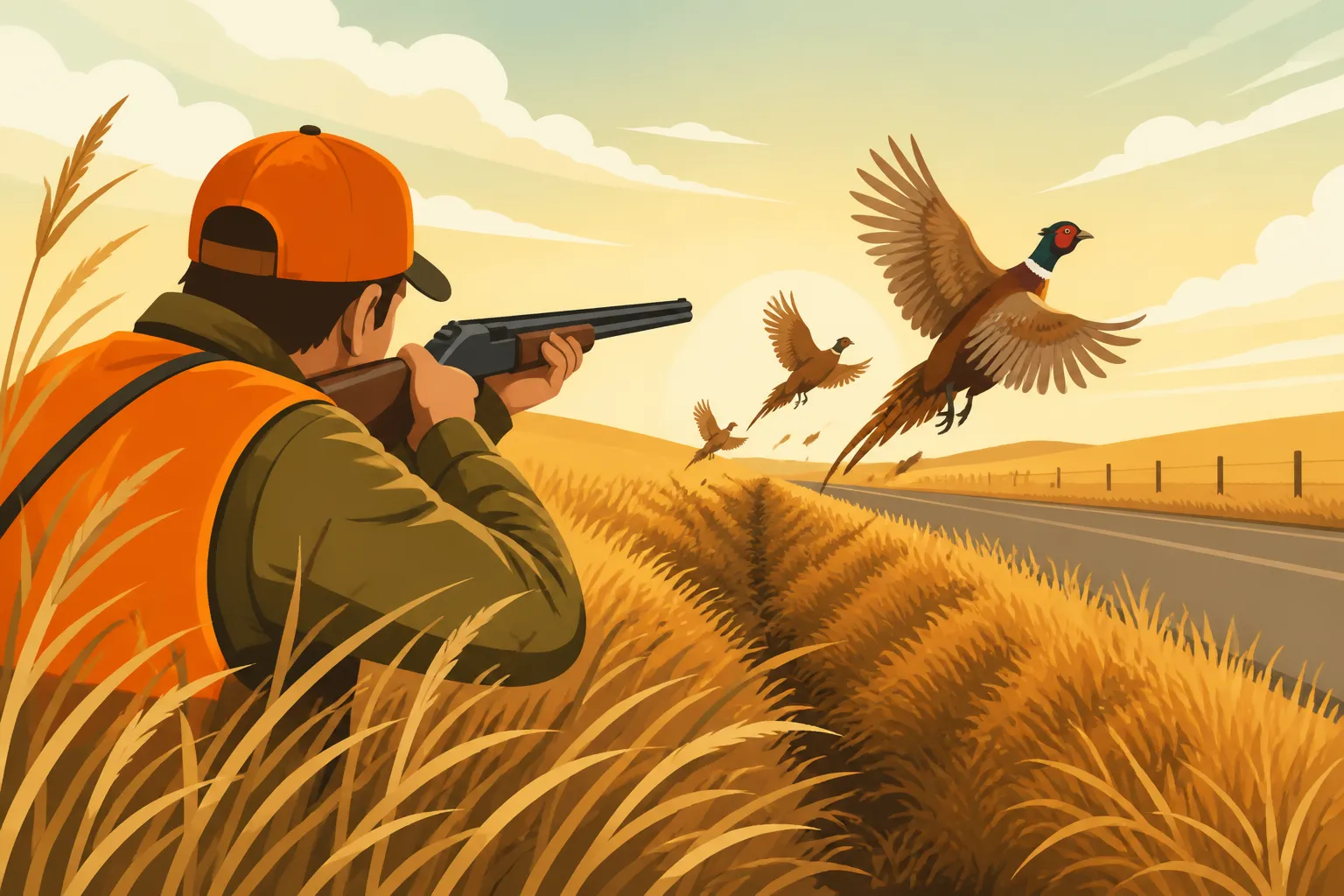
Think about it: in many parts of central and western Kansas, where vast fields of milo, corn, and wheat stretch for miles, that skinny ribbon of grass and weeds along a county road or section line is sometimes the only consistent cover for miles. Deer will use these ditches as travel corridors, moving from one isolated timber patch to another, or from bedding areas to food sources. Pheasants and quail find crucial nesting habitat and thermal cover in them, especially during harsh winters. It’s not uncommon to see a trophy buck standing in a ditch, seemingly unconcerned, making you wonder, "Can I hunt that?" This perceived opportunity, combined with the scarcity of other accessible cover, makes road ditches surprisingly attractive for hunting certain species. They can act as natural Terrain Funnels That Work Without Hills in otherwise flat country.
The Tricky Legal Landscape
This is where things get complicated, and where many well-meaning hunters can inadvertently run afoul of the law. The biggest misconception is that anything bordering a public road is "public land" and therefore fair game. This simply isn't true in Kansas, or in most places. The "right-of-way" for a public road, which includes the roadway itself and often the adjacent ditches and shoulders, is primarily for public travel and utility. While the public has a right to travel there, it doesn't automatically grant the public the right to hunt there. Landowners typically own the land right up to the center of the road, or at least to the edge of the paved surface, with the state or county having an easement for the road and its maintenance. This crucial distinction means that even if you're standing in a ditch, you might still technically be on private property, making it subject to Kansas Trespass Law and Posted Land.
Understanding Public Right-of-Way vs. Private Property
To truly grasp the issue, you need to understand that the "right-of-way" is an easement, not necessarily full ownership by the public. Imagine a strip of land where the public has permission to drive cars, but the farmer still technically owns the dirt under the asphalt and the ditch beside it. In Kansas, the property owner usually retains ownership of the land within the right-of-way, subject to the public's right to use it for transportation. This means that if a landowner places "No Hunting" signs or "No Trespassing" signs along their property line, those signs often extend into the road ditch. While state statutes broadly permit hunting within a public road right-of-way if it's not posted, the ability to legally retrieve game from the adjacent private land often makes ditch hunting a practical impossibility without explicit landowner permission. It's a nuanced area where what might be legal in one spot is absolutely not in another, depending entirely on local ordinances and property boundaries. Always remember the fundamental rule: when in doubt, don't.
Navigating Kansas Road Ditch Hunting Regulations
Even if you think you're on public access, the nuances of Kansas law regarding road ditch hunting are extensive. It’s not just about trespass; it’s about weapon discharge, public safety, and local control. Ignoring these details can quickly turn a hunting trip into a legal headache.
State vs. Local Ordinances
Kansas state law generally dictates the primary rules of hunting. For instance, Kansas Statute 32-1002 prohibits shooting from, upon, or across a public road or railroad right-of-way. It also specifies shooting within 50 yards of a public road. This is a big one. However, counties and cities also have the authority to enact their own ordinances that might be even more restrictive than state law. A county might prohibit discharging firearms within a certain distance of any dwelling, or within any road right-of-way entirely, regardless of whether it's posted private. What might be permissible in a remote rural township could be strictly forbidden just outside a small town. This patchwork of rules makes it incredibly difficult for hunters to know definitively if they're acting within the law without doing significant homework. Before ever considering hunting a ditch, always check both state statutes and any relevant county or city ordinances for the specific location you have in mind. A resource like the Kansas Hunting Atlas Online can provide some guidance on public land, but it won't detail every local ordinance.
Weapon Restrictions and Safety Zones
Beyond the general prohibition of shooting from or across a public road, there are specific safety zones that come into play. Kansas law states that it is illegal to "shoot any firearm or other deadly weapon within fifty (50) yards of the center of any public road or highway or within fifty (50) yards of any occupied dwelling, church, school building, or livestock enclosure, without the consent of the owner or occupant thereof." This 50-yard rule is critical. Fifty yards isn't very far when you're thinking about a shotgun or a rifle shot.
Consider a scenario: you spot a pheasant in a ditch. Even if you're standing off the road, say 20 yards into the ditch, and the pheasant is another 10 yards further, you're still only 30 yards from the center of the road. That shot is illegal. Moreover, if there's a farmhouse or even a distant outbuilding within 50 yards of your position or your projectile's path, you need specific permission. Bowhunting offers a bit more flexibility in terms of projectile range, but the intent of the law—public safety—still applies. Even with archery equipment, discharging a weapon too close to a road, vehicle, or dwelling creates an unnecessary risk and can be seen as reckless. Think about the potential for a broadhead to deflect or over-penetrate. Always err on the side of extreme caution and seek specific permission for any grey areas. Remember, Hunter Orange Rules During Firearm Season still apply, even if you're technically in a ditch.
Vehicle Use and Access
Another practical consideration is how you even get to these ditches. You can't just drive your truck off the road and into a ditch to block a pheasant or deer. Kansas law generally prohibits driving vehicles off established roads and trails, especially on publicly accessible lands (like WIHA) or within road rights-of-way, unless specifically designated for such use. This is to prevent habitat destruction and maintain safety. Parking along county roads is usually permissible, provided you're not obstructing traffic and your vehicle is entirely off the traveled portion. However, driving into the ditch itself, or driving along it, is usually forbidden. The idea is that these areas are for foot traffic, if anything, and certainly not for off-road vehicle excursions. Many Kansas Walk-In Hunting Access Explained tracts have specific rules regarding vehicle access, and road ditches often fall under similar restrictions, even if they aren't part of an official WIHA tract.
| Aspect of Ditch Hunting | General Rule in Kansas | Important Considerations |
|---|---|---|
| Land Ownership | Landowner owns to road center (usually), state/county has easement. | You are likely on private land, even in the ditch. |
| Trespass | Need landowner permission if on private ground, even if unposted. | Posted land rules often extend into the ditch. |
| Shooting from Road | Illegal to shoot from, upon, or across a public road/railroad R-O-W. | This is a bright-line rule; no exceptions. |
| 50-Yard Safety Zone | Illegal to shoot firearm/weapon within 50 yards of center of public road or occupied dwelling/livestock. | This severely limits where you can legally take a shot. |
| Local Ordinances | Counties/cities can have stricter rules than state law. | Always check local regulations for specific areas. |
| Vehicle Access | Generally prohibited to drive vehicles off established roads/trails. | Parking off the traveled portion is usually okay, but driving into the ditch is not. |
| Game Retrieval | Need landowner permission to cross private land to retrieve game. | This is often the biggest practical hurdle for ditch hunting. |
Retrieval of Game
This is often the ultimate deal-breaker for hunting road ditches, even if you believe you've found a legal spot to shoot. Let's say you've found a section of road ditch that, after careful research, you've determined is not private property or is open to hunting, and you're more than 50 yards from the road and any dwellings. You spot a pheasant, make a clean shot, and the bird falls into the adjacent field – which is private property. Can you retrieve it? Absolutely not, without explicit permission from the landowner. In Kansas, simply because you've harvested an animal does not grant you the right to trespass on private land to retrieve it. This is a major source of friction between hunters and landowners.
Think about the message it sends: even if you believe you did everything right on your side of the fence, crossing into a private field without permission is illegal and disrespectful. It can quickly erode relationships and lead to entire areas being posted "No Hunting" as a result of perceived abuses. If you don't have permission to retrieve game from the adjacent property, then ethically and legally, you cannot effectively hunt the ditch. The best practice is to identify the landowner before you hunt, secure permission not just for the ditch but also for retrieving game, and then carry that permission with you. Recovering a Deer Across a Property Line is a common problem, and it applies just as much to upland birds.
Ethical Considerations and Public Perception
Beyond the letter of the law, there are broader ethical responsibilities and public perception issues that every hunter needs to consider when it comes to road ditches. Our actions reflect on all hunters, and a few careless choices can sour the opinion of an entire community.
Respecting Landowners and Their Property
Kansas is built on agriculture, and the vast majority of hunting occurs on or adjacent to private land. Landowners are the stewards of this land, and their cooperation is absolutely vital for the future of hunting. Treating ditches as a free-for-all, even if you believe it's legal, can breed resentment. Imagine a farmer who has invested time and money into their crops, only to see hunters shooting near their fields or, worse, crossing their property without permission to retrieve game from what they consider their ditch. This can lead to all landowners posting their properties, making it even harder for everyone to find good hunting spots. Building positive relationships with landowners, asking permission, and demonstrating respect for their property are far more beneficial in the long run. If you want to hunt near a particular field, knock on the door, introduce yourself, and ask. You might be surprised by the response. Sometimes, a simple conversation is all it takes to gain access, or at least clarification on boundaries. Finding Private Land Access in Kansas often starts with a polite knock.
Hunter Image and Responsibility
The image of a hunter blasting away into a ditch along a busy road isn't a good one for the sport. It looks reckless, creates safety concerns for passing motorists, and gives non-hunters a negative impression. As hunters, we have a responsibility to uphold a positive image and ensure public safety. This means choosing our hunting locations wisely, even if they are technically legal. Just because something can be done, doesn't always mean it should be done, especially when public safety and the perception of hunting are at stake. A stray shot, a visible animal carcass near a road, or even just the sight of a hunter with a firearm in what appears to be a public area can generate negative attention and pressure for more restrictive hunting laws. We all share the responsibility to ensure that hunting remains a respected and viable activity for generations to come.
Safety First: Prioritizing Common Sense and Awareness
Safety should always be the number one priority. Hunting near roads introduces numerous hazards:
- Vehicular Traffic: Cars and trucks are unpredictable. A sudden swerve, a distracted driver, or just the noise of traffic can be dangerous for hunters and those around them.
- Other People: People walk, bike, and drive along roads. There might be children playing in a nearby yard that you can't see.
- Visibility: Ditches can obscure your view, making it hard to see beyond the immediate area, or making it hard for others to see you.
- Backstops: A road ditch often lacks a proper backstop. A bullet or shot could travel a considerable distance, posing a risk to vehicles, homes, or livestock.
Always follow the basic rules of firearm safety: be sure of your target and what is beyond it. In a road ditch scenario, "what is beyond it" often includes other vehicles, homes, and people. It's often simply not worth the risk, even if you're targeting small game. Take the time to understand Kansas Hunter Education and Licensing Basics to reinforce safety principles.
Practical Tips for Road Ditch Hunting
Given the complexities, is there any scenario where hunting a Kansas road ditch might be viable? Perhaps, but it requires meticulous planning, absolute certainty of legality, and a strong dose of common sense. For most hunters, the risks far outweigh the rewards, but if you're determined, here’s how to approach it with maximum caution.
Scouting Ditches for Sign
Before you even consider bringing a weapon, you need to scout thoroughly. Don't just drive by; get out and walk the ditches you're interested in. Look for deer tracks, pheasant roosts, quail coveys, and areas of dense cover that show signs of animal use. Pay attention to how deer might be entering and exiting the ditch – are they using specific fence crossings or low spots? Fence Crossings Deer Use Every Day can be indicators. Use mapping tools like onX Hunt or GoHunt to identify property lines, landowner names, and potential public access points. These apps often show right-of-way easements, though remember these don't automatically mean public hunting. Look for isolated sections of ditch that are far from dwellings, heavily wooded, or border large public tracts like Cimarron National Grassland Hunting or WIHA properties, where landowner permission for retrieval might be less of an issue, or the ditch is clearly part of public land. This detailed scouting might reveal that the ditch is simply not suitable due to legal restrictions or safety concerns.
Choosing the Right Equipment
If, and only if, you've found a truly legal and safe stretch of ditch to hunt, your equipment choice becomes important. For upland birds, a shotgun with appropriate shot size for pheasants or quail is standard. For deer, a bow might be more practical than a rifle due to the 50-yard discharge rule and the need for a safe backstop. However, the legal definition of "deadly weapon" often encompasses bows, so the 50-yard rule still applies. Consider a smaller, more maneuverable firearm if legal, like a .22 for rabbits or squirrels, again, only if the safety and legal parameters are met. A good pair of binoculars is essential for confirming what's beyond your target, and always, always wear hunter orange during firearm seasons, even if you're not on private land.
Communication is Key
Perhaps the most important "tool" for safely and legally hunting road ditches is communication.
- Landowners: As mentioned, if there's any ambiguity about land ownership or the need for retrieval permission, ask the landowner. A simple, polite request can go a long way. Make sure to get their permission in writing if possible, especially for retrieving game.
- Local Law Enforcement: If you are truly unsure about a specific local ordinance or the interpretation of a state statute, contact your local sheriff's department or a Kansas Department of Wildlife & Parks (KDWP) game warden. They are the ultimate authority and can provide accurate, up-to-date information for your specific area. They would much rather answer a question beforehand than deal with a violation after the fact. Remember that Reporting Poaching in Kansas is a service offered by KDWP; they are there to help protect wildlife and ensure legal hunting.
- Fellow Hunters: Share your knowledge and encourage responsible practices among your hunting companions. Educating each other helps to maintain a positive public image for all hunters.
By prioritizing research, safety, and respect for others, you can navigate the complex issue of hunting Kansas road ditches, even if it often means deciding it's best not to hunt them at all.
Disclaimer
This article is for general informational purposes only and does not constitute professional advice. Laws, prices and regulations vary by location and change over time. Consult a qualified professional for guidance on your specific situation.