Camping Rules on Kansas WIHA Ground
It's a common dilemma for hunters hitting Kansas Walk-In Hunting Access (WIHA) ground: you've driven hours, found a promising tract, and the thought crosses your mind – "Can I just pitch a tent here for the night?" The reality is often more complex than a simple yes or no, and misunderstanding the rules can quickly turn a great hunting trip into a legal headache. This guide is designed to clarify the specific camping rules related to Kansas WIHA land, helping you plan your overnight stays legally and comfortably, ensuring your focus remains on the hunt, not on where you'll sleep.
The Core Purpose of Kansas Walk-In Hunting Access (WIHA) Ground
Before we dive into the nitty-gritty of camping, it's crucial to understand what WIHA land is and, just as importantly, what it isn't. This program, administered by the Kansas Department of Wildlife and Parks (KDWP), is a fantastic resource, opening up hundreds of thousands of acres of private land for public hunting. However, its primary goal is very specific: providing access for hunting and fishing.
What WIHA Really Is (and Isn't)
WIHA tracts are private agricultural or native grassland parcels leased by KDWP from willing landowners. These leases grant public access for hunting and fishing during designated seasons, often marked by distinctive WIHA signs. Think of it as a temporary easement for specific recreational activities. The landowner still owns the land, runs their farm or ranch, and has a vested interest in its condition. The program is designed to benefit hunters by increasing access and landowners by offering an incentive to open their gates.
It’s vital to distinguish WIHA from other types of public land. Unlike National Forests, certain State Parks, or dedicated federal wildlife refuges where camping might be explicitly permitted, WIHA land is not purchased or managed by the state for general recreational use. It remains private property, subject to the landowner's underlying rights and the specific terms of the KDWP lease. This fundamental difference is why you can't just treat WIHA like a typical campground. You can spend the day pursuing Kansas Whitetail Hunting Tactics Through the Rut or Working Pheasant Fields Without a Dog, but your overnight plans usually need to look elsewhere.
Why Camping Directly on WIHA is Rarely an Option
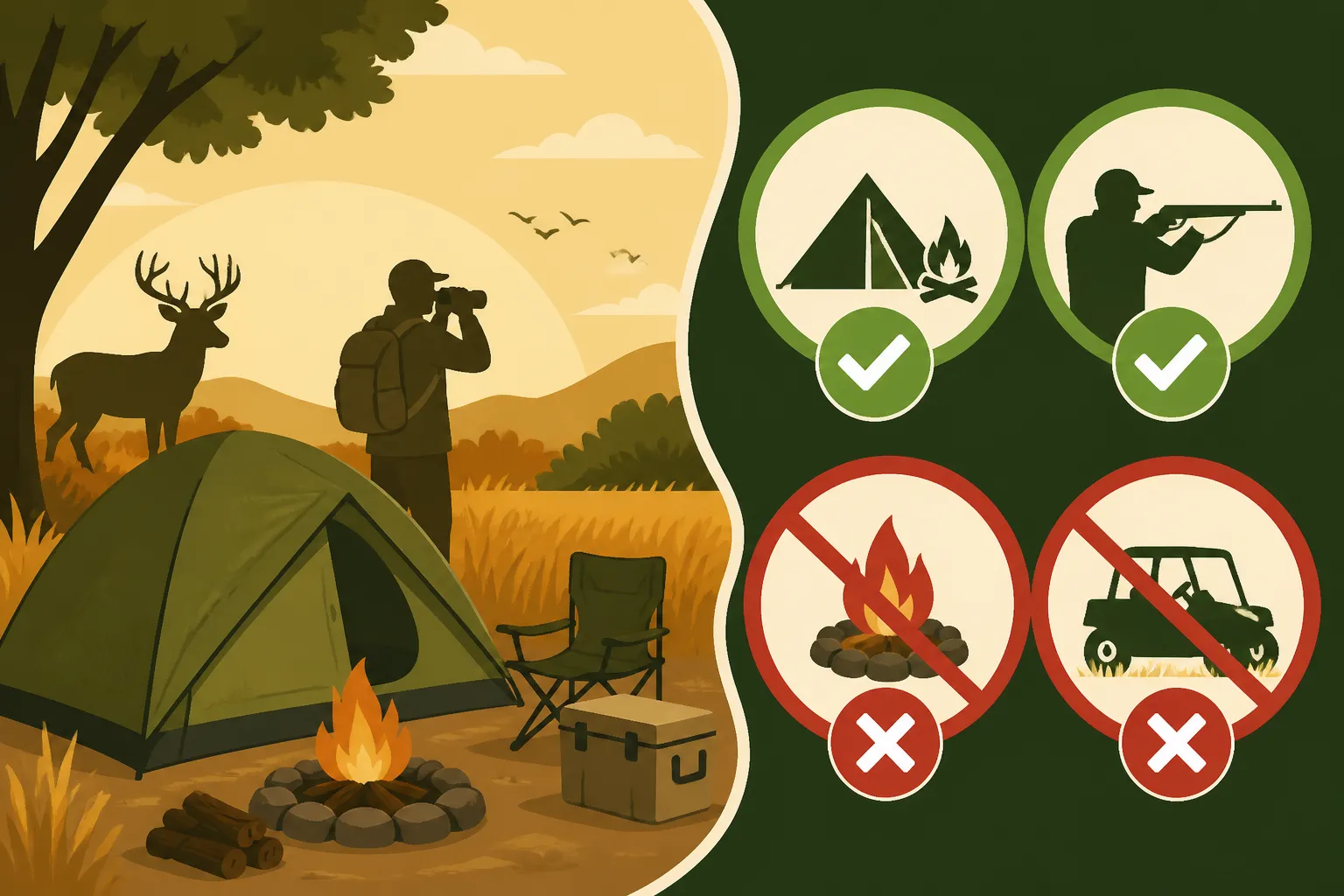
Given that WIHA land is privately owned and leased specifically for hunting and fishing access, camping is almost universally prohibited. The KDWP regulations are quite clear on this: while you can walk, hunt, and fish during open seasons, activities like camping, building fires, or leaving structures overnight are generally not allowed. These actions could disrupt agricultural operations, create potential liabilities for the landowner, or simply go against the spirit of the temporary access agreement.
Imagine a farmer who has leased a portion of their land. They're happy for you to hunt their milo fields for pheasants or set up a ground blind along a creek draw, but they wouldn't want you leaving a tent and a smoldering campfire behind when you're done. Their primary business is farming, and the WIHA program is a way to generate some income while providing a public service, not to turn their fields into a public campground. So, while you're focused on Reading a Kansas Creek Bottom for Deer Sign or patterning deer movements, remember that establishing a camp is outside the scope of your access privileges. This restriction applies whether you're talking about a small, remote tract or a larger, more accessible parcel.
Navigating Camping Rules for Kansas Public Hunting Lands
While direct camping on WIHA is a no-go, Kansas offers plenty of other public lands where overnight stays are permitted. The key is knowing the distinctions and planning accordingly. Understanding these different categories will guide you to a legal and enjoyable place to rest your head after a long day in the field.
Designated Camping Areas on State Wildlife Areas and Reservoirs
Kansas boasts numerous State Wildlife Areas (SWAs) and federal Corps of Engineers lands around its many reservoirs. These are often excellent places to hunt and frequently offer designated camping areas, sometimes with primitive sites, and other times with more developed facilities. Unlike WIHA, these lands are explicitly managed for wildlife, recreation, and often include provisions for camping.
For instance, many of the larger reservoirs like Cheney, Milford, or Wilson have both KDWP-managed wildlife areas and adjacent Corps of Engineers properties. You might find a WIHA tract just a few miles from a state park campground or a Corps of Engineers primitive camping area. These spots are your best bet for legitimate camping near hunting grounds. They typically have clear signage, fee structures (sometimes), and specific rules about quiet hours, campfires, and waste disposal. Checking the KDWP website or local reservoir management offices is always the first step. Look for specific information on Kansas State Wildlife Area Special Regulations or Corps of Engineers Land Around Kansas Lakes.
The Importance of Knowing Who Owns the Land (and Who Manages It)
This distinction of ownership and management is paramount for camping. As we've covered, WIHA is private land with public access for hunting. State Wildlife Areas and Corps of Engineers lands are public lands with public access for a broader range of recreation, including camping in designated spots. Then there's Cimarron National Grassland in the southwest, a federal property where dispersed camping might be allowed in certain areas, but still with specific regulations. Each type of land has its own set of rules, and they are not interchangeable.
This is where tools like onX Hunt become invaluable. With the property ownership layers, you can quickly differentiate between WIHA, KDWP lands, Corps of Engineers land, and private property. This allows you to identify not only your hunting spots but also nearby public camping opportunities. Before you even leave home, you can scout out potential campsites adjacent to or within a reasonable drive of your chosen WIHA tract. This pre-planning prevents frustration and ensures you don't accidentally trespass or break rules.
Alternatives for Overnight Stays Near WIHA Tracts
If your chosen WIHA tract isn't close to a State Wildlife Area or reservoir with camping, you'll need to consider other options. This is a common scenario, especially in agricultural areas where public land might be scarce.
- Commercial Campgrounds/RV Parks: Many small towns across Kansas have private campgrounds or RV parks that cater to travelers and hunters. These offer amenities from basic hookups to full-service facilities. They might be a bit more expensive than public camping but offer comfort and convenience.
- Motels/Hotels: Sometimes, a comfortable bed in a local motel is simply the best option, especially during colder seasons when primitive camping isn't appealing. Don't underestimate the warmth and hot shower after a day of Late-Season Food Source Hunting.
- Asking Landowners for Permission: In rare cases, if you've developed a good relationship with a private landowner whose property borders a WIHA tract (or from whom you've secured hunting permission), they might grant you permission to camp on their private land. This is a big "if" and requires a prior relationship and explicit permission. Never assume this is an option without asking directly and getting a clear "yes." This is an entirely different scenario than hunting on WIHA, which is already public access for hunting.
- Overnight Parking at Trailheads/Access Points: While not camping, some designated public access points or trailheads might allow overnight parking for hunters. This is typically just for your vehicle, not for setting up a tent or sleeping outside the vehicle. Always look for signage indicating "no overnight parking" or "camping prohibited." When in doubt, call the KDWP regional office for clarification.
Here's a quick comparison of general camping guidelines across different Kansas land types:
| Land Type | General Camping Allowed? | Common Restrictions/Notes | Best for Hunters Near WIHA? |
|---|---|---|---|
| WIHA (Walk-In Hunting Access) | No (private land, public hunting access only) | No fires, no structures, no overnight stays. Access is for hunting/fishing only. | No, but often nearby public lands offer camping. |
| State Wildlife Areas (SWAs) | Yes, in designated areas | Specific campsites, sometimes fees, fire restrictions, quiet hours. | Yes, frequently a great option for legitimate camping near hunting. |
| Corps of Engineers Lands (Reservoirs) | Yes, in designated areas (primitive & developed) | Varies by lake, often requires fees, specific rules for dispersed vs. developed. | Yes, many reservoirs have excellent camping close to good hunting. |
| State Parks | Yes, in designated campgrounds | Fees, amenities, strict rules. Often not directly adjacent to hunting areas. | Good for comfort, but might be a drive to hunting spots. |
| Cimarron National Grassland | Yes, dispersed camping often allowed in areas | Leave No Trace principles, fire restrictions, permits for larger groups. | Yes, if hunting this specific area in SW Kansas. |
| Private Land (with permission) | Yes, only with explicit landowner permission | Depends entirely on landowner's wishes. | Possible, but requires building a relationship beforehand. |
It boils down to this: if you're on KDWP-managed land or federal land, check for designated camping areas. If you're on WIHA, assume no camping.
Planning Your Overnight Stay: Tools and Best Practices
Successful hunting is as much about preparation as it is about skill. When it comes to camping near WIHA, smart planning can make all the difference, ensuring you're rested and ready for the early morning hunt rather than scrambling to find a legal place to sleep.
Using Mapping Apps to Identify Legal Camping Spots
Modern hunting means using modern tools, and mapping applications are at the top of that list. An app like onX Hunt is a game-changer for navigating land ownership. You can use its layers to clearly see property boundaries, identify WIHA tracts, and, critically for this discussion, pinpoint nearby public lands like State Wildlife Areas, Corps of Engineers property, or other federal lands where camping might be permitted.
Before your trip, spend time "e-scouting" your chosen WIHA tract. Look for blue (WIHA) and then scan the surrounding area for green (public land managed by state or federal agencies). Zoom in on those green areas to see if they contain campgrounds or areas where primitive camping is allowed. Many times, you’ll find a Corps park or a state park campground within a 10-15 minute drive of a prime WIHA hunting area. This allows you to plan your camp setup in a legal spot and still be close enough to your hunting grounds to make a quick morning commute. This kind of detailed scouting also helps with planning Access Routes That Do Not Bump Deer.
Researching Specific Area Regulations Before You Go
Even when you find a promising public land area for camping, always double-check the specific regulations for that particular unit. Don't assume that because one State Wildlife Area allows dispersed camping, all of them do. Rules can vary significantly.
Here's how to research effectively:
- KDWP Website: The Kansas Department of Wildlife and Parks website is your authoritative source. Look up the specific State Wildlife Area or reservoir you're considering. They often have dedicated pages with rules, maps, and contact information.
- Corps of Engineers Websites: If it's a federal reservoir, search for the U.S. Army Corps of Engineers district that manages it. Their sites will have detailed rules for camping, boat ramps, and other recreational uses.
- Local Offices: If in doubt, call the KDWP regional office responsible for the area, or the office of the specific wildlife area manager. A quick phone call can save you a lot of hassle. They can tell you about specific camping areas, whether permits are needed, and any unique restrictions like fire bans or quiet hours. Websites like
GoHuntcan provide general overviews and links to official state resources, which can be a good starting point for broader research before diving into the specifics of a particular tract.
It's also a good idea to download any relevant maps to your phone for offline use, especially in remote areas where cell service can be spotty. Nothing is worse than getting to a campsite after dark and realizing you can't access the information you need.
Minimizing Your Footprint While Hunting and Camping
Whether you're camping in a designated spot or just pulling off to park overnight, always practice Leave No Trace principles. This is especially important for hunters, as it helps maintain good relationships with landowners and the public at large.
- Pack It In, Pack It Out: This is the golden rule. Everything you bring with you, including trash, food scraps, and spent casings, must leave with you. This applies to your camping spot and your hunting area.
- Respect Campfire Rules: If campfires are allowed, keep them small, contained, and ensure they are dead out before you leave or go to bed. Never leave a fire unattended. In dry Kansas conditions, wildfires are a serious threat.
- Proper Waste Disposal: Use designated restrooms or practice proper cathole techniques for human waste in undeveloped areas, burying it at least 6-8 inches deep and 200 feet from water sources, trails, and campsites.
- Stay on Trails/Designated Areas: Drive and camp only where permitted. Avoid creating new tracks or disturbing vegetation unnecessarily.
- Respect Wildlife: Observe from a distance. Don't feed animals or disturb their natural behaviors. Your goal is to hunt specific game, not interfere with the ecosystem. This careful approach helps keep areas open for everyone, ensuring future opportunities for Hunting Kansas Walk-In Land Without Burning It Out and other pursuits.
Practical Scenarios for Hunters Seeking Camp Near WIHA
Let's consider a couple of common scenarios you might face when planning a Kansas hunting trip that involves WIHA ground and how these rules play out in the real world.
Hunting Remote WIHA and Finding Nearby Options
Imagine you've drawn a coveted deer tag and planned to hunt a remote WIHA tract in western Kansas, far from any major towns or established campgrounds. You know direct camping on the WIHA is out. What's your move?
First, using your mapping app like onX Hunt, you'd identify the WIHA tract and then scan the surrounding area. Are there any smaller state fishing lakes nearby? Sometimes these have very basic, primitive camping options. Is there a larger reservoir within a 30-45 minute drive? That might be your best bet for a more developed camp. If not, you might have to widen your search to the nearest small town. Even a town with just a gas station and a diner often has a municipal park that allows RVs or tents for a nominal fee, or a small, independently-run motel. This strategy is critical when you're targeting areas for Muzzleloader Deer Hunting in Kansas's September Season or Prairie Chicken Hunting in the Flint Hills where specific accommodations might be few and far between.
A common scenario might involve hunting a WIHA tract for pheasants, then packing up your gear and driving 20 minutes to a nearby State Wildlife Area like Byron Walker or Cheney, which often have dedicated camping facilities. It might not be "right there," but it's a legal, comfortable, and often picturesque place to spend the night.
Dealing with Limited Camping Choices in Farm Country
Kansas farm country, particularly in central and eastern regions, can present a different challenge. Here, private land dominates, and even public lands like SWAs or Corps properties might be a good distance away from your target WIHA tracts. It's not uncommon to find yourself hunting a prime WIHA only to realize the nearest designated camping spot is an hour's drive.
In these situations, hunters often rely on local motels, or if they're traveling in an RV, they might seek permission from a church, business, or even a friendly farmer to park overnight. Again, this permission is crucial and should never be assumed. Some smaller towns might even have basic city-run RV hookups for a small fee.
For bowhunters in September who are focused on Early-Season Bowhunting Over Water on a WIHA tract that's surrounded by private crop fields, the nearest actual campground could be miles away. You might end up choosing a motel in a county seat town that's a 30-minute drive, rather than trying to find a dubious "off-grid" camping spot. It's less romantic, perhaps, but certainly more legal and comfortable, especially when you need to be sharp for the morning hunt. The point is, be realistic about your options and prioritize legality and comfort. A well-rested hunter makes better decisions.
Disclaimer
This article is for general informational purposes only and does not constitute professional advice. Laws, prices and regulations vary by location and change over time. Consult a qualified professional for guidance on your specific situation.