Eastern Kansas Deer Units
It's incredibly frustrating when you're trying to plan a deer hunt in Kansas, especially when you start looking at the map and realize just how diverse the landscape is from east to west. Trying to decipher which deer unit in eastern Kansas is the right fit for your hunting style, your preferred weapon, and your draw odds can feel like solving a complex puzzle. This comprehensive guide will break down the characteristics of eastern Kansas deer units, helping you understand their unique challenges and opportunities, and ultimately guide you toward making an informed decision for your next hunt.
Understanding the Eastern Kansas Landscape for Deer
Eastern Kansas is a completely different beast than its western counterpart. Forget vast, open plains; here, you're looking at a patchwork of timber, winding rivers, agricultural fields, and rolling topography that provides incredible cover and nutrition for whitetail deer. This unique blend creates a rich habitat that drives deer movement and influences hunting strategies.
River Bottoms and Creek Draws: The Deer Superhighways
When you talk about eastern Kansas deer hunting, the conversation almost always starts with river bottoms and creek draws. These aren't just lines on a map; they are the lifelines for deer in this region, especially trophy whitetails. These natural corridors offer dense thermal cover, consistent water sources, and often the last remaining pockets of mature timber in heavily farmed areas. Bucks will use these draws to travel between bedding and feeding areas, often moving undetected under the cover of the canopy. You'll find everything from massive sycamores and cottonwoods to thick tangles of greenbrier and honeysuckle that offer ideal bedding. Understanding how deer utilize these features is paramount. I’ve spent countless hours studying aerial maps and then boots on the ground, realizing that what looks like a small line of trees on a satellite image can be a legitimate deer highway. Knowing Reading a Kansas Creek Bottom for Deer Sign can give you a significant edge in these areas.
Timber Blocks and Rolling Hills: More Than Just Woodlots
While not as mountainous as states further east, eastern Kansas definitely has its share of rolling hills and significant timber blocks, particularly as you move further east and south. These aren't always sprawling forests, but rather large private timber tracts, state parks, and wildlife areas that offer refuge. These larger wooded areas, combined with the undulating terrain, provide sanctuary and diverse forage. Deer here have more options for bedding and are not as concentrated in the small draws as they might be further west. These larger timber blocks can be challenging to hunt, as deer have more room to roam and pressure can push them into the thickest cover. However, they can also hold some absolute giants that rarely step foot into an open field during daylight.
Agricultural Influence and Food Sources: Driving Deer Movement
Eastern Kansas is prime agricultural country, and row crops like corn, soybeans, and milo play an enormous role in deer movement and nutrition. These fields provide an abundant, readily available food source for much of the year. During the early season, standing corn offers both food and unparalleled cover, making deer nearly invisible. As the season progresses and crops are harvested, the stubble fields become crucial feeding grounds, drawing deer out into the open, particularly during the late season. Understanding Milo and Corn Stubble Deer Patterns is critical here. Deer will often bed in nearby timber or thick cover and then filter into these fields at dawn and dusk. The edges where timber meets crops, or where a deep draw cuts into a cornfield, are classic ambush points. The sheer volume of high-quality food contributes significantly to Kansas Whitetail Deer and Why They Grow Big in this part of the state.
Key Characteristics of Eastern Kansas Deer Units
When you're trying to pick a unit, it’s helpful to understand the general trends that define eastern Kansas. These aren't hard and fast rules for every square mile, but they certainly paint a picture of what to expect.
Higher Deer Density: Opportunities and Challenges
Generally speaking, eastern Kansas units tend to have higher deer densities compared to the central and western parts of the state. More deer per square mile often translates to more opportunities to see deer, which is a big draw for many hunters. This can mean more encounters, more rut activity sightings, and potentially a higher chance of filling your tag. However, higher deer density often goes hand-in-hand with increased hunting pressure, especially on public land. You'll need to be savvy about how you approach your hunt, considering access routes, wind, and how other hunters might be moving deer. It’s a double-edged sword: more deer, but also more competition for those deer.
Whitetail Dominance: The Primary Target
Unlike some western units where a mule deer tag is a possibility, eastern Kansas is almost exclusively whitetail country. While you might encounter the rare hybrid or a stray mule deer, your primary target here will be the venerable whitetail. These units are managed specifically for whitetail deer, focusing on habitat, herd health, and antler quality for that species. This means you can hone your whitetail-specific hunting strategies, from rattling and grunting to understanding their specific patterns and behaviors in timbered, agricultural environments. If you’re dreaming of a big Kansas whitetail, the eastern units are generally where those dreams are realized.
Draw Difficulty and Preference Points: The Reality for Nonresidents
Let's be real: drawing a nonresident whitetail permit for an eastern Kansas unit can be tough. These units are highly sought after due to their reputation for producing big bucks and offering excellent hunting opportunities. Nonresidents often need a significant number of Kansas Preference Points Explained to draw a coveted whitetail permit in many of the popular eastern units. This is a critical factor in your planning. You can't just decide to hunt Unit 6 next year and expect to walk away with a tag without some serious foresight and point accumulation. The application process and understanding the draw dynamics are central to hunting these prime areas. GoHunt, a valuable resource for draw odds and application strategies, often highlights the competitive nature of these eastern Kansas units, helping hunters plan their applications over multiple years.
Specific Eastern Kansas Deer Units to Consider
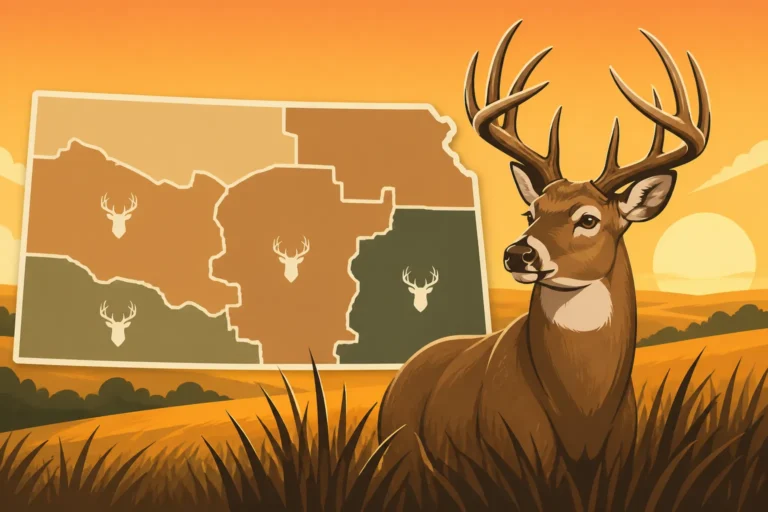
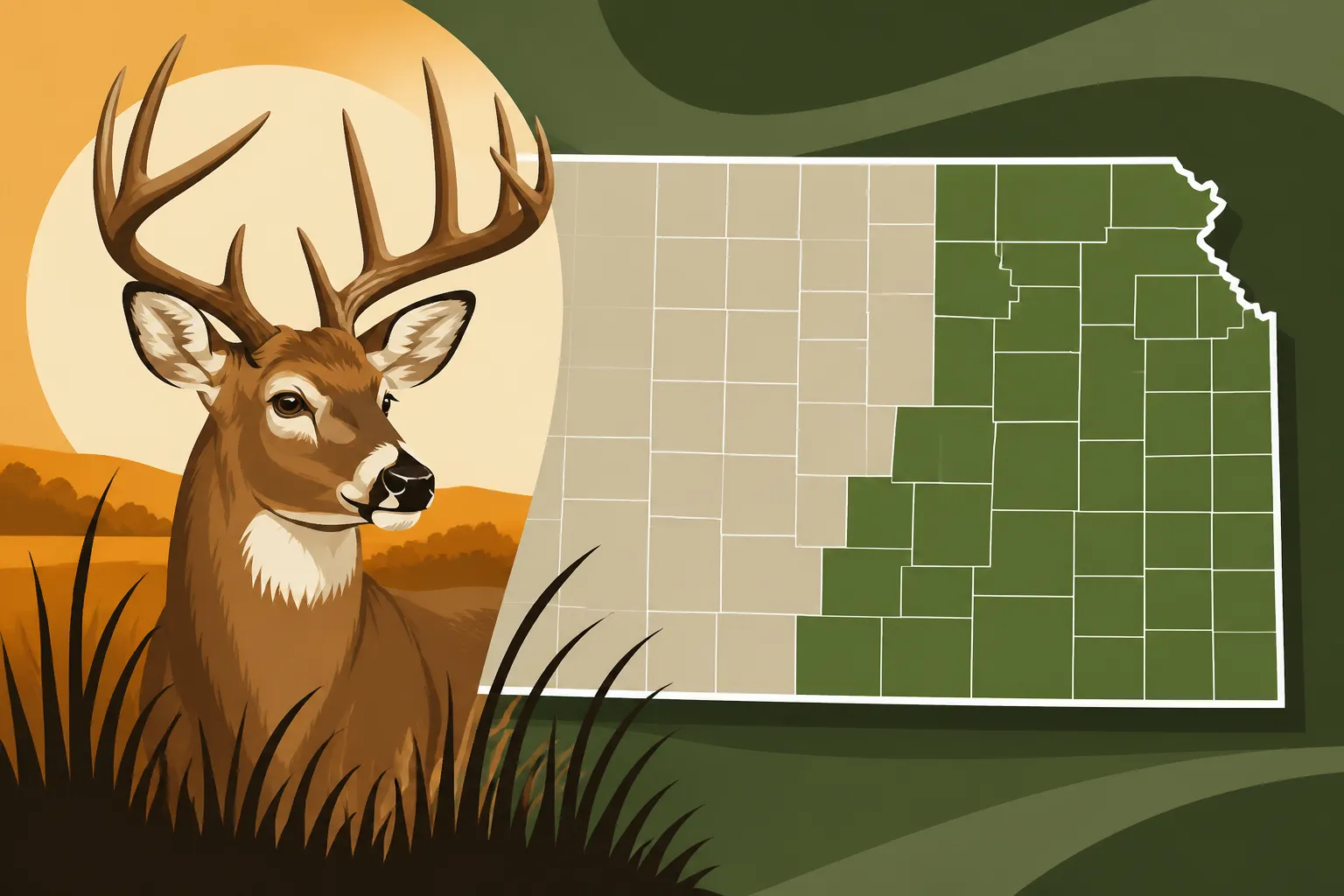
Kansas has 19 deer units, and the eastern part of the state encompasses quite a few of them, each with its own character. Let's look at some examples to give you a clearer picture.
Northeast Units (Units 6, 7): River Systems and Heavy Timber
Units like 6 and 7 in the northeast are often at the top of many nonresident wish lists, and for good reason. They are characterized by rich river bottomlands from the Kansas River and its tributaries, and significant timber blocks, particularly in the northern reaches. These units offer exceptional habitat and are well-known for producing mature whitetails. However, this reputation means they are among the hardest units to draw.
- Habitat: Expect a mix of rolling timber, dense creek and river bottoms, and highly productive agricultural fields. Cover is generally abundant, allowing deer to thrive and mature. You'll find classic travel corridors along the riparian zones.
- Draw Difficulty: These units are highly competitive for nonresidents, often requiring several preference points to draw a firearm or muzzleloader tag. Archery tags might be slightly easier but are still not guaranteed on a zero-point application.
- Hunting Strategy: Focus on identifying key travel corridors between bedding areas (often in thick timber or river bottoms) and feeding areas (crop fields). Public land here can see significant pressure, so identifying overlooked pockets or focusing on weekdays can be beneficial. Kansas River Bottom Hunting Access is a significant consideration here.
East Central Units (Units 10, 11, 14): Diverse Landscapes and Reservoir Influence
As you move into the east-central part of Kansas, you still find excellent whitetail hunting, often with the added influence of large reservoirs and their associated public lands. Units like 10, 11, and 14 offer a slightly more diverse landscape, balancing agriculture with more fragmented timber and significant public access around federal lands.
- Habitat: These units feature a combination of timbered draws, expansive crop fields, and the unique ecosystems created by major reservoirs like Milford, Tuttle Creek, and Perry Lakes. The Corps of Engineers land around these lakes often provides significant public hunting opportunities with good timber and dense cover.
- Draw Difficulty: While still competitive, these units might be slightly less difficult to draw than the far northeastern units, especially for archery. Still, don't expect to draw a firearm tag with zero points.
- Hunting Strategy: Scouting around reservoir public lands is key. Deer will utilize the timber and draws around the lakes, moving to nearby agricultural fields. Pay attention to how the wind interacts with the water and terrain, and look for Hunting Terrain Funnels in Flat Country that deer use to move through the more open areas.
Southeast Units (Units 15, 16): Rugged Terrain and Timbered Expanses
The southeastern units, such as 15 and 16, present a different flavor of eastern Kansas hunting. This region is often more rugged, with more substantial timbered expanses, including parts of the Ozark border region and the Chautauqua Hills. While still productive agriculturally, the landscape feels wilder and more broken.
- Habitat: Characterized by more consistent timber coverage, steeper creek drainages, and less intensive agriculture in some pockets compared to the farmlands further north. There are also more managed public timberlands and state wildlife areas that contribute to excellent deer habitat.
- Draw Difficulty: These units can sometimes be slightly easier to draw than the prime northeast units, particularly for archery tags, but firearm tags remain competitive.
- Hunting Strategy: Hunting here often involves more traditional timber hunting tactics. Identifying key ridge lines, saddles, and pinch points within the larger timber blocks becomes crucial. Deer may not be as tied to specific crop fields, offering more diverse patterns. Focus on travel corridors within the extensive timber and the deeper, rugged creek systems.
| Unit Type | Primary Habitat | Nonresident Draw Difficulty (Firearm) | Whitetail Quality | Public Land Opportunities |
|---|---|---|---|---|
| Northeast (6,7) | River Bottoms, Mature Timber, Ag Fields | Very High (Multiple Points needed) | Excellent | Limited, High Pressure |
| East Central (10,11,14) | Ag Fields, Timbered Draws, Reservoir Land | High (1-3+ Points needed) | Very Good | Moderate, Corps Land & SWAs |
| Southeast (15,16) | Extensive Timber, Rugged Terrain, Ag Pockets | Moderate-High (0-2+ Points needed) | Good to Excellent | More Consistent SWAs & Timberlands |
Navigating the Kansas Deer Draw for Eastern Units
The Kansas deer draw process is notorious, especially for nonresidents targeting trophy whitetails in the eastern units. It's not as simple as showing up and buying a tag; it requires planning, understanding, and often, patience.
Applying for Nonresident Whitetail Permits: A Step-by-Step Approach
For nonresidents, securing a whitetail permit in Kansas means entering the draw. You'll typically apply for a combined hunting license and deer permit. During the application period, you'll select a primary unit and an adjacent unit. It’s crucial to research both your primary and secondary choices carefully, as your chances of drawing the adjacent unit are much lower if your primary unit fills. The Kansas Deer Application Window in April is a critical timeframe to be aware of. Missing this window means you're out of luck for the year. This is where tools like onX Hunt or GoHunt become invaluable, as they can overlay unit boundaries and provide insights into draw odds and public land access, helping you make informed decisions about your application.
Understanding Preference Point Accumulation: Playing the Long Game
Preference points are the name of the game for nonresidents hoping to hunt eastern Kansas. Each year you apply for a permit and are unsuccessful, you accrue a preference point. These points increase your odds of drawing a permit in subsequent years. However, they don't guarantee a tag, and the number of points needed for certain eastern units can fluctuate based on demand. For popular eastern units, it's not uncommon for nonresidents to accumulate several points before drawing a firearm or even an archery tag. This means you might need to commit to a multi-year strategy, buying a point each year without applying for a permit if your primary goal is a specific, hard-to-draw unit. Remember, if you draw a permit, your preference points are reset to zero.
Impact of Weapon Choice on Draw Odds: Archery Versus Firearm
Your weapon choice significantly impacts your draw odds in eastern Kansas. Generally, archery permits are easier to draw than firearm or muzzleloader permits. This is because the archery season is longer, often running from mid-September through December, and it allows more flexibility. Firearm season, typically in December, is much shorter and carries higher success rates, making those permits far more competitive. Muzzleloader season, usually in September, falls between the two in terms of difficulty, often requiring fewer points than firearm but more than archery for many eastern units. If your priority is just getting a tag in an eastern unit and you're proficient with a bow, applying for an archery permit might be your best bet, especially if you have fewer preference points.
Maximizing Your Hunt in Eastern Kansas Deer Units
Once you've drawn that coveted eastern Kansas tag, the real work begins. Hunting these units effectively requires smart scouting, strategic stand placement, and an awareness of hunting pressure.
Scouting Strategies for Eastern Terrain: River Bottoms, Timber, and Crop Fields
Effective scouting in eastern Kansas is a multi-faceted approach. You need to become intimately familiar with the topography, even if it's subtle. Start with E-scouting using aerial imagery from tools like onX Hunt, identifying potential bedding areas (thick cover, cedar thickets, brushy draws), travel corridors (creek bends, timber edges, fence lines), and feeding locations (current crop types, oak stands, food plots). Look for River Oxbows and Deer Movement or Creek Crossings Worth Hanging a Stand On.
Once you have some areas identified, boots-on-the-ground scouting is essential. Look for fresh rubs, scrapes, and tracks. Pay attention to how deer are accessing fields from cover. In river bottoms, look for distinct trails that parallel the water or cut through the brush. In timber, identify natural funnels and pinch points. During the off-season, you can be more aggressive, but as the season approaches, shift to low-impact scouting to avoid disturbing deer. Your goal is to pinpoint where deer are living, feeding, and traveling, especially during daylight hours.
Stand Placement in Varied Cover: Funnels, Edges, and Bedding Areas
Stand placement is paramount, and in eastern Kansas, you’ll encounter a variety of scenarios.
- Funnels: Look for natural funnels where deer movement is concentrated. This could be a narrow strip of timber connecting two larger woodlots, a pinch point between a field and a river, or even a subtle terrain feature that pushes deer into a specific travel lane. Best Stand Locations in Flat Farm Country will often involve these subtle funnels.
- Edges: The edges of crop fields where they meet timber or heavy cover are classic ambush spots. Deer will often stage in the timber just inside the field edge before entering. Consider Hunting Inside Corners of Crop Fields where two different crops meet a patch of timber, as these can be incredibly productive.
- Bedding Areas: While you generally don't want to hunt directly in bedding areas to avoid blowing deer out, understanding where they bed allows you to set up on the trails leading to and from these spots. Think about how the wind will carry your scent away from the bedding area and toward where you expect deer to approach. Cedar Thickets as Bedding Cover are prime examples to focus on.
Always consider wind direction for your stand placement. Have multiple stand options for different wind directions, especially if you're hunting a prime location.
Managing Hunting Pressure: Public and Private Land Dynamics
Hunting pressure is an undeniable reality, especially in the more popular eastern Kansas units, particularly on public land.
- Public Land: On Public Hunting Land in Kansas, expect to encounter other hunters. To mitigate this, consider hunting weekdays, when pressure is often lighter. Get off the beaten path – walk further than others, or look for areas that are difficult to access. Use aerial maps to find small, overlooked pockets of cover or isolated pieces of public land that might not be obvious from the road. Hunting Pressure Patterns on Kansas Public Land are often predictable; learn them and avoid them.
- Private Land: Even on private land, neighboring pressure can impact deer movement. If a neighboring property is heavily hunted, it could push deer onto your ground, or conversely, drive them away. Understanding the broader hunting landscape is key. If you've secured permission on private ground, ensure your access routes are quiet and don't spook deer.
Public Land Opportunities in Eastern Kansas Units
While much of Kansas hunting is associated with private land, eastern units still offer numerous public hunting opportunities if you know where to look and how to utilize them effectively.
Walk-In Hunting Access (WIHA) in the East: Its Role and Limitations
The Kansas Walk-In Hunting Access Explained (WIHA) program is a fantastic resource, allowing public hunting on private land that landowners enroll. In eastern Kansas, WIHA tracts can vary greatly. You'll find everything from small, isolated timber blocks and creek bottoms to larger parcels of crop stubble. While WIHA is abundant across Kansas, some eastern units may have fewer large, contiguous WIHA tracts compared to the central or western parts of the state, but what they do have can be very high quality.
- Utilization: Always check the current WIHA atlas (available online or in print) to locate tracts. Pay attention to the specific rules for each tract, as some might have restrictions on weapon type, species, or dates.
- Strategy: WIHA tracts near population centers or along major roadways often receive heavy pressure. Look for WIHA further off the beaten path, requiring a longer walk, or those that have odd shapes or less obvious access points. These can sometimes hold less pressured deer. Remember to utilize the iWIHA system if a tract is marked for it, as it helps manage hunter numbers.
State Wildlife Areas and Reservoirs: Managed for Wildlife
Eastern Kansas is home to a number of State Wildlife Areas (SWAs) and areas around large reservoirs that are managed by the Kansas Department of Wildlife, Parks and Tourism (KDWPT) and the U.S. Army Corps of Engineers. These lands are specifically managed for wildlife and public recreation, often providing excellent hunting.
- State Wildlife Areas: These areas vary in size and habitat, but many in the east are known for their timber, creek systems, and some agricultural plots. They often have specific regulations beyond statewide rules, so always check the SWA's specific rules before you hunt. Examples include Perry Wildlife Area, Clinton Wildlife Area, and Elk City Wildlife Area, among others. These areas can be excellent for deer, turkey, and sometimes even upland birds.
- Reservoir Lands: The public land around major reservoirs (like Milford, Tuttle Creek, Perry, Melvern, Clinton, etc.) offers expansive opportunities. These lands, often managed by the Corps of Engineers, include vast tracts of timber, shoreline habitat, and sometimes even grassland. They are a fantastic resource for deer hunting. You’ll find a mix of dense cover, water sources, and access to agricultural fields adjacent to these properties.
Corps of Engineers Land Around Lakes: An Often-Overlooked Resource
The U.S. Army Corps of Engineers manages significant acreage around Kansas's federal reservoirs, and much of this land is open to public hunting. This is a huge asset for hunters, especially in eastern Kansas, where access to large tracts of timber can be otherwise limited.
- Characteristics: Corps land typically includes the timbered areas directly adjacent to the lake, extending up the river and creek arms that feed into the reservoir. These areas provide excellent cover, food (especially mast crops like acorns), and water. Deer often utilize these areas for bedding and travel, moving out to private agricultural lands at night.
- Hunting Potential: Because these areas are extensive, they can often absorb hunting pressure better than smaller tracts. Hunters willing to hike away from easy access points can find less disturbed areas. Scouting these areas using satellite imagery to identify deep coves, timbered points, and natural funnels that extend from the lake into the uplands is a wise strategy. However, be mindful of recreation zones, campgrounds, and boat ramps, which are typically closed to hunting.
| Public Land Type | Primary Features | Hunter Density (General) | Best Use |
|---|---|---|---|
| WIHA Tracts | Private land leases (varies by tract) | Varies, often high | Filling small gaps, target specific cover |
| State Wildlife Areas (SWAs) | Managed habitat, often timber & diverse cover | Moderate to High | Consistent hunting pressure, good for focused effort |
| Corps of Engineers Land | Reservoir timber, riparian corridors, large expanses | Moderate, spread out | Deep woods hunting, finding less pressured deer |
Eastern Kansas offers incredible opportunities for deer hunting, but success often hinges on understanding the nuances of its units, navigating the draw, and applying smart hunting strategies. Good luck with your scouting and drawing efforts!
Disclaimer
This article is for general informational purposes only and does not constitute professional advice. Laws, prices and regulations vary by location and change over time. Consult a qualified professional for guidance on your specific situation.