Squirrel Species in Kansas Timber
It's easy to think of a squirrel as just, well, a squirrel. You see them scampering up trees, chattering at you from a branch, or dodging traffic in town, and they all blend into one furry, bushy-tailed image. But for those of us who appreciate the subtle nuances of the Kansas woods, or who enjoy the challenge and reward of small game hunting, understanding the specific squirrel species that call our timber home can make a real difference. Not all squirrels are created equal, especially when it comes to their preferred habitats, behaviors, and even how you might go about finding them. This guide aims to pull back the canopy, helping you identify the distinct squirrel species commonly found in Kansas timber and offering insights into how these differences can impact your outdoor pursuits.
The Dominant Force: Kansas Fox Squirrels
When most folks around Kansas picture a squirrel, they're almost certainly envisioning the fox squirrel. These guys are the heavyweights of the Kansas squirrel world, robust and easily spotted in everything from sprawling river bottoms to isolated farmstead woodlots. They're intelligent, resilient, and an absolute blast to hunt, offering plenty of challenge and delicious table fare.
Identifying the Fox Squirrel
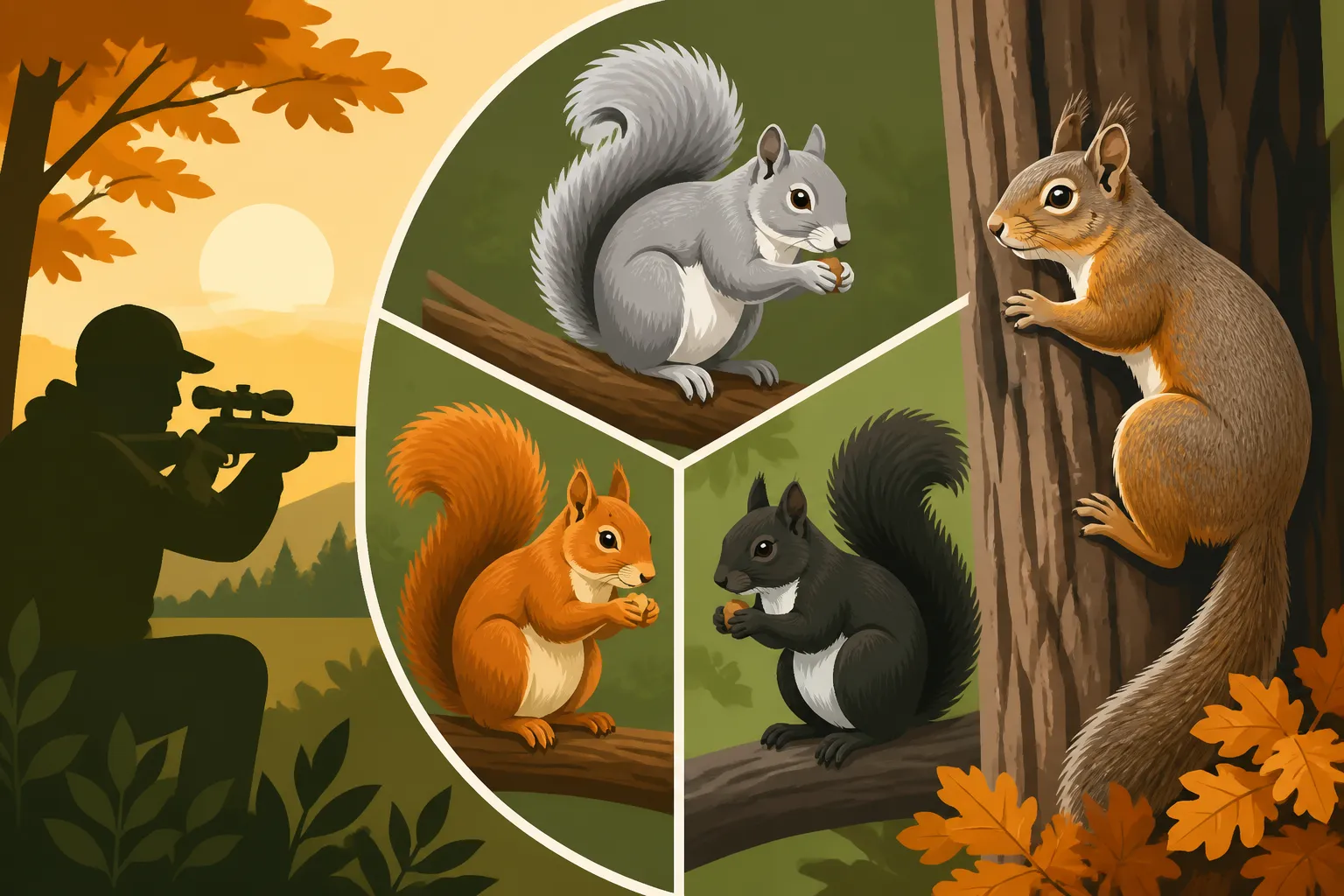
Fox squirrels (scientific name Sciurus niger) are the largest tree squirrels in North America, and Kansas boasts a healthy population. Their most distinguishing feature is their size; they're noticeably larger and more muscular than their grey cousins. Think of them as the burly, reddish-brown brawlers of the squirrel family. Their fur is typically a mottled grey and brown on their back, but their undersides, especially their belly, will be a striking rusty orange or reddish-brown. Their tails are long and bushy, often with a mix of black and orange hairs, which they use with incredible agility for balance and communication.
You might notice some variations in color, depending on the region and even individual squirrels. Some can appear darker, almost blackish, while others might have a more subdued reddish hue. But that overall impression of a large, robust, reddish-tinged squirrel is usually a dead giveaway. When you spot one bounding across a field or scaling a large oak, their substantial build really stands out.
Beyond their fur, pay attention to their movements. Fox squirrels often spend a significant amount of time on the ground, foraging for nuts, seeds, and even waste grain in fields adjacent to timber. While they can climb with remarkable speed, they don't have quite the same aerial grace as a grey squirrel, often preferring to run along branches or even descend to the ground to travel between trees.
Preferred Habitat and Diet
Fox squirrels are incredibly adaptable, which is part of why they're so widespread across Kansas. They thrive in open woodlands, particularly timbered areas with mature trees that produce a good mast crop. Think big oak, hickory, and walnut trees that provide both food and sturdy den sites. They're not huge fans of dense, unbroken forests; they prefer a bit more space, often gravitating towards the edges of timber blocks, shelterbelts, and woodlots bordering agricultural fields. This preference means you'll often find them in areas that also hold good deer populations, making them a great target for early season scouting trips.
Their diet is quite varied, allowing them to capitalize on whatever food sources are available. Acorns are a huge staple, especially in eastern Kansas, but they're equally fond of hickory nuts, walnuts, pecans, and osage orange fruits. Where timber meets agriculture, fox squirrels will readily feast on corn, milo, and soybeans, often making forays into crop fields. This habit is why you might spot them working the edges of a cornfield, similar to how deer might. Knowing this can help you strategically place yourself, especially if you're hunting small, isolated patches of timber. For hunters looking to connect the dots, understanding these food preferences is key. Sometimes, the best squirrel hunting isn't deep in the woods, but rather right on the fringes where the woods meet agriculture. Consider checking out Milo and Corn Stubble Deer Patterns for more on how grain fields influence wildlife.
Den trees are critical for fox squirrels, providing shelter from predators and harsh weather. They prefer cavities in large, mature trees, but they'll also construct leaf nests high in the canopy, especially during warmer months. These leaf nests, often looking like messy bundles of leaves and twigs, are a telltale sign of squirrel activity and can sometimes give away a squirrel's general whereabouts, even if you don't see the animal itself.
Behavior and Hunting Considerations
Fox squirrels are generally diurnal, meaning they are most active during the day. While they might be out at first light, they often become more active a couple of hours after sunrise and continue foraging through mid-afternoon. This can make them a fantastic target for a mid-day hunt, especially if deer activity has slowed down or if you're combining a squirrel hunt with scouting for other game. They can be incredibly wary, though, and once they spot you, they'll often flatten themselves against a tree trunk, circling to the opposite side to keep the tree between you and them.
Hunting fox squirrels requires patience and stealth. Still-hunting, slowly walking through the timber and stopping frequently to scan the trees and ground, is a very effective tactic. Listen for the telltale sounds of gnawing nuts or rustling leaves as they forage. If you spook one, don't immediately give up. Often, they'll "bark" at you from a high branch or try to hide, but if you sit still for 10-15 minutes, they may reappear, thinking the danger has passed. Another popular method is to find a good mast-producing tree, like a large oak or hickory, and simply sit quietly, waiting for them to move into feeding areas. Using a mapping platform like GoHunt can help you identify areas with good timber cover near crop fields, or even pinpoint individual large trees that might be mast producers, making your scouting more efficient.
The Acrobatic Eastern Grey Squirrel: Ghosts of the Canopy
While fox squirrels dominate much of Kansas, especially in the central and western parts of the state, the eastern grey squirrel holds court in the denser, more mature timber and riparian corridors, particularly in eastern Kansas. These squirrels are often harder to spot and hunt, favoring the safety and concealment of thick canopy.
Distinguishing Grey Squirrels
The eastern grey squirrel (Sciurus carolinensis) is distinct from the fox squirrel in several key ways. First, they are noticeably smaller and more slender. Their fur is primarily grey, sometimes with a brownish wash on their back, and their belly is a clean, bright white. Their tail is also very bushy, often with white or silver-tipped hairs that give it a "frosted" appearance. They lack the rusty-red coloration that defines the fox squirrel.
When observing them, you'll notice a difference in their demeanor. Grey squirrels often appear more nervous and quick. They are masters of the arboreal world, preferring to stay high in the trees, navigating the canopy with incredible speed and agility. While they do come to the ground to bury nuts or feed, they'll typically dash back up a tree at the first sign of danger, melting into the dense foliage. This makes them considerably more challenging to hunt than their fox squirrel counterparts in many situations.
It's worth noting that Kansas typically only has the Eastern Grey Squirrel. While there is a "western grey squirrel" species, its range is much further west, primarily along the Pacific coast, so you won't encounter them in Kansas timber. What you'll find in the eastern half of our state are these swift, grey acrobats, particularly in areas with extensive, mature timber.
Habitat Preferences and Diet
Eastern grey squirrels prefer much denser, more mature timber than fox squirrels. They thrive in extensive deciduous forests, especially those with a high concentration of oak, hickory, and other nut-producing trees. You'll find them in abundance along major river bottoms like the Kansas River, Marais des Cygnes, and Neosho River, where deep timber and old growth provide everything they need. These riparian zones offer excellent cover, abundant mast, and plenty of old trees for den sites. Exploring these areas, often rich in wildlife, is a fascinating pursuit. For a deeper dive into these rich habitats, check out Scouting Kansas River Bottoms and Creek Draws.
Their diet is heavily reliant on mast crops. Acorns, hickory nuts, and beechnuts are critical food sources. They are excellent at caching these nuts for winter sustenance, burying individual nuts throughout their home range. Unlike fox squirrels who might venture into agricultural fields more regularly, grey squirrels tend to stick closer to their dense timber strongholds, rarely venturing far into open country. They'll also eat buds, flowers, fungi, and sometimes even insects or bird eggs. Their dependence on mast means that years with poor nut production can significantly impact their population numbers, making them a good indicator of forest health.
Because they prefer these more extensive timber blocks, understanding how to navigate and hunt denser woods is paramount. These are the areas where you might also find good concentrations of deer. Eastern Kansas Timber and River Bottoms gives a good overview of the types of environments where grey squirrels flourish.
Hunting Challenges and Tactics
Hunting grey squirrels can be a truly humbling experience. Their ability to disappear into the canopy, coupled with their nervous energy, means you need to bring your A-game in terms of stealth and patience. They are particularly active during the early morning and late afternoon, often coinciding with peak deer movement, which can be a fun challenge if you're trying to combine both pursuits.
One effective tactic for grey squirrels is to find a vantage point overlooking a stand of mature nut trees and sit absolutely still, letting your eyes and ears do the work. Listen for the distinct "clink" of nuts hitting the forest floor or the subtle rustling of leaves as they move through the branches. Binoculars are invaluable for spotting movement high in the canopy. If you do spot one, moving slowly and deliberately to get into position is key, as they are quick to react to perceived threats.
Another strategy is to utilize heavy overcast days or light rain. These conditions often keep squirrels on the ground longer, as they're less likely to be harassed by aerial predators and are eager to forage for freshly fallen nuts. The damp ground also helps muffle your footsteps, giving you a better chance to get close. Some hunters swear by wearing camouflage that helps them blend into the dappled light of the forest floor, further aiding in their pursuit of these canopy ghosts. GoHunt can be invaluable in identifying these deep timber blocks and visualizing the canopy coverage before you even step foot in the woods.
Other Squirrels You Might Encounter (But Probably Won't Hunt Actively)
While fox and grey squirrels are the main event for hunters in Kansas, our state is also home to a few other fascinating squirrel species. These are generally not pursued for sport, but encountering them adds to the rich tapestry of the Kansas wilderness.
The Mysterious Flying Squirrels
Yes, Kansas actually has flying squirrels! Specifically, the southern flying squirrel (Glaucomys volans). These aren't true flyers in the bird sense, but rather gliders. They possess a furry membrane of skin called a patagium that stretches from their wrists to their ankles, allowing them to parachute gracefully from tree to tree. They are incredibly small, much smaller than even a grey squirrel, with disproportionately large eyes that are perfectly adapted for their nocturnal lifestyle.
You are highly unlikely to ever see a flying squirrel during daylight hours, as they spend their days sleeping in tree cavities or old bird nests. They emerge at dusk to forage for nuts, seeds, fruits, fungi, and even insects. While their presence is a testament to the diverse ecosystems within Kansas timber, they are not a game species and are protected by their elusive, nocturnal habits. If you ever find yourself sitting quietly in dense timber at last light, you might just catch a glimpse of one of these fascinating creatures silently gliding between trees.
Ground Squirrels and Chipmunks
Kansas is also home to several species of ground squirrels and chipmunks, though these are entirely different critters from the tree squirrels we've been discussing. The most common you might see are the thirteen-lined ground squirrel (often called "striped gopher" by locals) and the eastern chipmunk.
Thirteen-lined ground squirrels are small, fast-moving rodents with distinctive stripes down their back, typically found in open grasslands, pastures, and along roadsides, not usually deep in the timber. They live in burrows in the ground and are strictly terrestrial. Eastern chipmunks, with their even more pronounced facial stripes and tiny size, prefer brushy areas and forest edges, but they also spend most of their time on or under the ground, caching food in their cheek pouches. Neither of these species is a traditional game animal for hunting in Kansas, nor do they typically inhabit the dense timber where tree squirrels are found. They're more for casual observation, a charming part of the state's smaller wildlife.
General Squirrel Hunting Strategies in Kansas Timber
No matter which species you're after, a few overarching strategies can significantly improve your chances of success when squirrel hunting in Kansas timber. It's a fantastic way to sharpen your woodsmanship, understand wildlife patterns, and put some delicious meat on the table.
Seasonal Considerations for Squirrel Hunting
The timing of your hunt can greatly impact success. Early season, when leaves are still on the trees (think late summer through early fall), offers maximum concealment for both you and the squirrels. It can be challenging to spot them through the dense foliage, but it also allows you to move more stealthily. Focus on areas with freshly dropping mast, and listen intently for sounds of cutting nuts. As the season progresses and leaves fall (late fall into winter), visibility dramatically improves. Squirrels are easier to spot, but they can also spot you more easily. This is a great time for longer shots with a rimfire rifle. During the colder months, focus on warmer, sunny days, as squirrels will be more active, foraging before retreating to their dens. This also tends to be when you'll find them actively working persistent food sources like standing corn.
Weather plays a huge role. Calm, clear days often see squirrels active, but they can be extra wary. Overcast, slightly drizzly days, as mentioned before, can be fantastic. The damp ground quiets your footsteps, and the diffused light makes them less prone to spooking, plus they're often more focused on feeding.
Gear and Techniques for Success
For most squirrel hunting in Kansas, a .22 caliber rifle is a popular choice, offering accuracy and minimal meat damage. Shotguns, typically in .410, 20-gauge, or 12-gauge with smaller shot sizes (like #4, #5, or #6), are excellent for fast-moving targets or for hunting in thick cover where precise rifle shots are difficult. Whatever your weapon, practice is key to making clean, ethical shots.
Still-hunting is perhaps the most effective technique. This involves moving incredibly slowly through the woods, pausing frequently (think 2-5 minutes at a time) to scan for movement. Use your binoculars to scrutinize den trees, potential feeding areas, and every branch intersection. Remember to look up, down, and all around. Squirrels can be on the ground, high in the canopy, or clinging to the side of a trunk. You might be surprised at how well they can blend in. A GoHunt subscription can help you pre-scout timber stands from home, identifying potential travel corridors or mast tree groupings.
Alternatively, find a prime feeding area – perhaps a stand of mature oaks or hickories, or a timber edge adjacent to a cornfield – and sit quietly. Let the squirrels come to you. This "sit and wait" approach requires immense patience, but it can be incredibly rewarding, especially if you set up before their peak activity hours. You'll likely see more than just squirrels; deer, turkeys, and various songbirds will often move through the same areas. Kansas Small Game Licence Requirements is a good resource to review before heading out.
Ethical Hunting and Regulations
Always be familiar with the current Kansas Department of Wildlife, Parks and Tourism (KDWP) regulations for squirrel hunting. These include season dates, bag limits, and any specific rules for public land. Respect private property by always obtaining permission before hunting on land you don't own. Practice safe firearm handling at all times, being absolutely sure of your target and what lies beyond it.
Squirrel hunting is often an excellent way to introduce new hunters, especially youth, to the outdoors. It teaches patience, marksmanship, and woodsmanship in a low-pressure environment. It's a great opportunity to connect with nature, put some wild game on the table, and appreciate the diverse ecosystems of Kansas timber. For more general small game advice, check out Squirrel and Rabbit Hunting in Kansas.
Comparing Kansas Tree Squirrels
To give you a clearer picture, here's a quick comparison of the two main tree squirrel species you'll encounter and hunt in Kansas.
| Feature | Fox Squirrel (Sciurus niger) | Eastern Grey Squirrel (Sciurus carolinensis) |
|---|---|---|
| Average Size | Larger (1.5-2.5 lbs), robust body | Smaller (1-1.5 lbs), more slender body |
| Primary Color | Mottled gray/brown back, rusty-orange/red belly | Predominantly grey back, pure white belly |
| Tail Appearance | Bushy, often with reddish highlights | Bushy, typically fringed with white hairs ("frosted") |
| Preferred Habitat | Open woodlands, woodlots, timber edges, urban areas | Dense, mature deciduous forests, riparian zones |
| Movement Style | Spends considerable time on the ground, runs on branches | Primarily arboreal, agile in canopy |
| Diet Staples | Acorns, walnuts, corn, pecans, seeds | Acorns, hickory nuts, beechnuts, fungi, berries |
| Activity Peak | Mid-morning to mid-afternoon | Early morning, late afternoon |
| Hunting Difficulty | Moderate, can be wary but less flighty than grey | High, quick to vanish into dense canopy |
Understanding these distinctions can truly elevate your experience in the Kansas outdoors. Whether you're a seasoned hunter or just an observer, appreciating the different squirrel species in Kansas timber is part of connecting with our state's rich natural heritage.
Disclaimer
This article is for general informational purposes only and does not constitute professional advice. Laws, prices and regulations vary by location and change over time. Consult a qualified professional for guidance on your specific situation.