Kansas Turkey Population Trends
Kansas turkey population trends, historical highs and lows, and details on Rio Grande and Eastern subspecies across the state.
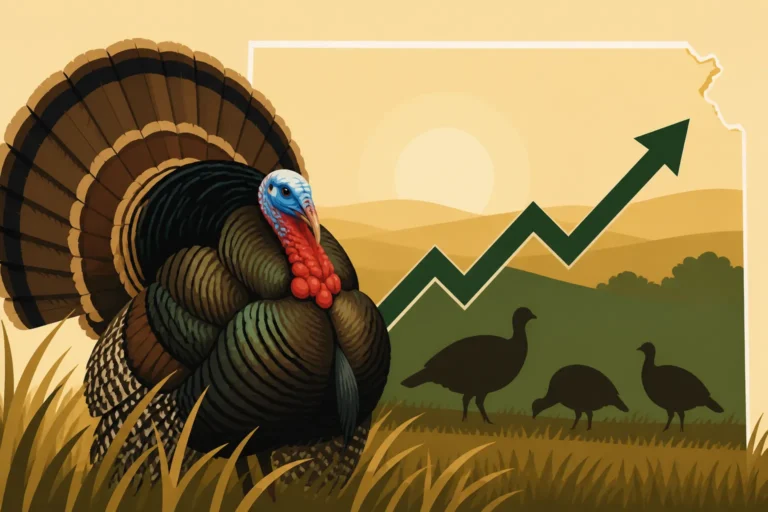
Kansas turkey population trends, historical highs and lows, and details on Rio Grande and Eastern subspecies across the state.
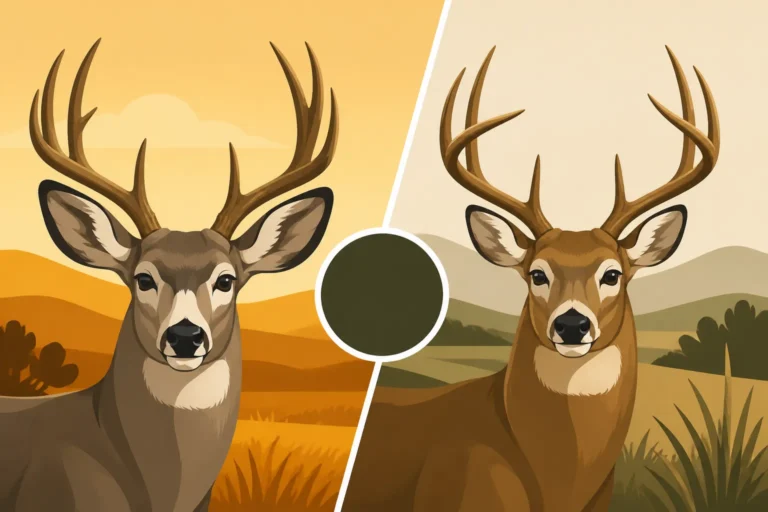
Kansas deer identification helps hunters legally distinguish whitetail and mule deer using distinct antlers, habits, and western ranges.
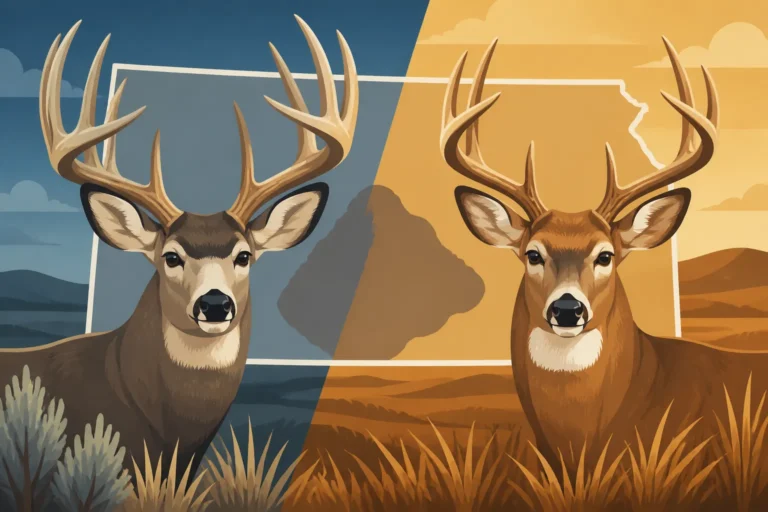
Mule deer and whitetail overlap in Kansas, detailing historical ranges, expanding frontiers, and changing western habitats for hunters.
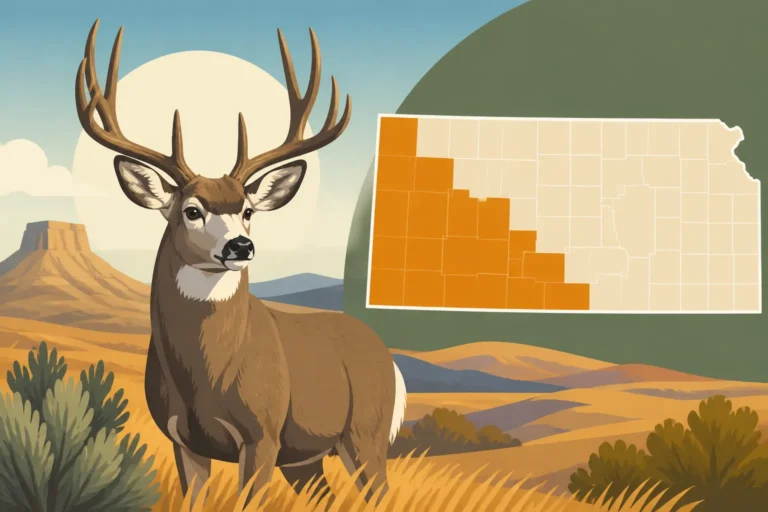
Kansas mule deer range details explain the specific western counties, High Plains environment, and public land strongholds for hunters.
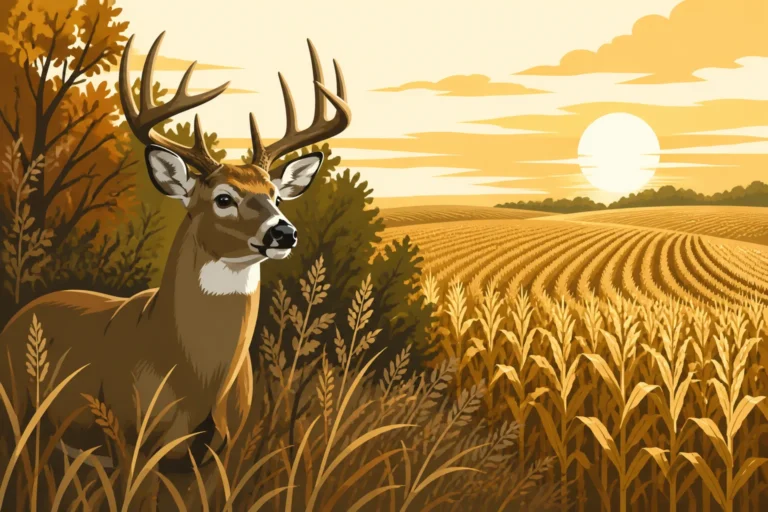
Kansas deer habitat in agricultural regions combines crops, creek bottoms, and shelterbelts to support massive whitetails.
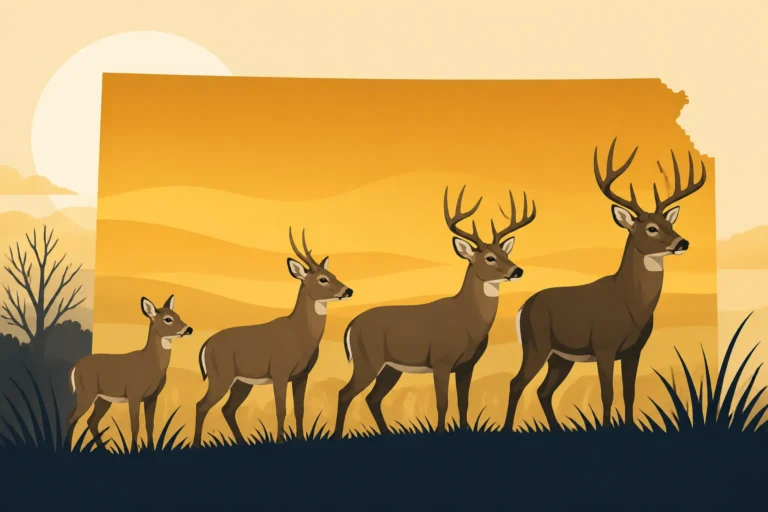
Kansas buck age structure details the distribution of age classes from 1.5 to 5.5 plus years old and agricultural feeding factors.
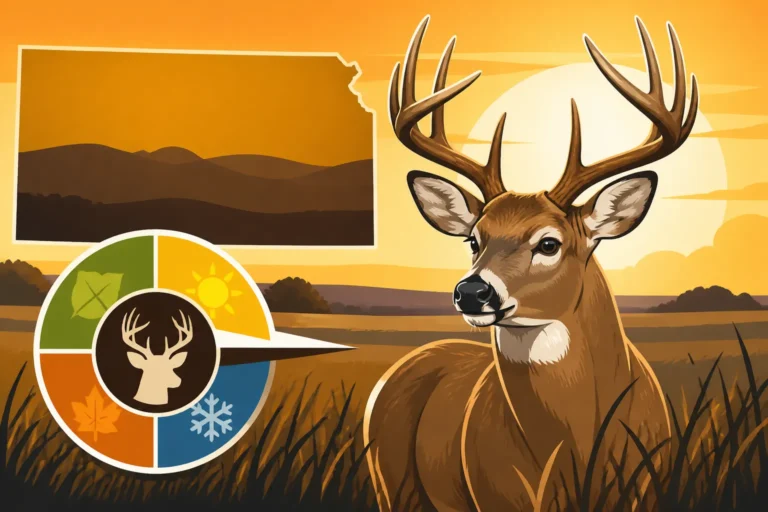
Kansas whitetail rut timing relies on photoperiod biology, explaining peak breeding phases and optimal hunter strategies.
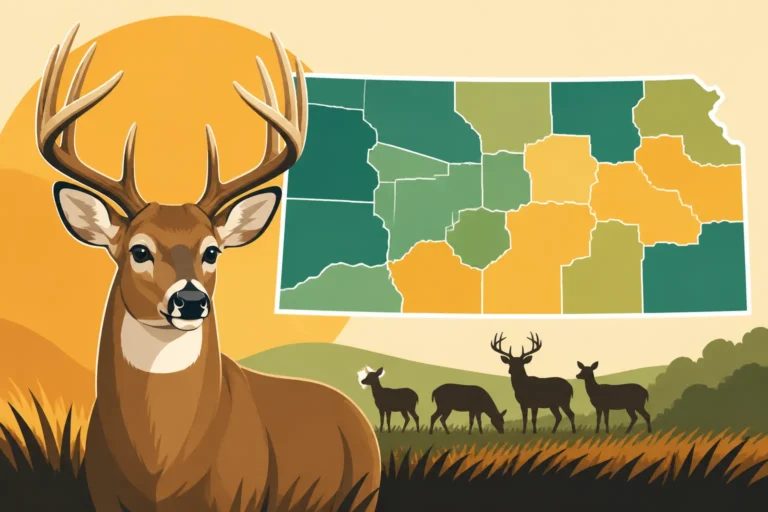
Kansas deer herd numbers and population densities across nineteen management units guide local hunting strategies and permit allocations.

Kansas whitetail deer body and antler sizes, driven by corn, soybeans, and state wildlife management policies.
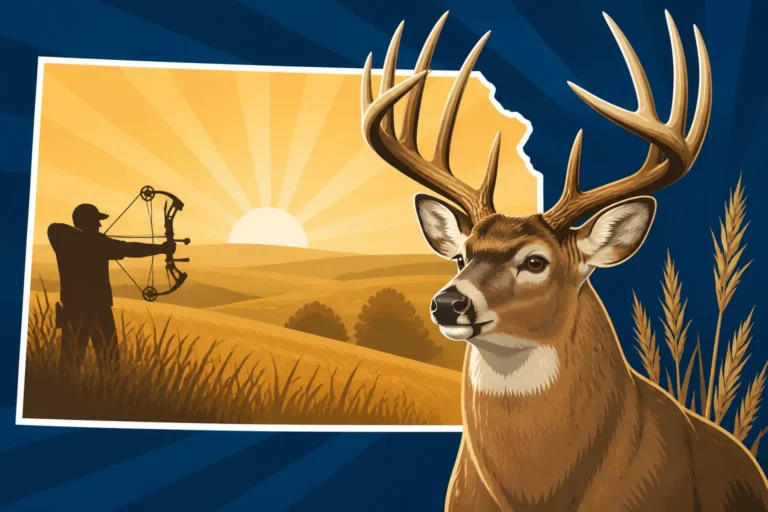
Kansas whitetail deer genetics, environmental factors, and nutrition explain why the state produces trophy bucks for hunters.