Quartering-Away Shots on Whitetails
The moment a magnificent Kansas whitetail steps out, your heart pounds, and all those hours of scouting and waiting boil down to a few critical seconds. Often, that deer won't offer a perfect broadside shot, and you're left contemplating a quartering-away angle. This shot can be incredibly effective when executed properly, but it also carries significant risks if you don't fully understand the anatomy and aiming points. This guide will meticulously break down how to approach, analyze, and ethically execute a quartering-away shot on a whitetail.
Understanding Whitetail Anatomy for Angled Shots
Before you even think about pulling back your bow or squeezing the trigger, you need to have an intimate understanding of whitetail anatomy. A quartering-away shot changes everything you thought you knew about aiming for the "boiler room." The vitals shift, and bones become more prominent obstacles.
The Shifting Vitals and Bone Structure
When a deer is quartering away, its body is angled with its tail end closer to you than its head. This angle effectively hides certain parts of the vitals while exposing others. The most crucial organs – the heart and lungs – are still your primary target, but their orientation relative to your position changes dramatically. What might look like a clear shot to the lung on a broadside deer can quickly become a glancing blow or a gut shot on a quartering-away animal if you misjudge the internal path of your projectile.
The shoulder blade, spine, and femur are massive obstacles. On a quartering-away shot, the deer's near-side shoulder blade will be a significant concern, but the far-side shoulder can also come into play if the angle is too severe or your arrow/bullet trajectory is off. The rib cage is also angled, meaning you're trying to slip your shot between ribs that are no longer perpendicular to your aiming line. You're aiming to thread the needle, avoiding heavy bone and ensuring a clean pass-through of the vital organs. Remember that deer are not static; even a subtle shift can change the internal geometry you're aiming for. It's a dance between the animal's movement and your decision-making.
Common Mistakes and Misconceptions
One of the biggest mistakes hunters make is treating a quartering-away shot like a modified broadside shot. It's not. Another common error is aiming too far forward, trying to catch the front of the lungs, but instead hitting the paunch or the liver, leading to a long, difficult, and often unsuccessful Blood Trailing in CRP and Cedars This happens because the chest cavity narrows as it moves forward, and the shoulder angle becomes even more acute. Many hunters also misjudge the severity of the angle. A deer that looks slightly quartering away might actually be more significantly angled than you perceive, especially if you're experiencing "buck fever" or are hunting from an elevated position.
It’s easy to get caught up in the moment and rush a shot that isn't quite right. Always default to caution. If you have any doubt about the angle, the deer's movement, or your ability to make the shot cleanly, do not take it. Wait for a better opportunity, even if it means letting the deer walk. An ethical shot results in a quick, humane harvest, not a wounded animal.
Ideal Quartering-Away Shot Angles
Not all quartering-away shots are created equal. Some angles offer a fantastic opportunity for a clean, ethical harvest, while others should be unequivocally avoided. Knowing the difference is paramount for any responsible hunter.
The Sweet Spot for Quartering-Away Angles
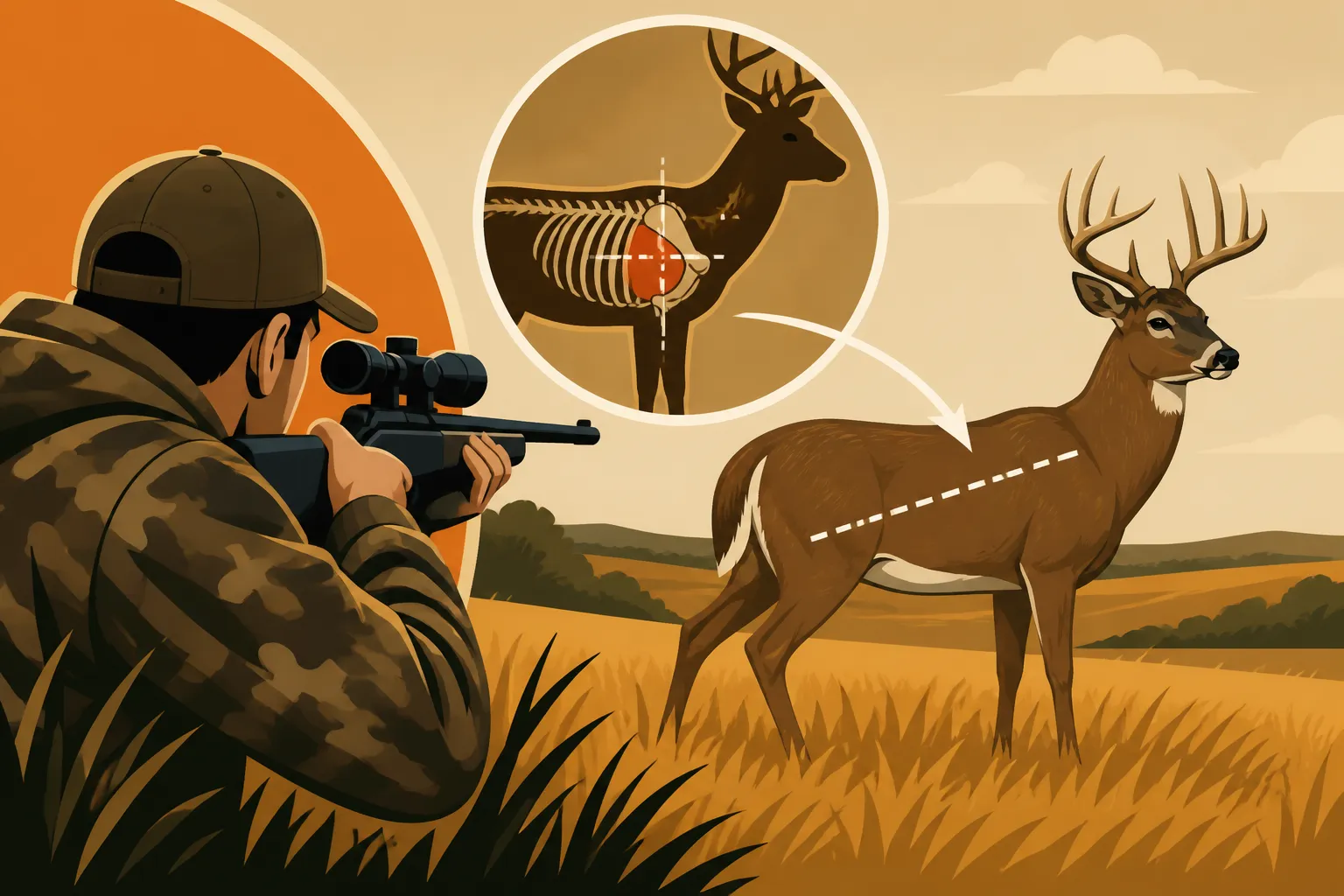
The absolute best quartering-away shot is when the deer is angled just enough for you to see the crease behind the far-side shoulder. This means the deer is facing slightly away from you, exposing its rib cage from the last rib forward to the off-shoulder. For a right-handed shooter, if the deer is quartering away to your right (its left side is exposed), you want to aim for the opposite armpit area. If it's quartering away to your left (its right side exposed), aim for the opposite armpit area.
Your goal here is to enter behind the near-side ribs and exit through the far-side armpit, ensuring both lungs and potentially the heart are taken out. This angle often allows for a full pass-through, which is crucial for a good blood trail. From an elevated stand, this angle is even more forgiving as your arrow or bullet will travel on a downward trajectory, increasing the chances of catching more vitals and exiting low for excellent blood. This is where understanding your Best Stand Locations in Flat Farm Country. Using a tool like GoHunt's mapping features can even help you visualize potential shot angles from different stand setups before you ever step foot in the woods.
Angles to Strictly Avoid
Any shot where the deer is quartering too severely away should be passed on. If you can't clearly visualize the exit point in the far-side armpit, or if the deer's rear leg is obscuring your view of the vitals, it's too much of an angle. These shots often result in a gut shot, which is almost always a prolonged, painful death for the animal and a heartbreaking, frustrating experience for the hunter. The same goes for a deer that is facing directly away from you, presenting a straight-on rear shot. While some might advocate for a "Texas heart shot" in specific, rare circumstances, for most hunters, this is an extremely low-percentage shot with a high risk of wounding.
If the deer's head is turned back towards you, or if it's moving quickly, it's also best to wait. Movement can easily throw off your shot placement. Patience is your greatest ally. Sometimes, a subtle grunt or mouth bleat can stop a deer or cause it to turn, giving you a better angle. But never force a shot that isn't there.
Shot Placement for Quartering-Away Shots
Once you've determined that the angle is favorable, the next step is precise shot placement. This is where your understanding of anatomy and trajectory truly comes into play.
Aiming for the Exit Point
This is arguably the most critical piece of advice for a quartering-away shot: aim for the exit point. Don't aim for where you want the arrow or bullet to enter the deer. Instead, visualize where you want it to come out on the far side, ideally in the opposite armpit or just behind it. This mental shift helps account for the angle and ensures that your projectile travels through the maximum amount of vital tissue.
For a deer quartering away to your left (its right flank is exposed), you'll aim to enter behind the last rib on the near side, but mentally you're aiming for that small pocket just behind the right front shoulder. Your projectile will traverse through the liver first, then ideally both lungs, and potentially nick the heart, before exiting. If the deer is quartering away to your right (its left flank is exposed), you'll do the inverse. This aiming strategy significantly increases your chances of hitting both lungs and getting a clean pass-through, leading to a quick recovery and a good blood trail. When Practicing Shots From a Treestand, spend time envisioning these angled shots, not just broadside.
Here’s a quick guide for aiming points on a slightly quartering-away whitetail:
| Shot Angle Severity | Entry Point Guidance | Target Exit Point (Visualization) | Primary Organs Hit | Risk Level |
|---|---|---|---|---|
| Slight Quartering-Away | Just behind the near-side shoulder/rib cage. | Opposite armpit/front leg crease. | Both Lungs, potentially Heart, Liver (minimal). | Low |
| Moderate Quartering-Away | Aim further back, behind near-side last rib. | Opposite shoulder/foreleg, low. | Liver, both Lungs. | Medium |
| Severe Quartering-Away | Avoid if possible. If absolutely necessary, high behind the last rib, aiming for spine/off shoulder. | Highly risky. Unpredictable, often gut shot. | High risk of Gut/Paunch, potential Liver or single Lung. | High |
| Directly Away (Rear) | Strictly avoid. | N/A | Spine (risky), Paunch, Pelvis. | Extreme |
Note: This table assumes a standing deer and an elevated or ground-level shot. Always confirm the exact location of vitals relative to the angle before shooting.
Reading Body Language and Adjusting for Elevated Stands
A deer's body language can give you clues about its next move. Is it relaxed and browsing, or is it tense, looking around, and possibly about to bolt? If it's calm, you have more time to assess the shot. If it's nervous, consider holding off. Sometimes, a deer will take a step that improves or worsens the angle. Be ready to adjust or hold your shot.
When you're Hunting From a Blind Without Movement, or especially from a treestand, your angle of attack changes from horizontal to downward. This downward trajectory actually works in your favor for quartering-away shots, as it increases the chances of hitting both lungs and exiting low on the off-side, creating a better blood trail. However, it also means your entry point will be higher on the deer's body. You'll need to aim a bit lower than you would from the ground to hit the heart/lung area, visualizing that downward arc. Practicing this from an elevated position, like using a platform or actual treestand at the range, after Sighting In Before Firearm Season, is invaluable. Tools like GoHunt can provide topographic data to help you anticipate these angles in specific terrain.
Practice and Preparation for the Quartering-Away Shot
The quartering-away shot demands precision, confidence, and a deep understanding of your weapon and the animal. This isn't a shot you want to improvise in the heat of the moment. Preparation is key.
Range Practice and Scenario Training
Regular practice at the range is non-negotiable. Don't just shoot at broadside targets. Set up your target quartering away, mimicking the angles you might encounter in the field. If you hunt from a treestand, practice from an elevated position. If you hunt from a ground blind, practice from a kneeling or seated position. Use a 3D target if possible, as it provides a much more realistic representation of a deer's body than a flat paper target.
When you practice, focus on a precise aiming point, just like you would in the field. Visualize the arrow or bullet traveling through the deer. Practice taking a deep breath, settling your aim, and executing a smooth release or trigger pull. Don't rush. One excellent method is to use a rangefinder, like a Vortex Fury HD 5000, not just for distance but also to mentally map out different shooting lanes and angles before the season starts. This kind of Rangefinding in Flat Country, particularly for Kansas hunting, can drastically improve your confidence.
Mental Preparation and Ethical Considerations
Beyond physical practice, mental preparation is crucial. Visualize yourself making the shot cleanly. Replay successful scenarios in your mind. Equally important, mentally prepare for the possibility of not taking the shot. Be firm in your commitment to ethical hunting. If the angle isn't right, or if you feel a moment of hesitation, consciously decide to wait. It's far better to come home empty-handed than to make a poor shot that results in a wounded animal.
Understanding the limitations of your weapon is also part of ethical hunting. For bowhunters, shot distances are typically much shorter than for rifle hunters. Ensure your broadheads are razor-sharp and your bow is perfectly tuned. For rifle hunters, know your bullet's trajectory at various distances, especially in the open expanses often found in Kansas. This diligence pays off, not just in successful harvests, but in the satisfaction of knowing you did everything possible to ensure a humane hunt. For insights on navigating public land and ensuring you leave no trace, consider reading about Leaving No Trace on Walk-In Ground, which speaks to overall responsible hunting.
Gear Considerations for Angled Shots
While practice and understanding are paramount, your gear also plays a role in successfully executing quartering-away shots. For archers, choosing a broadhead with excellent penetration is critical. Fixed-blade broadheads or well-designed mechanical broadheads known for reliable deployment and structural integrity are good choices. A heavy arrow can also aid in penetration through vitals, even if it encounters some rib bone on its path.
For rifle hunters, bullet construction is important. A bullet designed for deep penetration and controlled expansion will perform better on angled shots, ensuring it holds together and reaches the far-side vitals. Pay attention to shot placement, but also ensure your ammunition is up to the task of the job at hand. Making sure your gear is dialed in is as important as your personal skill, especially when considering Muzzleloader Deer Hunting in Kansas's September Season, where shot opportunities can be limited and precise.
Disclaimer
Hunting is an inherently dangerous activity. This guide provides information for educational purposes only. Always consult and adhere to all local, state, and federal hunting regulations and laws. Your safety, the safety of others, and ethical hunting practices are your sole responsibility. Always be certain of your target and what lies beyond it.