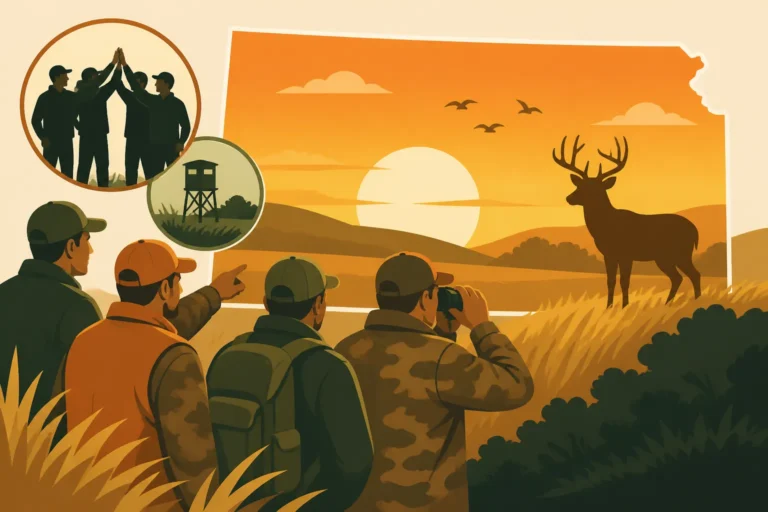
Kansas Self-Guided Lease Hunts
It's no secret that Kansas offers some truly incredible deer hunting opportunities, with big bucks roaming the timber and crop fields. But for many of us, the dream of hunting prime private ground feels out of reach. Fully guided hunts can be a significant investment, and while public land is an option, it often comes with increased pressure and competition. This guide dives deep into the world of self-guided lease hunts in Kansas, offering a fantastic middle-ground for hunters looking for that exclusive private land experience without the full-service outfitter price tag.
Understanding Self-Guided Lease Hunts in Kansas
When you think about hunting in Kansas, you might immediately picture either paying top dollar for an all-inclusive guided trip or slogging it out on crowded public land. But there's a growing third option that's attracting a lot of savvy hunters: the self-guided lease hunt. This approach bridges the gap, giving you private land access and the freedom to hunt your way, often at a more palatable price point than a fully guided experience. It's essentially renting hunting rights for a parcel of private land for a set period, typically a season or a specific block of days.
What Defines a Self-Guided Lease?
A self-guided lease means you, as the hunter, are responsible for every aspect of your hunt once you've secured the land. The landowner or lease manager grants you access to a specific tract of ground, usually for a fee, and that's largely where their involvement ends. You're bringing your own gear, doing your own scouting, hanging your own stands, and handling all game recovery and processing. Think of it like renting a vacation cabin versus staying at an all-inclusive resort. The cabin gives you privacy and space, but you're cooking your own meals and planning your own excursions. The beauty is in the independence and the ability to dictate your own hunting schedule and tactics.
Contrast this with a fully guided hunt where an outfitter often provides lodging, meals, pre-scouted stand locations, transportation to and from stands, and assistance with tracking and field dressing. With a self-guided lease, you're the guide, the cook, the shuttle driver, and the deer hauler. This requires a different mindset and a higher level of preparation, but for many, it's the ultimate way to truly earn their deer. You get to implement your own strategies, adapting to deer movement and weather patterns as you see fit, rather than following a pre-set plan.
Advantages of Choosing a Lease Over Public Land
The biggest draw of a self-guided lease hunt, hands down, is the promise of exclusive access to private ground. Anyone who has spent time hunting public land knows the frustration of showing up before dawn, only to find another truck already parked at your intended access point. Or worse, bumping into other hunters in the timber an hour into your morning sit. With a lease, barring any agreed-upon sharing with other leaseholders (which should always be clarified in your agreement), that ground is yours and your group's for the duration of your lease. This drastically reduces hunting pressure, allowing deer to behave more naturally and increasing the likelihood of encountering mature animals that haven't been pushed around daily.
Beyond reduced pressure, private land often simply holds better habitat. Kansas landowners, especially those interested in leasing their ground, frequently manage their properties with wildlife in mind, planting food plots, maintaining diverse cover, or strategically leaving standing crops. This translates to consistent food sources, secure bedding areas, and natural travel corridors that are less disturbed. It's not uncommon for these properties to have established trail camera networks, well-worn deer trails, and a general feel of undisturbed wildlife. While Public Land Deer Hunting in Kansas can be rewarding, the caliber of deer and the consistency of encounters can sometimes be more predictable on well-managed private leases.
Finding and Securing a Kansas Hunting Lease
So, you're convinced a self-guided lease is the way to go for your next Kansas hunting adventure. Fantastic! Now comes the critical part: finding one. This isn't always as simple as a quick Google search, but with a bit of persistence and knowing where to look, you can absolutely find quality opportunities. It requires patience and a proactive approach, but the reward of exclusive hunting ground is well worth the effort.
Utilizing Online Platforms and Marketplaces
In today's digital age, the most accessible way to start your search is through online hunting lease marketplaces. These platforms act as a broker, connecting landowners with hunters looking for leases. Websites like BookYourHunt and GoHunt are great starting points, offering listings that often include detailed descriptions of the property, aerial maps, available game species, and pricing structures. You can filter by state, hunt type, and even specific dates, making it easier to narrow down options that fit your needs. Many listings will show images, videos, and sometimes even harvest history, giving you a preliminary look at what to expect.
When browsing these sites, pay close attention to the details. Look for information on the acreage, the type of terrain (timber, CRP, crop fields), and any existing infrastructure like deer stands or primitive camping spots. Don't be afraid to reach out to the landowner or listing agent with specific questions about Acreage and Stand Numbers to Ask About or Hunter Density on a Kansas Lease. Understanding the specifics upfront can save you a lot of headaches later. Remember, these platforms are a marketplace, so do your due diligence, read reviews if available, and compare multiple listings before committing.
Direct Contact with Landowners
While online platforms are convenient, sometimes the best leases are found through old-fashioned networking and direct contact. This often requires being on the ground, or at least strategically researching areas you're interested in. Start by identifying Kansas counties or specific areas known for good deer populations and habitat. Then, use online mapping tools (like those offered by GoHunt or other land ownership mapping services) to identify landowners. Many hunters have found success by simply knocking on doors or sending personalized letters of inquiry to landowners who own promising tracts of land.
This approach allows you to build a direct relationship, which can be invaluable. A handshake agreement, backed up by a written contract, can often lead to more flexible terms, better rates, and even long-term lease opportunities. Be polite, professional, and clear about your intentions. Offer to help with property maintenance, clean up trash, or even assist with chores during your hunting stay. Often, landowners are looking for responsible, respectful individuals they can trust, and building that rapport face-to-face can set you apart. Asking about potential Food Plots on Leased Kansas Ground or other habitat management practices can also show your serious interest in the property's potential.
What to Look for in a Lease Agreement
A clear, comprehensive lease agreement is non-negotiable. This document protects both you and the landowner and outlines the terms of your hunting rights. It should specify the exact dates of the lease, the cost, the specific parcel of land included (often with a map), and who has access. Key details to look for include:
- Access points: Where can you enter and exit the property? Are there specific parking areas?
- Permitted activities: What kind of hunting is allowed (archery, firearm, muzzleloader)? Can you bring ATVs or UTVs? Are guests allowed? Can you build or place blinds?
- Harvest rules: Are there antler restrictions? Are antlerless deer permitted?
- Liability: Who is responsible for accidents? This is a critical point, and many landowners will require you to carry liability insurance or sign a waiver.
- Game cameras and scouting: When can you scout? Can you leave trail cameras year-round?
- Neighboring properties: Understanding property boundaries is vital. Discuss any shared borders or potential trespass issues with the landowner. This also helps you understand Kansas Trespass Law and Posted Land in relation to your lease.
Make sure to read every line and ask questions about anything that's unclear. Never assume anything. It's far better to have a slightly longer conversation upfront than to encounter a major misunderstanding when you're 500 miles from home.
Cost Considerations and Value Assessment
Cost is always a primary factor when considering a hunting lease. While self-guided leases are generally more affordable than fully guided hunts, they still represent a significant investment. It's crucial to understand all the potential expenses involved and to assess the value you're getting for your money. Think beyond just the sticker price of the lease; consider all the peripheral costs that add up.
Breaking Down Typical Lease Costs
The price of a self-guided hunting lease in Kansas can vary wildly depending on several factors: the quality of the hunting, the acreage, the location (some units are simply more sought after), the amenities, and the length of the lease. What Kansas Lease Ground Costs Per Acre can range considerably. A remote, timbered tract in eastern Kansas might command a different price than a parcel of crop ground with a small creek bottom in the western part of the state. Leases that are known for producing trophy bucks will naturally be at the higher end of the spectrum.
Beyond the base lease fee, you also need to factor in your personal expenses. This includes your Kansas nonresident deer permit and hunting license, which are separate costs. Then there are travel expenses: fuel for the drive, potential airfare if you're coming from a distance, and vehicle maintenance. Don't forget food and lodging for the duration of your trip, especially if the lease doesn't include a cabin or camping facilities. If you're staying in a nearby town, motel rooms or Airbnb rentals will add to your budget. Lastly, consider any gear upgrades, scent control products, or trail cameras you might need to make the most of your self-guided adventure.
Comparing Self-Guided Leases to Other Hunt Options
To truly understand the value of a self-guided lease, it's helpful to compare it to the alternatives.
| Feature | Self-Guided Lease (Kansas) | Fully Guided Hunt (Kansas) | Public Land Hunt (Kansas) |
|---|---|---|---|
| Access | Exclusive private land | Exclusive private land (outfitter's leases) | Open to all licensed hunters |
| Cost | Moderate (lease fee + personal expenses) | High (all-inclusive package) | Low (license + personal expenses) |
| Flexibility | High (your schedule, your tactics) | Low (outfitter's schedule, pre-set stands) | High (your schedule, your tactics) |
| Scouting | Required (pre-season & during) | Provided by outfitter | Required (pre-season & during) |
| Pressure | Low (minimal to none from other hunters) | Low (managed by outfitter) | High (can be crowded, especially opening week) |
| Amenities | Variable (depends on lease, often none) | High (lodging, meals, transport, assistance) | None |
| Deer Quality | Potentially high (managed ground, low pressure) | Potentially very high (outfitter's best ground) | Variable (depends on pressure, habitat, location) |
| DIY Level | Very High (everything is your responsibility) | Very Low (everything handled for you) | Very High (everything is your responsibility) |
As you can see, a self-guided lease offers a unique blend of private land benefits and DIY independence. It’s ideal for the experienced hunter who enjoys the challenge of planning and executing their own hunt but wants to avoid the uncertainties and crowds of public land. The value comes in the quality of the experience, the solitude, and the potential for a less pressured hunt on good ground. It's about investing in the opportunity to truly own your hunting experience.
Planning Your Self-Guided Kansas Hunt
Once you've secured your lease, the real work (and fun!) of planning begins. A successful self-guided hunt in Kansas is largely dependent on thorough preparation. You don't have a guide to fall back on, so every detail, from scouting to gear, is on you. This level of autonomy is what makes self-guided hunts so rewarding, but it also demands meticulous attention to detail.
Pre-Season Scouting and E-Scouting
Even if your lease description included details about deer activity, you absolutely need to conduct your own scouting. This can involve physical visits to the property well before the season, or extensive e-scouting from home. E-scouting using satellite imagery and topographic maps is invaluable for identifying potential hotspots: pinch points, funnels, bedding areas, and food sources. Look for subtle changes in elevation, timber edges next to crop fields, and water sources like creek draws or ponds. Areas like River Oxbows and Deer Movement can be prime locations. Tools like those integrated into GoHunt can give you an edge by allowing you to overlay different land features and publicly available data.
If possible, make a dedicated scouting trip a few weeks or months before your hunt. This allows you to confirm your e-scouting observations, hang trail cameras, identify fresh sign, and determine access routes that won't spook deer. Look for heavily used trails, rubs, scrapes, and bedding areas. Understanding the layout of the land, prevailing winds, and potential blind or stand locations is critical. Remember, you'll be navigating this property in the dark, so knowing it intimately is a huge advantage. This is also a good time to check in with the landowner about any recent changes to the property, such as new crop rotations or timber work.
Essential Gear and Logistics for Independence
Because you're operating independently, your gear list for a Kansas self-guided lease hunt is comprehensive. Beyond your weapon of choice, broadheads, and ammunition, consider the following:
- Mapping and navigation: A reliable GPS unit or a smartphone with detailed hunting maps (like those offered by BookYourHunt or GoHunt, which often have property boundaries clearly marked) is crucial. Don't rely solely on cell service.
- Tree stands or ground blinds: Unless specifically provided and approved by the landowner, you'll need to bring your own. Think about portability and stealth. Options like mobile hunting with a saddle can be ideal for adapting to deer movement. Saddle Hunting on Kansas Public Land offers some great insights that are applicable to private leases too.
- Game recovery: A high-quality headlamp, good blood trailing skills (perhaps reviewing Blood Trailing in CRP and Cedars), and a deer cart or game sled are essential. Kansas bucks can be big, and getting them out of a remote timber block can be a challenge.
- Field dressing supplies: Knives, gloves, game bags, and cooling supplies are important, especially for early season hunts where temperatures can be warm. Field Dressing in Warm Kansas Weather offers vital tips.
- Food and water: Plan all your meals and bring plenty of water, especially if you won't have easy access to a store.
- Emergency kit: First-aid supplies, fire-starting tools, and communication devices are a must. Cell service can be spotty in rural Kansas.
- Lodging: If the lease doesn't include lodging, plan for a tent, RV, or nearby motel. Remember to check local regulations for camping on private land if that's your plan.
Logistics also include travel plans, communicating your hunt plan to someone at home, and having a backup plan for unexpected challenges like vehicle breakdowns or bad weather. Being prepared for anything that Kansas might throw at you is key to a stress-free and successful hunt.
Maximizing Your Success on a Self-Guided Lease
You've found the lease, planned your trip, and now you're on the ground. How do you ensure your self-guided Kansas hunt lives up to its potential? It comes down to smart hunting strategies, adaptability, and managing your own impact on the property. Remember, you're not just a hunter; you're also a steward of the land during your lease period.
Strategic Hunting Approaches for Leased Ground
The beauty of a self-guided lease is the freedom to hunt your own way, but that freedom comes with the responsibility of making smart decisions. Leverage your scouting information to pick optimal stand locations based on wind direction, time of day, and deer patterns. Focus on primary food sources, bedding areas, and the travel corridors that connect them. During the rut, concentrate on funnels, pinch points, and areas where bucks are likely to cruise. Rattling and Grunting During the Kansas Rut can be highly effective when combined with knowledge of a buck's travel routes on your lease.
Don't be afraid to be mobile. While you might have a few "go-to" stands, the ability to move quickly and set up where the deer are is a huge advantage. This might mean using a lightweight lock-on or a saddle system. Pay attention to weather changes, especially cold fronts, as these can drastically impact deer movement. Observe deer patterns from a distance if possible, to avoid putting too much pressure on specific areas. Remember, your goal is to hunt smart and avoid educating the deer on your property.
Respecting the Land and the Landowner
A positive relationship with the landowner is paramount, especially if you hope to lease the ground again in the future. Treat their property with the utmost respect. This means leaving no trace behind: pack out all your trash, remove all stands and blinds at the end of your lease (unless otherwise agreed), and avoid damaging crops, fences, or natural features. If you create a game trail to drag a deer, try to make it as unobtrusive as possible. Be mindful of their personal property, livestock, and any other activities that might be happening on their land.
Communication is also key. Keep the landowner informed if you encounter any issues, such as trespassers or damaged fences, and share details of your hunt (if they're interested). Offering to share some wild game meat, especially if you harvest an antlerless deer, can go a long way in building goodwill. By being a responsible and considerate lessee, you're not only ensuring a positive experience for yourself but also helping to maintain the reputation of hunters who seek self-guided opportunities. You might even find yourself with an invitation to come back year after year, which is the ultimate success in the world of private land hunting.
Safety Considerations for the Independent Hunter
Hunting alone or with a small, self-reliant group on leased land means that safety is entirely in your hands. There's no guide looking out for you, so you need to be extra vigilant. Always let someone know exactly where you're going and when you expect to return. Share your specific stand location or the area you'll be hunting for the day. This "leaving a trip plan" is crucial for any hunting, but especially when you're off the beaten path.
Practice proper tree stand safety at all times, including wearing a full-body harness from the moment your feet leave the ground until they return. Handle firearms and archery equipment safely, always being aware of your muzzle and your target and what lies beyond it. Be prepared for potential wildlife encounters, not just deer. Stay hydrated, dress appropriately for the weather conditions (which can change rapidly in Kansas), and know your physical limits. Having a well-stocked first-aid kit and knowing how to use it are also critical. Being self-reliant means being prepared for all eventualities, ensuring you can focus on the hunt itself.
Disclaimer
This article is for general informational purposes only and does not constitute professional advice. Laws, prices and regulations vary by location and change over time. Consult a qualified professional for guidance on your specific situation.