Kansas WIHA Tracts Near Interstate 70
The open road can often feel like a barrier when you're dreaming of a quick hunting escape, especially in a state like Kansas where prime hunting ground can seem miles from the nearest highway. Many hunters struggle to find accessible public land that isn't already pounded by pressure or requires an epic journey. This guide is dedicated to helping you discover and effectively hunt the Walk-In Hunting Access (WIHA) tracts that are surprisingly close to the Interstate 70 corridor, offering realistic strategies for success.
The Convenience and Challenge of WIHA Near I-70
There's a special kind of freedom that comes with knowing you can hop off the main highway and be hunting within minutes. For many of us, I-70 is a lifeline, stretching across the heart of Kansas, and the idea of finding quality hunting just a stone's throw away is incredibly appealing. These readily accessible WIHA tracts offer convenience that's hard to beat, whether you're making a dedicated day trip or just trying to squeeze in a quick hunt while traveling. But this very accessibility brings its own set of challenges, primarily increased hunter pressure.
What Makes I-70 Corridor WIHA Unique
Unlike some of the more remote corners of Kansas, WIHA tracts near I-70 are often characterized by a blend of agricultural landscapes and smaller pockets of cover. Think cut cornfields, milo stubble, and wheat fields interspersed with thin timber belts, CRP, or grassy waterways. These aren't vast, untouched wildernesses; they're working farmlands that offer critical food sources and some security cover for deer, pheasants, and quail. The deer in these areas often adapt to human presence, becoming more nocturnal or utilizing subtle cover that might be overlooked. They learn to duck into a narrow brushy ditch or a tiny cedar clump that, to the untrained eye, looks like nothing but open prairie. Knowing what to look for, and realizing that good habitat doesn't always mean massive timber, is key to unlocking the potential here.
One major benefit of these spots is the sheer ease of getting there. You don't need a heavy-duty four-wheel drive to access many of these areas; a passenger car often suffices, letting you save that precious fuel and time for the hunt itself. This convenience is a double-edged sword, of course, but for hunters with limited time or resources, it's an absolute game-changer. These tracts can be phenomenal for a quick evening pheasant hunt after work or a short morning deer sit before the family wakes up.
Balancing Accessibility with Hunter Pressure
Let's be real, if a WIHA tract is easy to get to, you can bet other hunters have thought the same thing. Hunter pressure is an undeniable factor on these I-70 adjacent parcels. You'll likely encounter more vehicles at the access points, more foot traffic, and the game animals residing there will be much more wary. This isn't a bad thing, necessarily, but it means your approach needs to be different. Forget strolling in at sunrise and expecting to see deer milling about in an open field; those deer have learned to be elsewhere by then.
The key to navigating this pressure is often to embrace it, or rather, to work around it. Think about the path of least resistance for other hunters – they'll likely walk the fence lines, the obvious paths, or the edges of easily traversed fields. Your advantage lies in going where others won't, or simply can't, easily go. This might mean crawling through thick plum thickets, wading through tall, dense CRP grass, or making a wider, longer walk around to access a less-pressured corner. Sometimes, the most pressured spots can still hold game if you arrive super early, stay until legal shooting light ends, or hunt during less conventional times like midday when most others have gone for lunch. Understanding Hunting Pressure Patterns on Kansas Public Land is vital here.
Types of WIHA Habitat You'll Find Along the Interstate
The landscape along I-70 in Kansas is incredibly diverse, transitioning from the rolling hills and timber of the east to the vast, open plains of the west. Consequently, the types of WIHA ground you encounter will shift dramatically. Understanding these different habitat types is crucial for developing effective hunting strategies, as a tactic that works for pheasants in a milo field won't likely work for deer in a dense river bottom.
Agricultural Fields and Associated Cover
Throughout much of the I-70 corridor, agriculture reigns supreme. This means many WIHA tracts are dominated by crop fields – corn, soybeans, milo (grain sorghum), and wheat. While standing crops are often private, you'll frequently find WIHA consisting of cut stubble fields, which are absolute magnets for deer, pheasants, and quail, especially during the late season. These fields provide crucial food sources after the harvest, and the remaining stubble offers valuable cover. Deer will often bed in the thickest parts of cut corn or milo fields, especially if there's a slight depression or standing weeds mixed in. Milo and Corn Stubble Deer Patterns can be very effective if you know how to read the sign.
Beyond the main fields, pay close attention to the smaller, often overlooked pockets of cover that accompany them. We're talking about unharvested corners, grassy fencerows, brushy ditch lines, small patches of timber at the edge of a field, or even just dense weed growth. These are the places where game, particularly pheasants and quail, will congregate for thermal cover and escape routes. Hunting these "micro-habitats" within a larger agricultural landscape can be incredibly productive. For instance, a small, brushy ditch running through a cut milo field might hold a dozen pheasants that flush out the end, or a cruising buck might follow a subtle creek bed as he checks for does.
Timbered Draws and Creek Bottoms
As you move east along I-70, and even in some central Kansas counties, you'll encounter more timber, often in the form of narrow creek bottoms and brushy draws. These ribbons of trees and brush, even if they're only 20-50 yards wide, are incredibly important travel corridors and bedding areas for whitetail deer. They offer shade, security, and a direct line of travel through otherwise open country. Deer will often use these draws to move between bedding areas and food sources without being exposed in the open fields. A savvy hunter knows that even a small, seemingly insignificant creek bottom can hold a mature buck.
When hunting these timbered draws on WIHA, focus on pinch points, funnels, and natural crossings. Look for areas where the timber narrows, or where a slight rise in elevation creates a natural travel corridor. Deer often cross creeks at the shallowest points or where fallen logs create an easy bridge. These areas are prime for setting up a mobile treestand or a ground blind. Reading a Kansas Creek Bottom for Deer Sign will give you an edge. However, remember that these areas, being limited in scope, can also see significant pressure. Getting in early, setting up quietly, and understanding how wind and thermals affect these linear features is crucial for success.
CRP Grasslands and Patchy Cover
Conservation Reserve Program (CRP) ground is a hunter's best friend in Kansas, offering dense, tall grasses that provide excellent bedding, nesting, and loafing cover for a variety of game. Along I-70, you'll find WIHA tracts that are entirely CRP, or mixed with agricultural fields. These areas are fantastic for pheasants and quail, which tuck into the thick cover. Deer also utilize CRP extensively, especially for bedding during daylight hours, preferring the security it offers over open fields. A big buck might lie in the middle of a massive CRP field, seemingly invisible, only moving at dusk.
Hunting CRP can be challenging due to its density. Walking through it can be exhausting, and spotting game can be difficult. However, the rewards can be immense. For upland birds, working the edges of CRP, especially where it meets a stubble field or a brushy draw, can be very productive. For deer, focusing on transitions within the CRP, like changes in grass height, small clumps of cedars, or depressions, can reveal hidden bedding areas. Sometimes, a long, slow walk through a vast CRP field, pushing towards a timber edge, can jump a bedded buck. Understanding CRP Grass and Where Bucks Bed can help you refine your strategy. Don't overlook the smaller, patchy cover areas either – isolated clumps of cedars, brush piles, or even dense stands of weeds can hold game, especially when pressured.
Smart Strategies for Hunting I-70 WIHA Tracts
Hunting WIHA tracts along I-70 requires a different mindset than hunting large, private tracts or vast public lands. It's about efficiency, adaptability, and outsmarting both the game and, at times, other hunters. The "easy access" often translates to "easy pressure," meaning your tactics need to be sharp and often mobile.
The Art of Early-Morning Scouting
Forget showing up an hour before legal light and hoping for the best. For I-70 WIHA, especially on weekends, you need to conduct some form of scouting – even if it's just e-scouting from your phone or truck. Knowing where to go and having a plan before your boots hit the ground is paramount. Use mapping tools like onX Hunt to identify access points, property boundaries, and potential travel corridors or bedding areas. Look for those subtle features mentioned earlier: the narrow timber strips, the corners of crop fields, or the brushy ditch lines that might serve as natural funnels. E-Scouting Kansas Farm Country From Home is a skill you'll want to master.
Early morning is often your best bet for actual on-the-ground scouting, even if it's not a full-on hunt. Before other hunters arrive, you can often see fresh tracks, droppings, and rubs that indicate recent game activity. Pay attention to how deer are using the terrain at first light, where they're entering and exiting fields, and which cover they retreat to. This reconnaissance is invaluable. Don't be afraid to pull over and observe a WIHA tract from a distance with binoculars, noting any movement or signs of game. The more information you gather before you hunt, the higher your chances of success.
Adapting to Weekday vs. Weekend Pressure
The rhythm of hunting pressure on WIHA tracts along I-70 is distinct. Weekends, especially during peak seasons like the rut or opening firearm season, will see significantly higher hunter numbers. Game animals, particularly deer, will quickly become nocturnal or move into the thickest, most overlooked cover. On weekdays, especially during working hours, pressure often drops considerably, offering a window of opportunity.
Consider the following table for adapting your approach:
| Factor | Weekend Strategy | Weekday Strategy |
|---|---|---|
| Hunter Presence | High. Focus on overlooked areas, deep pushes, or late/early sits. | Lower. Hunt more aggressively, target primary food/bedding areas. |
| Deer Activity | Often nocturnal; bedded tight in thick cover. | May move more during daylight; more relaxed in secondary cover. |
| Upland Birds | Pushed deeper into thickest cover by dog handlers. | More likely to be in typical feeding/loafing areas. |
| Access | Expect more vehicles; plan to walk further or quieter routes. | Easier access, less competition for prime parking spots. |
| Timing | Hunt first light and last light intensely; consider midday still-hunting. | All-day sits become more viable; greater chance of catching midday movement. |
| Tactics | Mobile hunting, long walks, pushing small pockets of cover, Hunting Terrain Funnels in Flat Country. | More traditional stand setups, rattling/grunting. |
If you're stuck with weekend hunting, focus on the least accessible parts of the WIHA, the thickest nastiest stuff that other hunters avoid. Or, consider hunting later in the day, when morning hunters have packed up. On weekdays, you might find deer moving more freely and be able to employ more conventional tactics.
Mobile Hunting for Elusive Game
Given the typically smaller size and often linear nature of I-70 adjacent WIHA tracts, coupled with the pressure they receive, being a mobile hunter is a massive advantage. Hauling in a big, heavy treestand and leaving it for days might not be practical or even allowed on some WIHA. Instead, consider a lightweight saddle hunting setup, a run-and-gun ground blind, or simply still-hunting. Mobile Hunting With a Saddle in Kansas offers incredible flexibility.
A mobile approach allows you to quickly adapt to fresh sign, changing wind conditions, or areas of unexpected pressure. If you scout a promising timber strip only to find a truck already parked at the access, you can quickly pivot to another WIHA tract a few miles down the road. This agility is your superpower on these types of public lands. For pheasants and quail, a mobile "run-and-gun" approach, covering a lot of ground quickly, is often the most effective way to locate coveys and flushes, especially if you're Working Pheasant Fields Without a Dog. Don't be afraid to cover some serious mileage, moving from one promising piece of cover to the next.
Leveraging Technology to Find and Hunt I-70 WIHA
In today's hunting world, technology isn't just a luxury; it's a necessity, especially when you're trying to maximize your time on limited public land like the WIHA tracts near I-70. Gone are the days of relying solely on paper maps (though they still have their place!). Modern mapping applications and digital resources can save you countless hours of scouting and vastly improve your in-field efficiency.
Digital Tools for Locating Open Ground
The Kansas Department of Wildlife, Parks and Tourism (KDWP) offers invaluable resources for locating WIHA tracts, most notably the Kansas Online Hunting Atlas. This interactive map is your first stop. It allows you to filter by county, game species, and even specific types of habitat. You can zoom in and out, see property boundaries, and verify access points. Many hunters don't realize how much information is available right at their fingertips.
Beyond the KDWP's official atlas, third-party mapping applications like onX Hunt are incredibly powerful. I can't stress enough how much time and frustration onX Hunt saves me. With it, you can view WIHA boundaries overlaid on satellite imagery, identify land ownership, and see topographic features, all from your phone. This is crucial for distinguishing public from private land, understanding terrain features, and planning your approach. You can drop waypoints for potential stand locations, game sign, or parking spots, building a digital scout report before you ever leave home. GoHunt is another fantastic platform that offers detailed public land maps and hunting strategies, which can be particularly useful for understanding larger-scale patterns, though onX is generally more granular for in-field navigation. These tools are indispensable for Scouting Kansas Walk-In Tracts Before the Opener.
On-the-Ground Verification and Adjustments
While digital tools are amazing for planning, they are no substitute for boots on the ground. Always treat your e-scouting as a starting point. When you arrive at a WIHA tract, take a few minutes to verify what you saw on the map. Has a fencerow been removed? Is a creek running higher than expected? Are there fresh tracks indicating game movement in an unexpected spot? The landscape changes, and recent weather or farming activity can alter how game uses an area.
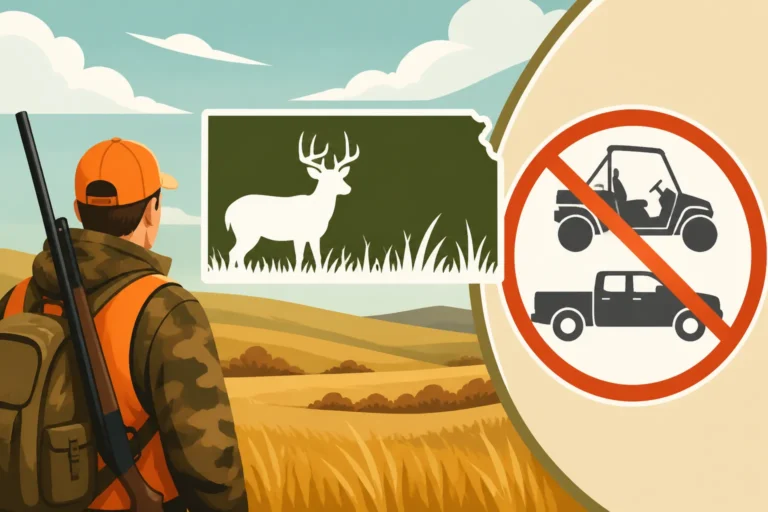
Be prepared to make adjustments. If your planned access point is too muddy, or if another hunter has already taken your intended spot, having backup plans is essential. Your mapping app can quickly help you identify alternative routes, different sections of the same WIHA, or even another nearby tract. Remember that onX Hunt, for example, often shows areas that are "Walk-In Hunting Access – Fall/Winter" versus those that are "Walk-In Hunting Access – Year Round" – details that matter when planning a specific hunt. Always double-check the Kansas Walk-In Rules and Restrictions before you enter, as regulations on things like camping, vehicle use, and stand placement can vary. Having a solid understanding of these local conditions and being flexible will lead to more enjoyable and successful hunts on these valuable I-70 accessible lands.
Disclaimer
This article is for general informational purposes only and does not constitute professional advice. Laws, prices and regulations vary by location and change over time. Consult a qualified professional for guidance on your specific situation.