EHD Effects on Kansas Deer Herds
It's truly unsettling to come across a deer acting strangely, stumbling, or worse, finding a deceased animal with no visible wounds, especially in the heat of late summer or early fall. When you spend so much time in the field, watching our Kansas whitetails thrive, witnessing such distress can be heartbreaking and leave you wondering what unseen threat is impacting the herd. This comprehensive guide aims to demystify Epizootic Hemorrhagic Disease (EHD), explaining what it is, how it affects Kansas deer herds, how to recognize its signs, and what hunters can do to help and adapt their strategies.
Understanding Epizootic Hemorrhagic Disease (EHD)
EHD is a viral disease that can hit deer populations hard, and it's something every Kansas hunter should be familiar with. It’s not something to panic about, but it’s crucial to understand how it works and what its presence means for your local deer. Think of it as a natural, albeit often devastating, part of deer population cycles, especially in our warm, humid climate.
What EHD Is and How It Spreads
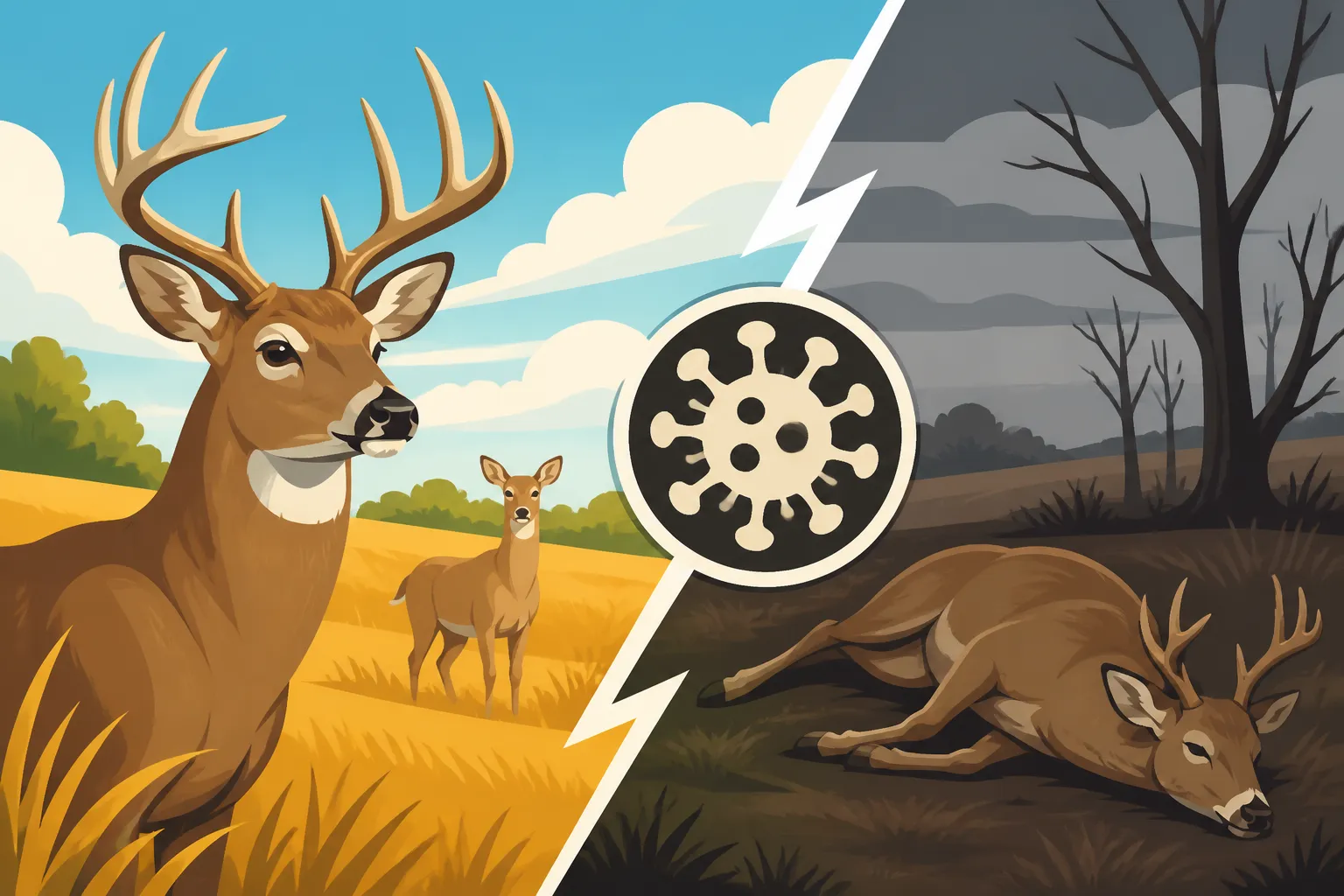
Epizootic Hemorrhagic Disease, or EHD, is caused by a virus transmitted by biting midges, often called "no-see-ums" or "gnats." It's not bacterial, and it's definitely not something that deer catch directly from each other, like a cold. The virus attacks the deer's blood vessels, causing internal hemorrhaging, fever, and severe swelling. While it can affect various ruminants, whitetail deer are particularly susceptible, and unfortunately, it often results in rapid mortality for infected animals. It's a natural disease that has been observed in deer populations for decades, and outbreaks are cyclical, often tied to environmental conditions.
The good news is that EHD poses no known health risk to humans, so consuming meat from a deer that wasn't obviously sick with EHD is generally considered safe. However, it's always wise to practice good hygiene when field dressing any animal, and if you have any doubts about a deer's health, it's best to err on the side of caution.
The Role of Midges in EHD Transmission
Those tiny, annoying midges are the primary vectors for EHD. They pick up the virus from an infected deer and then transmit it to healthy deer when they take their next blood meal. These midges thrive in warm, humid conditions, often associated with standing water or muddy areas. This is why EHD outbreaks typically occur in late summer and early fall in Kansas, when midge populations are at their peak and temperatures are still high.
As the weather cools and we get our first hard frosts, the midge populations crash, effectively halting the spread of the virus. This is why you rarely hear about widespread EHD outbreaks in late fall or winter. The disease is self-limiting in that regard, as the cold weather eventually breaks the transmission cycle. Understanding this seasonal pattern can help you anticipate potential outbreak periods and observe local deer behavior more closely.
Seasonal Patterns and Outbreak Conditions
EHD outbreaks are closely linked to weather patterns. A hot, dry summer followed by periods of rain that create shallow, muddy breeding grounds for midges can create the perfect storm for a significant outbreak. Areas with higher deer densities and abundant midge habitats, like creek bottoms, pond edges, and wet pastures, are often hit the hardest. We've seen years in Kansas where certain regions experience heavy mortality, while others, sometimes just a county away, remain relatively untouched.
The severity of an outbreak can vary wildly from year to year and location to location. Some years might see minor, localized cases, while others bring widespread, devastating losses. It’s a stark reminder of how interconnected wildlife health is with environmental factors. You might notice more deer congregating around water sources during dry spells, which, unfortunately, can also increase the chances of midge exposure. Keeping an eye on weather forecasts and local conditions, perhaps even using a mapping tool like GoHunt to mark potential midge breeding areas near your hunting grounds, can help you gauge the risk in your area.
Recognizing EHD Symptoms in Kansas Whitetails
Spotting EHD can be tricky because some of the symptoms can overlap with other deer ailments. However, knowing what to look for, especially during those prime late-summer and early-fall months, can help you understand what might be happening in your hunting area. It's not just about finding dead deer; it's about observing behavior and physical signs in live ones too.
Visible Signs of Infection
Deer infected with EHD often exhibit a range of distressing symptoms. One of the most common early signs is a high fever, which drives the deer to seek out water. You might find sick deer lying near ponds, creeks, or even small puddles, often appearing lethargic and disoriented. They may also lose their appetite and become extremely weak.
As the disease progresses, the visible signs become more pronounced. Look for swelling of the head, neck, tongue, and eyelids. The tongue might appear bluish due to lack of oxygen. Deer can also develop ulcers or sores on their mouths, tongues, and noses. Their hooves may become inflamed and cracked, causing lameness. In severe cases, particularly in bucks, the stress on their bodies can cause premature antler shedding.
Behavioral Changes in Affected Deer
Beyond the physical symptoms, you might notice significant changes in a deer's behavior. Infected deer often become unusually tame or fearless, losing their natural wariness of humans. They might stand in open fields, unresponsive to your presence, or appear wobbly and disoriented. They may also struggle to breathe, panting heavily.
These behavioral shifts are a direct result of the virus impacting their central nervous system and causing extreme discomfort. If you observe a deer exhibiting these behaviors, it’s a strong indicator that something is seriously wrong. It's a sad sight to behold, but recognizing these signs is critical for understanding the health of your local herd. If you frequently use mapping and scouting tools like GoHunt, you might even consider marking areas where you've seen sick deer to avoid unnecessary disturbance.
Differentiating EHD from Other Deer Diseases
It's important to remember that EHD isn't the only disease that can affect deer. Another significant concern for Kansas deer is Chronic Wasting Disease (CWD). While both can cause deer to appear emaciated or behave unusually, their mechanisms, symptoms, and outcomes are quite different. CWD is a progressive, fatal neurological disease that primarily affects the brain, leading to weight loss, drooling, and abnormal behavior over a longer period. EHD, on the other hand, is an acute viral infection with rapid onset and often quick mortality, characterized by hemorrhages and swelling.
Here's a quick comparison of key differences:
| Feature | Epizootic Hemorrhagic Disease (EHD) | Chronic Wasting Disease (CWD) |
|---|---|---|
| Cause | Virus | Prion (abnormal protein) |
| Transmission | Biting midges (no direct contact) | Direct contact, environment |
| Onset | Acute (rapid, days to weeks) | Chronic (slow, months to years) |
| Primary Season | Late summer/early fall | Year-round |
| Key Symptoms | Fever, swelling (head, neck, tongue), internal bleeding, lameness, seeking water, mouth lesions, antler shedding | Progressive weight loss, drooling, vacant stare, abnormal posture, behavioral changes, increased thirst/urination |
| Mortality | Often rapid and widespread in outbreaks | Always fatal, but slow progression |
| Human Risk | None known | Avoid consuming meat from infected animals |
Knowing the distinctions, especially if you're concerned about a sick deer, is important. For instance, if you suspect CWD, the protocol for reporting and carcass handling will be different than for EHD. You can find more specific guidance through state wildlife agencies.
The Real Impact of EHD on Kansas Deer Herds
The immediate impact of an EHD outbreak can be alarming, but it's also important to understand the broader, long-term effects on the deer population. While highly lethal to individual deer, EHD generally doesn't wipe out an entire herd, but it can certainly reshape its dynamics for a while.
Short-Term Mortality and Localized Declines
When EHD hits, it often results in concentrated mortality events. You might find several deer carcasses near a single water source, indicating a localized outbreak. In severe years, these pockets of mortality can lead to noticeable drops in deer numbers in specific areas. It’s not uncommon for hunters to report significantly fewer deer sightings in areas that were heavily impacted the previous year.
This immediate reduction in deer density can feel disheartening, especially if you've been watching specific bucks or doe groups. The scale of mortality depends on the virulence of the particular strain of the virus, the density of the deer population, and the environmental conditions favoring midge populations. Younger deer and deer that haven't been exposed to the virus before are typically the most vulnerable. While tough to witness, it’s part of the natural culling process that strengthens the herd over time, as deer that survive an outbreak often develop immunity.
Long-Term Population Dynamics and Recovery
Despite the immediate losses, deer populations are surprisingly resilient. After an EHD outbreak, the remaining deer, particularly the does, tend to be healthier and have better fawn survival rates due to reduced competition for resources. This often leads to a rebound in numbers within a couple of years, assuming favorable conditions. Kansas deer, particularly the whitetail, are prolific breeders, and given time, they can replenish their numbers effectively.
The Kansas Department of Wildlife, Parks and Tourism (KDWP) monitors these trends closely. They use harvest data to track herd health and population levels. While a severe outbreak might mean fewer mature bucks the following year, the overall population typically recovers. It's a testament to the adaptability of these animals. Hunters often notice changes in affected units, sometimes showing a temporary dip, but rarely a permanent one.
Regional Variations in EHD Severity Across Kansas
Kansas is a big state, and the impact of EHD can vary significantly from one region to another. Generally, areas with more permanent water sources and higher humidity tend to see more frequent and severe outbreaks. This might include river bottoms and areas with numerous farm ponds in central and eastern Kansas. The drier western parts of the state, while not immune, sometimes experience less intense outbreaks simply because midge breeding habitats are less prevalent.
For example, a unit along the Kansas River might experience a significant EHD event, while a unit in the high plains with sparse water sources might be relatively untouched in the same year. This regional variability is why it's so important to pay attention to local conditions and reports rather than assuming statewide impacts. Hunters using resources like GoHunt can get a better sense of how populations are faring in their specific hunting units, which may indirectly reflect EHD impacts.
What Hunters Should Do When Encountering EHD
As hunters and stewards of the land, we play a vital role in monitoring deer health. Knowing how to react responsibly to EHD is key, both for the health of the herd and for your own safety. Your observations in the field are invaluable to wildlife managers.
Reporting Sick or Deceased Deer
If you encounter a deer exhibiting signs of EHD, or find a carcass that appears to have succumbed to the disease, the most important thing you can do is report it to the Kansas Department of Wildlife, Parks and Tourism (KDWP). Your report helps wildlife biologists track outbreaks, understand their severity, and implement appropriate management strategies. They rely on hunters' eyes and ears in the field to get a clearer picture of what's happening.
You can often find contact information for reporting sick animals on the KDWP website. Be prepared to provide specific details, including the exact location (GPS coordinates are ideal), the date and time of observation, and a description of the deer's condition or the carcass. Don't assume someone else has already reported it; every piece of information helps.
Handling Carcasses and Safety Precautions
When it comes to handling carcasses, caution is always the best approach. While EHD isn't known to affect humans, it's still prudent to avoid direct contact with sick or deceased animals without proper protection. If you must move a carcass, wear gloves.
The best course of action for disposing of a deer carcass is to leave it where it lies, if feasible, allowing nature to take its course. Scavengers will quickly handle the remains. If the carcass is near a public area, road, or water source, and needs to be moved, burying it or taking it to a landfill might be options, but always check with KDWP or local authorities for specific regulations. If you're ever in doubt about a deer's health, it's better to pass on it. Always prioritize responsible and ethical practices.
Hunting Strategies After an EHD Outbreak
Hunting after an EHD outbreak requires a bit of adaptation. First, understand that the immediate area where you observed sick or dead deer might have a temporarily reduced deer population. This doesn't mean the hunting is ruined forever, but it might mean adjusting your expectations or shifting your focus. You might need to scout new areas or pay closer attention to fresh sign in areas that seemed less affected.
It's wise to avoid concentrating hunting pressure on areas that were heavily hit, as the remaining deer might be stressed and need time to recover. Focus on areas that may have been spared or where deer populations are naturally higher. Don't be surprised if you see fewer older bucks the year after a major outbreak, as they are often susceptible. However, the does that survived will likely bring in healthy fawns, and the herd will begin its natural recovery. Keep an eye on KDWP harvest reports and population updates, which can often be found through tools like GoHunt, to help inform your strategies for the upcoming seasons.
Disclaimer
This article is for general informational purposes only and does not constitute professional advice. Laws, prices and regulations vary by location and change over time. Consult a qualified professional for guidance on your specific situation.