Kansas Turkey Hunting Tactics for Spring Gobblers
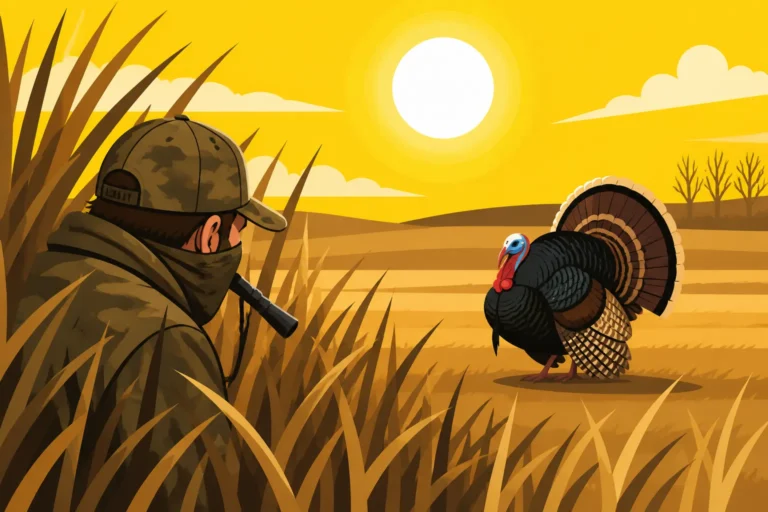
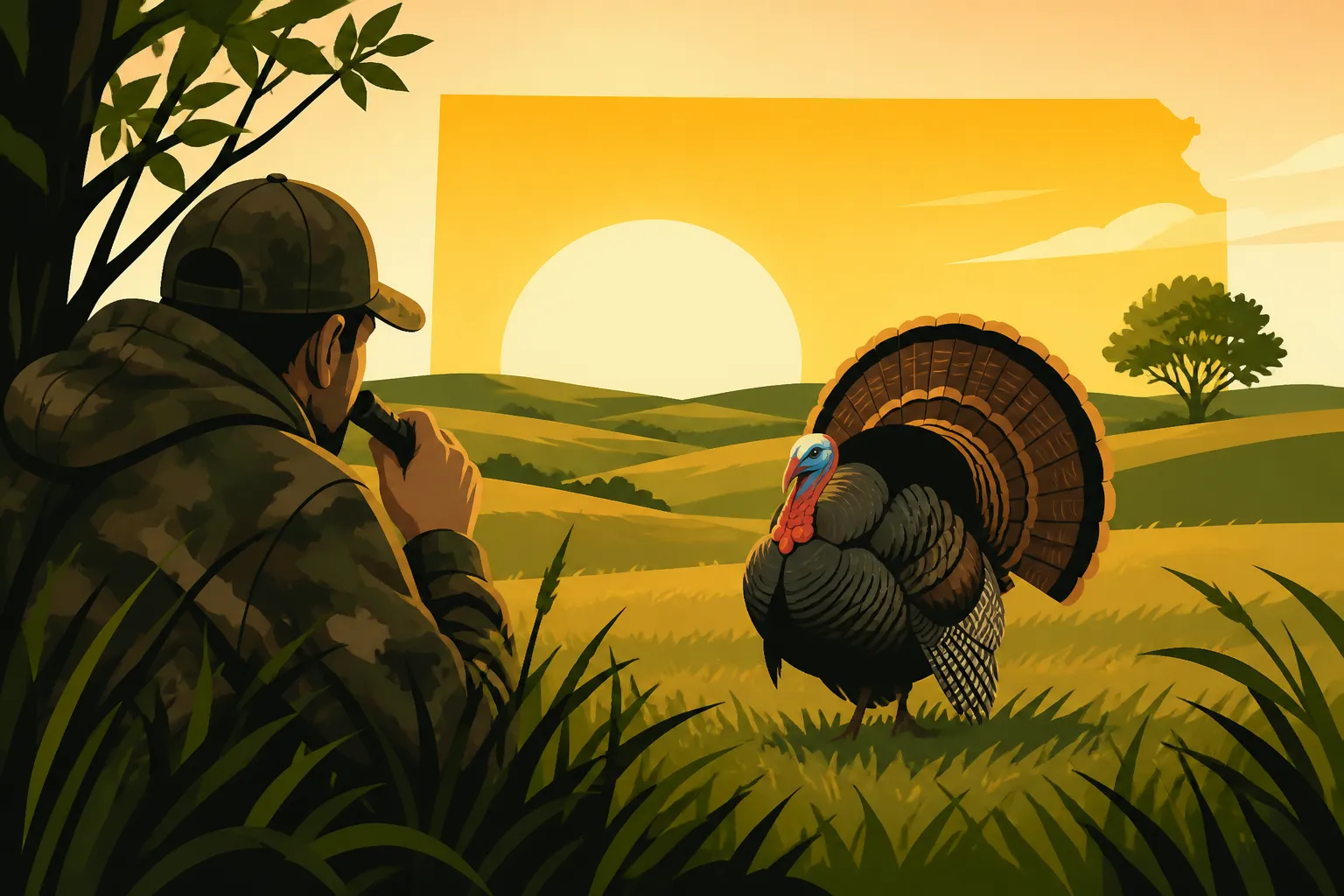
There's nothing quite like the sound of a spring gobbler hammering back at your call, especially when you're perched on the edge of a vast Kansas ag field or tucked into a river bottom. But let's be real: chasing those big toms across the Sunflower State can be incredibly frustrating. Whether it's dealing with a bird that just won't commit, navigating vast public lands, or trying to pull a henned-up gobbler away from his ladies, spring turkey hunting here presents unique challenges. This guide is dedicated to equipping you with the tactics and insights you need to put a big Kansas longbeard in front of your shotgun.
Understanding Kansas Spring Turkeys
Kansas is a fantastic state for turkey hunting, offering a unique blend of species and habitats. Before you even think about calling or setting up a blind, it’s crucial to understand the birds you’re chasing and how they behave in this environment.
Species and Their Distribution
When you're hunting turkeys in Kansas, you're primarily after Rio Grande birds, especially in the central and western parts of the state. These are the classic "prairie" turkeys, known for their slightly lighter body feathers and tail fans tipped with buff or tan bands. They thrive in the mix of agriculture, riparian timber, and open grasslands that dominate much of Kansas.
However, as you move east, particularly into the heavily wooded river drainages, you'll start encountering Eastern wild turkeys. These birds are darker, with chestnut-brown tail fan tips. Where the ranges of these two subspecies overlap, primarily in the central corridor, you might even encounter hybrids, which can display a mix of characteristics. It’s important to know what you’re likely to find because their habitat preferences can differ slightly. Rios often prefer more open country and can be found strutting in large fields, while Easterns tend to stick closer to dense timber. This understanding helps tailor your scouting and calling efforts.
Turkey Behavior During the Spring Rut
The spring turkey season revolves entirely around the breeding cycle, often referred to as the "rut" for turkeys. Gobblers are looking to breed hens, and their entire focus is on attracting females. In early spring, the mature gobblers will be strutting and gobbling intensely, trying to establish dominance and draw hens. They're most vocal right off the roost, often gobbling at any sound – an owl hoot, a crow call, or even a slammed truck door. This is a prime time to locate them.
As the season progresses and more hens become bred, gobblers can become "henned up." This is a common frustration for many hunters. A henned-up gobbler will gobble and strut, but he's already surrounded by hens and often won't leave them, no matter how enticing your calls might be. Patience and strategic repositioning become paramount here. You'll also notice the birds' activity fluctuates throughout the day, with peaks at fly-down and before fly-up, and often a midday lull where they might be feeding or dusting. Knowing these patterns helps you anticipate their movements and plan your hunts accordingly.
Impact of Weather on Spring Gobblers
Kansas weather is notoriously unpredictable, especially in spring, and it plays a huge role in turkey behavior. A warm, calm, clear morning can lead to explosive gobbling, making it easy to locate birds. They'll often spend more time strutting in open fields, basking in the sun. However, a sudden cold front, dropping temperatures, or a blustery day can shut gobbling down almost completely.
Heavy rain can also put a damper on activity, with birds often taking cover in dense timber and remaining silent. Light rain, on the other hand, can sometimes make birds more vocal as other ambient noises are suppressed. Strong winds are perhaps the biggest challenge, as they make it difficult for turkeys to hear your calls and for you to hear them gobbling. On windy days, you'll need to get much closer and adapt your calling strategy, often calling louder and more frequently, or hunting tight to timber edges that offer some protection from the wind. Always check the forecast and be ready to adjust your tactics to the conditions.
Scouting for Success Before the Season
Ask any seasoned turkey hunter, and they'll tell you that the hunt often begins long before opening day. Effective scouting, both from your armchair and on the ground, is the bedrock of consistent success on Kansas spring gobblers. Don't skip this step!
E-Scouting Kansas Public and WIHA Land
In a state like Kansas, where public land can be scattered and access points sometimes tricky, e-scouting is your best friend. Websites and apps like GoHunt and OnX are invaluable tools for identifying potential hunting spots. Start by pulling up your target Kansas deer unit map or county and looking for areas marked as Walk-In Hunting Access (WIHA) or other public lands managed by the Kansas Department of Wildlife, Parks and Tourism (KDWPT). These digital maps provide aerial imagery that can reveal critical habitat features.
Look for long fingers of timber that extend into crop fields, creek bottoms that snake through agricultural land, and shelterbelts that offer roosting and travel corridors. Identify potential roost sites – mature trees, especially cottonwoods, along river or creek banks. Also, mark any open fields, especially those showing signs of recent cultivation or standing grain, as these are prime strutting and feeding areas. Pay attention to pinch points, fence lines, and areas where habitat types converge, as these often act as natural travel routes for turkeys. Remember, Kansas turkey hunting success often comes down to finding those often-overlooked public or WIHA tracts where birds might feel less pressure.
In-Person Scouting for Roosting and Feeding Areas
While e-scouting helps narrow down possibilities, there's no substitute for boots-on-the-ground reconnaissance. Before the season, ideally in the weeks leading up to opening day, spend some time walking the public lands or WIHA tracts you've identified. Your goal is to confirm what you saw on the map and find fresh sign. Focus your efforts on creek bottoms, river oxbows, and timber points – these are classic areas for turkeys to roost. Look for droppings, shed feathers, and "roost trees" which will have more droppings at their base.
Also, scout adjacent feeding areas. Turkeys often fly down from their roosts directly into a nearby field or open timber. Look for fresh tracks, scratch marks where they've dug for insects or seeds, and dusting bowls – shallow depressions where they roll around to clean their feathers. Identifying these specific locations allows you to formulate a game plan for opening morning. If you can pinpoint a roost tree and an adjacent feeding area, you've already won half the battle. This is also a great time to determine your access routes that do not bump deer or turkeys, ensuring a quiet approach on hunt day.
Reading Sign and Identifying Key Locations
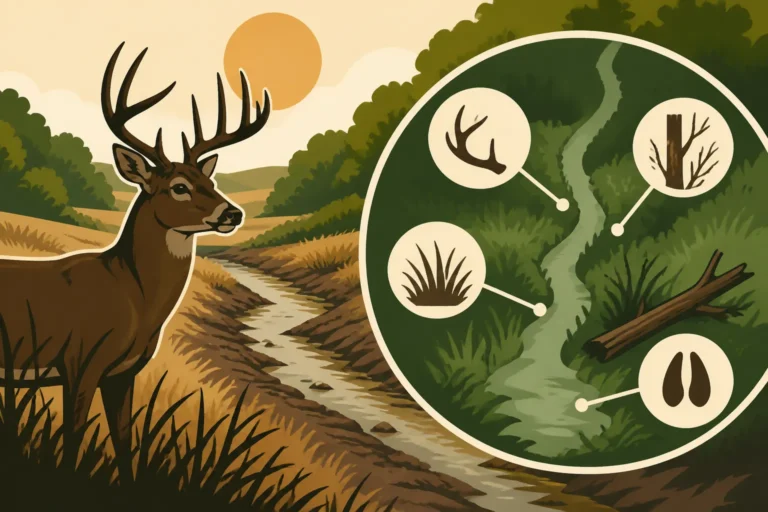
Turkeys leave a lot of clues behind if you know what to look for. Fresh tracks in soft dirt or mud, especially along creek banks or field edges, tell you birds are in the area. Tom tracks are generally larger and wider than hen tracks, with a longer middle toe. Droppings are another key indicator: j-shaped droppings indicate a tom, while more coiled or spherical droppings are from a hen. Piles of droppings under large trees are a sure sign of a roost tree.
Beyond tracks and droppings, look for dusting bowls, which are often found in dry, sandy soil or loose dirt near cover. Strut zones, typically open areas in fields or clearings within timber, will show signs of a tom's wing tips dragging in the dirt, creating a distinct arc. Observing these various signs helps you confirm turkey presence, understand their daily patterns, and pinpoint the exact spots where you'll want to set up. Think about how to effectively read a Kansas creek bottom for deer sign, and apply similar observational skills to turkeys; the principle of identifying travel corridors and bedding/roosting areas is much the same.
Calling Strategies for Kansas Gobblers
Calling is the art and science of turkey hunting, and it's where many hunters either find immense success or get hopelessly frustrated. In Kansas, understanding when and how to call can make all the difference.
Mastering the Basic Calls
Before you can get fancy, you need to master the basics. The most fundamental calls are the yelp, cluck, and purr. The yelp is a series of 3-7 notes, often used to locate birds or imitate a lost hen. Vary the volume and cadence: an excited yelp is faster and louder, while a soft, contented yelp is slower and quieter. The cluck is a single, sharp note, used to get a turkey's attention or signal contentment. A purr is a soft, rolling sound, indicating a contented hen, often used when birds are close.
Beyond these, aggressive cutts (sharp, rapid, loud yelps) can challenge a gobbler or simulate an excited hen. Tree yelps are soft, muffled yelps used just before fly-down. Spend time practicing with different calls – slate calls, box calls, and diaphragms – until you can consistently produce realistic sounds. Each call has its own voice, and having a range allows you to adapt to the birds' moods. Don't underestimate the power of subtle, realistic calling; sometimes less is more.
Adapting Calling to Different Scenarios
The art of calling isn't just about making the right sounds, it's about making the right sounds at the right time. Right off the roost, a few soft tree yelps followed by some confident clucks can simulate a hen waking up. Once the birds are on the ground, you can increase the volume and enthusiasm. If a gobbler hammers back at every call, be ready to set up quickly and get silent; he’s likely on his way.
For henned-up birds, the strategy shifts. You might need to be patient, observe their movements, and try to pull the gobbler away by acting disinterested or moving away from him, making him think you're a hen leaving the area. Sometimes, soft, periodic clucks and purrs are more effective than aggressive yelping, suggesting a hen that isn't desperate but is still available. Midday, when gobblers might be quieter, a series of loud, excited cutts and yelps can sometimes provoke a shock gobble, revealing their location. Understanding how to call a henned-up Kansas gobbler is a critical skill for success here.
Decoy Usage and Placement for Open Country
Decoys can be incredibly effective in Kansas, especially in the open agricultural landscapes where turkeys have excellent visibility. The key is proper placement and understanding when to use them. A single hen decoy or a jake decoy paired with a hen are popular choices. The jake decoy can often trigger an aggressive response from a mature gobbler who sees it as a challenger. Full-strut gobbler decoys are even more aggressive but can also intimidate smaller birds.
Place your decoys where a gobbler can see them from a distance, usually about 20-30 yards from your setup point. Ensure they are facing in a direction that forces the gobbler to approach, giving you a good shot angle. In open fields, placing them slightly downhill or on a gentle rise can improve visibility. Always consider the sun's position – you want the sun at your back, shining on your decoys, making them visible and realistic to an approaching gobbler, and keeping the sun out of your eyes. Be mindful of public land turkey safety when using decoys, especially in areas with other hunters.
Setting Up for the Shot
Once you've located a gobbler and started calling, your setup is the next most critical factor. A poor setup can ruin a hunt faster than a bad call. In Kansas's varied terrain, adapting your setup is essential.
Effective Setups in Open Agricultural Landscapes
Kansas is famous for its wide-open spaces, and much of the state's turkey habitat includes large agricultural fields. Setting up in these areas requires careful planning. Natural cover is often sparse, so you'll need to utilize what's available: the edge of a timber block, a brushy fence line, a standing crop row, or even a subtle dip in the terrain. Ground blinds are excellent options here, providing full concealment and allowing for movement, which is crucial when dealing with wary birds. If using a blind, ensure it's well brushed in and set up a few days in advance if possible, to let the birds get used to it.
When picking your exact spot, consider your backdrop. You want to blend in, breaking up your outline against something solid, like a tree trunk or a dense bush. Avoid silhouetting yourself against the sky. Your shooting lanes should be clear, particularly in the direction you expect the turkey to approach from your decoys. Also, remember that turkeys have excellent eyesight, so minimize any movement once you're set up.
Utilizing Terrain Features for Ambushes
Even in flat country, Kansas has subtle terrain features that can be exploited for turkey hunting ambushes. Creek banks and draws are prime examples. Turkeys often use these as travel corridors, and the change in elevation offers fantastic opportunities for concealment. Setting up on the high bank of a creek bottom, overlooking a lower field or timber, can give you an advantage. The rise provides a natural blind, allowing you to see birds approaching without being seen.
Timber edges are another critical feature. Turkeys will often strut and feed along the edge of a field where it meets the woods. Setting up 10-20 yards inside the timber, facing out towards the field, offers a great ambush point. Similarly, shelterbelts and hedgerows, often planted for windbreaks, create linear strips of cover that turkeys frequent. These can funnel birds directly to your position if you set up along them. Remember that even a slight depression or a rise in elevation, especially in the rolling prairies, can offer enough cover to make a successful setup.
Concealment and Movement Considerations
Full camouflage, head-to-toe, is non-negotiable for spring turkey hunting. Your patterns should match the environment – leaf litter, bark, and dirt tones for timber, or more open-country patterns for grasslands. Gloves and a face mask are critical, as your hands and face are often exposed and move the most. Any shine from watches, glasses, or gun barrels needs to be eliminated.
Once you're set up, movement is your enemy. Turkeys are incredibly perceptive, and even a slight twitch can send them scattering. Practice raising your gun smoothly and slowly before the season. If a bird hangs up out of range, resist the urge to move or adjust. Sometimes, patience is the only tactic that works. If you absolutely must move, wait until the bird's head is behind an obstacle or when it turns its head away. In situations where you're hunting from a blind without movement, you have a bit more leeway, but still, try to stay as still as possible. Always be aware of your surroundings and any potential hazards, ensuring you have a clear shot and a safe backdrop.
Run-and-Gun Tactics and Mobile Hunting
Kansas isn't always about sitting and waiting. Sometimes, especially when gobblers are scattered or quiet, a more aggressive, mobile approach is needed. This is where run-and-gun tactics shine.
Covering Ground on Large Public Tracts
Many of Kansas's public lands, particularly WIHA tracts, can be extensive and sprawling. When you're dealing with vast acreage and potentially pressured birds, sitting in one spot all morning might not cut it. This is where the run-and-gun approach becomes incredibly effective. The idea is to cover a lot of ground, stopping frequently to call and listen. You're not looking for a "perfect" setup at each stop; rather, you're trying to provoke a gobble and then quickly close the distance.
Utilize existing trails, field edges, and two-track roads to move efficiently and quietly. Walk for 100-200 yards, then stop, make a series of loud, attention-grabbing calls (like cutting or aggressive yelps), and listen intently for a response. Give it a minute or two, then move on. You're actively searching for the birds, instead of waiting for them to find you. This tactic works particularly well on public land deer hunting in Kansas where you might have to cover ground to find unpressured pockets.
Locating and Intercepting Roaming Gobblers
Kansas gobblers, especially when henned up or in the midday lull, can be constantly on the move, covering significant distances across fields and timber lines. With run-and-gun tactics, your goal is to locate these roaming birds and then quickly get ahead of them or cut them off. If you hear a distant gobble, use your mapping tools (like GoHunt or OnX) to quickly identify the most direct route to get into position, considering available cover.
Often, this means hustling along a timber edge, cutting through a standing crop field, or quickly traversing a creek bottom to get into an intercepting position. Once you're closer, use softer calls to gauge their exact location and direction of travel. You want to set up along their likely path of travel, giving them the illusion that they are approaching a hen. This often means trying to get slightly ahead of them and letting them come to you rather than trying to chase them down.
Calling Strategies for Mobile Hunters
When you're constantly moving, your calling strategy needs to be adapted. Loud, attention-grabbing calls are often necessary to get a distant gobbler to respond. Use a box call or a loud slate call for volume. Aggressive cutts and sharp yelps are excellent for getting a reaction gobble. Don't be afraid to experiment with different calls and volumes until you find what works that day.
Once a bird responds, the strategy shifts. You want to confirm his direction and then move quickly and quietly to set up. As you get closer, soften your calls, becoming more seductive and less aggressive. Use periodic clucks and purrs to keep him interested without spooking him. The key is to sound like a hen that's comfortable and waiting, drawing him in for a closer look. Remember, the goal of calling while mobile is to locate, then entice, then get set up for the shot.
Addressing Common Challenges
Even the most experienced turkey hunters face challenges. Kansas gobblers can be notoriously tricky, and knowing how to adapt when things don't go as planned is crucial for success.
Dealing with Henned-Up Gobblers
This is probably the most common and frustrating scenario in spring turkey hunting. You hear a gobbler hammering, you call, he responds, but he just won't commit because he's got a harem of real hens surrounding him. It's enough to make you pull your hair out! The key here is patience and unconventional tactics. Don't keep hammering at him with calls; he's heard it all before.
One strategy is to act like a disinterested hen. Give a few soft clucks or purrs and then go silent for extended periods. Sometimes, if you pack up and slowly move away from him, making a few soft "leaving" yelps, he might break from his hens, thinking you're a real hen trying to escape. Another tactic, if legal and safe, is "reaping" or "fanning" – slowly raising a gobbler decoy and allowing the gobbler to see it and come challenge it. This is highly aggressive and should only be done in very specific, safe scenarios with no other hunters around. The most consistent advice, however, is often simply to outwait the hens. Turkeys, and specifically how to call a henned-up Kansas gobbler, are very much like people – when the real hens go to nest, usually between 9 AM and 11 AM, that gobbler often becomes lonely and suddenly much more receptive to your calls.
Hunting Pressured Public Land Birds
Public land turkeys in Kansas, especially on easily accessible WIHA tracts or wildlife areas, can quickly become "educated." They've heard every call, seen every decoy, and probably been shot at a few times. These birds are wary, often gobbling less and moving more stealthily. To succeed, you need to think differently.
First, consider hunting weekdays instead of weekends, or at least getting to your spot extra early before other hunters arrive. Second, target areas that are harder to access – those requiring a longer walk, crossing rough terrain, or perhaps using a less obvious parking spot. Turkeys will often retreat to these sanctuaries. Third, use lighter, more subtle calling. Over-calling will likely spook a pressured bird. Instead, use soft clucks, purrs, and occasional yelps to peak their curiosity without alarming them. Finally, use aggressive run-and-gun tactics to cover ground quickly and find birds that haven't been disturbed. Don't be afraid to try scouting Kansas walk-in tracts before the opener to find those hidden gems.
Strategies for Midday Lulls and Afternoon Hunts
Many turkey hunters pack it in by 10 AM, especially if the morning gobbling was slow. This is a mistake, as some of the best hunting can happen during the "midday lull" and into the afternoon. As hens leave to go to their nests, gobblers become solitary and often more eager to respond to calls.
During midday, focus on food sources and dusting areas. Turkeys will spend these hours feeding, dusting, and sometimes just wandering around. Find fields with fresh green-up, standing grain, or areas with exposed dirt. Walk quiet access routes, stopping every few hundred yards to make a series of loud, excited calls to try and provoke a shock gobble. If you get a response, quickly close the distance and set up. As the afternoon progresses towards fly-up time, turkeys will begin moving towards their roosting areas. If you can locate a roost in the afternoon, position yourself for an evening ambush or for a prime setup the following morning. Roosting Kansas turkeys the night before can give you a significant advantage.
Essential Gear for Kansas Spring Turkey Hunting
Having the right gear won't guarantee a bird, but it will certainly improve your chances and make your hunt more comfortable and safe. From your shotgun to your calls, every piece plays a role.
Shotguns, Chokes, and Ammunition
Your shotgun is your primary tool for bagging a spring gobbler. While a 12-gauge is most common, 20-gauge and even .410s have become highly effective with modern ammunition. The key is patterning your shotgun. Before the season, take your gun to the range and shoot various turkey loads and choke combinations at 20, 30, and 40 yards. Your goal is to find a combination that puts a dense, consistent pattern of at least 100 pellets in a 10-inch circle, typically targeting the head and neck of a turkey.
Most turkey hunters opt for an extra-full or super-full choke to achieve this density. Shot sizes like 4, 5, or 6 are popular, with newer TSS (Tungsten Super Shot) loads offering incredible density and range, often in smaller shot sizes like 7 or 9. Knowing your effective range is crucial. Don't try to stretch a shot beyond what your pattern consistently delivers, and always ensure proper shot placement on a whitetail at twenty yards, or a turkey's head, for a quick, ethical kill.
Decoys, Calls, and Optics
We've already touched on the importance of decoys and calls, but let's reinforce their necessity. Carry a variety of calls: a slate or box call for versatile sounds and volume, and a mouth call (diaphragm) for hands-free calling when a gobbler is close. This allows you to adapt to different scenarios. Decoys, especially a jake and hen, can be game-changers in open Kansas country. Look for realistic, lightweight, and packable options.
Optics are often overlooked but incredibly valuable. A good pair of binoculars (8x or 10x magnification) can help you spot distant turkeys in open fields, differentiate between hens and gobblers, and scan for other hunters. A rangefinder is also highly recommended. Knowing the exact distance to your decoys and any natural landmarks around your setup ensures you only take ethical shots within your patterned range. GoHunt's gear reviews can be helpful here for choosing reliable equipment.
Clothing, Footwear, and Safety Gear
Comfort and concealment are paramount in your clothing choices. Full camouflage, matching the spring foliage and timber of Kansas, is a must. Layers are key, as spring mornings can be chilly and afternoons surprisingly warm. Look for breathable, moisture-wicking fabrics. Sturdy, waterproof boots are essential for traversing wet creek bottoms, dew-covered fields, and potentially muddy terrain. A comfortable turkey vest with plenty of pockets for calls, shells, and snacks will keep your gear organized and accessible.
Safety gear includes a blaze orange hat or vest, which is crucial when walking in or out of your hunting area, especially on public land during firearm seasons. While not always required for archery turkey, it's a good practice to wear orange when moving and take it off when set up. Carry a first-aid kit, a headlamp for early morning or late evening treks, and a fully charged cell phone. Always let someone know your hunting plan, including your location and expected return time. Public land turkey safety is everyone's responsibility.
Post-Harvest and Regulations
The moment of truth arrives, and you've harvested a beautiful Kansas gobbler. Now, what? Understanding the post-harvest procedures and regulations is just as important as the hunt itself.
Tagging and Reporting Requirements
Once you've successfully harvested a spring gobbler in Kansas, the first thing you need to do is tag it immediately. Kansas law requires you to attach your valid turkey permit to the bird's leg. Make sure the permit information is accurate and legible. This tag must remain with the carcass until it reaches your home, a locker plant, or a taxidermist.
Additionally, Kansas requires all harvested turkeys to be reported within 48 hours. This can typically be done through the KDWPT's electronic check-in system, often accessible via their website or the Go Outdoors Kansas app. You'll need information from your permit and about the bird itself (e.g., date of harvest, county, species). Reporting your harvest is vital for wildlife management, helping KDWPT track population trends and set future season dates and bag limits. Always double-check the current Kansas regulation summary for the most up-to-date requirements, as rules can change.
Field Care and Processing
Spring weather in Kansas can be warm, so proper field care is essential to preserve the quality of your turkey meat. Once tagged, immediately gut the bird. This allows the carcass to cool down much faster, preventing spoilage. You can either breast out the bird in the field, taking only the breast meat, or transport the whole bird to process at home.
If transporting the whole bird, try to get it on ice or into a cooler as quickly as possible, especially if temperatures are high. A large cooler filled with ice is indispensable for keeping the bird cool during the drive home. Many hunters choose to quarter a deer in the field, and the same principle applies to turkeys; smaller pieces cool faster. Once home, clean and process the meat promptly. If you plan to get your bird taxidermied, take extra care with the head, neck, and tail fan, ensuring they remain undamaged.
Kansas Spring Turkey Season Dates and Bag Limits
Understanding the specific season dates and bag limits is crucial to avoid any legal issues. Kansas spring turkey permits and units are structured to manage the population effectively. Typically, the spring turkey season runs from early April through the end of May, with an earlier youth and disability season usually preceding the regular statewide archery and firearm seasons.
Kansas generally has specific Kansas turkey bag limits that allow hunters to take one bearded turkey per permit. Non-residents usually have a limit of one turkey. However, it's critical to review the current year's Kansas spring turkey season dates and regulations published by KDWPT, as specific start and end dates can vary slightly year to year, and unit restrictions or permit types (like either-sex or bearded-only) can differ. Check the Kansas turkey unit quotas compared to ensure you're applying for the correct permit for your chosen area. Ignorance of the law is never an excuse, so always be informed before you head afield.
Disclaimer
The information provided in this guide is for general informational purposes only. Hunting regulations and conditions can change. Always consult the official Kansas Department of Wildlife, Parks and Tourism (KDWPT) regulations and local ordinances before hunting. Safety should always be your top priority.