Squirrel and Rabbit Hunting in Kansas
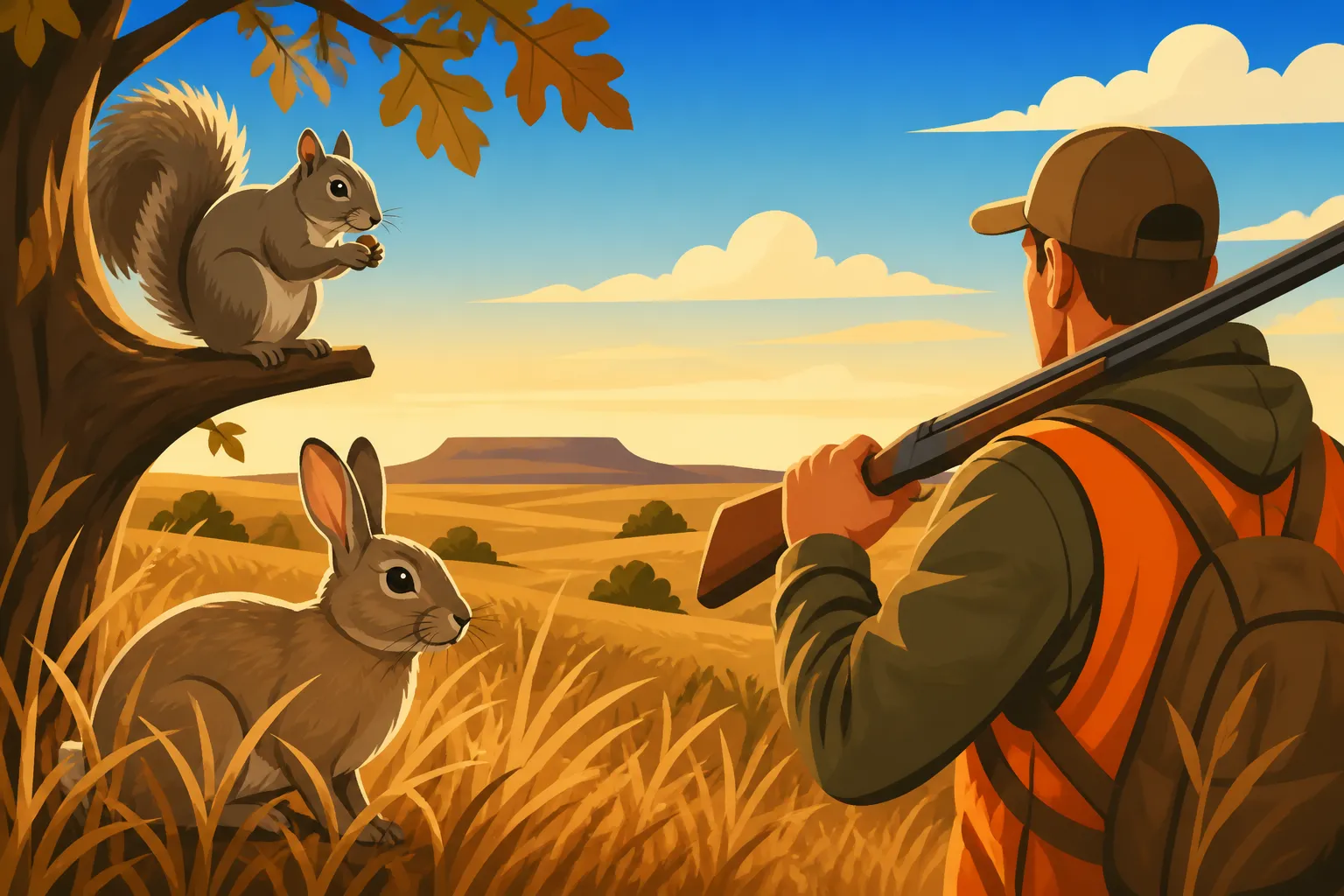
There's a special kind of satisfaction that comes from hunting the giants of the Kansas landscape – chasing those big whitetail bucks or calling in a spring gobbler. But let's be honest, those big game hunts often come with a hefty dose of planning, preference points, and sometimes, disappointment at the draw. For many of us, the real joy of simply being outdoors, honing our skills, and bringing home some tasty wild game can get lost in the shuffle. This comprehensive guide is dedicated to bringing that pure hunting enjoyment back into focus by exploring the accessible and incredibly rewarding world of squirrel and rabbit hunting in Kansas.
Why Small Game Hunting is So Rewarding in Kansas
When you talk about hunting in Kansas, most conversations quickly turn to trophy whitetails or a limit of pheasants. But for those of us who appreciate the simpler pleasures, or who are looking for more time afield without the intense pressure, small game like squirrels and rabbits offer an unparalleled experience. It's a fantastic way to extend your time in the woods and fields, fill the freezer with delicious meat, and often, introduce new hunters to the sport in a low-stakes environment.
Accessible and Affordable Opportunities
Let's face it, the Kansas nonresident deer draw can be a heartbreaker, and even resident tags for some premium hunts require careful planning and a bit of luck. The cost of big game permits, specialized gear, and travel can really add up, making regular hunting trips a significant investment. This is where small game shines. You don't need a fancy lease, a thousand-dollar rifle, or years of preference points. A basic hunting license, an inexpensive firearm, and a pair of boots are often all you need to get started. It’s incredibly relieving to just grab your gear on a crisp fall morning and head out, knowing that the opportunities are plentiful and the barrier to entry is wonderfully low. This accessibility makes it a perfect pursuit for those tight on time or budget, offering a genuine hunting experience without the immense financial and logistical burden often associated with larger game.
Beyond the cost, the sheer availability of squirrels and rabbits across virtually every corner of the state means you're rarely far from a good hunting spot. Whether you're tucked away in the deep timber of eastern Kansas or navigating the brushy draws of the west, chances are good you'll find small game. This omnipresence drastically reduces travel time and opens up local hunting possibilities, making it easier to fit quick hunts into a busy schedule. Plus, with less pressure on these species compared to deer or turkeys, you're more likely to have a peaceful, solitary experience in nature, which for many, is a huge part of hunting's appeal.
Building Foundational Hunting Skills
You might think chasing a squirrel or a rabbit is completely different from pursuing a mature whitetail, but the reality is that small game hunting hones many of the same crucial skills that translate directly to big game success. It's a fantastic training ground for hunters of all experience levels, allowing you to practice critical techniques in a less intimidating setting. Learning to move quietly through the woods, interpret subtle signs, and understand animal behavior can all be refined when you're focused on a wary bushytail or a hidden cottontail.
For example, the patience required to sit motionless for an hour, waiting for a rustle in the leaves that indicates a squirrel, is excellent practice for the long hours spent in a treestand. Tracking subtle disturbances, like a freshly gnawed nut or a flattened patch of grass, teaches you to read the landscape for clues, much like you would when trying to decipher Reading a Kansas Creek Bottom for Deer Sign. Moreover, the ethical shot placement on a small, fast-moving target demands precision and quick decision-making, skills that are absolutely vital when that once-in-a-lifetime buck steps out. Small game hunting allows for repetition and learning in a way that big game hunting often doesn't, building confidence and competence that will serve you well in any hunting scenario.
Understanding Kansas Squirrel Species and Habits
Kansas is home to two primary squirrel species that offer fantastic hunting opportunities: the common fox squirrel and the more elusive Eastern gray squirrel. While both provide a thrilling chase and delicious table fare, understanding their distinct habits and preferred habitats is key to a successful hunt. Knowing where to look and how they behave can make all the difference in filling your bag.
Fox Squirrels: The Backyard Bushy-Tail
The fox squirrel is undoubtedly the most common and widespread squirrel in Kansas, inhabiting nearly every county from east to west. They are larger than their gray squirrel cousins, often sporting a reddish-brown to orange coat on their undersides, which gives them their "fox" name. You'll find them almost everywhere, from mature timber blocks to small woodlots bordering crop fields, and even in many suburban parks and neighborhoods (where hunting might not be appropriate, of course!). Their adaptability is truly remarkable, allowing them to thrive alongside human development.
Their preferred habitat is mature timber, especially oak, hickory, and walnut groves, where they can feast on abundant nuts. They also frequent osage orange trees for their large, pithy fruit and are often seen foraging in agricultural fields for corn and other grains. Fox squirrels are primarily diurnal, meaning they are most active during the day, particularly in the early morning and late afternoon. During midday, especially in hot weather, they often retreat to their dens or the cool shade of a tree canopy. Understanding this daily rhythm is crucial for timing your hunts.
These squirrels are notorious for their caching behavior, burying nuts and seeds throughout the fall to sustain them through the leaner winter months. They have an incredible memory, though they do "forget" some caches, contributing to seed dispersal and forest regeneration. When disturbed, a fox squirrel might freeze, flatten itself against a tree trunk, or quickly circle to the opposite side of a tree, using the trunk as a shield. This evasive maneuver is a classic challenge for squirrel hunters, requiring patience and a good eye to outwit them.
Eastern Gray Squirrels: Less Common, More Elusive
While fox squirrels dominate much of Kansas, the Eastern gray squirrel has a more restricted range, primarily found in the eastern third of the state, particularly in areas with extensive, dense hardwood forests. They are smaller than fox squirrels, with a sleek, mostly gray coat and a white belly. Gray squirrels tend to be more arboreal, meaning they spend more of their time in the trees, often preferring the dense canopy over ground foraging. This preference for deep, contiguous timber makes them a bit more challenging to locate and hunt than their fox squirrel counterparts, which are often found in more fragmented habitats.
Gray squirrels are generally shyer and more wary than fox squirrels. They are less tolerant of human presence and tend to disappear quickly into the dense foliage at the first sign of danger. When alarmed, they might chatter loudly, flick their tails, and then bolt through the treetops, making themselves difficult targets. This makes hunting them a more demanding exercise in stealth and patience, often requiring you to still-hunt very slowly or find a productive spot and simply wait them out.
Their diet is similar to fox squirrels, revolving around nuts, seeds, and buds, but they tend to utilize a wider variety of mast sources within their dense forest homes. If you're hunting in eastern Kansas and encounter a larger tract of old-growth oak-hickory forest, keep an eye out for these quick, agile creatures. Their smaller size and shyer nature make them a prized quarry for experienced squirrel hunters, offering a different kind of challenge compared to the more ubiquitous fox squirrel.
Rabbit Species and Their Kansas Haunts
Just like squirrels, rabbits are a fantastic small game option that can be found across Kansas, each with its own characteristics and preferred habitats. Hunting rabbits is a fast-paced, exciting endeavor that can be done with or without dogs, and it provides some of the finest wild game meat available. Understanding the two main types you'll encounter will help you locate them and plan your hunt.
Eastern Cottontail: The Ubiquitous Hoppity Hunter
The Eastern cottontail is arguably the most recognizable and widespread rabbit in Kansas, found in abundance in nearly every county. These little dynamos are characterized by their soft, brownish-gray fur, large eyes, and of course, that distinctive fluffy white tail that bobs as they bound away. Their incredible adaptability allows them to thrive in a vast array of habitats, from dense briar patches and plum thickets to brushy fencerows, CRP (Conservation Reserve Program) grass fields, and the edges of agricultural crops. They are masters of concealment, often sitting tight until you're almost on top of them before bursting out in a frantic dash.
Cottontails are true survivors, boasting a high reproductive rate that allows their populations to rebound quickly, even after harsh winters or heavy hunting pressure. They are most active during dawn and dusk, but on overcast days or during the late afternoon, you can often find them out foraging. In colder weather, especially after a snowfall, they tend to remain bedded down in dense cover, making them a prime target for hunters willing to push through thickets. Their diet is largely herbaceous, consisting of grasses, clover, forbs, and in winter, the bark and twigs of woody plants.
Hunting cottontails often involves walking through their preferred cover, a tactic often called "rabbit pushing" or "brush busting." You'll want to focus on areas that provide both food and protection from predators, such as the thick, thorny plum thickets that dot many Kansas landscapes or the tall, dense growth of CRP Grass and Where Bucks Bed that offer excellent escape cover. The thrill of a cottontail bursting from its hiding spot and darting through the brush is an experience every hunter should enjoy.
Jackrabbits: The Western Plains Speedsters
While technically hares and not true rabbits, the black-tailed jackrabbit is another exciting small game animal found primarily in the western half of Kansas. These creatures are significantly larger than cottontails, with incredibly long ears, powerful hind legs built for speed, and a distinctive black stripe running down their tail. Their habitat is synonymous with the open plains and short-grass prairies of western Kansas, where cover can be sparse and their primary defense is their blistering speed, often exceeding 35 miles per hour.
Hunting jackrabbits presents a unique challenge compared to cottontails. Instead of bursting from dense cover, jackrabbits are often spotted at a distance, either sitting motionless in a "form" (a shallow depression in the ground) or loping across the vast expanse. The hunting approach often involves spot-and-stalk tactics, using binoculars to scan the horizon for their distinctive long ears or their crouched forms in the prairie grass. A good pair of optics, like those you might use for deer scouting, can be invaluable when trying to locate these camouflaged speedsters.
Once jumped, a jackrabbit will often lead you on an impressive chase, covering ground at an astonishing pace. This makes them a challenging target for even experienced shooters, requiring quick reflexes and accurate shooting at longer distances. The vast, open nature of their habitat also means you might need to cover a lot of ground to find them. Hunting jackrabbits is a true taste of the western Kansas hunting experience, combining patience, keen eyesight, and the excitement of a high-speed chase across the plains.
Essential Gear for Small Game Success
One of the great things about small game hunting in Kansas is that you don't need a huge investment in specialized equipment. In fact, many hunters already own the basic tools needed. However, having the right gear can significantly increase your comfort, effectiveness, and overall enjoyment. Let's break down the essentials you'll want to consider before heading out.
Firearm and Ammunition Choices
For squirrels, the .22 LR rifle is king. It's quiet, accurate, and its low recoil makes it perfect for precise headshots, preserving meat. Many hunters also opt for the slightly more powerful .17 HMR, which offers a flatter trajectory and even greater accuracy at modest ranges, though it can be a bit more destructive to the meat if not careful with shot placement. Shotguns, particularly a .410, 20-gauge, or even a 12-gauge with small shot (like 6 or 7 ½), are also popular, especially in dense timber where squirrels are constantly on the move. The spread of a shotgun makes hitting a scampering squirrel easier, though it can damage more meat. Always prioritize safety, knowing your target and what's beyond it, especially when using a rimfire rifle in timber.
For rabbits, shotguns are often the preferred choice due to the fast-flushing nature of cottontails and the quick, often erratic movements of jackrabbits. A 20-gauge or 12-gauge loaded with 6 or 7 ½ shot is highly effective. The wider pattern increases your chances of connecting with a rabbit as it bolts from cover. If you're still-hunting for cottontails or spot-and-stalking jackrabbits in open country, a .22 LR or .17 HMR rifle can also be used, but you'll need to be very patient and a good shot. Air rifles, particularly powerful PCP (pre-charged pneumatic) models, are gaining popularity for both squirrels and rabbits due to their quiet operation and accuracy, offering a unique challenge and often a more localized impact, especially useful for those looking to minimize noise. Always check local regulations regarding air rifle use for hunting, as rules can vary.
Clothing, Optics, and Other Must-Haves
Regardless of your target, comfort and practicality in your clothing are paramount. Layered clothing is always a good idea, as Kansas weather can change quickly, especially during the fall and winter small game seasons. Durable, waterproof boots are essential for navigating dew-soaked grass, muddy creek bottoms, or even snow. A small backpack or game vest with plenty of pockets is incredibly useful for carrying extra ammunition, snacks, water, a knife, and of course, your harvested game. Consider wearing blaze orange, especially during firearm deer season, even when hunting small game. Checking Hunter Orange Rules During Firearm Season is always a good practice.
Optics can greatly enhance your small game hunt. While not strictly necessary for busting brush for cottontails, a good pair of binoculars is invaluable for scanning tree limbs for camouflaged squirrels or spotting distant jackrabbits in open terrain. For squirrels, they can help differentiate a knot on a tree from a bedded bushy-tail. A quality pair of reading glasses or a magnifying glass can even help you pinpoint elusive animal tracks or tell if a nut has been freshly gnawed. Finally, don't forget a sharp knife for field dressing, and a small cooler with ice if you anticipate warm weather, to quickly cool your game and preserve its quality.
Effective Tactics for Hunting Squirrels and Rabbits
Small game hunting, while often perceived as simple, involves a rich array of tactics that can be both challenging and immensely satisfying. Whether you're patiently waiting for a squirrel or actively pushing brush for rabbits, understanding how to approach these animals is key. Each species and habitat often calls for a slightly different strategy, keeping you on your toes and constantly learning.
Still Hunting and Stalking for Squirrels
Still hunting is a classic and highly effective method for pursuing squirrels, especially in timber. This involves moving incredibly slowly through the woods, taking a few steps, then pausing for several minutes to observe and listen. Squirrels are often more active than deer, making rustling leaves or the gnawing sound of a nut easy to detect once you learn to filter out the ambient forest noise. Focus on areas with mature nut-bearing trees like oaks, hickories, and walnuts, especially during the fall when the mast crop is abundant. A good strategy is to find an active area, sit down quietly against a tree for 15-20 minutes, and simply wait for the woods to come alive around you. Squirrels that were alerted by your initial movement will often resume their activity once they perceive the threat has passed.
When you do spot a squirrel, the stalking begins. If it's on a tree, try to circle around to keep the tree trunk between you and the squirrel, slowly closing the distance. If it's on the ground, move deliberately, using cover to break up your silhouette. Sometimes, a subtle "bark" or "chatter" made with your mouth or a squirrel call can make a squirrel pause, giving you a shot. Pay attention to how the wind might carry your scent, though scent control is far less critical than for deer hunting. Learning to read the subtle movements and sounds of the forest is vital. This patient approach not only yields squirrels but also provides invaluable practice for deer hunting tactics like Scouting Kansas Walk-In Tracts on Foot and even Hunting Terrain Funnels in Flat Country, as you learn to identify natural travel routes and feeding areas.
Pushing Cover and Jump Shooting Rabbits
For cottontail rabbits, actively pushing through dense cover is often the most productive tactic. This involves walking slowly but deliberately through briar patches, plum thickets, brushy fencerows, tall grass, and dense patches of timber undergrowth. Rabbits will often sit tight, relying on their camouflage, until you are nearly on top of them before bursting out in a frantic dash. This "jump shooting" requires quick reflexes and a fast-swinging shotgun. Wearing tough, briar-resistant clothing is a must to navigate these thick areas without getting torn up.
Hunting with a partner can greatly increase your success. One person can "push" a section of cover, while another "blocks" the likely escape routes at the end or sides of the thicket. This strategic movement helps to funnel rabbits into shooting lanes. Focus your efforts in the early morning, late afternoon, or on overcast days when rabbits are most active. After a fresh snowfall, rabbits often leave easy-to-follow tracks leading to their bedding areas in heavy cover, making them easier to locate. This energetic method is very similar to Working Pheasant Fields Without a Dog, where you systematically comb through dense areas to flush game.
Hunting With Dogs
Incorporating a well-trained dog can elevate your small game hunting experience to another level. For squirrels, a good "treeing dog" (often a cur, feist, or even certain terrier breeds) will scent a squirrel, track it to a tree, and then bark relentlessly, indicating which tree the squirrel is in. This eliminates much of the guesswork and adds an exciting, interactive element to the hunt. You can then scan the tree for the squirrel, or if it's hiding, circle the tree to get a better angle.
For rabbits, beagles are the undisputed champions. Their keen noses and relentless drive allow them to pick up a rabbit's scent and pursue it through the thickest cover, often circling the rabbit back towards the hunters. The sound of a beagle's baying as it chases a rabbit is music to a small game hunter's ears. Hunting with dogs requires proper training, care, and an understanding of dog safety in the field. Always ensure your dogs are visible (vests with bells or bright colors are helpful), have access to water, and are aware of any local regulations regarding hunting with dogs on public or private land. The bond you form with a well-trained hunting dog while pursuing small game is truly special and adds a dynamic layer to the experience.
Finding Productive Small Game Hunting Spots in Kansas
Finding good hunting ground for small game in Kansas is often much simpler than for deer or turkeys, but it still benefits from a strategic approach. With the state's diverse landscape, from vast timber to open prairies and abundant agricultural fields, there are opportunities almost everywhere if you know where to look.
Public Land Opportunities
Kansas offers a fantastic array of public hunting opportunities that are perfect for small game. The Walk-In Hunting Access (WIHA) program is a godsend for hunters seeking access to private lands, allowing public hunting on enrolled tracts. These tracts often include prime squirrel timber along creek bottoms or excellent rabbit cover in brushy fields and fencerows. You can learn all about them by checking out Kansas Walk-In Hunting Access Explained. While some WIHA tracts can experience heavy pressure, especially early in big game seasons, many smaller or more remote parcels can offer excellent small game hunting with less competition.
Beyond WIHA, State Wildlife Areas and Corps of Engineers land around major reservoirs provide extensive public access. These areas often feature large tracts of timber, dense riparian corridors, and brushy habitat ideal for squirrels and rabbits. When planning your trip, consider using resources like the Kansas Hunting Atlas, which can be accessed online, to identify suitable areas. The Kansas Department of Wildlife, Parks and Tourism (KDWP) provides detailed maps and information through tools like the Using the Kansas Hunting Atlas Online or the GoHunt app, which helps identify land ownership and boundaries. Look for areas marked with dense timber for squirrels or thick, brushy edges, old farmsteads, and tall grass fields for rabbits. Even smaller, overlooked patches of public ground can hold surprising numbers of small game, especially if they are difficult to access or overlooked by bigger game hunters.
Gaining Private Land Access
While public land offers a wealth of opportunities, securing permission to hunt private land for small game can often be easier than for big game. Landowners are sometimes more amenable to allowing hunters to pursue rabbits and squirrels, as they are generally less sensitive to disturbance than deer or turkeys, and hunting them can sometimes even be seen as a form of pest control. This opens up countless acres that might otherwise be inaccessible.
When seeking private land access, always be polite, respectful, and prepared. Dress neatly, introduce yourself, and clearly state what you'd like to hunt and for how long. Emphasize that you will be respectful of their property, close all gates, and leave no trace. Offering to share some of your harvested game, or even offering to help with a chore around the farm, can go a long way in building rapport and securing future access. For more detailed advice, check out Asking a Kansas Landowner for Permission. Remember, a positive relationship with a landowner can unlock amazing hunting opportunities and provide a deeper connection to the land and the local community.
Comparison of Squirrel vs. Rabbit Hunting
To help you decide which small game adventure to embark on, or how to best prepare for both, here's a quick comparison of the key aspects of squirrel and rabbit hunting in Kansas.
| Feature | Squirrel Hunting (Fox & Gray) | Rabbit Hunting (Cottontail & Jackrabbit) |
|---|---|---|
| Primary Habitat | Mature hardwoods (oak, hickory, walnut), creek bottoms, timber edges, urban woodlots. | Briar patches, plum thickets, fencerows, CRP fields, brushy draws, open prairies (jackrabbits). |
| Best Time of Year | Early Fall (September-October) for abundant mast, Late Fall/Winter for easier spotting in bare trees. | Late Fall/Winter (after leaf-fall, snow often helps) for dense cover. |
| Daily Activity | Early morning and late afternoon. Midday rests, especially when warm. | Dawn and dusk for cottontails. Jackrabbits often active midday in winter. |
| Common Tactics | Still hunting (slow movement, listening), sit-and-wait, stalking, hunting with treeing dogs. | Pushing cover (brush busting), jump shooting, hunting with beagles, spot-and-stalk (jackrabbits). |
| Preferred Firearm | .22 LR, .17 HMR rifle for precision; small gauge shotgun for quick shots. | 20-gauge or 12-gauge shotgun with small shot; .22 LR/.17 HMR for patient shots. |
| Key Skillset | Patience, keen observation, stealth, precise shooting. | Quick reflexes, physical endurance, ability to read dense cover. |
| Meat Yield | Smaller, delicate meat. Excellent for stews, frying. | Larger, lean meat. Great for frying, roasting, chili. |
Seasonal Considerations and Best Practices
Kansas weather and seasonal changes significantly impact small game behavior and hunting success. Being aware of these cycles, as well as general best practices, will make your time afield more productive and enjoyable. Whether you're chasing squirrels in early fall or busting brush for rabbits in the depths of winter, adapting to the conditions is key.
Early Fall: Abundant Mast and Thick Cover
The early fall, particularly September and October, marks the opening of squirrel season in Kansas, and it's a fantastic time to be in the woods. During this period, trees are still full of leaves, and the mast crop – acorns, hickory nuts, walnuts – is often at its peak. This means squirrels are incredibly active, foraging intensely to build up fat reserves for winter. The downside? The dense foliage makes spotting squirrels incredibly challenging. It's a time for patience and listening. Focus on still-hunting very slowly, pausing often to listen for the distinct sounds of squirrels cutting nuts, gnawing on shells, or rustling leaves on the ground.
During this time, rabbits might be a bit harder to find as the thick vegetation provides them with maximum cover, making them less likely to move and easier to hide. However, focusing on specific food sources or water locations can still yield success. Remember that ticks and chiggers can be prevalent in early fall, so appropriate insect repellent and clothing checks are important. Early season squirrel hunting offers a unique challenge, forcing you to sharpen your auditory senses and rely on subtle clues rather than visual confirmations.
Late Fall and Winter: Open Woods and Heavy Cover
As late fall progresses and leaves drop, the woods open up dramatically, making squirrels much easier to spot. November through January are prime months for squirrel hunting, especially on clear, crisp days when squirrels are active. The challenge now shifts from spotting them in dense foliage to outsmarting them when they're exposed on bare limbs or racing across the forest floor. This is also when rabbits become a primary target. With natural vegetation dying back, rabbits concentrate in the densest available cover—briar patches, plum thickets, brush piles, and Cedar Thickets as Bedding Cover.
Winter hunting, especially after a fresh snowfall, can be incredibly rewarding. Snow makes tracking rabbits easier, revealing their travel paths to and from bedding areas and food sources. It also makes squirrels stand out starkly against white tree trunks. However, it's also when conditions can be the harshest. Make sure you're prepared with Cold Weather Stand Clothing if you're planning a stationary hunt for squirrels, and durable, warm gear for busting brush. The cold can also mean game meat needs less immediate cooling, which is a bonus for handling your harvest in the field.
Ethical Considerations and Regulations
No matter what you're hunting, ethical considerations and adherence to regulations are paramount. Always know the local bag limits, season dates, and weapon restrictions for small game in Kansas. The KDWP website is your best resource for the most current information. Always ensure you have a valid Kansas hunting license and any required permits.
Practice responsible hunting by taking only what you'll use, making clean, humane shots, and respecting the land you hunt on. If hunting with dogs, ensure they are under control and not disturbing other wildlife or private property. Small game hunting is an excellent way to introduce new hunters, especially youth, to the sport. It teaches respect for wildlife, gun safety, and the satisfaction of harvesting your own food, fostering a lifelong appreciation for the outdoors.
Disclaimer
This article is for general informational purposes only and does not constitute professional advice. Laws, prices and regulations vary by location and change over time. Consult a qualified professional for guidance on your specific situation.