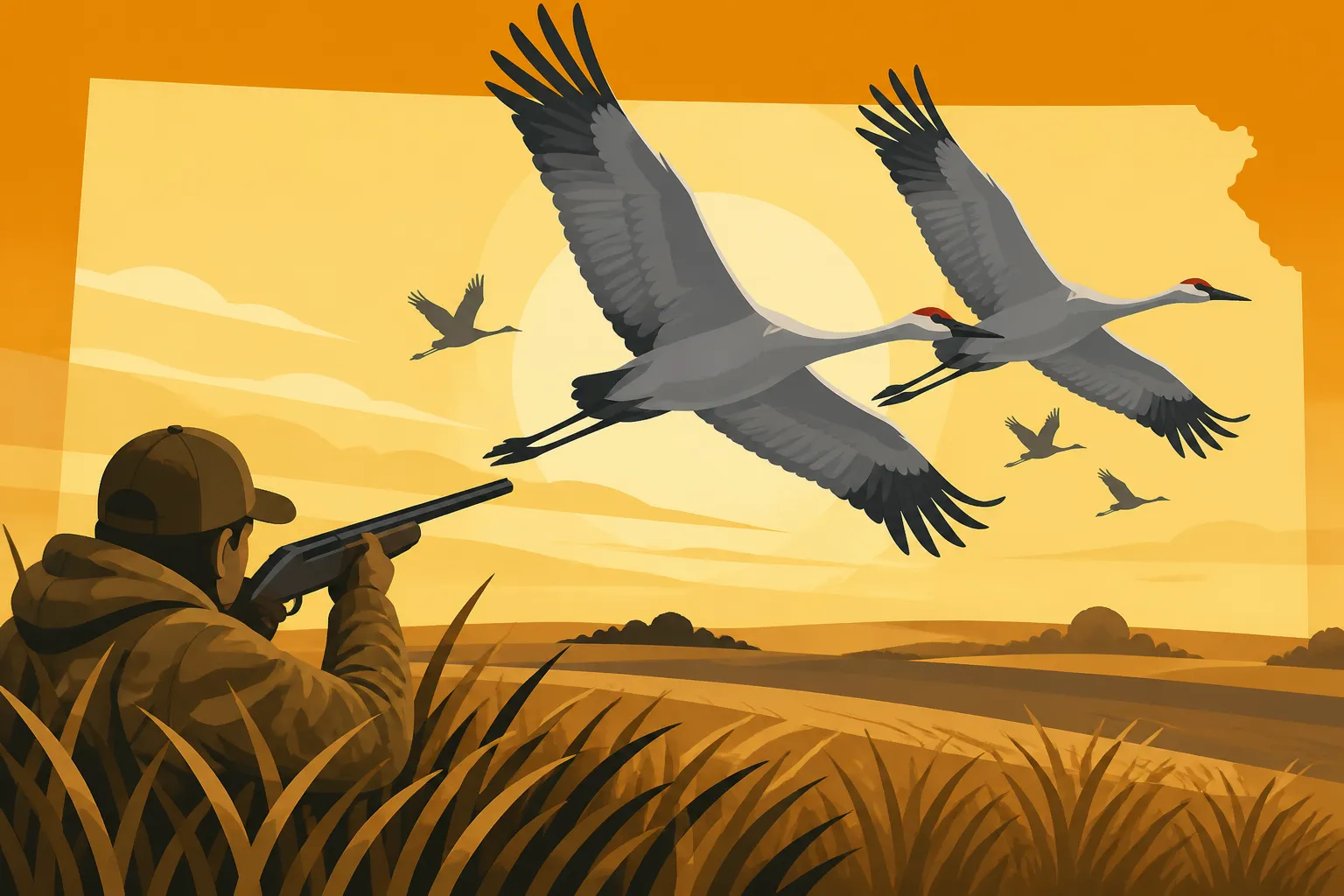
Sandhill Cranes Through Kansas
There's a unique thrill that comes with witnessing a massive flock of Sandhill Cranes migrating across the Kansas sky, their ancient, rattling calls echoing for miles. For many hunters, the challenge of pursuing these wary birds is a deeply rewarding experience, but figuring out where and when to find them, and how to successfully decoy them, can feel like trying to crack a secret code. This guide aims to demystify Sandhill Crane hunting in Kansas, offering practical advice and insight into the incredible journey of these magnificent birds.
Understanding Sandhill Crane Migration Through Kansas
Kansas holds a special place on the map for Sandhill Cranes, not just as a flyover state, but as a critical stopover point where they rest and refuel on their incredible journey. Missing the peak windows or not understanding their flight patterns can mean the difference between an unforgettable hunt and a long, cold day with an empty decoy spread.
The Central Flyway Connection
Kansas sits smack-dab in the heart of the Central Flyway, one of North America's four major migratory bird routes. This massive aerial highway funnels millions of birds, including Sandhill Cranes, from their northern breeding grounds in Canada, Alaska, and even Siberia, all the way down to their wintering habitats in the southern United States and Mexico. For cranes, Kansas offers vital resources, particularly expansive agricultural fields and large, shallow water bodies for roosting.
They are truly creatures of habit on this flyway, using generations-old routes and stopover points. Understanding this deep-rooted connection to the Central Flyway helps us appreciate why specific areas of Kansas become so crucial during their journey. It's not random; it's a finely tuned ecological machine, and we as hunters become a small part of that rhythm. This consistent movement is why hunters flock to Kansas, hoping to intercept these large, majestic birds as they follow the ancient pathways south.
Peak Migration Periods and Weather Factors
While cranes can be seen passing through Kansas for several months, there are distinct peak periods when their numbers truly swell. Generally, the major push for Sandhill Cranes through Kansas begins in late September and continues robustly through October, often extending into early November. This aligns with cooler temperatures settling in the northern states, pushing birds southward. A strong cold front from the north, especially one bringing significant snow or freezing temperatures, acts like a giant broom, sweeping birds down the flyway rapidly.
However, mild autumns can delay their arrival, leading to a more drawn-out migration. Local weather patterns in Kansas also dictate their behavior once they're here; strong winds can alter flight paths, and sudden temperature drops can push them to feed more aggressively. Keeping a close eye on long-range forecasts, not just for Kansas but for states north like Nebraska and the Dakotas, is crucial for timing your hunts. Using tools like the GoHunt app's weather overlays can give you a real edge in predicting these movements.
Key Stopover Points in Kansas
When these long-distance travelers need a break, they look for specific types of habitat in Kansas. The vast wetlands and agricultural lands of central and western Kansas are crane magnets. Major reservoirs like Cheyenne Bottoms Wildlife Area, Quivira National Wildlife Refuge, and parts of the McPherson Wetlands are legendary roosting sites, attracting tens of thousands of birds. These areas provide the safety of shallow water where cranes can stand overnight, protected from ground predators.
During the day, these birds will fan out, sometimes flying 20-30 miles from their roosts, to feed in harvested corn, milo, and wheat fields. They're primarily looking for waste grain, which provides the energy needed to continue their journey. Other important areas include the Arkansas River corridor in central Kansas, where numerous sandbars offer ideal roosting habitat, and vast stretches of farmland in counties like Stafford, Barton, and Rice. Understanding these key areas is your first step to success; without knowing where they generally want to be, the rest is just guesswork. If you're looking for public land opportunities, leveraging the Kansas Online Hunting Atlas can pinpoint critical areas near these major stopovers.
Identifying Sandhill Cranes: A Hunter's Guide
Before you even think about swinging a shotgun, it's vital to correctly identify Sandhill Cranes. They are often mistaken for other large birds, especially various heron species or even geese, particularly at a distance. Knowing their distinct features, calls, and behaviors is key to avoiding misidentification and ensuring a responsible hunt.
Distinguishing Features from Other Birds
Sandhill Cranes are truly magnificent birds, and once you know what to look for, they’re unmistakable. They stand tall, typically between 3 to 4 feet, with a wingspan that can reach up to 6 or 7 feet. Their plumage is predominantly gray, often with rusty brown staining, especially on their back and wings, which comes from preening with mud containing iron oxides. The most striking feature, and an instant giveaway, is their distinctive patch of bare, red skin on the crown of their head. Juveniles will have a feathered, gray head that gradually turns red as they mature.
In flight, their long necks are extended straight forward, and their long legs trail directly behind, unlike herons which often retract their necks into an S-shape. Their wingbeats are slow and deliberate, almost ethereal. Distinguishing them from other large birds, especially those like Great Blue Herons, comes down to this posture and their unique calls. Pay attention to the wing shape too; cranes have very broad, rounded wings compared to the more pointed wings of geese, and they often thermal high in the sky, spiraling upwards.
Call Recognition and Behavior
The call of a Sandhill Crane is perhaps its most iconic feature. It's a loud, trumpeting, rattling bugle that can carry for miles, often described as a guttural "kar-r-r-o-o-o." Unlike the honks of geese or the squawks of herons, the crane's call has a unique, almost prehistoric quality. This call is produced by their long trachea, which coils into their sternum, acting like a resonating chamber. Hearing this call is often the first sign that cranes are in the area, even before you see them.
Behaviorally, cranes are cautious birds. They typically feed in large, open agricultural fields where they have an unobstructed view of their surroundings, making them difficult to approach on foot. They'll send up sentinel birds that stand watch while the others feed. When spooked, they'll often run a short distance before taking flight, gaining altitude surprisingly quickly. Their flight patterns are also quite predictable; they fly in V-formations or long, undulating lines, similar to geese but with slower, more powerful wingbeats. Observing these behaviors is crucial when scouting potential hunting locations, as understanding their habits can help you set up more effectively. For insights into Reading a Kansas Creek Bottom for Deer Sign, similar principles of observing animal patterns can be applied to crane scouting, just in a different habitat.
Subspecies and Size Variations
While all Sandhill Cranes share similar characteristics, there are actually several subspecies, three of which are migratory and commonly seen. The one you'll predominantly encounter in Kansas is the Lesser Sandhill Crane (G. c. canadensis). These are the smallest and most numerous of the migratory Sandhills, weighing around 6 to 8 pounds. They breed in the far north and make up the vast majority of the Central Flyway population.
Occasionally, you might spot the larger Greater Sandhill Crane (G. c. tabida), which typically weighs 10 to 14 pounds, or even the Canadian Sandhill Crane (G. c. rowani), an intermediate-sized bird. Distinguishing between them in the field can be challenging, as size perception is difficult without a direct comparison. For hunting purposes in Kansas, regulations don't typically differentiate between subspecies; they are all simply "Sandhill Cranes." However, understanding that there can be size variations can help manage expectations when observing flocks and preparing for your shot, as the larger birds present a slightly bigger target.
Hunting Sandhill Cranes in Kansas: Regulations and Zones
Hunting Sandhill Cranes in Kansas isn't as straightforward as duck or goose hunting for many, largely because it often requires an additional permit. It's crucial to be well-versed in the specific regulations set forth by the Kansas Department of Wildlife and Parks (KDWP) and the U.S. Fish and Wildlife Service to ensure a legal and ethical hunt.
Permits, Licenses, and Stamps Required
Before you even step foot in a field, you'll need the proper paperwork. For Sandhill Crane hunting in Kansas, you must possess a valid Kansas hunting license. On top of that, you'll need a Kansas Migratory Waterfowl Habitat Stamp, which covers all migratory birds, and crucially, a Federal Sandhill Crane Permit. This federal permit is specific to Sandhill Cranes and is often overlooked by hunters accustomed to only duck or goose hunting. It's free but mandatory and must be obtained through the KDWP licensing system or vendors. Additionally, all migratory bird hunters, including those pursuing cranes, must be Harvest Information Program (HIP) certified, which is also acquired through the KDWP licensing process.
It’s important to remember that these requirements can change, so always check the most current KDWP hunting regulations summary before your season begins. Websites like GoHunt often provide links to official state resources, making it easier to stay updated. Don't risk a hefty fine or losing your hunting privileges by cutting corners on permits.
Season Dates and Bag Limits
Sandhill Crane season dates in Kansas are set annually, typically running from early November through mid-January, though specific dates can vary slightly year to year. These dates are designed to coincide with the peak migration through the state while balancing harvest goals with conservation efforts. The season is usually divided into two segments to accommodate varying migration patterns and hunter access. The daily bag limit for Sandhill Cranes is generally three birds per day, with a possession limit of nine birds.
These limits are strictly enforced to manage the population sustainably, so accurately counting your birds and keeping track of your possession is paramount. It's not uncommon for wildlife officers to check hunters in the field, so have your permits and birds readily accessible for inspection. Always consult the official KDWP regulations for the exact dates and limits for the current hunting season. Being aware of the Kansas Waterfowl Season Zones can also be helpful, as general waterfowl regulations often align geographically with crane movements.
Designated Hunting Zones and Restrictions
While Sandhill Cranes are migratory across Kansas, hunting is not permitted statewide. Kansas has designated specific hunting zones for Sandhill Cranes, primarily in the central and western parts of the state. These zones generally encompass areas with significant crane concentrations, such as the major agricultural regions and critical wetland stopovers previously mentioned. These zones are usually defined by county lines, making it clear where you can and cannot hunt.
Hunting within specific refuges or wildlife areas can also have additional restrictions or may be closed to crane hunting entirely. For instance, while cranes may roost in Cheyenne Bottoms, hunting regulations within the refuge boundaries might prohibit crane hunting or limit it to specific areas or dates. Always refer to the KDWP Sandhill Crane hunting zone map and consult specific wildlife area regulations if you plan to hunt on public ground. Knowing your boundaries and respecting "No Hunting" areas, as well as the 150-yard safety zone around occupied dwellings, is a non-negotiable part of responsible hunting.
Effective Tactics for Kansas Sandhill Crane Hunting
Hunting Sandhill Cranes is a unique challenge that combines elements of goose hunting with its own set of intricacies. These birds are incredibly intelligent and wary, and success often hinges on meticulous scouting, effective decoying, and precise calling. It's not a casual hunt; it demands dedication and a good understanding of crane behavior.
Scouting for Feeding and Roosting Areas
This cannot be stressed enough: scouting is the absolute bedrock of successful Sandhill Crane hunting. Cranes are creatures of habit. They will typically fly from their overnight roosts to specific feeding fields each morning and then return to roost in the evenings. Your primary goal in scouting is to identify these patterns. Look for large, open fields, especially those recently harvested for corn, milo, or wheat. Drive around at dawn and dusk, observing flight lines and looking for cranes actively feeding. Don't be afraid to pull over and watch them for an hour or two; note their entry and exit points in the field, and where they seem to concentrate.
Fresh sign, like tracks and droppings, is a clear indicator of recent activity. The bigger the concentration of sign, the better. Pay attention to wind direction, as this often dictates their flight paths into and out of fields. Once you find a field with consistent activity, it’s critical to secure permission from the landowner before you plan your hunt. This is where a good mapping app can really shine; services like GoHunt can help you identify landowner names quickly, making the permission-seeking process smoother.
Decoying Strategies That Work
Sandhill Cranes are often referred to as "ribbon birds" because of their long, lean appearance, and traditional goose decoys often don't cut it. Purpose-built Sandhill Crane decoys are highly recommended. Full-body crane decoys, especially those with realistic postures (feeders, sentries), are the most effective. Lesser numbers of high-quality decoys often outperform a larger spread of poor-quality ones. A spread of 12-24 full-body decoys is a good starting point, but don't hesitate to deploy more if you have them and the field allows.
Placement is key. Cranes prefer to land into the wind, so position your decoys downwind of your blind, leaving a landing zone directly in front of you. Mimic a natural feeding flock; place some decoys close together as if feeding, and others scattered as if standing guard. A popular setup involves creating a "J" or "U" shape with your decoys, leaving the open end facing into the wind where you want the birds to land. Consider adding a few motion decoys, like flags or flyers, to grab their attention from a distance, especially if you're hunting in flat, open country where visual draw is critical. Much like Decoying a Kansas Whitetail Buck, understanding the animal's natural approach and sight lines is paramount for success.
Calling Techniques and Equipment
Crane calling is an art, but it's not overly complex. The basic call to master is the "rattle" or "bugle," mimicking their loud, guttural cries. There are excellent mouth calls and electronic calls available designed specifically for Sandhill Cranes. Start with soft, pleading calls as birds are distant, gradually increasing volume and intensity as they approach. Don't overcall; let the birds work your spread and respond to their reactions. If they seem hesitant, back off the call. If they're locked on, a few sharp, excited calls can sometimes seal the deal.
Electronic calls, if legal in your specific hunting zone (always check regulations), can be incredibly effective, especially for drawing birds from a long distance. Combining an e-caller with realistic decoy spreads can significantly increase your success rate. Practice your calling before the season to ensure you sound convincing. A good call, combined with a realistic decoy spread, can bring those high-flying cranes right into your landing zone.
Blinds and Concealment for Open Country
Cranes have exceptional eyesight, making concealment absolutely critical, especially in the open expanses of Kansas farm country. Layout blinds are arguably the most effective choice, allowing you to lie flat in the field, completely concealed, until the birds commit. It’s essential to brush in your layout blind thoroughly with natural vegetation from the field you're hunting – corn stalks, milo stubble, wheat straw, even dirt clods. The goal is to make it disappear into the surrounding environment.
If layout blinds aren't an option, a well-placed pit blind or a natural field edge with heavy cover can work, but you'll need to be extremely still. Hunting from a vehicle is typically not allowed for migratory birds. Consider using dark, drab clothing that blends with the field. When cranes are working your spread, remain absolutely motionless until the very last second. Even the slightest movement can flare these wary birds. For more tips on blending into the environment, you might find ideas from articles like Ground Blind Brushing In useful, as similar principles apply to any form of concealed hunting.
Conservation and Management of Kansas Sandhill Cranes
The opportunity to hunt Sandhill Cranes is a privilege, one that is carefully managed to ensure healthy populations for future generations. Understanding the conservation efforts and the role hunters play is an important part of responsible sportsmanship.
Population Trends and Monitoring Efforts
Sandhill Crane populations have generally been stable or increasing over recent decades, a conservation success story. This is largely due to robust management efforts by state and federal agencies, including the U.S. Fish and Wildlife Service, which conduct annual surveys to estimate population sizes and monitor trends. These surveys, often aerial counts along the Central Flyway, provide critical data used to set season lengths and bag limits. The primary population indicator for Lesser Sandhill Cranes comes from surveys conducted in the Platte River Valley of Nebraska, a major spring staging area.
While overall numbers are strong, localized issues like habitat loss or drought can affect specific regions. Kansas plays its part by monitoring local crane use of wetlands and agricultural areas. Hunters contribute directly to this monitoring through the Harvest Information Program (HIP) and through mandatory reporting in some states. This data helps biologists understand harvest impacts and inform future management decisions, ensuring that the Sandhill Crane remains a vibrant part of the Kansas ecosystem.
Habitat Protection and Restoration
The continued success of Sandhill Cranes relies heavily on the availability of suitable habitat, both for breeding and for their crucial stopover points during migration. In Kansas, this means protecting and restoring large, shallow wetlands for roosting, like Cheyenne Bottoms and Quivira, and maintaining expansive agricultural landscapes that provide waste grain for feeding. Conservation programs, often funded by hunting license sales and federal excise taxes on hunting equipment, support these efforts.
Many private landowners also contribute by enrolling their property in conservation programs or simply managing their land in ways that benefit cranes and other wildlife. For instance, leaving some corn or milo standing after harvest, or delaying tillage, can provide vital food sources. The health of these habitats is interconnected; without the large, safe roosting areas, cranes cannot fully utilize the feeding fields, and vice-versa. Hunter dollars and engagement are critical components of maintaining these vital landscapes.
Hunter's Role in Sustainable Management
Hunters are often the most passionate advocates for conservation, and this holds true for Sandhill Cranes. By purchasing licenses, stamps, and permits, hunters directly contribute funds that go back into wildlife management, research, and habitat acquisition. Beyond financial contributions, ethical hunting practices are paramount. This includes adhering to all regulations, accurately identifying birds to avoid accidental harvest of protected species, and striving for clean, ethical kills to minimize crippling.
Participating in surveys, providing accurate harvest data, and supporting conservation organizations that focus on migratory bird habitat are all ways hunters contribute to sustainable management. It's a partnership between wildlife agencies, landowners, and hunters that ensures the majestic sight and sound of Sandhill Cranes will continue to grace the Kansas skies for generations to come. Your actions in the field directly reflect on the broader hunting community and its commitment to conservation.
Preparing for Your Kansas Sandhill Crane Hunt
A well-prepared hunter is a more successful and safer hunter. Sandhill Crane hunting can mean long hours in potentially cold, windy fields. Having the right gear, knowing how to handle your harvest, and prioritizing safety are all essential components of a rewarding experience.
Essential Gear and Clothing
Hunting Sandhill Cranes often means being out in open fields during cooler fall and early winter weather. Layering is crucial. Start with a moisture-wicking base layer, add insulating mid-layers like fleece or down, and top it off with a waterproof and windproof outer shell in drab, field-appropriate colors (camo patterns that mimic corn or milo stubble are ideal). Don't forget a warm hat, gloves, and waterproof boots – cold feet or hands can quickly end a hunt.
Beyond clothing, you’ll need:
- Shotgun: A 12-gauge shotgun with a modified or improved cylinder choke is a popular choice. Steel shot is required for all migratory bird hunting. Shot sizes like BB or #2 are effective for cranes.
- Ammunition: Bring plenty, as opportunities can come quickly, and you might need to take follow-up shots.
- Decoys: As discussed, purpose-built full-body Sandhill Crane decoys are best.
- Calls: A good quality Sandhill Crane mouth call (and an e-caller if legal and desired).
- Blind: A layout blind with good brushing capabilities.
- Binoculars: Essential for scouting and identifying distant birds.
- Rangefinder: Useful for judging distances in flat country, especially when estimating where birds will land. Understanding Rangefinding in Flat Country can dramatically improve your accuracy and confidence.
- Licensing and Permits: Ensure all are current and easily accessible.
- Water and Snacks: Sustenance for those long hours.
- First-aid kit: Always a good idea.
Field Care and Processing Your Harvest
Once you've harvested a crane, proper field care is important to ensure the meat is good. Sandhill Cranes are known as "ribeye in the sky" for their delicious, dark red meat. The breast meat is the primary focus. Immediately after the shot, secure your bird and quickly cool it down. If it's warm weather, gutting the bird in the field can help cool the carcass faster.
The most common method is to breast out the bird. This involves making an incision along the keel bone and carefully removing the breast meat from both sides. You can leave a single wing attached for transport to satisfy tagging requirements, or ensure you keep proof of species identification if you process fully in the field. Place the breast meat in a cooler with ice as soon as possible. Later, at home, you can clean any remaining shot, trim sinew, and prepare the meat for cooking or freezing. Remember to Field Dressing in Warm Kansas Weather if you're hunting early in the season when temperatures might still be high.
Safety Considerations in the Field
Safety is always paramount when hunting. When hunting Sandhill Cranes, particularly with a group, communication is key. Establish clear zones of fire to prevent swinging on birds directly over another hunter. Always identify your target positively before shooting. Cranes are large birds, and stray pellets can travel a significant distance. Be mindful of houses, roads, and livestock in the area.
Pay attention to your footing in agricultural fields, as uneven ground, stubble, and hidden irrigation ruts can lead to trips and falls, especially in low light. If using layout blinds, ensure you can safely and quickly emerge from your blind to shoot. It's also wise to inform someone of your hunting location and expected return time – a practice often referred to as "leaving a trip plan for a public hunt." Carrying a fully charged cell phone for emergencies is always a good idea. By prioritizing safety, you ensure that everyone has an enjoyable and successful hunt.
| Requirement/Item | Description | Status for Sandhill Crane Hunting in Kansas |
|---|---|---|
| Kansas Hunting License | General license required for all hunting. | Required |
| KS Migratory Waterfowl Habitat Stamp | State stamp for all migratory birds. | Required |
| Federal Sandhill Crane Permit | Specific federal permit for Sandhill Cranes. | Required (free) |
| HIP Certification | Harvest Information Program registration. | Required (free) |
| Shotgun | 12-gauge recommended. | Recommended |
| Ammunition | Steel shot only. Sizes BB, #2 common. | Required (steel shot) |
| Decoys | Full-body Sandhill Crane decoys. | Highly Recommended |
| Calls | Mouth call or electronic call. | Recommended (check e-caller legality) |
| Blind | Layout blind, well-brushed. | Highly Recommended |
| Daily Bag Limit | Number of birds you can take in one day. | 3 birds (check current regulations) |
| Possession Limit | Total birds you can possess. | 9 birds (check current regulations) |
| Hunting Zones | Specific counties where crane hunting is allowed. | Designated Zones Only |
Disclaimer
The information provided in this guide is for general informational purposes only and is not a substitute for official regulations. Hunting laws and regulations in Kansas can change frequently. It is the responsibility of every hunter to consult the most current Kansas Department of Wildlife and Parks (KDWP) regulations and federal migratory bird regulations before engaging in any hunting activity. Always confirm season dates, bag limits, permit requirements, and legal hunting zones directly with official KDWP sources.