Why Kansas Unit 4 Is Resident Only
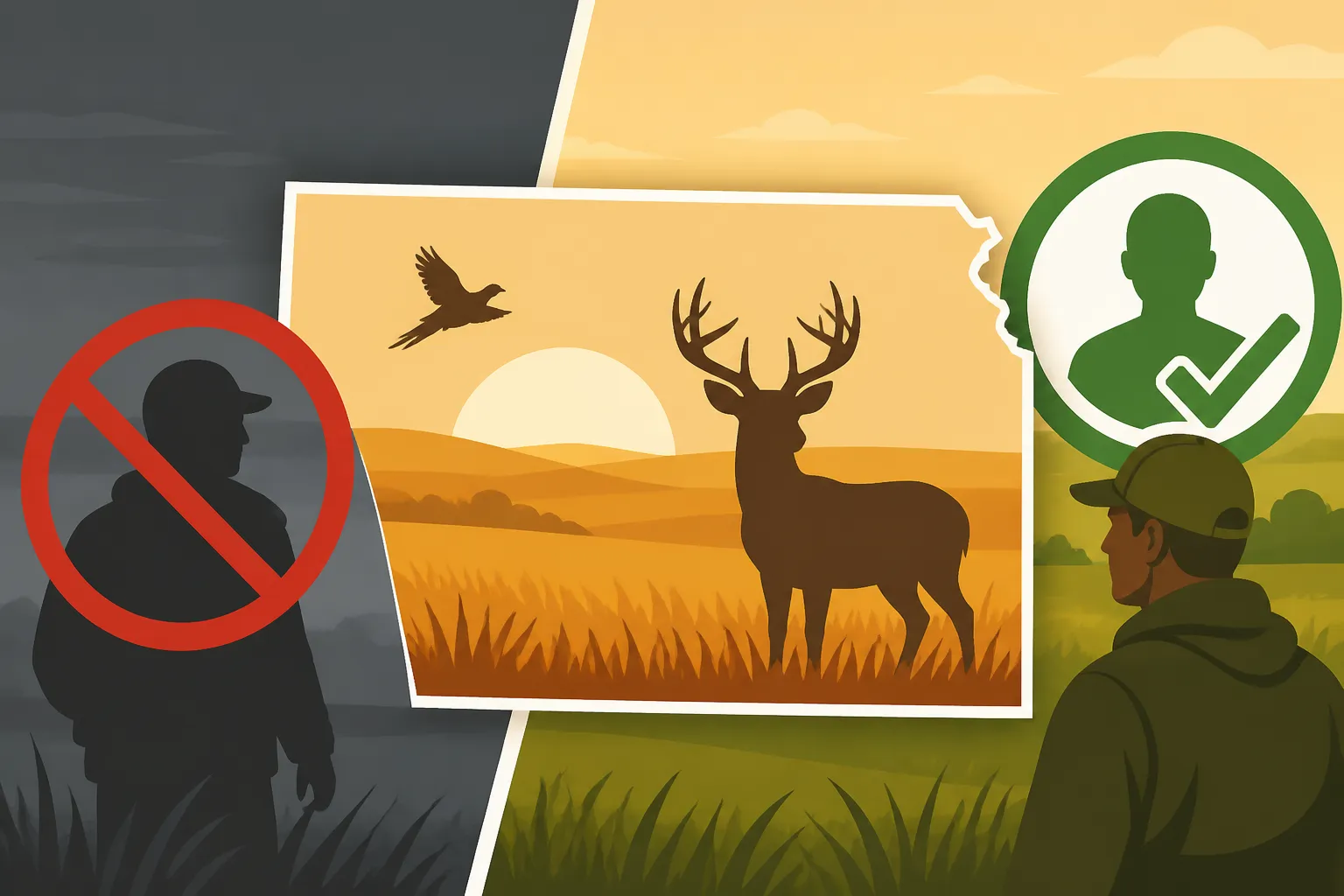
It can be incredibly frustrating for non-resident hunters to pour over Kansas hunting maps, dream of trophy whitetails, only to discover that one of the state's prime units—Unit 4—is completely off-limits. This isn't just an arbitrary rule; it's a carefully considered management decision by the Kansas Department of Wildlife, Parks and Tourism (KDWPT) designed to protect a unique part of the state's deer herd. This guide will walk you through the historical context, ecological reasons, and the current implications of why Kansas Deer Unit 4 remains a resident-only hunting zone.
The Foundation of Kansas Deer Management Units
Before we dive into the specifics of Unit 4, it's crucial to understand why Kansas divides its deer hunting landscape into units at all. It's not just about drawing lines on a map; it's a sophisticated system designed to manage deer populations effectively, ensuring healthy herds and quality hunting opportunities for everyone. Without these units, the KDWPT would be hard-pressed to tailor their strategies to the wildly varying habitats and deer densities found across the state.
How Deer Units Shape Management Decisions
Kansas is an incredibly diverse state, from the dense timbered river bottoms in the east to the wide-open plains of the west. A "one-size-fits-all" approach to deer management simply wouldn't work. The KDWPT uses these units to implement specific harvest quotas, season lengths, and permit types based on local ecological conditions, habitat availability, and population trends. For instance, a unit with abundant food and cover might sustain a higher deer density and thus handle more hunting pressure than a unit with marginal habitat. This granular control allows for targeted conservation efforts and helps prevent overharvesting in vulnerable areas or underharvesting where populations might be booming. When applying for permits, understanding these units is key to choosing a primary and adjacent Kansas unit that aligns with your hunting goals.
Balancing Hunter Opportunity and Herd Health
The KDWPT's primary goal is to maintain a healthy and sustainable deer population across the state while also providing ample hunting opportunities. This is a delicate balance. If a unit is over-hunted, especially for bucks, the buck-to-doe ratio can become skewed, leading to a later, more drawn-out rut, and potentially impacting future antler quality. Conversely, if antlerless deer aren't harvested sufficiently, populations can grow beyond the carrying capacity of the land, leading to habitat degradation, increased disease transmission, and more deer-vehicle collisions. The unit system, therefore, is a dynamic tool, constantly adjusted based on harvest data, aerial surveys, and landowner feedback to ensure both hunter satisfaction and the long-term viability of the herd. This is especially true for managing Kansas Antlerless Hunts and Filling the Freezer, which plays a vital role in herd management.
Unpacking the "Resident-Only" Rule for Unit 4
The resident-only status of Kansas Deer Unit 4 isn't a new development, nor is it a decision made lightly. It stems from a specific conservation history and ongoing management strategy aimed at protecting a unique and often vulnerable segment of the Kansas deer population. This rule prioritizes local residents for a unit that carries significant ecological importance.
Historical Context and Conservation Efforts
Kansas Unit 4, situated in the extreme southwestern part of the state, has historically held a unique and smaller population of deer, particularly mule deer. Unlike the eastern and central parts of Kansas where whitetail deer thrive, Unit 4's arid, open landscape presents different challenges for deer survival and population growth. In the past, these western units experienced greater pressure, and managers observed that these specific deer populations, especially mule deer, were more susceptible to decline from intense hunting pressure. To safeguard these more fragile populations and ensure their long-term viability, the KDWPT implemented the resident-only rule. This decision aimed to reduce overall pressure, allowing the deer herd, particularly mule deer, to stabilize and grow without the added impact of non-resident hunters vying for limited permits.
Mule Deer Management and Unit 4's Role
While whitetails are abundant across Kansas, Unit 4 is one of the few units where you might consistently find mule deer. However, the Mule Deer in Western Kansas have been facing challenges, including habitat loss, drought, and competition with whitetails. The resident-only designation for Unit 4 is a direct response to the KDWPT's commitment to managing these distinctive deer effectively. By limiting permits to residents, they can more precisely control the harvest numbers, particularly for mule deer bucks, which are often slower to reproduce and more sensitive to hunting pressure than whitetails. It’s a way to give the local population a stronger voice and more direct access to manage their local resource, ensuring that the unique characteristics of the Unit 4 deer herd are preserved for future generations. For non-residents keen on harvesting a mule deer, it highlights the importance of understanding the Kansas Mule Deer Stamp Draw and which units might allow for such a pursuit.
The Unique Ecology and Deer Herd of Kansas Unit 4
Kansas Deer Unit 4 isn't just another square on the map; it's an ecological niche distinct from much of the state, and its deer herd reflects that. Understanding this unique environment is key to grasping why special management rules, like the resident-only stipulation, are in place. This area, part of the High Plains, presents a different set of challenges and opportunities for deer compared to the lush, agricultural regions further east.
Landscape and Habitat Characteristics
Unit 4 is primarily characterized by vast stretches of shortgrass prairie, interspersed with agricultural fields, deep river breaks, and isolated pockets of timber, often along the Cimarron River or its tributaries. This is classic Western Kansas Plains Hunting Country. The availability of water sources, often scarce, dictates deer movement and distribution more acutely here. Unlike the heavy timber and abundant row crops of eastern Kansas, deer in Unit 4 rely heavily on creek bottoms, plum thickets, and draws for cover, and a mix of agricultural crops like wheat and milo, along with native browse, for sustenance. This sparse, often dry habitat means deer populations, especially mule deer, tend to be less dense and more spread out. They also face different challenges, such as larger home ranges and increased vulnerability during harsh winters or prolonged droughts.
Distinct Deer Population Dynamics
The deer in Unit 4 exhibit different population dynamics than their eastern Kansas counterparts. While whitetail deer are still present, Unit 4 is one of the primary areas for mule deer in Kansas. Mule deer tend to have lower reproductive rates, mature slower, and are often more susceptible to environmental stressors. Their numbers are generally much lower than whitetails, making them a more sensitive species to manage. The KDWPT monitors these populations closely, recognizing that even small changes in harvest or environmental conditions can have a more significant impact on the Unit 4 herd. This distinct dynamic is why the state implements specific strategies, including the resident-only rule, to ensure the long-term health and stability of these deer, preventing localized declines and maintaining genetic diversity. It's about protecting the character of the herd that calls this specific, challenging landscape home.
Impacts and Perspectives: What It Means for Hunters
The resident-only rule for Kansas Deer Unit 4 has significant implications, not just for non-resident hunters but also for residents and the overall perception of fair chase and resource allocation. It shapes hunting strategies, expectations, and even the broader conversation about public land access and wildlife management.
Implications for Non-Resident Hunters
For non-resident hunters dreaming of a Kansas buck, Unit 4 being resident-only simply means it's off the table. This can be a bitter pill, especially for those who might have heard whispers of impressive mule deer or unique hunting opportunities in the southwestern corner of the state. It forces non-residents to focus their efforts on the other 18 deer units. While Kansas is renowned for its deer hunting throughout the state, particularly for trophy whitetails in units like 1, 5, and 6, the inability to apply for Unit 4 narrows the options. It also emphasizes the importance of understanding the complexities of the Kansas Deer Permit System and applying strategically. Non-residents often turn to resources like GoHunt to research success rates and public land opportunities in other units, like Public Land Deer Hunting in Kansas, to maximize their draw odds and plan their hunts effectively.
Benefits and Criticisms from Resident Hunters
For Kansas residents, the "resident-only" status of Unit 4 is generally viewed as a significant benefit. It reduces competition for permits in a unit with more sensitive deer populations, ensuring that local hunters have better access and a higher chance of drawing a tag. This prioritization is often seen as a fair allocation of a state resource to its tax-paying citizens. It also provides a unique, less pressured hunting experience for those who live locally. However, even among residents, there can be criticisms. Some argue that limiting access, even to protect a resource, goes against the spirit of maximizing hunter opportunity. Others might question if the management strategy is truly effective or if other measures could achieve the same conservation goals without restricting access. Ultimately, it sparks healthy debate about what "fairness" means in wildlife management and resource allocation.
Navigating the Kansas Deer Permit System as a Non-Resident
If you're a non-resident hunter with your sights set on Kansas, the fact that Unit 4 is resident-only doesn't mean you're out of luck for a fantastic deer hunt. Kansas still offers incredible opportunities, but you need to understand how the permit system works and how to apply strategically. It’s a draw system, and careful planning is essential.
Understanding the Non-Resident Deer Draw
The Kansas deer draw can feel a bit complex, but once you get the hang of it, it's manageable. As a non-resident, you'll be applying for an Either-Species/Either-Sex permit, which allows you to harvest one antlered deer of either whitetail or mule deer species, as well as one antlerless whitetail. The application period for these coveted tags typically opens in April. You'll need to choose a primary unit and an adjacent unit, and this is where your research really pays off. Tools like GoHunt's Insider service offer data and insights into draw odds for different units, helping you make an informed decision on where to apply based on your preference points and hunting goals. Many non-residents also opt to purchase a Kansas Preference Point without applying for a tag if their goal is to build points for future, harder-to-draw units.
Strategic Unit Selection Beyond Unit 4
Since Unit 4 is off the table, your focus shifts to the remaining 18 units. These units offer diverse hunting experiences, from the timbered river bottoms and ag fields of eastern Kansas to the rolling plains and CRP grasslands further west. When making your selections, consider the following:
- Whitetail vs. Mule Deer Focus: If your primary goal is a trophy whitetail, units in the eastern and central regions, like 1, 2, 5, 6, 7, 8, 10, 11, and 14 often boast higher whitetail densities and a good reputation for mature bucks. For mule deer, you'll want to look at western units where they primarily reside, such as units 1, 2, 3, 17, and 18, but remember the mule deer stamp draw adds another layer of complexity here.
- Public Land Access: Some units have more public hunting land in Kansas, including extensive Walk-In Hunting Access (WIHA) properties, State Wildlife Areas, and Corps of Engineers land. If you're planning a DIY hunt, researching these units for available public ground is critical. The Kansas online hunting atlas is an invaluable resource.
- Draw Odds: Past draw odds, often available through KDWPT reports or services like GoHunt, can give you an idea of how many preference points it might take to draw a specific unit. Some units are notoriously difficult to draw, while others have much higher success rates for non-residents, especially if you have a few points accumulated. Understanding how many points to draw a Kansas unit is a crucial part of your application strategy.
| Kansas Deer Units | General Location | Primary Deer Species | Public Land Opportunities | Difficulty to Draw (Non-Res) |
|---|---|---|---|---|
| Unit 4 | Southwest | Mule Deer, Whitetail | Moderate | Resident Only |
| Unit 1 | Northwest | Whitetail, Mule Deer | High (WIHA, state land) | High |
| Unit 2 | North Central | Whitetail, Mule Deer | Moderate | High |
| Unit 3 | Western Central | Whitetail, Mule Deer | Moderate | Moderate |
| Unit 5 | Southeast | Whitetail | Moderate (state land) | Moderate |
| Unit 6 | East Central | Whitetail | High (Corps, state land) | Moderate |
| Unit 7 | Central | Whitetail | Moderate (WIHA) | Moderate |
| Unit 8 | South Central | Whitetail | Moderate (WIHA) | Moderate |
| Unit 9 | Northeast | Whitetail | Low | High |
| Unit 10 | North Central | Whitetail | Moderate | Moderate |
| Unit 11 | East Central | Whitetail | Moderate | Moderate |
| Unit 12 | Southeast | Whitetail | Moderate (state land) | Moderate |
| Unit 13 | Central | Whitetail | Moderate | Moderate |
| Unit 14 | South Central | Whitetail | Moderate | Moderate |
| Unit 15 | Northeast | Whitetail | Low | Moderate |
| Unit 16 | East Central | Whitetail | Moderate | Moderate |
| Unit 17 | West Central | Whitetail, Mule Deer | High (WIHA, Cimarron) | Moderate |
| Unit 18 | Western | Whitetail, Mule Deer | High (WIHA) | High |
| Unit 19 | Eastern | Whitetail | High (Corps, state land) | Moderate |
Note: "Difficulty to Draw" is a generalization and can fluctuate year-to-year based on applicant numbers and permit allocations. Always check current KDWPT regulations and draw statistics.
Future Outlook and Conservation Efforts in Unit 4
The resident-only status of Kansas Deer Unit 4 is not set in stone forever, but it is a reflection of ongoing conservation efforts and the KDWPT's adaptive management approach. The future of this unit, and indeed all Kansas deer units, depends heavily on environmental factors, population trends, and evolving management strategies.
Ongoing Monitoring and Adaptive Management
The Kansas Department of Wildlife, Parks and Tourism continually monitors deer populations across all units, including Unit 4. This involves annual harvest surveys, aerial counts, and health assessments to track population density, buck-to-doe ratios, fawn recruitment, and overall herd health. For Unit 4, specific attention is paid to the health and numbers of its mule deer population, as these are often more sensitive indicators of ecological stress in the arid western landscape.
Adaptive management means that if data shows a significant, sustained increase in the deer population within Unit 4, or if environmental conditions improve dramatically, the KDWPT could potentially revisit the resident-only rule. However, any such change would be carefully considered, likely through public meetings and expert consultation, ensuring that the long-term health of the herd remains the priority. The department's commitment to sound science and sustainable practices means decisions are made based on what is best for the wildlife resource, not simply popular demand. Continued efforts in habitat improvement, disease monitoring, and responsible landowner practices will all play a part in shaping the future of hunting in this unique unit.
Broader Conservation Initiatives Affecting Western Kansas
The fate of Unit 4's deer herd is also intertwined with broader conservation initiatives impacting Western Kansas. Habitat conservation programs, particularly those focused on preserving native grasslands and improving riparian areas along vital water sources like the Cimarron River, are crucial. Practices that reduce soil erosion, promote diverse native plant communities, and manage grazing can have a direct positive impact on deer health and numbers.
Furthermore, issues like Chronic Wasting Disease (CWD) and EHD Effects on Kansas Deer Herds are continually monitored. The KDWPT has stringent CWD testing and carcass rules to mitigate the spread of these diseases, which can significantly impact deer populations, especially in smaller, more isolated herds. The future of Unit 4’s deer hunting will undoubtedly depend on the success of these overarching conservation efforts, combined with careful population management, to ensure that this unique resident-only opportunity remains viable and robust for generations of Kansas hunters.
Disclaimer
The information provided in this article is for general guidance only and is subject to change. Hunting regulations, season dates, permit requirements, and unit boundaries are set by the Kansas Department of Wildlife, Parks and Tourism (KDWPT) and can be updated annually. Always consult the most current KDWPT regulations summary or their official website before planning any hunting activity.