Kansas Public Land Baiting Rules
Navigating the myriad of hunting regulations in Kansas can sometimes feel like trying to untangle a stubborn knot, especially when it comes to something as nuanced as baiting. Many of us, myself included, have stood in a field, scratching our heads, wondering if that pile of spilled corn from a previous harvest or a stray mineral block left by another hunter could land us in hot water. This guide is here to cut through that confusion, clarifying the specific rules around baiting on Kansas public hunting land so you can enjoy your time afield with confidence and peace of mind.
Understanding the Core Rules of Baiting in Kansas
Kansas has specific rules regarding baiting, and it's crucial for every hunter to understand them, especially when hunting on public land. The laws are designed to maintain fair chase principles, manage wildlife populations responsibly, and minimize the spread of disease. It’s not just about avoiding a ticket; it’s about preserving the integrity of our hunting heritage for future generations.
The Legal Definition of Baiting
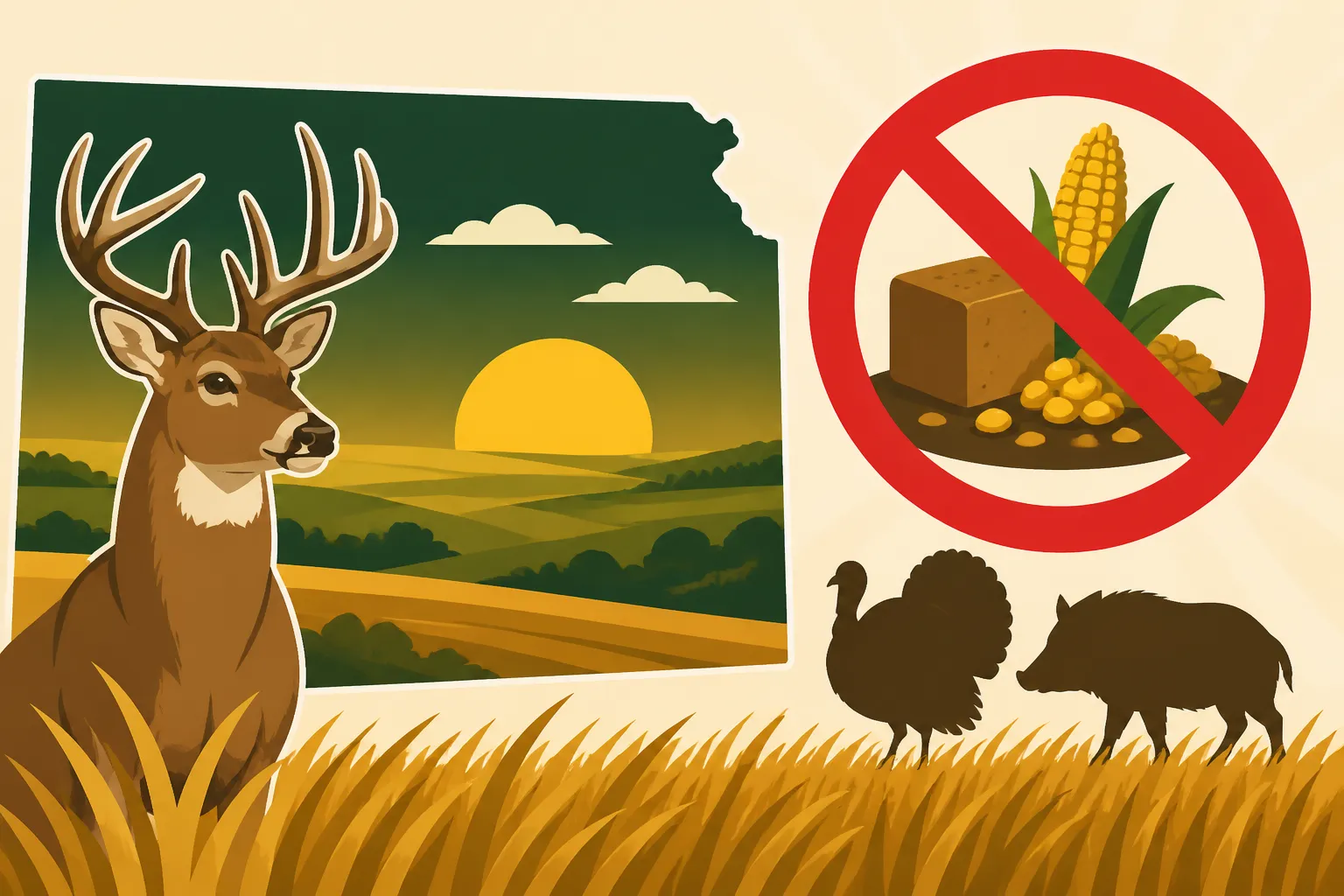
When we talk about baiting in Kansas, the law is pretty clear on public land: you cannot hunt over bait. But what exactly constitutes "bait"? Generally, bait is defined as any grain, fruit, vegetable, nut, hay, salt, mineral, or other food that attracts wildlife, which is placed for the purpose of hunting. This definition includes both natural and manufactured attractants if they are deliberately placed. So, if you're thinking about dropping a bag of corn or setting out a feeder on a Walk-In Hunting Access (WIHA) tract or a state wildlife area, you're stepping into illegal territory.
It’s not just whole kernels of corn either. This definition extends to various forms of food materials, whether processed or unprocessed, that are used to lure animals into a specific area. This includes things like protein pellets, sweet feeds, or even spent grain from brewing. The key element here is the placement for the purpose of hunting. This is where the distinction often gets murky for hunters, especially those accustomed to different regulations in other states or on private land where baiting might be permitted.
Why Public Land Rules Differ from Private Land
This is where a lot of the frustration comes in, right? You might drive past a private farm where a landowner has a feeder running all year, yet you can't even put out a mineral block on public ground. The difference isn't arbitrary; it's rooted in the core philosophies of public land management. Public lands are for everyone, and the rules aim to provide an equitable hunting experience for all users while protecting the resource.
Firstly, public land is often under much greater hunting pressure than private tracts. Allowing baiting on these heavily used areas would create an unfair advantage for those who could afford to constantly re-bait, and it would concentrate deer, leading to over-harvesting in small areas. Secondly, there’s a strong emphasis on "fair chase" on public lands. Baiting can reduce the challenge and skill involved in locating, stalking, and harvesting game, which many argue diminishes the hunting experience. Finally, and perhaps most critically from a wildlife management perspective, concentrating animals around artificial food sources greatly increases the risk of disease transmission. This is a huge concern, especially with threats like Chronic Wasting Disease (CWD) becoming more prevalent.
Penalties for Violating Baiting Regulations
Ignorance of the law is never an excuse, and violations of baiting regulations on public land in Kansas can carry some pretty serious consequences. It's not just a slap on the wrist. Depending on the severity and context of the offense, you could be facing significant fines, the loss of your hunting license for a period, or even the confiscation of your equipment. Think about your rifle, your bow, or even your vehicle if it was used in the commission of the offense.
Beyond the legal ramifications, there's also the ethical stain. A violation becomes part of your record and can impact your ability to hunt in other states, too. No one wants to be "that guy" who broke the rules and tarnished the reputation of hunters as a whole. Always remember that conservation officers are out there, and they take these regulations seriously. It's far better to educate yourself and err on the side of caution than to face the penalties. Kansas Wildlife Violation Penalties can be quite steep, and it's simply not worth the risk.
Common Scenarios and Grey Areas
The legal definition of baiting can sometimes feel like it has more grey areas than a foggy morning in a river bottom. Many hunters struggle with the fine line between what's considered legal and what isn't, especially when natural agricultural practices or commonly used attractants come into play. Let's break down some of these scenarios to help you navigate them confidently.
Food Plots and Natural Agricultural Practices
One of the biggest points of confusion often arises with food plots or typical farming operations. Kansas law makes a distinction: hunting over normal agricultural practices, such as standing crops or those harvested in a customary manner, is generally permitted. This means if you're hunting near a field of standing corn, or a soybean field that has been cut and still has residual beans on the ground, you are usually fine. This is considered part of the natural food source available to wildlife.
However, the line gets crossed when grain or other feed is actively placed or altered to concentrate game for hunting purposes outside of these normal practices. For example, if a farmer has harvested a cornfield, and you then go in and dump more corn in a pile or create a new "feed line," that's baiting. Similarly, hunting over a specifically planted food plot is generally okay if it’s genuinely grown as a crop and not just a small patch of feed put out solely for hunting. The intent and the nature of the placement are key. Always check the specific land rules, as some state wildlife areas may have additional restrictions on hunting near certain agricultural areas or food plots they manage.
Mineral Blocks, Attractants, and Scents
This is another area where hunters frequently get tripped up. Many mineral blocks or attractants marketed to hunters contain salts, minerals, or even sweet components designed to draw deer in. On Kansas public land, placing these is generally considered baiting. It falls under the umbrella of "salt, mineral, or other food that attracts wildlife." The idea is that these items are designed to act as a draw, concentrating animals, which goes against the fair chase and disease prevention principles of public land hunting.
What about scents? Most pure curiosity scents or deer urine-based attractants, used to mask human odor or pique a buck's interest, are typically not considered bait, as they are not a food source. However, be cautious with any "attractant" that has a strong food-based component. If it's something a deer might consume, even if not explicitly advertised as "food," it could be interpreted as bait. When in doubt, stick to pure cover scents or traditional deer urine/gland lures and avoid anything with a strong sweet or food-like aroma that could be ingested.
Accidental Baiting and Residual Attractants
Sometimes, bait can be present on public land through no fault of your own. Maybe a previous hunter left a salt block, or there's a spill from an old agricultural operation that isn't actively being farmed. What should you do if you encounter this? The general rule of thumb is that you cannot hunt over bait, regardless of who placed it or how it got there. If you discover bait, you should move to a different location where bait is not present.
It's a good practice to be observant when you enter a new area. If you find something that looks like bait, document it (a quick photo with a timestamp can be helpful), and if it's substantial or looks recently placed, you might consider reporting it to KDWP. Your responsibility is to ensure you are not hunting in the vicinity of bait. This can be tricky, as attractants can linger. It's best to allow a reasonable amount of time (often defined as 10-30 days by regulations in other areas, though Kansas's specific timeframe may vary for public land – always consult current regulations) to pass after bait has been removed or naturally dispersed before hunting the area.
How to Stay Compliant and Hunt Ethically
Staying on the right side of the law and maintaining ethical hunting practices on public land isn't just about avoiding penalties; it's about being a responsible steward of our wildlife resources. There are practical steps you can take to ensure you're always compliant and contributing positively to the hunting community.
Consulting Official KDWP Resources
The absolute best way to stay informed about Kansas hunting regulations, including baiting rules, is to go straight to the source: the Kansas Department of Wildlife and Parks (KDWP). Their website is a treasure trove of information, and they publish annual hunting regulations summaries that detail all the dos and don'ts. Make it a ritual to review these regulations every single year, even if you think you know them backward and forward. Laws can change, interpretations can be updated, and you don't want to be caught off guard.
Don't just skim through; read the sections on baiting and public land specifically. If there's ever a doubt, a quick call to a local KDWP office or game warden can provide clarification. It's much better to ask a question beforehand than to explain a violation after the fact. Remember, your personal interpretation of a rule won't hold up in court if it contradicts the official regulation.
Scouting and Observation as Alternatives
Instead of relying on attractants, embrace the art of scouting and observation. This is where the real satisfaction in hunting lies anyway! Learning to read the land, understand deer movement patterns, and identify natural food sources will make you a more successful and ethical hunter. Spend time before the season using tools like onX Hunt to identify potential bedding areas, travel corridors, and natural funnels on public land. Look for agricultural fields, creek bottoms, and timber edges that naturally draw deer.
On the ground, look for fresh tracks, rub lines, scrape areas, and droppings. Identify mast crops like acorns or persimmons, or standing crops that will provide natural forage. By understanding how deer use the landscape without artificial inducement, you develop skills that are far more rewarding and consistently legal. Scouting Kansas Walk-In Tracts Before the Opener can give you an edge, allowing you to pinpoint those natural hotspots.
Tools to Help Avoid Violations
Modern technology offers incredible advantages for hunters, not just for finding game, but for staying compliant. Mapping applications like onX Hunt are invaluable for clearly identifying public land boundaries. This helps you avoid inadvertently placing bait on public ground while thinking you're on private, or vice versa. Layers showing land ownership, WIHA tracts, and state wildlife areas are critical for navigating complex land access.
Some advanced hunting platforms, such as GoHunt, might also provide insights into specific public land rules or access points, though always cross-reference with KDWP's official documentation. Using these tools to plan your hunt means you can pinpoint legal parking areas, understand specific access routes, and confirm that your chosen hunting spot is indeed public and free from potential baiting issues. Always confirm the specific rules for the public tract you intend to hunt, as some areas may have unique regulations beyond the general state statutes.
Broader Implications of Baiting
While the immediate concern for many hunters regarding baiting rules is simply "am I going to get a ticket?", the regulations exist for much larger, more critical reasons. Understanding these broader implications helps us appreciate why these rules are in place and why adhering to them is vital for the health of Kansas's wildlife and the future of hunting.
Disease Transmission and Wildlife Health
This is perhaps the most significant scientific reason behind public land baiting restrictions. When deer, or any wildlife, are concentrated in a small area around a food source, they come into much closer and more frequent contact than they would naturally. This close proximity creates a perfect environment for the rapid transmission of diseases. Imagine a kindergarten class where one child has a cold; if all the children are forced to share a single drinking fountain, that cold is going to spread like wildfire. The same principle applies to deer and diseases like Chronic Wasting Disease (CWD) or Epizootic Hemorrhagic Disease (EHD).
CWD is a particularly insidious neurological disease that affects deer, elk, and moose. It's always fatal, and there is no known cure or vaccine. Once CWD prions are in the soil, they can remain infectious for years. By avoiding baiting, especially on public lands where multiple hunters might try to establish "hot spots," we reduce the likelihood of creating CWD hotspots and minimize the risk of spreading this devastating disease throughout the Kansas deer herd. Kansas CWD Testing and Carcass Rules are also in place to combat this threat.
Fair Chase and Hunter Ethics
Beyond the biological concerns, baiting on public land often clashes with the deeply held principle of "fair chase." Fair chase is a set of ethical guidelines that dictate a sportsman should not take an unfair advantage over the animal being hunted. It’s about respecting the animal and the challenge of the hunt. Many hunters feel that using bait removes a significant portion of the skill, patience, and effort required to locate and harvest a wild animal.
Public lands are meant to offer a challenging and rewarding experience that relies on a hunter's woodsmanship, scouting abilities, and understanding of animal behavior. When bait is introduced, it can transform hunting into a more passive exercise of waiting for an animal to appear at a feeding station, which detracts from the traditional and ethical values many of us cherish. Upholding fair chase on public land ensures that the hunting experience remains true to its roots and is a respected activity for all.
Here's a quick reference table to help clarify common scenarios regarding baiting on Kansas public land:
| Scenario | Is it Baiting on Kansas Public Land? | Explanation |
|---|---|---|
| Placing a pile of corn/grain | Yes | Explicitly placed food for the purpose of attracting wildlife for hunting. |
| Setting out a mineral block/salt lick | Yes | Minerals and salts are considered attractants placed for wildlife. |
| Hunting near a standing crop field | No | Considered a normal agricultural practice and a natural food source. |
| Hunting near a harvested field with spilled grain | No (usually) | If residual grain is from a normal harvest operation, it's generally considered natural. Avoid adding to it. |
| Using pure deer urine/gland scents | No | Not a food source, used for masking human scent or attracting through curiosity/rut response. |
| Using food-flavored or sweet attractant spray | Yes (likely) | If it can be ingested or is designed to mimic a food source, it usually falls under baiting. Err on the side of caution. |
| Hunting over bait left by another hunter | Yes | You are responsible for not hunting over bait, regardless of who placed it. Move to a different spot. |
| Actively managing a food plot | No (usually) | If genuinely planted as an agricultural crop, it's generally allowed. Check specific area rules. |
| Leaving feed for deer after filling your tag | Yes (if for hunting purposes) | The purpose of placement is key. If you've filled your tag, it's still illegal if it aids another hunter or future hunting for that species. Best to avoid altogether on public ground. |
Disclaimer
This article is for general informational purposes only and does not constitute professional advice. Laws, prices and regulations vary by location and change over time. Consult a qualified professional for guidance on your specific situation.