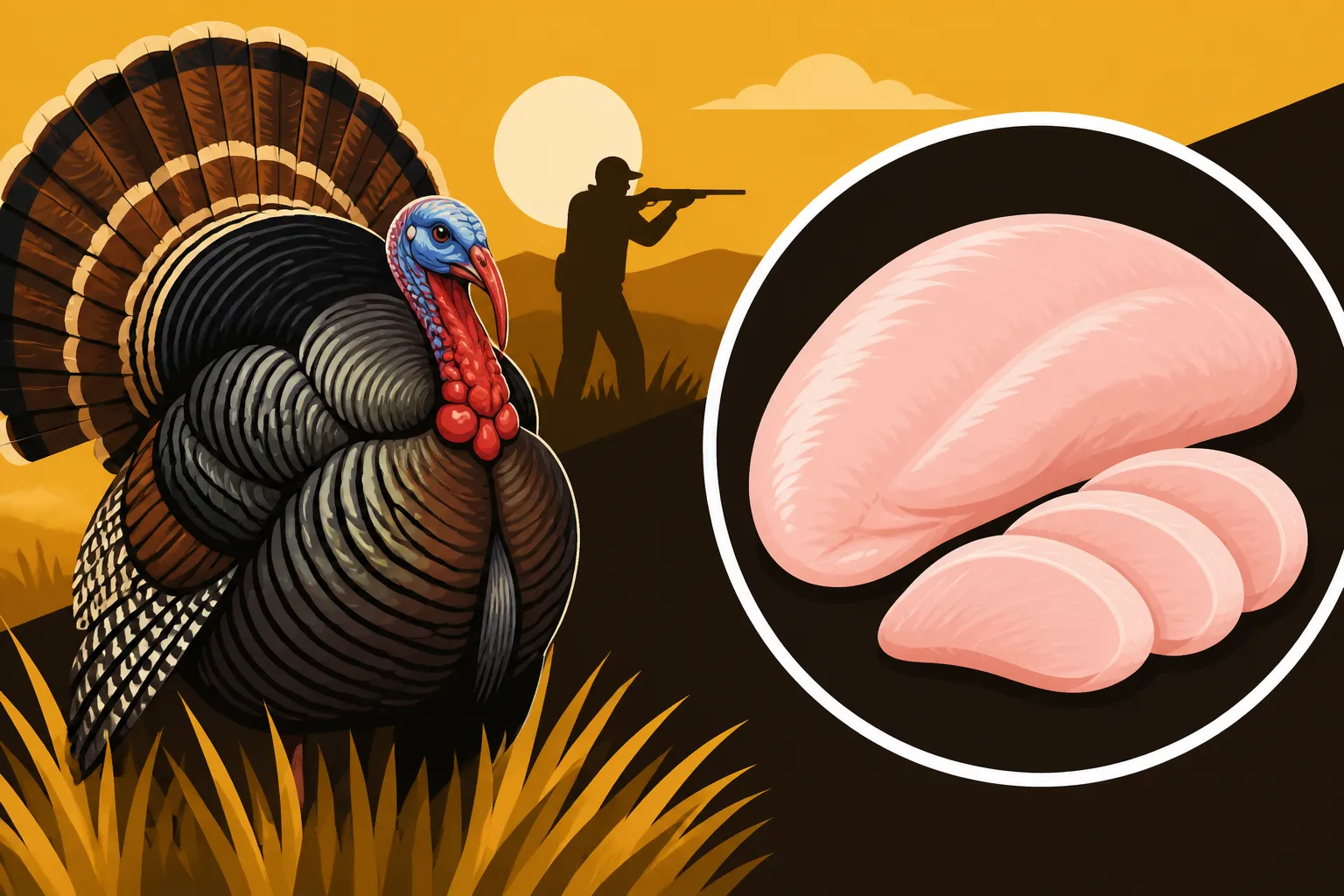
Turkey Breast Meat Yield
You've finally tagged that magnificent Kansas gobbler, whether it was a wily spring tom or a late-season bird, and now the practical questions set in. Beyond the thrill of the hunt, every hunter wants to know: how much actual meat will I get from this bird? It's a common thought, especially when you're envisioning those delicious wild turkey dinners. This guide is all about understanding turkey breast meat yield, helping you manage your expectations, maximize your harvest, and ensure none of that hard-earned protein goes to waste.
The Factors Influencing Your Turkey's Meat Yield
When you field dress a turkey, you might be surprised by how much of its total weight is dedicated to feathers, bones, and internal organs. The true prize, especially for many hunters, is the generous amount of breast meat. However, that yield isn't a fixed number; it's a dynamic figure influenced by several key factors. Understanding these can help you estimate your take-home more accurately.
Age and Sex of the Bird
This is probably the biggest determinant of how much breast meat you'll end up with. A mature gobbler, often referred to as a "tom," is going to carry significantly more meat than a young male bird (a "jake") or a hen. Think about it: a tom has had more time to grow, build muscle, and establish its dominance, which translates directly to a larger frame and more developed pectorals.
A jake, typically a year-old male, is still growing and is usually much smaller in both body size and breast mass. While still delicious, the sheer volume of meat will be less. Similarly, hens, while varying in size, generally don't carry the massive breast plates of a mature tom. Their primary biological function isn't to build large muscle mass for display or fighting in the same way a gobbler does. When you’re looking at harvest reports or trying to strategize for the biggest birds, keeping the age and sex in mind is crucial. You might have seen hunters target a specific trophy, but even for meat purposes, a mature tom simply offers more. When researching areas, a good resource like GoHunt can provide insights into population dynamics, which might indirectly hint at the likelihood of encountering older, larger birds.
Species and Subspecies Variations
While Kansas is primarily known for its Kansas Wild Turkeys and the Population Decline, specifically the Rio Grande subspecies, it's worth noting that other turkey subspecies exist across North America, and they can vary slightly in size and build. In eastern Kansas, you might find more influence from Eastern turkeys or even hybrids where ranges overlap.
Rio Grandes, generally, are considered a bit smaller in body size compared to their Eastern counterparts found further east, but they still offer a substantial amount of meat, especially the mature gobblers. Eastern turkeys often boast a slightly larger frame and can, in turn, yield a bit more breast meat from a comparable-aged bird. However, these are generalities; the individual bird's health, diet, and genetics play a much larger role than subtle subspecies differences within Kansas. If you're hunting in different regions or states, this factor might become more pronounced, but for a typical Kansas hunt, focusing on the age and sex is usually more impactful.
Diet and Habitat Quality
Just like any wild animal, the nutrition a turkey receives directly impacts its overall health, size, and muscle development. Turkeys that live in areas with abundant food sources – think corn, milo, soybeans, acorns, insects, and lush vegetation – tend to be healthier and heavier. This translates directly to more muscle mass, and therefore, more breast meat.
In Kansas, where agriculture is king, turkeys often have access to incredibly rich food sources throughout the year. Fields of waste grain after harvest, mast crops in timbered creek bottoms, and plentiful insects contribute to robust turkey populations with good body weights. Conversely, birds in areas with poor forage or those experiencing prolonged drought conditions might be leaner, yielding less meat. When you're scouting, paying attention to available food sources and habitat quality, perhaps using mapping tools to identify potential feeding areas, can give you clues about the health and size of the birds you might encounter. Reading a Kansas Creek Bottom for Deer Sign or similar scouting methods for other game can also reveal rich pockets of diverse forage that benefit turkeys too.
Estimating Your Turkey's Breast Meat Yield
Okay, so you've got your bird. Now what? Getting a realistic idea of how much actual boneless, skinless breast meat you'll recover from your turkey helps you plan meals, decide on processing methods, and just generally manage expectations. It's rarely as much as the bird's live weight, but it's often more than people initially anticipate when they first look at a dressed carcass.
Average Yields by Bird Type
While there's no perfectly universal formula, we can use some averages to give you a ballpark figure for breast meat yield. This is the boneless, skinless meat, which is what most people are after for cooking.
| Bird Type | Live Weight (Approx.) | Expected Breast Meat Yield (Approx.) | Percentage Yield (Approx.) |
|---|---|---|---|
| Mature Gobbler | 18-25 lbs | 4-7 lbs | 20-30% |
| Young Gobbler (Jake) | 10-15 lbs | 2-4 lbs | 20-30% |
| Hen | 8-12 lbs | 1.5-3 lbs | 20-30% |
It’s important to remember these are averages. An exceptionally large, old tom could yield more, and a scrawny jake might yield less. The "percentage yield" remains relatively consistent because the proportion of breast meat to overall body mass, once feathers and entrails are removed, is fairly stable across different sizes. This means roughly 20-30% of the live weight will be pure breast meat. So, a 20-pound tom won't give you 20 pounds of meat, but you can expect a solid 4-6 pounds of breast meat, which is still a fantastic haul.
Weighing Your Harvest
For the most accurate assessment, a portable scale is your best friend. Weighing the bird directly after harvest, before any processing, gives you its true live weight. From there, you can use the percentages in the table above to get a very close estimate of your potential breast meat yield.
If you don't have a scale, you can still make an educated guess. Most hunters can differentiate between a large, mature gobbler and a smaller jake or hen. Experienced hunters can often estimate a turkey's weight within a pound or two simply by hefting it. Over time, you'll develop an eye and feel for it. However, if you're serious about tracking your harvests or simply curious, investing in a small digital scale designed for fishing or luggage can be incredibly useful. This can also be helpful for reporting harvest data, which often asks for live weight.
The Myth of "Heaviest Turkey Ever"
It's common to hear stories of turkeys weighing 30, even 40 pounds. While incredibly large turkeys do exist, these figures are often the result of estimates, sometimes exaggerated by excitement, or they include the weight of the entire bird, guts and all, before any processing. It’s rare for a wild turkey to genuinely exceed 25-28 pounds live weight.
When you hear these claims, it's good to keep the breast meat yield in mind. Even a 28-pound gobbler would likely only yield 7-8 pounds of breast meat. This isn't to diminish the achievement of harvesting a large bird, but rather to ground expectations in reality. The goal is delicious meat, and even a 18-pound tom provides a substantial amount for many meals.
Maximizing Your Breast Meat Yield
Harvesting the bird is just the first step; proper field care and butchering are critical to ensuring you get every usable ounce of meat into your cooler and eventually onto your plate. Losing meat to poor handling or inefficient cutting is a real shame after all the effort you put into the hunt.
Prompt Field Dressing
One of the most crucial steps to maximizing yield and ensuring meat quality is prompt field dressing. Especially in warmer Kansas spring weather, delaying this process can lead to rapid bacterial growth and spoilage, particularly if the bird was gut-shot. Getting the entrails out quickly helps the carcass cool down, which is essential for preserving the meat.
Even if you're planning to pluck the bird, removing the guts is paramount. It lightens the load for the pack out and, more importantly, prevents the internal organs from continuing to generate heat and contaminate the meat. For a hunter focused solely on the breast meat, a quick breast-out method can be employed right in the field, saving weight and cooling the meat almost instantly. You can perform a fast field dress to preserve the whole bird, or simply take the breasts out and leave the rest, depending on your regulations and preference. This attention to detail will keep the meat fresh and allow for optimal cooling and preservation, especially on days where the sun beats down. Field Dressing in Warm Kansas Weather is a good read for broader principles that apply to turkeys too.
Efficient Butchering Techniques
Once you have your turkey back to camp or home, efficient butchering is key. The goal is to separate the breast meat cleanly from the bone, leaving as little as possible behind.
Here’s a simple, effective method:
- Lay the bird on its back: Position the turkey so the breast bone is facing up.
- Make a cut down the breast bone: Using a sharp knife, make a shallow cut along the center of the breast bone, from the neck cavity down to where the breast flares out.
- Separate the meat: From this central cut, begin to peel the meat away from the breast bone and rib cage. Use your knife to gently scrape along the bone, keeping the blade angled towards the bone. You'll feel the meat wanting to separate. Work from the center out to the wing joint.
- Remove the breast lobes: Once you reach the wing joint, you can either cut through the connective tissue to remove the entire breast lobe in one piece, or continue to peel it off. Repeat on the other side.
- Remove the tenderloins (inner breasts): On the underside of each main breast lobe, there's a smaller, tender strip of meat known as the tenderloin. Gently peel these away; they often come off easily.
With practice, you'll become incredibly efficient at this. A good, sharp boning knife is invaluable. Don't forget to check the upper part of the breast bone for any remaining small bits of meat. For those who want to be truly resourceful, remember that the legs and thighs, while tougher than breast meat, are excellent for slow-cooking, stewing, or grinding. While this guide focuses on breast meat, don't discard these valuable parts if you have the time and inclination for Processing Your Own Deer at Home type of full carcass utilization.
Proper Storage and Cooling
After the meat is off the bone, it needs to be cooled rapidly and stored correctly. This is paramount for flavor and longevity. Place the breast meat in a cooler with ice, ideally in zip-top bags to prevent waterlogging. Ensure the ice is evenly distributed around the meat. The quicker you can bring the core temperature of the meat down, the better.
Once home, if you're not cooking it immediately, vacuum seal the breast meat in meal-sized portions and freeze it. Vacuum sealing removes air, preventing freezer burn and greatly extending the shelf life of your wild turkey. This way, you can enjoy the fruits of your labor for months to come. Neglecting proper cooling can undo all your careful field dressing and butchering, leading to tough, off-flavored meat. A crucial aspect of preserving any wild game, whether it's the breast from a turkey you took with Kansas Turkey Hunting Tactics for Spring Gobblers or venison from a whitetail, is ensuring it's handled safely from the moment of harvest.
Cooking Your Kansas Wild Turkey Breast
Now that you've maximized your yield, it's time for the delicious payoff! Wild turkey breast is a lean, flavorful meat that shines with simple preparations, but it can also be transformed into gourmet dishes. Unlike store-bought turkey, wild turkey often has a deeper, richer flavor profile, a testament to its natural diet and active life.
Simple and Delicious Preparations
One of the best ways to enjoy wild turkey breast is with minimal fuss. Because it's so lean, it can dry out quickly if overcooked, so gentle cooking methods are often preferred.
- Pan-Seared: Slice the breast into medallions, season with salt, pepper, and your favorite herbs (rosemary, thyme, sage work beautifully). Sear quickly in a hot skillet with a little butter or olive oil until just cooked through. This keeps it tender and moist. It’s a perfect way to appreciate the pure, unadulterated flavor of the bird you called in, perhaps after patiently Working a Henned-Up Tom Midday all morning.
- Grilled: Marinate whole breast halves or thick slices for a few hours to add moisture and flavor, then grill over medium-high heat until cooked. Again, don't overcook. A meat thermometer is your friend here to ensure it reaches a safe internal temperature without drying out.
- Roasted: A whole breast can be roasted in the oven, often basted with broth or wrapped in bacon to keep it moist. Roasting tends to concentrate the flavors, making for a wonderfully aromatic meal.
Remember, wild game often benefits from a slightly lower internal cooking temperature than farm-raised poultry, as it's so lean. Aim for around 160-165°F and let it rest, as it will continue to cook a bit after being removed from the heat.
Utilizing All the Yield
While the breast meat is often the star, don't forget you can process the rest of the bird for other uses if you chose to take the whole thing. The legs and thighs, though tougher, are packed with flavor.
- Slow-Cooked: The dark meat from the legs and thighs is incredible when slow-cooked or braised. Think wild turkey chili, pulled turkey sandwiches, or a hearty stew. The longer cooking time breaks down the connective tissues, resulting in tender, flavorful meat. This is a great way to use parts that would otherwise be discarded, extending the value of your hunt far beyond just the breast.
- Ground Turkey: Any tougher bits, or even some of the breast meat if you desire, can be ground for burgers, meatballs, or sausage. Mixed with a little pork fat, wild turkey sausage can be absolutely phenomenal. This offers incredible versatility and ensures every last scrap is utilized.
- Stock: The carcass itself, especially if you plucked the bird, can be used to make a rich, flavorful turkey stock. This stock is far superior to anything store-bought and is the perfect base for soups, gravies, or risottos, making sure your wild harvest provides sustenance in many forms. This is part of the tradition of fully utilizing game, a lesson learned from hunting everything from pheasants to deer.
The experience of sitting out there, listening to a gobbler wake up and fly down, perhaps after Calling a Gobbler Off the Roost for an hour, culminates in not just a successful hunt but also in healthy, organic, wild protein for your table. Understanding and maximizing your turkey breast meat yield ensures that every successful hunt brings the maximum possible reward to your freezer and your family's dinner plate.
Disclaimer
This article is for general informational purposes only and does not constitute professional advice. Laws, prices and regulations vary by location and change over time. Consult a qualified professional for guidance on your specific situation.