How Much Meat a Kansas Buck Gives
There's a question every hunter asks themselves, usually with a grumble, after the shot is fired and the initial adrenaline fades: "How much meat is this thing actually going to give me?" You've put in the time, faced the elements, and finally tagged a Kansas buck. Now, it's about putting food on the table, and knowing what to expect from your hard-earned venison is key to managing your efforts, whether you're butchering it yourself or taking it to a processor. This guide will walk you through the factors that determine your venison yield, from live weight to the final package in your freezer.
Factors Affecting Meat Yield from a Kansas Buck
The amount of usable meat you get from a Kansas buck isn't just a simple calculation; it's a dynamic interplay of several factors. Understanding these can help you better estimate your haul and appreciate the work involved in bringing that protein home.
Live Weight Versus Dressed Weight
One of the first things that throws many hunters off is the difference between a deer's live weight and its dressed weight. When you see those impressive live weights reported, remember that a significant portion of that weight is not going to end up in your freezer. Live weight is exactly what it sounds like – the total weight of the deer when it's still alive. This includes all its internal organs, blood, hide, head, and lower legs.
Once you've field-dressed a deer, you've removed a substantial part of that initial weight. Dressed weight, sometimes called "gutted weight," accounts for the removal of the heart, liver, lungs, stomach, and intestines. This is often the weight a processor will use as a starting point for their calculations. For a typical whitetail, field dressing usually reduces the live weight by about 20-30%. So, a 200-pound live weight buck might come in around 140-160 pounds dressed. This initial reduction is why a seemingly massive buck doesn't always translate into a proportionally massive amount of packaged meat. It's an important step for quality, though, especially in warmer Kansas conditions, to get that internal heat out quickly.
Field Dressing and Processing Techniques
Beyond the initial gutting, the way a deer is further processed plays a huge role in the final meat yield. A clean, efficient field dress is just the beginning. The subsequent butchering steps, whether done by a professional or yourself, determine how much actual boneless, packaged meat you'll recover. For instance, some butchers might leave more trim on the bone for certain cuts, while others aim for a higher boneless yield.
If you choose to process your own deer at home, you have direct control over this. Are you cutting bone-in chops and roasts, or are you meticulously deboning every ounce of meat for grinding and stew meat? Every decision impacts the final number. Bone-in cuts will naturally weigh more but contain less actual edible meat per pound. Many hunters, especially those focused on maximum freezer space and versatility, prefer to debone completely. This minimizes waste and maximizes the usable protein. Learning proper techniques, perhaps through online resources or by shadowing an experienced friend, can significantly increase the amount of meat you recover. You can find detailed advice on Processing Your Own Deer at Home to ensure you're getting the most out from your harvest.
Deer Age and Body Condition
The age and overall body condition of the Kansas buck you harvest are major determinants of meat yield. A young, yearling buck, while still providing delicious venison, simply hasn't put on the muscle mass of a mature 3.5-year-old or older buck. A younger deer will have smaller bones and less fat, but also less overall muscle.
Conversely, a mature buck that has spent several years feeding on Kansas's rich agricultural crops – think corn, milo, and soybeans – will often be a robust, heavily muscled animal. These bucks have developed stronger skeletal structures and denser muscle tissue, leading to a higher meat yield relative to their size. However, the time of year also matters. A buck harvested early in the archery season, before the rigors of the rut kick in, will typically be in peak physical condition with good fat reserves. A buck taken late in the firearm season, especially after weeks of chasing does and expending massive energy, might be considerably leaner and lighter. Factors like disease outbreaks, such as EHD, can also dramatically impact the body condition of deer, potentially reducing their overall mass and fat reserves. EHD Effects on Kansas Deer Herds can provide more context on how these health issues affect local populations.
Estimating Meat Yield Based on Buck Size
So, after all that, what can you actually expect to pull from a Kansas buck? While every deer is different, we can provide some general guidelines to set your expectations.
Standard Ratios and General Guidelines
A widely accepted rule of thumb for estimating boneless meat yield is to take 25-35% of the deer's live weight or 50-60% of its dressed weight. This percentage can vary based on the deer's condition, how thoroughly it's deboned, and the skill of the butcher. If you're meticulous with your processing, stripping every last bit of usable meat, you might push towards the higher end of these estimates. For a more practical perspective, consider that the average whitetail doe will typically yield 40-50 pounds of boneless venison. This helps put buck yields into perspective, as does often have similar body weights to younger bucks. For ideas on filling the freezer, check out Kansas Antlerless Hunts and Filling the Freezer.
When you're out there looking for your next Kansas whitetail, knowing these ratios can help you quickly assess the potential for your freezer. Whether you use a hunting app like GoHunt to scout and plan your trips or prefer to navigate the terrain by feel, having a rough idea of what a 150-pound deer means for your dinner plate helps connect the hunt to the harvest.
What Different Buck Sizes Mean for Your Freezer
Kansas is renowned for growing some impressive whitetail bucks, often weighing in at over 200 pounds live. But even a smaller buck still offers a significant amount of lean, organic protein. Let's break down some general expectations:
- Small Buck (Yearling): These deer, typically 1.5 years old, might have a live weight of 120-150 pounds. After field dressing, you're looking at a dressed weight of 90-110 pounds. From this, you can reasonably expect to yield 30-40 pounds of boneless meat. This is still a fantastic amount of high-quality protein for your family.
- Medium Buck (2.5-3.5 Years Old): Many hunters target bucks in this age class, which often exhibit good antler growth and have put on substantial body mass. A medium Kansas buck might weigh 160-200 pounds live, dressing out to 120-150 pounds. Your boneless meat yield here could be anywhere from 45-60 pounds. This is enough to keep a small family well-stocked for a good part of the year. You can learn more about how these animals mature by exploring Kansas Whitetail Body and Antler Size.
- Large Buck (4.5+ Years Old): These are the heavy hitters, the mature giants that Kansas is famous for. A truly large buck can tip the scales at 200-250+ pounds live, with a dressed weight of 150-190+ pounds. For these magnificent animals, you can anticipate a boneless meat yield of 60-80+ pounds. Some exceptional specimens, particularly those harvested outside the rut in prime condition, might even push past 90 pounds of boneless meat. This truly fills the freezer and makes all those early mornings and cold sits worth every minute.
Here's a quick reference table to help visualize these estimates:
| Buck Size | Estimated Live Weight (lbs) | Estimated Dressed Weight (lbs) | Estimated Boneless Meat Yield (lbs) |
|---|---|---|---|
| Small (Yearling) | 120-150 | 90-110 | 30-40 |
| Medium (2.5-3.5 yr) | 160-200 | 120-150 | 45-60 |
| Large (4.5+ yr) | 200-250+ | 150-190+ | 60-80+ |
Keep in mind these are averages, and individual deer can always surprise you. A buck that looks huge on the hoof might have a smaller yield if it's been running hard during the rut or if you encounter significant bloodshot meat from a less-than-ideal shot. Good shot placement, as discussed in Shot Placement on a Whitetail at Twenty Yards, can minimize waste.
Maximizing Your Meat Recovery and Quality
Harvesting a deer is only half the battle; the real work for the freezer begins immediately after the shot. Maximizing your meat recovery and ensuring its quality requires prompt, careful action.
Quick and Clean Field Dressing
The moment you recover your buck, especially in Kansas where temperatures can swing wildly, swift field dressing is paramount. The goal is to remove the internal organs as quickly and cleanly as possible to allow the carcass to begin cooling internally. This prevents bacterial growth that can start to taint the meat, leading to off-flavors or even spoilage. A clean gutting job means minimizing contact between gut contents and the meat, avoiding punctures, and ensuring all organs are removed.
In warmer early-season conditions, like those often experienced during the September muzzleloader or early bow seasons, heat can be your biggest enemy. Leaving a deer to sit un-field-dressed for even a short period in 70-degree weather can significantly compromise meat quality. Focus on getting it done efficiently, then thinking about how to cool it down. If you're hunting in particularly hot weather, our guide on Field Dressing in Warm Kansas Weather offers critical advice.
Proper Cooling and Transport
Once field-dressed, the next critical step is getting that carcass cooled down. This often means getting it out of direct sunlight and into a cooler environment. If you're hunting remotely, this can be a challenge. Quartering a deer in the field might be necessary to facilitate transport and cooling, especially if you're deep in a river bottom or miles from a vehicle. Our advice on Quartering a Deer in the Field can be incredibly helpful here.
For hunters working solo or needing to cover significant distance on public walk-in ground, methods like using a deer cart can make a huge difference in both effort and speed. Dragging a heavy deer can be exhausting and slow, delaying the cooling process. Compare options in Dragging Versus Cart Hauling or learn about specific equipment in Deer Carts on Walk-In Ground. Even if you have a short walk, getting the deer into the back of an open-bed truck for airflow, or ideally into an air-conditioned space or cooler with ice, is crucial. For specific strategies on handling the heat, especially early in the season, consult Getting a Deer Cooled in September. The quicker you can drop that internal temperature, the better the quality and longevity of your venison will be.
Butchering Options: DIY Versus Professional Processor
Once you have your field-dressed and cooled buck, you have a choice: process it yourself or take it to a professional. Each option has its merits.
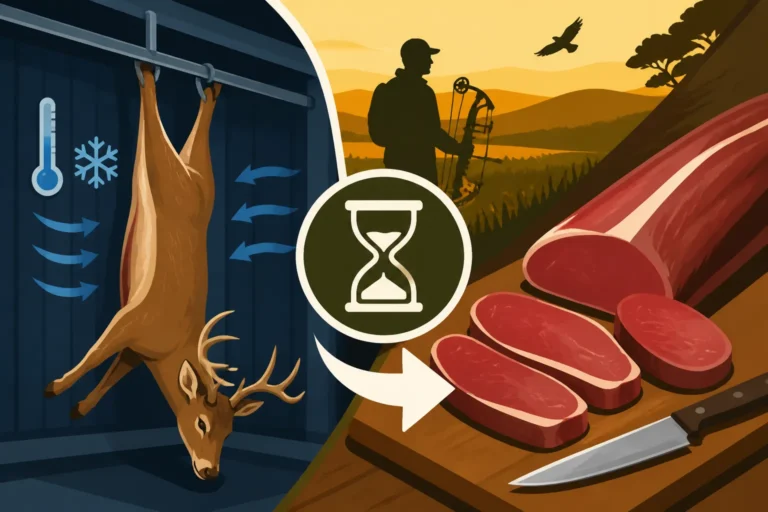
Doing It Yourself (DIY) offers maximum control over your cuts and, often, a higher meat yield. You decide exactly what becomes a steak, what's a roast, and how much goes into the grind pile. It's a fantastic way to deepen your connection to the harvest and learn a valuable skill. Plus, it saves money. If you're committed to the DIY route, remember to invest in good, sharp knives, a clean workspace, and understand basic butchering anatomy. Taking your time and being methodical will pay off in the end. Aging venison, a process discussed in Aging Venison Before Cutting, can also be done at home with proper refrigeration, enhancing flavor and tenderness.
Using a Professional Processor is often the choice for those short on time, space, or expertise. These folks are skilled at what they do, often handling hundreds of deer during peak season. They can efficiently debone, cut, wrap, and freeze your venison, ensuring consistent quality and maximizing yield for their chosen methods. They also understand how to handle large volumes of meat under strict sanitary conditions. When considering a processor, especially during the busy firearm season, be sure to check their availability and turnaround times, as outlined in Locker Plants During Firearm Season. While there's a cost involved, the convenience and professional results can be well worth it. Whichever route you choose, the goal is always to respect the animal and maximize the delicious, healthy meat it provides.
Beyond the Numbers: The True Value of Kansas Venison
While getting a solid number of pounds for your freezer is certainly satisfying, the value of a Kansas buck extends far beyond mere weight. It's about nourishment, self-reliance, and a deep connection to the land and tradition.
Nutritional Benefits and Organic Source
In an age where food sources are often processed and full of unknowns, wild venison stands out as an incredibly healthy and organic option. It's naturally lean, high in protein, and rich in essential vitamins and minerals like iron, zinc, and B vitamins. Unlike commercially raised meats, wild deer live freely, eating a natural diet of browse, forbs, and agricultural crops, free from added hormones or antibiotics.
Bringing venison home means providing your family with a truly wholesome and sustainable food source. This knowledge alone can make all the effort of the hunt incredibly rewarding. For many Kansas hunters, deer meat is a staple, a delicious and versatile protein that forms the base of countless meals throughout the year.
The Experience and Sustenance
There's a unique satisfaction that comes from providing for yourself and your family through hunting. Every steak, every burger, every pot of chili made with venison carries with it the story of your hunt, the crisp Kansas mornings, the anticipation, and the respect for the animal. This connection is something you just can't buy at a grocery store. It's about independence and a primal fulfillment.
For hunters who rely on detailed information to plan their seasons, resources like GoHunt can be invaluable, helping them scout prime habitat and track game movements to ensure successful hunts that contribute to their family's sustenance. It's more than just hunting; it's a lifestyle that centers around responsible harvesting and appreciation for nature's bounty.
Utilizing All Cuts
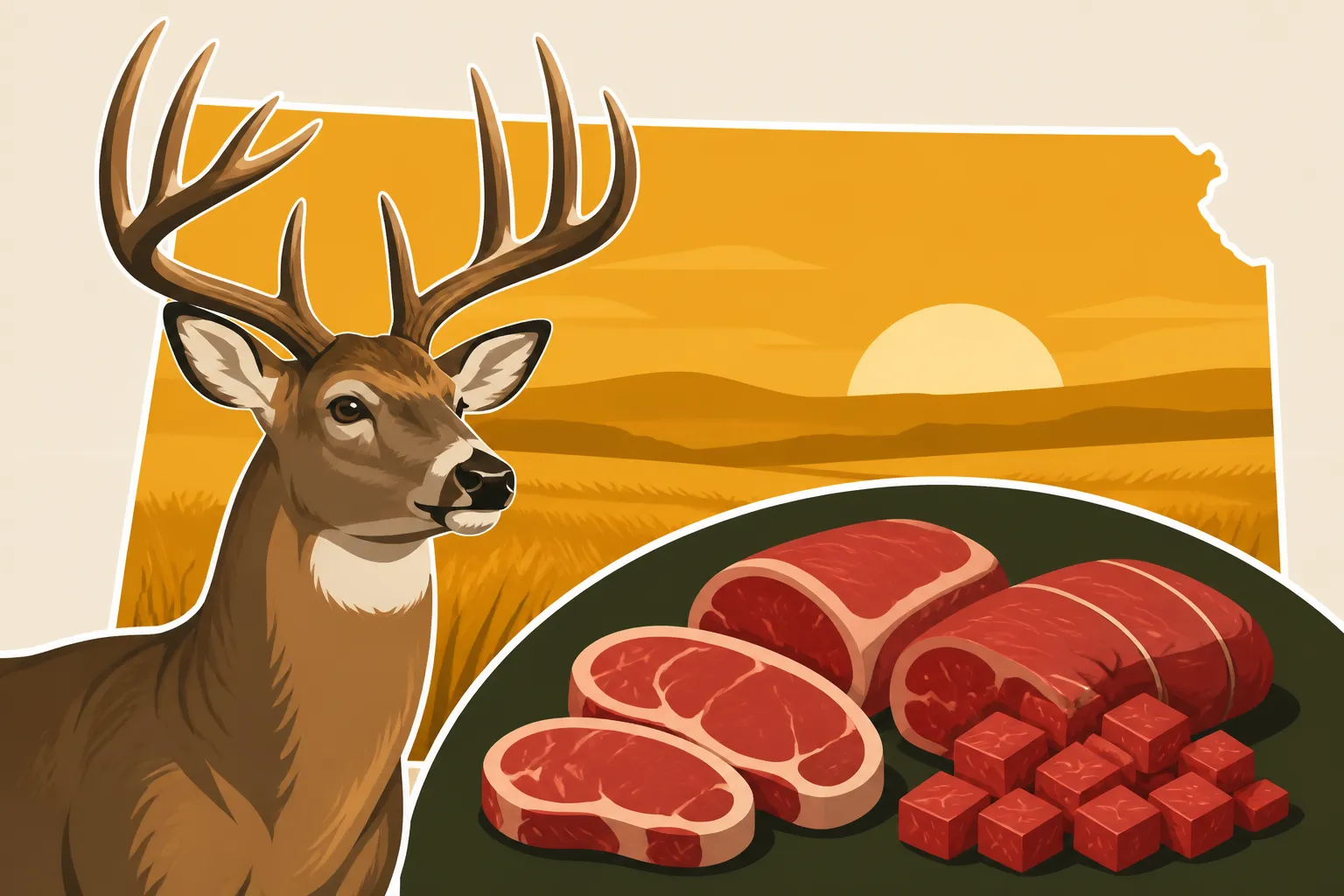
A Kansas buck offers a remarkable array of culinary possibilities. Beyond the prime cuts like backstraps and tenderloins, which are often savored as steaks or quick roasts, there's a wealth of other meat to be utilized. The hindquarters yield excellent roasts and larger steaks. The front shoulders, while often tougher, are perfect for slow cooking, stew meat, or grinding. Trimmings from virtually anywhere on the carcass can be ground into burger, which is incredibly versatile for anything from tacos to meatloaf.
Don't forget specialty items like jerky, sausages, or even smoked roasts. Even the organs, for those who appreciate them, can be a nutritious part of the harvest. The beauty of venison is its versatility, allowing you to create a wide range of meals that are both delicious and incredibly healthy. Every pound, whether it's a prized loin or a pound of grind, represents a successful effort to put wholesome food on the table.
Disclaimer
This article is for general informational purposes only and does not constitute professional advice. Laws, prices and regulations vary by location and change over time. Consult a qualified professional for guidance on your specific situation.